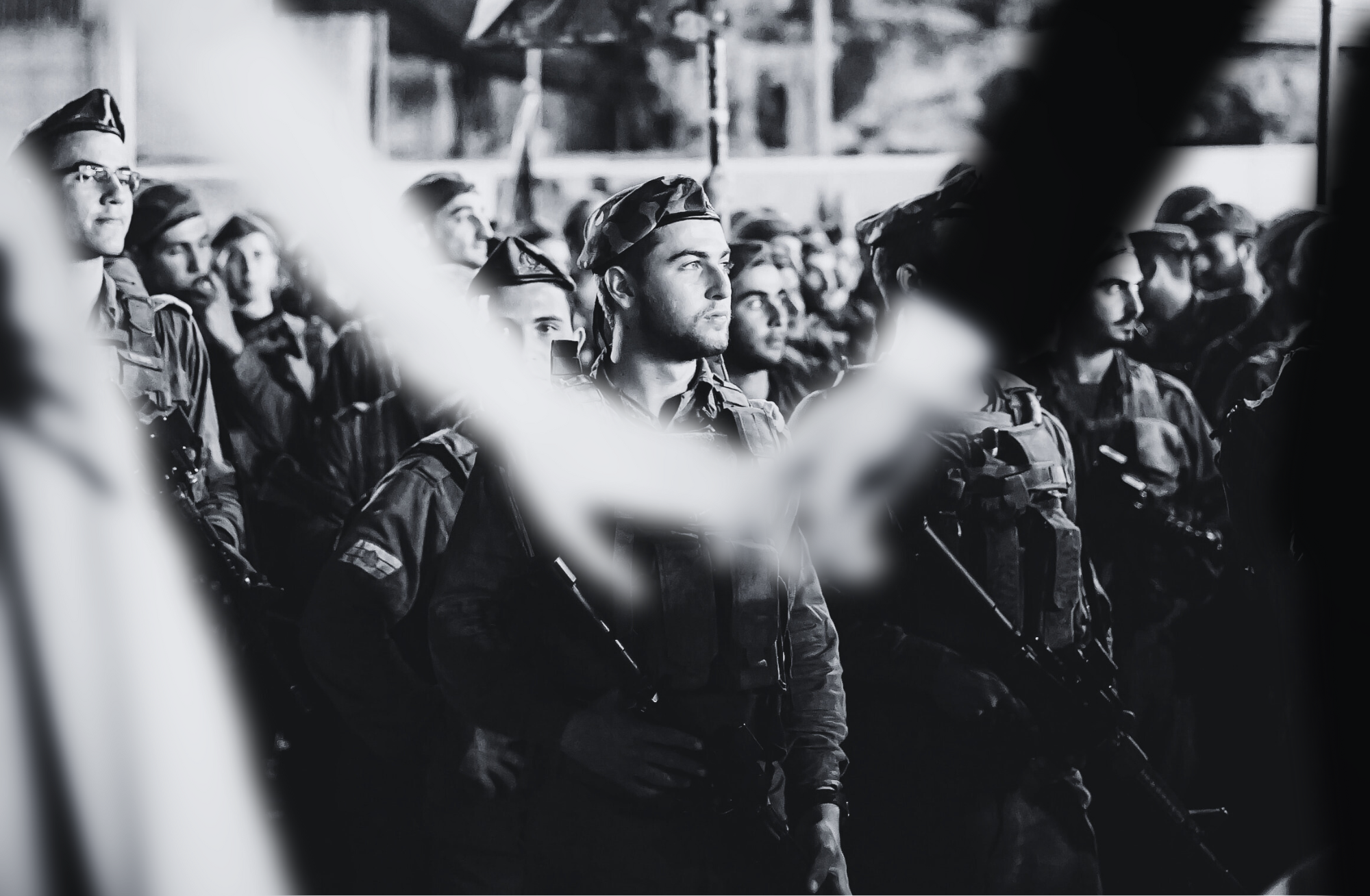


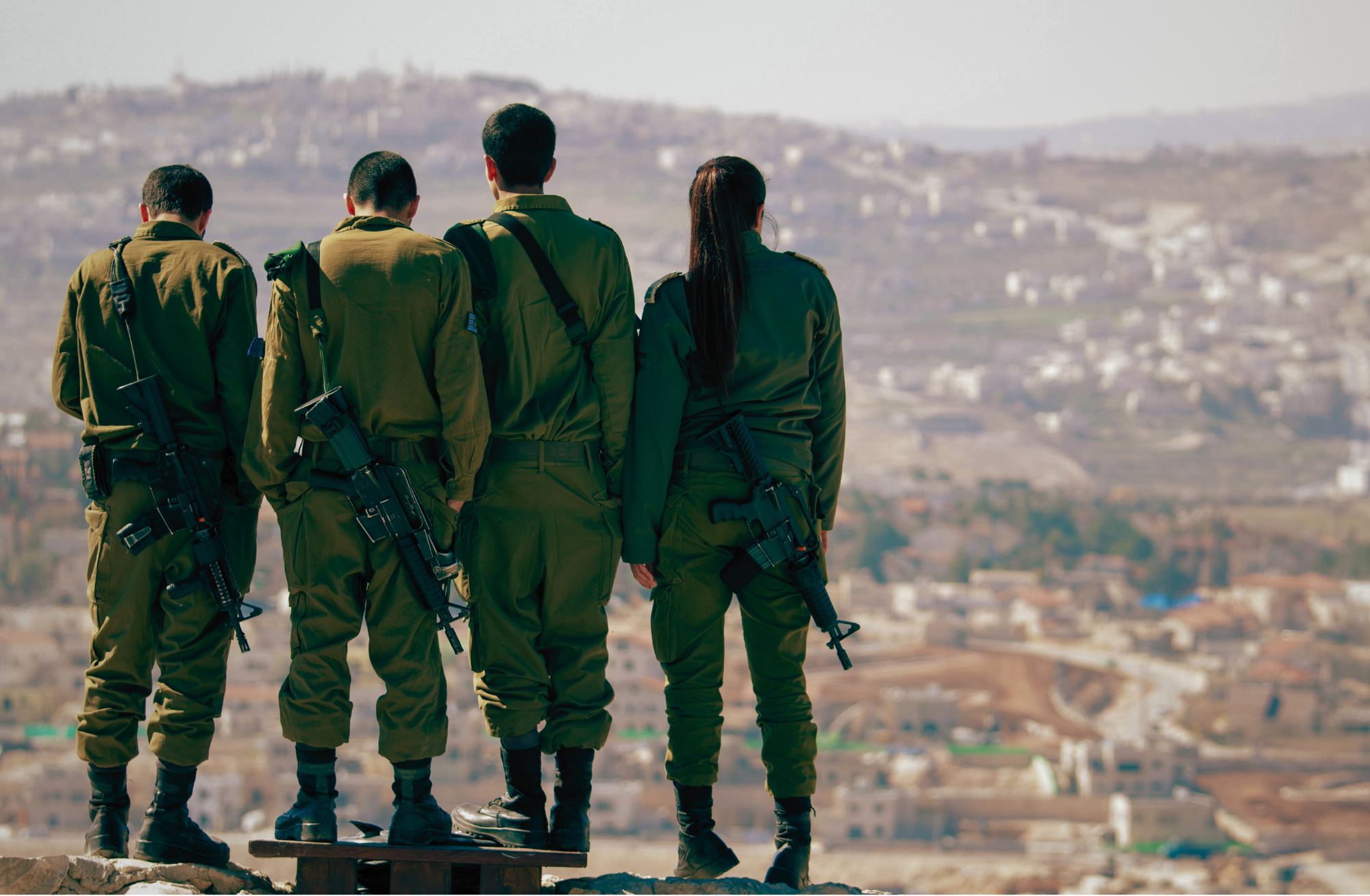
Song and war have long held a strange fellowship. The very term “war song” is ambivalent; it can refer to a song that is pro-war, anti-war, about war, or simply written during war.
Like the wars they emerge from, songs of war have many faces. These songs can (and have) galvanize soldiers to the front lines, keep their marching in rhythm, and instill doubt about the causes that lead so many to die. Songs can hold dueling feelings, complex emotions, can be packed tightly into music. Listen to the songs people were listening to during the First World War, and compare them to the popular songs during the Vietnam War. Think of the little drummer boy.
This isn’t just about song, of course, but many forms of art during war. Poetry, visual art, photography—all of them show the signs of the world they were written in. For a deeply moving collection of poems that show many of these contradictions, read No Rattling of Sabers: An Anthology of Israeli War Poetry. The questions, and answers, you’ll find here are not simple.
Here are three songs written during times of conflict in Israel that I’ve been turning to again and again. What are yours?
1. Ein Li Eretz Acheret (I Have No Other Land) by Orly Yahalom
Written by the great Israeli songwriter Ehud Manor, who also wrote classics like “B’Shanah HaBa’ah,” “Ein Li Eretz Acheret” was first performed by Gali Atari in 1986. This isn’t a war song because it was written during a war or about a specific war, but because the entire message of the song speaks to a country too used to war. “I have no other land, even if my land burns,” the song opens, spreading out the word “burns” in Hebrew. “With a hurting body, and a ravenous heart, here is my home,” she sings with a steadiness to her certainty. The singer is willing to look open-eyed at life in a land of conflict, and say nonetheless: There is nowhere else. The final words say it all: “I will not be silent, for my land has changed her face. I will not cede from mentioning her, until her days are renewed.” These words, for me, say everything: Commitment to a home and a land does not mean we cannot note the ways we need change, nor does it mean we must be silent. Indeed, we can speak, and we can sing.
2. Milyon Kochavim (A Million Stars) by Yiftach Kerzner
Captain Tom Farkash died in 2006, in a helicopter crash during the Second Lebanon War, while serving in the IDF. When the 17-year old Amit Farkash heard about her brother’s death, she asked a friend of her brother’s, Yiftach Kerzner, to write the song, which she sang at his funeral. Both Amit and Yiftach went on to become creative figures of their own, and the song has remarkable staying power.
“You wanted to fly, you wanted to move on,
with half a smile you ascended up high.
One million stars in the sky,
hold the blue of your eyes
Give me just a moment
To wish you
Shalom”
3. Omrim Yeshnah Eretz (They Say There is a Land) by Naomi Shemer
Based on a poem by Shaul Tchernichovsky, Omrim Yeshnah Eretz was first reworked into song by Shlomo Artzi in 1973, the year of the Yom Kippur War, and was reworked by Naomi Shemer to greater success in 1979. The song opens with a question: “They say there is a sun-drenched land / Where is that land, where is that sun?” The answer is never clear, as the song wonders: “We’ve already travelled many / oceans and desserts…that land of sun, perhaps it is not?” This song strikes hard because of the place it positions the land of Israel, in the crosshairs of dream and reality, for the Jewish people. We’ve needed a sun-drenched land of possibility and hope, and have a land that is so much more and less than that, and we do our best to keep dreaming nonetheless. At one point in the song, after the existence of this land is pined for, doubted, and pined for again (“the land in which will be fulfilled / that which every man dreams”), there is a mysterious encounter between Akiva and an unnamed Rebbi, culminating in a simple truth being taught: Kol Yisrael Kedoshim. We need this lesson more than ever.