


Can you love Judaism, but not Jews? Can one be a member of the Jewish community while living outside the institutions that constitute the community? Does the Jew need the community, or the community need the Jew? Bethany S. Mandel is a thoughtful and passionate commentator on this complicated intersection of questions.
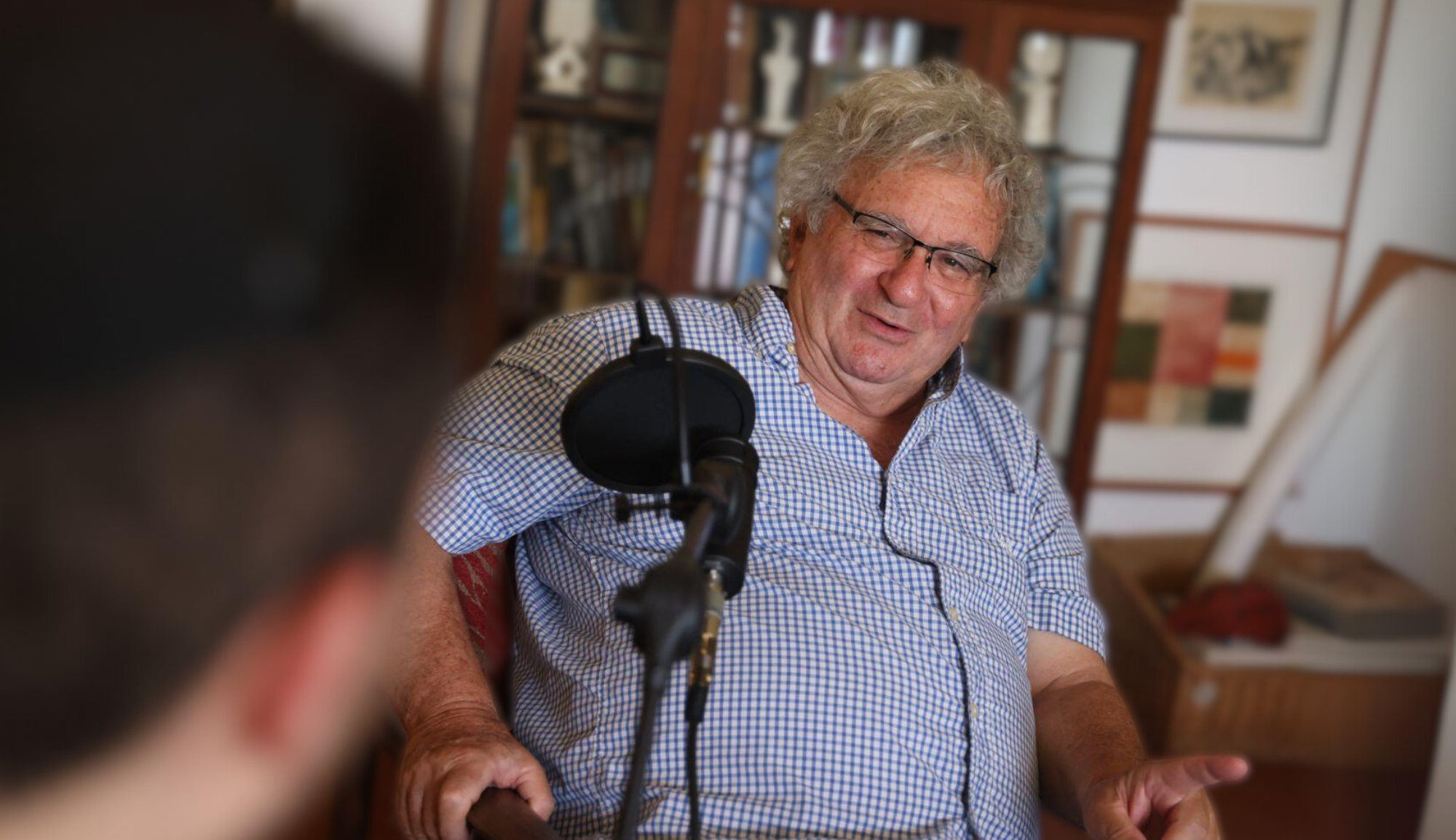
As a journalist and cultural commentator, Bethany has written and spoken widely about her relationship with the idea of community, particularly after her dealings with the now-deposed Rabbi Freundel. After encountering the negative side of Jewish communal life, Bethany made her home the center of her family’s religious life, starting a YouTube channel for Jewish homeschooling, and embracing the possibilities of a home-based religious center before 2020 made that the norm. In many ways, Bethany’s belief in a Judaism centered in the home presaged the shift to home we have all experienced this past year.
In March 2020, the organized Jewish communities of the world had to confront these questions. With the shuttering of institutions and abeyance of in-person programming due to the Covid-19 pandemic, Jewish life moved from synagogues and schools to living rooms and crowded kitchens. Given the high financial cost of Jewish institutions, the shift to the home and the internet has pushed questions of sustainability and decentralization to the forefront of national conversation. Looking towards the future of the Jewish people, will Jews continue to engage with the Jewish people through institutions, or through the people themselves?
So often, we rely on institutions to provide the meaning and magnificence that religious life has to offer, and we lose the perspective that independence grants. Placing faith in buildings and people puts that faith under stress when far from institutions and people. A lesson learned in 2020: God can be found in the home and the synagogue, in the individual and the institution, in the Jew—with or without community.
The shift that occurred in 2020, from religion practiced in community to practiced in the independent individualism of one’s home allows for greater encounters between neighbors, members of a family, and members of a community.
There is a parallel set of questions that frame this dilemma on a far broader scale: What about when Jews fail Judaism? Should one place their faith in Jews or Judaism? Rabbi Louis Jacobs is fabled to have said that “Judaism is perfect—Jews aren’t.” Many have experienced the beauty of Jews only to then experience the beauty of Judaism, but others have experienced a more challenging mismatch: A sensitive religion with occasionally insensitive adherents. Don’t judge Judaism by the Jews, but “eventually, the Jews will have to measure up to Judaism,” Bethany Mandel opines in her conversation with 18Forty.
Rabbi Samson Raphael Hirsch (1808-1888) was sensitive to the fragile, beautiful relationship between individual and institution, between Jew and Jewish community, when he stunningly said:
If I had the power I would provisionally close all synagogues for a hundred years. Do not tremble at the thought of it, Jewish heart. What would happen? Jews and Jewesses without synagogues, desiring to remain such, would be forced to concentrate on a Jewish life and a Jewish Home. The Jewish officials connected with the synagogue would have to look to the only opportunity now open to them—to teach young and old how to live a Jewish life and how to build a Jewish home. All synagogues closed by Jewish hands would constitute the strongest protest against the abandonment of the Torah in home and life. (“Introduction by Translator” to Horeb, “The Classification of the Mitzvoth,” p.1xix)
For Rabbi Hirsch, closing the centers of Jewish study and practice would force a renewed consideration of what matters most: A deeper concentration on Jewish life and the Jewish home. The song of the community is most rich when each individual is comfortable and confident in their own song, in diverse unity.
An observation on Walt Whitman illuminates this point—Whitman’s great ode to the individual spirit, the Song of Myself, fittingly begins with the word “I”:
I celebrate myself, and sing myself
The poem, a powerful testimony to the Western love affair with the individual, ends:
missing me one place search another
I stop somewhere waiting for you.
The astute observation has been made—this great poem about the “I” starts with “I,” but ends with “you.” Reaching this final “you” takes Whitman a long time, much of which is spent marveling at the beauty of the soul’s “I”, but eventually the Song of Myself beckons to the other, the “you.” Perhaps Whitman’s delicate transition from “I” to “you” is a lesson in the relationship between self and other—by deepening one’s own self, one’s home, this can engender a much deeper encounter with the “you,” the other.
The shift that occurred in 2020, from religion practiced in community to practiced in the independent individualism of one’s home allows for greater encounters between neighbors, members of a family, and members of a community. Away from the rarefied practices of the institution, individuals can come to each other as individuals, and grow from the encounter.
Bethany S. Mandel speaks of the encounter between Jew and Jewish community, and between Jews and Judaism. In Bethany’s writing, change happens in and between individuals, far from institutions. In a piece that brought her considerable controversy, “We Need to Befriend Neo-Nazis,” she argues for social change on the radically human level—ideological enemies approaching each other as people.
Agree or disagree, institutionalist or individualist, Bethany’s insight is valuable. Listen to Bethany for her sensitive thinking on the relationship between Jews and the Jewish community, and why her Jewish community is her home.
Tune in to to this episode with Bethany S. Mandel.