


How can one person love a whole nation? And how can the love for a nation be a textured love, an appreciation that runs deeper than ethnocentrism or love of the similar? In order to connect to the nation without, one has to embrace the nation within.
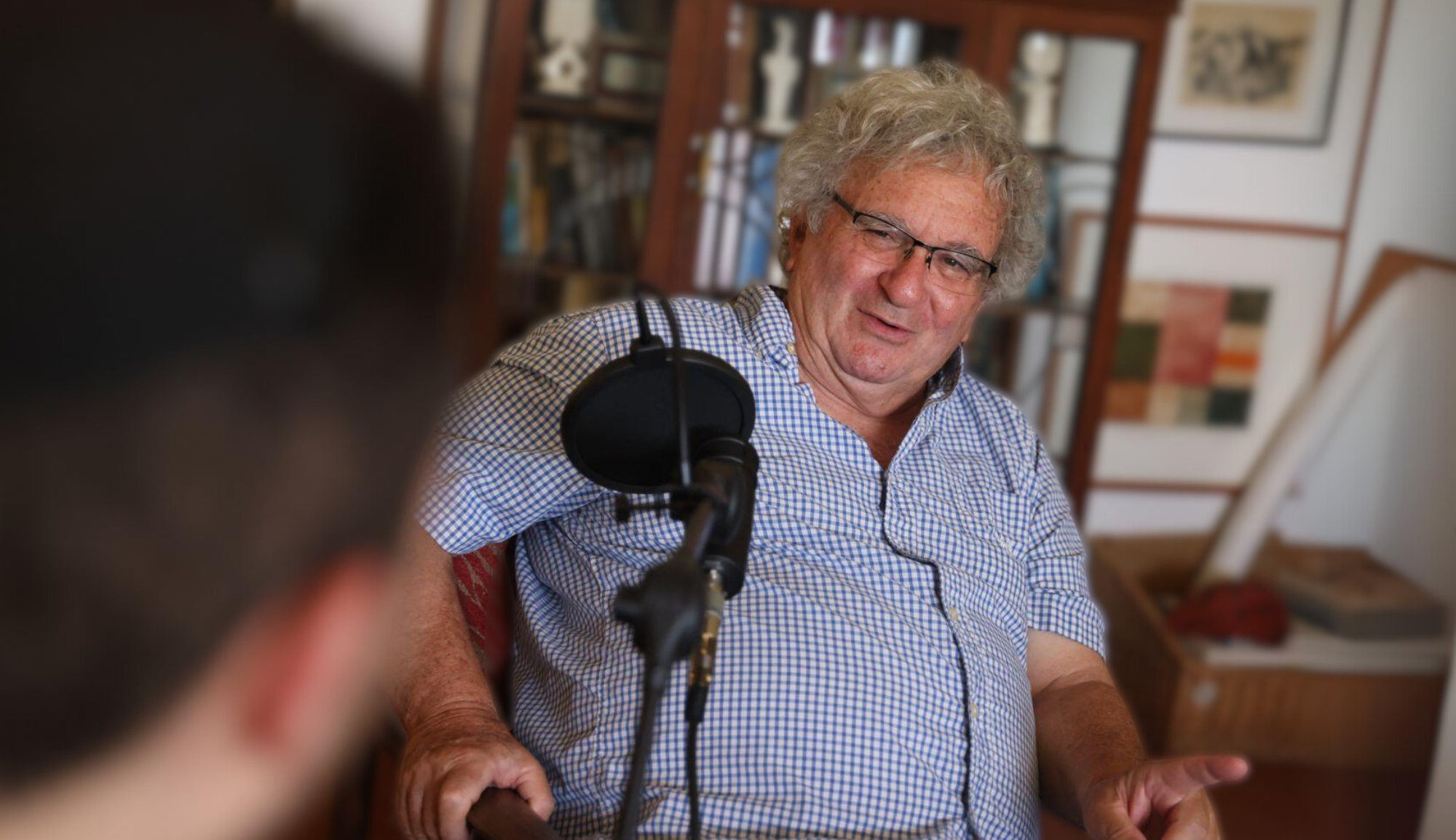
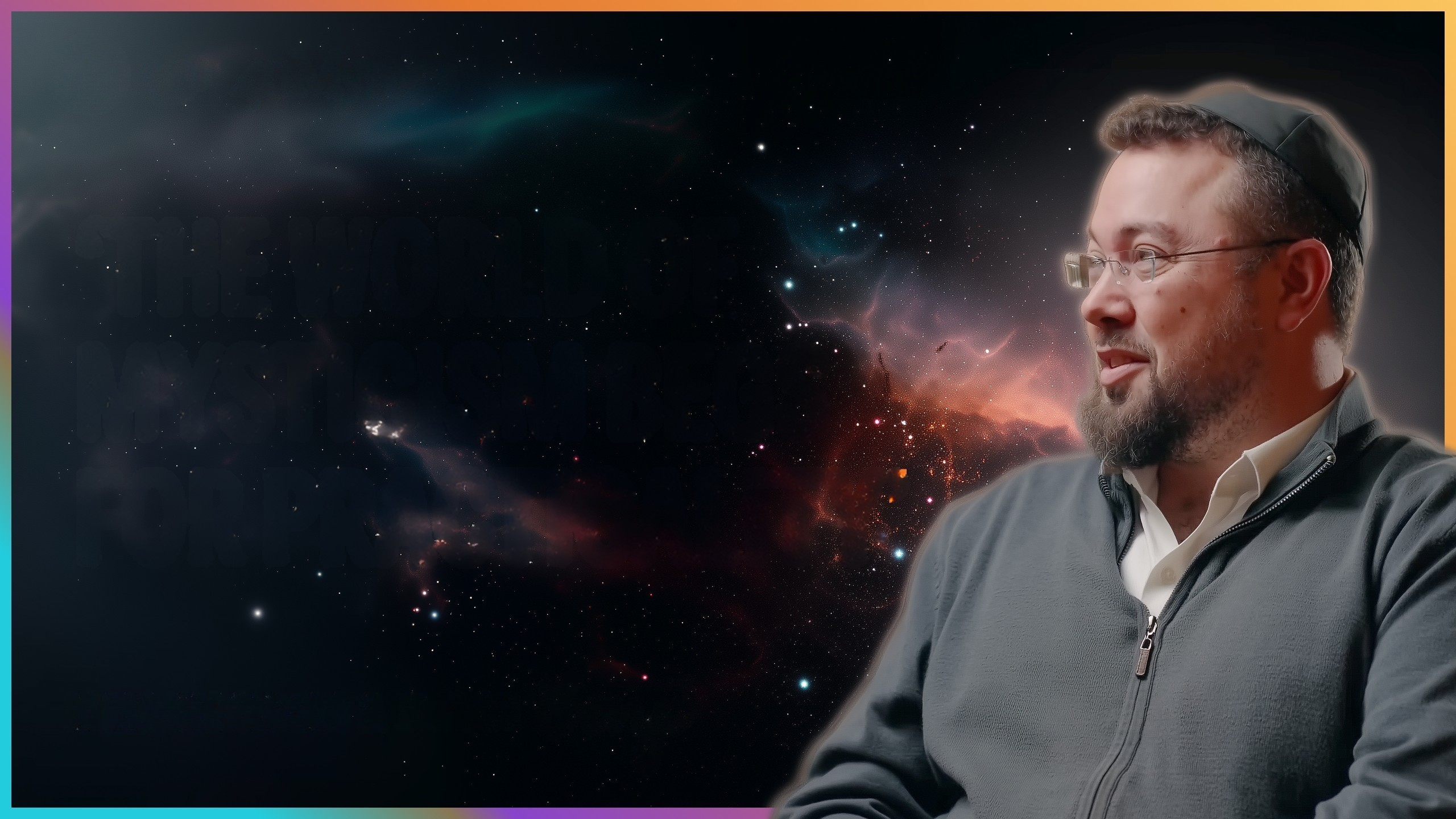
Rav Aaron Lopiansky joins 18Forty to think about the past, present, and future of the Jewish people. Much of Rav Lopiansky’s perspective emerges from his communal positioning—as a Rosh Yeshiva, author, and thinker, much of his writing speaks to those struggling at the boundaries of the right-wing and modern world. His Ben Torah for Life is an erudite work aimed at those leaving the Yeshiva for the workforce, a shift in roles that necessitates a shift in meaning structures. This week, we are considering Rav Lopiansky’s understanding of the many roles we all occupy, and how this can inform one’s appreciation for the whole Jewish people.
We are all built of different qualities and components, pastiches of the characters of the entire Jewish people. The Jewish people embody unity within variety, in the many faces of lived Jewish experience that comprise the Jewish people, just as the Jewish person embodies variety within unity, in the many different aspects to each person’s lived Jewish experience.
It is in this context that Rav Lopiansky meets Jewish peoplehood. Rav Lopiansky considers the twelve tribes an important symbol for the roles we all have. Each tribe has a particular portion of Biblical Israel, and with it a goal, a shared characteristic, or role.
In his Ben Torah For Life, he describes the different personalities that comprise the Jewish people:
Each tribe has a very unique personality with its own set of attributes and talents, yet all of them together – and only together – are Klal Yisrael. Thus, while each tribe is a world unto itself, each is irreplaceable as a member of the whole. For instance, the tribes of Shimon and Levi were most outspoken in their condemnation of evil, whereas the tribe of Dan reached out to the stragglers to bring them back into the fold. These approaches are polar opposites of each other, yet Klal Yisrael is a nation only if it contains both an element of frank and searing condemnation of wrongdoing and also the ability to reach out to the furthest of the stragglers. So too, all the other shevatim have their unique and sometimes diametrically opposing personalities.
Nevertheless, each and every tribe had a core personality of “Yisrael”, a nation devoted to G-d. in addition, each one had a unique facet that was specific to that tribe … Each and every … tribe oriented its particular attribute towards the center point of dedication to Hashem.
As such, the history of the Jewish people has seen a fair share of inter-tribal disputes, sometimes with tragically violent consequences. This conflict continues to occur on all levels of Jewish society, as people and groups of people clash over values.
Can deep engagement with one’s own cultural experience engender a deeper appreciation for other cultures, or do the lines of difference between one’s culture and others’ demand demarcation?
In order to embrace the Jewish people, in all their uncomfortable diversity, Rav Aaron Lopiansky urges us to embrace the diversity that lies within each of us:
These descriptions hold true of each individual’s personal development as well. That a person consists of many different facets of personality, and that they all must work together for the common goal to be realized, is widely understood. However, the fourth dimension of a person, i.e. time, is poorly understood. Each person travels through different periods of life: childhood, teenage years, young adulthood, marriage, parenthood, etc. Each of these stages is another stratum of the total person. Each period has its own focus and challenges, and each becomes a unique contribution to the totality of the person. There are correspondingly different values to be stressed in each of the different periods, such that together they present “adam” in totality.
Much of what is so challenging about embracing the contradictions of a nation is also true for embracing one’s own contradictions. In order to appreciate the complexities of the nation, one learns to appreciate the complexities of the person. James Joyce, the Irish novelist and poet, put it this way:
For myself, I always write about Dublin, because if I can get to the heart of Dublin I can get to the heart of all the cities of the world. In the particular is contained the universal.
The presumption behind this idea of the universal heart within the particular is based on the understanding that the deep core of human experience transcends difference.
Becoming aware of the great many voices of Jewish experience present within each and every one of us is intimately tied to developing a greater historical consciousness. As long as one’s lens of history is narrow, so too will their perspective on Jewishness and Jewish people be narrow. Rav Lopiansky is a believer in the importance of developing such a real historical consciousness. In an article for Mishpacha titled “Sometimes Mashiach is Not the Solution,” Rav Lopiansky critiqued the sort of popular messianism that is prone to cropping up in challenging times for lacking a historical perspective:
We need to teach our children history. And that history needs to include much more than dry names and dates and stories of gedolim. They need to have an accurate understanding of the experiences of the Jewish communities of each generation—the daily life, the hardships, the challenges, the successes, and the wounds. The pasuk implores us to “contemplate the years of each generation.”
This historical awareness forestalls one’s ability to rely on easy conceptions, and puts a premium on recognizing the past, and the present, in a beauty basked in the warm light of complexity.
This point is particularly important given the current debate around the boundaries and opportunity of identity—in a fragmented world, is it possible to find the universal in the particular? Can deep engagement with one’s own cultural experience engender a deeper appreciation for other cultures, or do the lines of difference between one’s culture and others’ demand demarcation? Terrence, the Roman-African slave turned senator, famously said “I am human, and I think nothing human is alien to me.” For Terrence, engagement with the realest stuff of the human experience necessarily grants one intimacy with the whole of the human experience.
Rav Aaron Lopiansky speaks the language of the particular; much of his insight is situated for those in the Yeshiva-oriented Jewish communities, but his thought is important for all. Listen to Rav Lopiansky to think about differentiating education for all ages, the challenges facing the Jewish people in 2020, and his thoughtful commentary on Jewish life today.
Tune in for our episode with Rabbi Aaron Lopiansky.