

His Ladder Will Take You to the Zohar

Yehuda Fogel
Share
×

Share

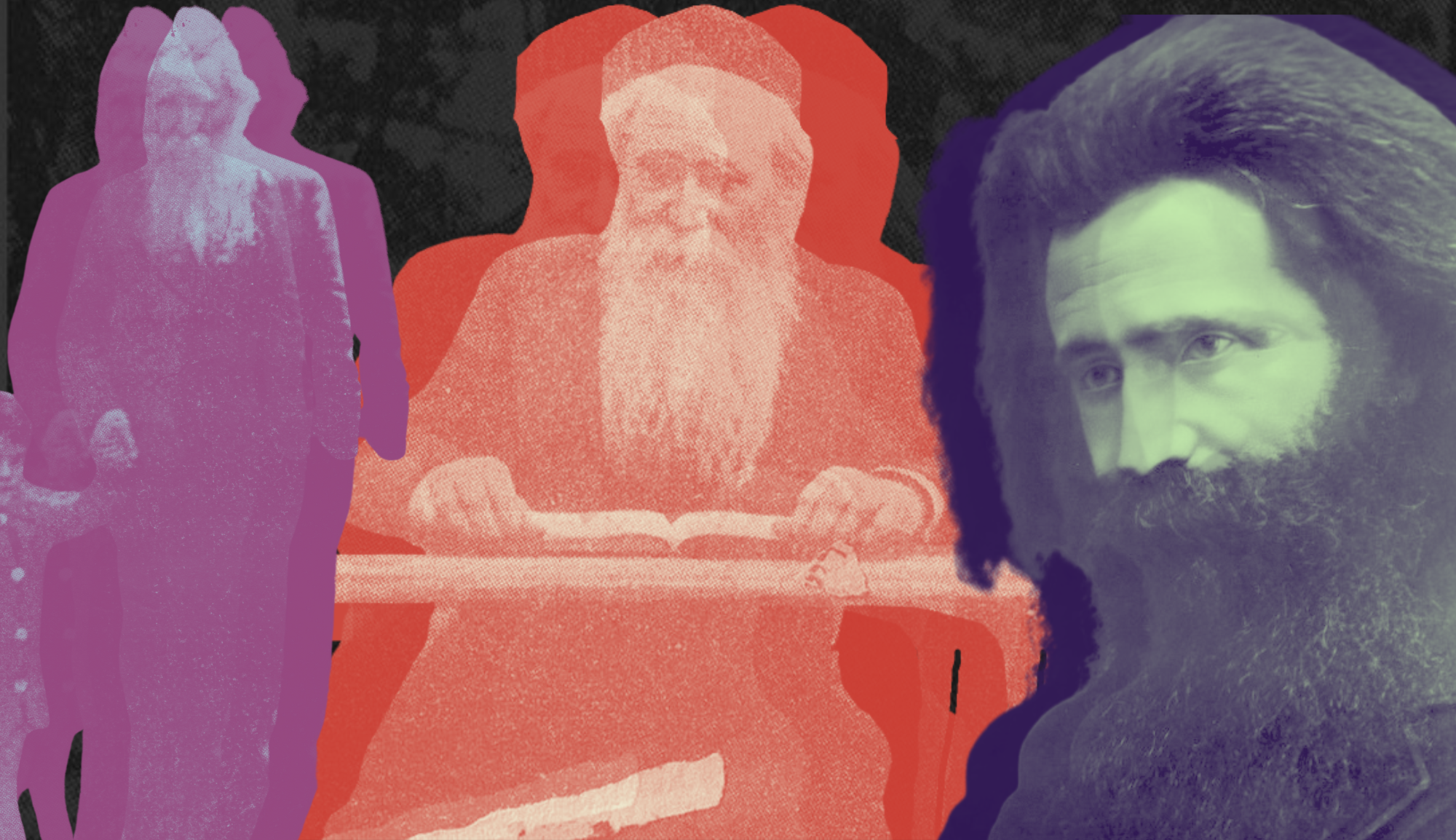
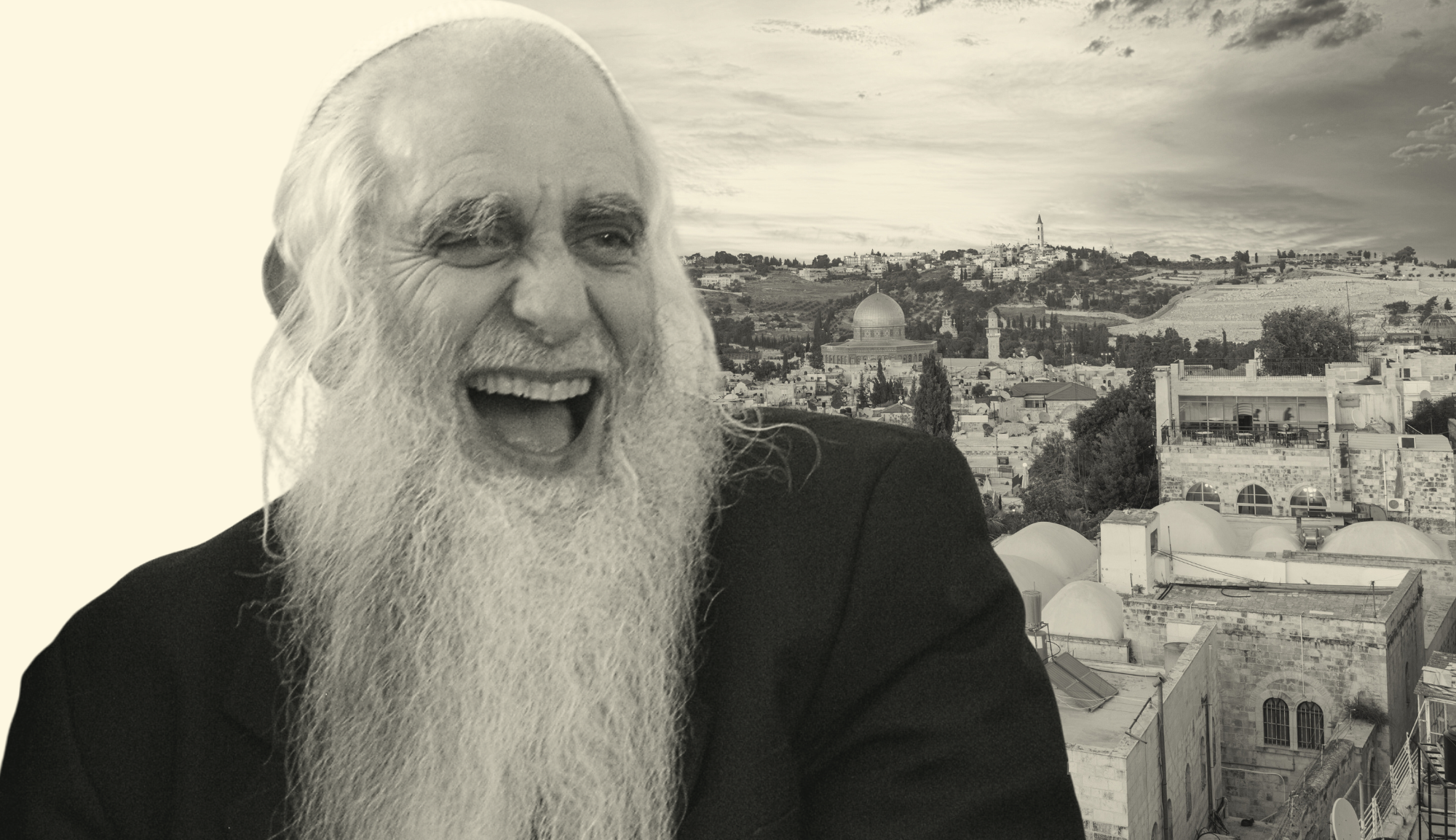
Meet Rav Yehuda Leib HaLevi Ashlag (1885 – 1954). 

Rav Ashlag, known also as the Baal HaSulam after his most well-known work—a commentary on the Zohar called “the Sulam,” or “ladder”—was born in Poland to a Chassidic family, and moved to pre-state Israel in 1922, where he lived until his death in 1954. 

While little discussed today, Ashlag played an important role in the popularization of Kabbalah and the Zohar in the last century due to his own work, the work of his students, and that of his students’ students. Unlike many Kabbalists before him, he believed in the import of sharing and popularizing the esoteric, paving the way for the movements that followed from his influence. 

Ashlag lived a curious life, with influence, teachers, and students from a wide range of backgrounds. He’s said to have studied Hegel and Nietzsche in German, and to have studied with an anonymous teacher for several months. Students of his students went on to found the much-maligned Kabbalah Center, which has since garnered headlines about the financial improprieties of its directors, as well as its celebrity adherents. David Ben-Gurion mentions meeting Ashlag multiple times, and that “while I wanted to talk to him about Kabbalah, he wanted to talk to me about socialism and communism.” 

Ashlag also wrote the Talmud Eser Sefirot, a textbook-like compendium of Lurianic thought, and has since gained interest in academic and popular circles for his political writings, which often take on a socialist or religious communist bent. Ashlag figures in the “mystics” section of Hayyim Rothman’s recent dry, but important No Masters But God: Portraits of Anarcho-Judaism, a compendium on an eclectic assortment of thinkers, rabbis, activists, and pacificists that fall along anti-establishment lines. 

Much of the contemporary literature on Ashlag is from today’s popular Kabbalah movements started by his students’ students, such as the Kabbalah Center or the Bnei Baruch in Israel (named after R. Yehuda Ashlag’s son R. Baruch Ashlag), or in a surge of recent studies on Ashlag in Hebrew. 

For your reading pleasure, we’ve included a sampling of two pieces on Ashlag. The first, from Micha Oppenheimer in Haaretz, offers a good biographical overview of Ashlag’s life. The second, a master’s thesis from Adam Zagoria-Moffet, offers a look at Ashlag’s political thought. Please note that this dissertation is quite long, so be careful as you print! 

Interested readers who want to learn more about this fascinating figure and his cultural context would want to read Jonatan Meir’s “Kabbalistic Circles in Jerusalem (1896-1948),” in which Ashlag and his world make many appearances, as well as Rothman’s book mentioned above, in which Ashlag has a substantive chapter. Readers comfortable in Hebrew may also want to read “Chapters in the Educational Philosophy of the Author of ‘Ha-Sullam’,” and Jonatan Meir’s “The Revealed and the Revealed within the Concealed: On the Opposition to the ‘Followers’ of Rabbi Yehudah Ashlag and the Dissemination of Esoteric Literature.

Enjoy your climb up the ladder, and let us know what you find! 

Read On

No Masters But God: Portraits of Anarcho-Judaism, by Hayyum Rothman (see “mystics” section)

Latter-day Luminary,” by Micha Odenheimer

The Communist Kabbalist: The Political Theology of Rav Yehuda Ashlag,” by Adam Zagoria-Moffet

Kabbalistic Circles in Jerusalem (1896-1948),” by Jonatan Meir

Chapters in the Educational Philosophy of the Author of ‘Ha-Sullam’,” by Dani Rosenbaum (Hebrew)

The Revealed and the Revealed within the Concealed: On the Opposition to the ‘Followers’ of Rabbi Yehudah Ashlag and the Dissemination of Esoteric Literature,” by Jonathan Meir (Hebrew)
Recommended Essays

Essays

A (Talmud) Page is Worth a Thousand Worlds

Beyond the words of the page, the Talmud teaches just as much Jewish history as it does Jewish law, revealing new insights…

Essays

‘It’s Not Great’: What’s the Deal With Jewish Education?

Jewish students, parents, and educators weigh in about what helps, what hurts, and what we need to do.

Essays

‘The Crisis of Experience’: What Singlehood Means in a Married Community

I spent months interviewing single, Jewish adults. The way we think about—and treat—singlehood in the Jewish community needs to change. Here’s how.

Essays

3 Questions To Ask Yourself Whenever You Hear a Dvar Torah

Not every Jewish educational institution that I was in supported such questions, and in fact, many did not invite questions such as…

Essays

American Judaism is Falling Apart. We Have Ourselves to Blame

Until recently, I too found myself almost entirely estranged from Jewish tradition. My return is showing me what we need to do…

Essays

Benny Morris Has Thoughts on Israel, the War, and Our Future

We interviewed this leading Israeli historian on the critical questions on Israel today—and he had what to say.

Recommended Videos

videos

An Orthodox Rabbi Interviews a Reform Rabbi | Dovid Bashevkin & Diana Fersko

In this episode of the 18Forty Podcast, we speak with Diana Fersko, senior rabbi of the Village Temple Reform synagogue, about denominations…

videos

A Vulnerable Conversation About Shame, Selfhood, & Authenticity with Shais Taub & David Bashevkin

In this episode of the 18Forty Podcast, we speak with Shais Taub, the rabbi behind the organization SoulWords, about shame, selfhood, and…

videos

A Reform Rabbi Interviews an Orthodox Rabbi | Dovid Bashevkin & Diana Fersko (Part 2)

In this episode of the 18Forty Podcast, David Bashevkin answers questions from Diana Fersko, senior rabbi of the Village Temple Reform synagogue,…

videos

Moshe Benovitz: Why Religious Change Doesn’t Always Last

In this episode of the 18Forty Podcast, recorded live at Stern College, we speak with Rabbi Moshe Benovitz, director of NCSY Kollel,…

videos

Matisyahu: Teshuva in the Spotlight

We talk to Matisyahu, who has publicly re-embraced his Judaism and Zionism.

videos

Jewish Peoplehood

What is Jewish peoplehood? In a world that is increasingly international in its scope, our appreciation for the national or the tribal…

videos

Moshe Gersht: ‘The world of mysticism begs for practicality’

Rabbi Moshe Gersht first encountered the world of Chassidus at the age of twenty, the beginning of what he terms his “spiritual…

videos

Is Modern Orthodox kiruv the way forward for American Jews? | Dovid Bashevkin & Mark Wildes

In this episode of the 18Forty Podcast, we speak with Mark Wildes, founder and director of Manhattan Jewish Experience, about Modern Orthodox…

videos

18Forty: Exploring Big Questions (An Introduction)

18Forty is a new media company that helps users find meaning in their lives through the exploration of Jewish thought and ideas.…

videos

Five Years of 18Forty

18Forty helps users find meaning through the exploration of Jewish thought and ideas.

videos

We Asked Jews About AI. Here’s What They Said.

This series, recorded at the 18Forty X ASFoundation AI Summit, is sponsored by American Security Foundation.

videos

Sarah Yehudit Schneider: ‘Jewish mysticism is not so different from any mysticism’

Rabbanit Sarah Yehudit Schneider believes meditation is the entryway to understanding mysticism.

videos

What’s Next for Jewish Students in Secular College?

In this episode of the 18Forty Podcast, we speak with Rabbis Eitan Webb and Ari Israel, head of a campus Chabad and…