


Your 18Forty Parsha Guide is a weekly newsletter exploring five major takeaways from the weekly parsha. Receive this newsletter every week in your inbox by subscribing here. Questions or feedback? Email Rivka Bennun Kay at Shabbosreads@18forty.org.
For millions of people today, dating apps have transformed the search for a life partner, offering access to more potential matches than any previous generation could imagine. Yet many find themselves asking deeper questions: How do you assess genuine compatibility beyond attraction? What predicts lasting love? How do you know when to commit?
Into this landscape of digital romance walks an ancient story that seems utterly foreign to contemporary dating. Parshat Chayei Sarah tells of Avraham sending his servant Eliezer to find a wife for Yitzchak using specific criteria: shared values, compatible worldview, and character revealed through action. Eliezer prays for a sign, Rivka appears at the well and offers water to him and his camels, and her generosity signals she’s the right match. By the end of the parsha, Yitzchak brings Rivka into his late mother Sarah’s tent, and the Torah tells us he loved her.
This narrative raises questions for modern readers. What if the factors that initially attract us aren’t the same as those that predict lasting love? As modern daters navigate a world of infinite choice, many are seeking a new framework for clarity. This ancient story offers unexpected wisdom—not by advocating for ancient processes like matchmaking, but by revealing timeless values that help build enduring partnerships.
1. Intentionality Beats Algorithm: The Power of Purpose-Driven Partner Search
The story of finding a wife for Yitzchak begins not with feelings but with mission. Avraham makes Eliezer swear an oath that he will find a wife from Avraham’s birthplace, not from among the Canaanites. This isn’t about romantic preference—it’s about shared values, compatible worldview, and continuing a covenant. Eliezer doesn’t scroll through profiles hoping for a spark; he travels with clear criteria and prays for divine guidance.
Avraham’s concern wasn’t arbitrary or rooted in prejudice against Canaanites. He understood that shared religious and cultural frameworks provide essential tools for building lasting partnerships. Modern sociological data validates this ancient wisdom: shared religious and cultural identity is a powerful predictor of marital stability. Research shows interfaith marriages face statistically higher hurdles than same-faith marriages. A 2016 longitudinal study, for instance, found that interfaith couples had an 82% greater odds of divorce compared to their same-faith counterparts. Researchers identify common sources of conflict that go beyond theology, stemming from differing cultural norms, conflicting expectations from in-laws, and practical disagreements over holiday observance and child-rearing.
For the Jewish community, this challenge is compounded by the question of continuity. The Jewish Databank’s 2020 national study provides stark data: 93% of in-married Jewish couples are raising their children Jewish by religion, compared to just 28% of intermarried couples. This data point isn’t a judgment but a sociological snapshot, illustrating that a shared religious framework provides a powerful default for identity transmission that interfaith couples must work with far greater intentionality to replicate.
This isn’t to say that same-faith marriage is a perfect solution. Even within the same faith, partners with different levels of observance will still face significant conflict over practice. However, a crucial distinction exists: these couples typically operate from a shared cultural vocabulary and theological language. They are often discussing “how much” rather than “whether.” As explored in the “When a Spouse Loses Faith” episode on 18Forty, this common foundation provides more tools for negotiation, a journey built upon a shared history that interfaith couples may not have from the outset.
Jewish wisdom has long emphasized this principle of intentionality. While a traditional process like the shidduch (a suggested match) may seem foreign, the timeless value it represents is one of prioritizing compatibility of values and life goals. This principle of “pre-vetted intentionality” stands in sharp contrast to the modern “laundry list” of superficial requirements (like height, income, or specific hobbies) that can prematurely disqualify a good potential partner.
Feelings, of course, are essential. But beginning with clarity about core values creates better conditions for genuine connection to develop. Eliezer’s prayer at the well is telling: he asks for a sign that reveals character, not merely beauty. He wants to identify someone kind, generous, and hard-working—someone who would offer water not just to a stranger but to his camels as well, an act requiring significant physical effort. The test reveals Rivka’s essential nature.
2. Family Involvement: Wisdom or Interference?
One of the most striking elements of Yitzchak and Rivka’s story is the central role played by family members. Avraham directs the search for Yitzchak’s wife. Rivka’s family—her brother Lavan and her father Betuel—negotiate the terms of the marriage. This level of family involvement strikes many contemporary readers as intrusive at best, oppressive at worst.
Modern Western culture celebrates individual autonomy in romantic choices. The narrative of “falling in love” is fundamentally individualistic—two people meet, feel attraction, choose each other independent of external input. Parental involvement in adult children’s romantic lives is often viewed as boundary violation.
While individual autonomy is central, research reveals a more complex picture. Psychologist Robert Epstein’s studies have found that marriages built primarily on assessed compatibility and shared values often show increasing satisfaction over time, often matching or exceeding marriages built primarily on romantic attraction. This does not diminish romantic attraction—it grounds it.
The parsha’s emphasis on family involvement highlights two distinct principles for modern application. First, getting perspective from people who know us well offers real advantages. Friends and family who’ve watched us in past relationships can often spot patterns we don’t see. They notice when we’re rationalizing incompatibility or ignoring warning signs because we’re excited about someone.
A reality many modern daters overlook is that when you marry someone, you’re also marrying into their family system. In-law relationships and differing family cultures will inevitably shape your marriage. Assessing whether you can navigate your partner’s family relationships isn’t intrusive—it’s practical. The question isn’t whether families will be part of your married life, but whether you’re entering a family system you can live with for decades.
The contemporary application isn’t about having families select partners, but about being intentional. Healthy family dynamics involve appropriate boundaries—this means neither isolating yourself from input nor allowing others to override your judgment, but rather gathering perspective while maintaining full agency over your own decision.
3. Character Over Chemistry: What Actually Predicts Lasting Love
Eliezer’s test at the well is famously pragmatic. He doesn’t test for chemistry; he designs a test to reveal generosity, work ethic, and emotional maturity. While the Torah notes Rivka was “very beautiful,” this detail is secondary. The match is sealed based on character revealed through action. What kind of person sees a stranger’s need and meets it without expectation of reward? These questions drive the evaluation.
Research on what makes marriages last supports this ancient wisdom. Dr. John Gottman’s decades of research on couple dynamics found that he could predict with over 90% accuracy which marriages would succeed or fail based on how partners interacted during conflict. The key factors weren’t physical attraction, sexual chemistry, or even similarity of interests. They were character qualities: ability to regulate emotions, willingness to accept influence from a partner, capacity to repair after conflict, and maintaining positive regard even during disagreement.
Dr. Ty Tashiro’s work examining marriage success found that personality compatibility—particularly in traits like agreeableness, conscientiousness, and emotional stability—was far more predictive of long-term satisfaction than initial attraction or passion. Couples who reported intense initial chemistry often struggled in the long term if underlying personality incompatibilities existed.
The parsha suggests that character reveals itself in small actions when we know what to look for. Rivka’s choice to help wasn’t random—it flowed from who she was. Modern dating might benefit from this focus: Does this person demonstrate capacity for self-sacrifice? Do they show genuine interest in putting their partner’s needs first? Can they give more to the relationship than they expect to receive? Rivka’s unprompted generosity at the well—offering far more than requested, with no expectation of reward—reveals precisely this character trait that predicts lasting partnership.
The parsha’s wisdom isn’t that attraction doesn’t matter, but that character provides the foundation on which healthy attraction can grow and be sustained. Beauty fades, passion fluctuates, but the capacity to put your partner first, to give generously without keeping score, and to sustain emotional maturity through inevitable challenges—these character traits provide the bedrock for partnerships that weather decades of change.
For further exploration:
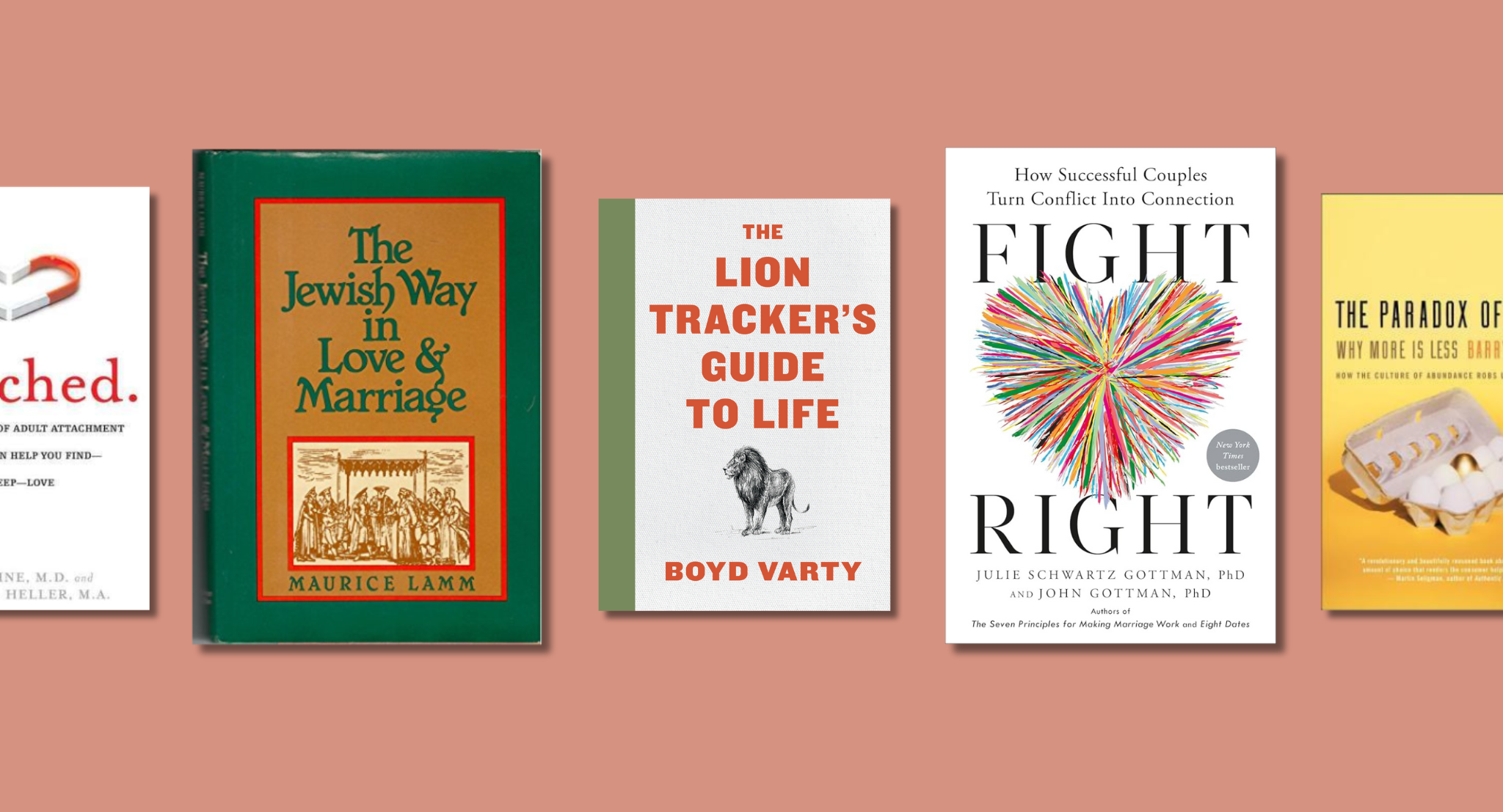
- Dr. David Schnarch argues that successful long-term partnerships require “differentiation”: the ability to maintain a solid sense of self while in intimate connection with another person.
4. Love Deepens Through Commitment: Why Initial Feelings Are Just the Beginning
The Torah tells us that Yitzchak brought Rivka into his mother Sarah’s tent, “and he loved her.” The text is clear that love was present from the start. The order is instructive, however, not in suggesting love comes after marriage, but in teaching that the initial love was the starting point, not the final destination.
Robert Sternberg’s triangular theory of love proposes that lasting love consists of intimacy, passion, and commitment. What matters isn’t just whether these elements are present at the wedding, but how they evolve over decades. Passion and physical intimacy naturally fluctuate and may diminish over time. Emotional intimacy, however, can deepen profoundly through vulnerability, shared challenges, and accumulated history together. Commitment provides the stability that allows emotional connection to grow even as initial intensity fades.
This reframes what we should assess before marriage. The critical question is not just “Am I in love?” but “Is this the kind of love that can grow and evolve through decades of change?” This requires assessing the compatibility factors that determine whether initial love matures into a lasting partnership, such as whether you share core values that will guide you when feelings waver or if you can navigate conflict constructively.
When we prioritize feelings before commitment, we remain in perpetual evaluation mode, undermining the vulnerability and investment required for deep intimacy to develop. Esther Perel, a renowned couples therapist, calls this modern problem “the tyranny of perfect choice,” which prevents depth from developing.
Chayei Sarah offers a different framework: Rivka wasn’t selected by checklist but by character revealed through action. Focus on genuine compatibility and capacity for partnership, recognize that initial feelings will evolve, and trust that committing to building a life together creates conditions for love to deepen rather than fade.
Rabbi Lord Jonathan Sacks writes about this dynamic in his commentary on Chayei Sarah. He notes that the Hebrew word for love (ahava) shares a root with the word for “give” (hav). Love, in Jewish thought, isn’t primarily a feeling we fall into, but an action we choose: giving of ourselves to another person. This connects directly to the character trait Rivka demonstrated at the well: giving more than requested, with no expectation of reward. Successful marriages are built by partners who approach the relationship asking “What can I give?” rather than “What will I get?” This active understanding of love as generous self-giving, combined with compatibility and commitment, creates the conditions through which initial affection matures into the deep, lasting love that sustains partnerships through decades of change and challenge.
Alexandra Solomon, a professor who studies relationships, talks about “relational self-awareness”—understanding that relationships develop us as much as we choose them. From this perspective, the question isn’t just “Is this the right person for me?” but also “Can I become the kind of person who builds lasting love with a compatible partner?” This shifts focus from finding perfect feeling to developing the capacity for commitment, vulnerability, and growth.
The parsha’s model offers perspective for those navigating modern dating’s pressure to feel absolutely certain before committing. You should feel genuine affection and attraction to your partner—that emotional and physical connection matters. But you don’t need to experience overwhelming, lightning-bolt certainty that eliminates all doubt. What you need is authentic care for this person, compatibility on the factors that sustain partnerships long-term, and willingness to commit to the ongoing work that marriage requires. Love at the beginning is essential, but it’s just the starting point. The real work—and the deepening love—comes through choosing each other repeatedly through decades of change, challenge, and growth.
5. Individual Agency: The Non-Negotiable Element
The story of Yitzchak and Rivka raises an essential question for any era: What role does individual choice play in determining life’s most consequential decisions? The Torah was given in a specific historical context with very different social-structures than ours, yet it’s meant to teach eternal principles. This parsha, read carefully, reveals a principle that transcends its setting: individual consent is not optional, it’s fundamental.
The narrative demonstrates this at its climax. After all the negotiations, after the match seems settled, Rebecca’s family cannot simply send her off. They call Rivka and ask her directly: “Will you go with this man?” Her response is immediate and clear: “I will go” (eilech). The Hebrew grammar emphasizes her agency—first person, active voice. The text stages Rivka’s voice as the decisive factor that allows the marriage to proceed.
This moment establishes a foundational principle in Jewish law. The Talmud (Kiddushin 2a-3a) develops this into clear halacha: marriage requires the genuine consent of both parties. A marriage conducted without mutual agreement is invalid.
This principle of total agency continues today—even when potential partners are introduced through friends or family, the individuals involved maintain complete authority over whether to pursue the relationship. Others may facilitate introductions, but the choice belongs entirely to the two people considering marriage.
Furthermore, this concept of agency extends beyond the choice to enter a marriage; it also includes the agency to exit one. This framework assumes mutual respect and baseline compatibility. It emphatically does not apply to unhealthy or abusive dynamics. In Jewish law, both partners must be able to exit a marriage that becomes untenable—which is why contemporary Orthodox communities increasingly require prenuptial agreements ensuring that divorces, when necessary, can proceed without one partner being trapped.
This modern application is the 21st-century extension of the same principle Rivka demonstrated. Agency is not a one-time event; it is the non-negotiable foundation of a dignified partnership.
Questions for Reflection:
- When have you seen someone’s character reveal itself through small acts of kindness or restraint?
- What qualities in yourself do you most want to bring into a lasting relationship?
- How do you think about the relationship between commitment and freedom—between choosing and being chosen?
This project is made possible with support from the Simchat Torah Challenge and UJA-Federation of New York. Learn more about the Simchat Torah Challenge and get involved at their website.