

Reading Jewish History in the Parsha is a weekly newsletter from 18Forty, where guest writers contribute their insights on Jewish history and its connection to the weekly parsha. Receive this free newsletter every week in your inbox by subscribing here. Questions, comments, or feedback? Email Rivka Bennun Kay at Shabbosreads@18forty.org.
At the very end of Parshat Ki Teitzei, the Torah commands us regarding the mitzvah of zechirat Amalek.
Remember what Amalek did to you on the way, when you went out of Egypt,
That he chanced upon you on the way and he cut off all the weak ones at your rear, when you were faint and weary, and he did not fear God,
And it will be, when Hashem your God gives you rest from all your enemies around, in the land which Hashem, your God, gives to you as an inheritance to take possession of, you shall erase the remembrance of Amalek from under the heavens. Do not forget! (Devarim 25:17-19).
What incident is Moshe referring to in these verses?
40 years prior to the soliloquy of Moshe Rabbeinu that is Sefer Devarim, the nation of Israel encountered Amalek for the first time. The former slaves were on their way out of Egypt, having finally been freed after hundreds of years in the land, when Amalek attacked them (Shemot 17:8-16).
The forefather of this evil nation was Amalek, a grandson of Eisav (Bereishis 36:12). The enmity which Eisav harbored in his heart towards Yaakov (ibid., 27:41) became a genetic DNA of hatred passed down from Eisav, to his grandson Amalek, to the Biblical nation of Amalek, to the enemy in each generation who rises to destroy us (cf. Passover Haggadah, Maggid, v’hi she’amda).
It is this battle—of Amalek against the nation of Israel and the God of Israel (keviyachol)—that lingers in the world still today.
וַיֹּ֗אמֶר כִּֽי־יָד֙ עַל־כֵּ֣ס יָ֔-הּ מִלְחָמָ֥ה לַה’ בַּֽעֲמָלֵ֑ק מִדֹּ֖ר דֹּֽר
And he (Moshe) said: for there is a hand against the throne of God, a war of Hashem against Amalek from generation to generation (Shemot 17:16).
What—and who—is Amalek? Rabbi Joseph B. Soloveitchik explains:
He is the personification of total evil, for whom immorality has become the norm. Amalek is obviously more than a Bedouin tribe. He is more than a particular group, nationality, or people. He is Everyman gone berserk, who has shed his divine image for that of Satan. This is the persistent villainy that the Lord bid us combat and against which He has sworn eternal enmity. It is for this reason that there is a positive Torah commandment: “Remember what Amalek did to you when you were on your journey, after you left Egypt…Do not forget” (Deut. 25:17, 19) (Soloveitchik, Rabbi Joseph B., Megillat Esther Mesorat HaRav [OU Press, Koren Publishers Jerusalem Ltd., 2017], p.82).
At the time that Amalek attacked, Moshe commanded Yehoshua to amass an army and fight back. While Yehoshua weakened Amalek, they remained undefeated. Hence, at the conclusion of the epic battle, Hashem commanded Moshe:
וַיֹּ֨אמֶר ה’ אֶל־מֹשֶׁ֗ה כְּתֹ֨ב זֹ֤את זִכָּרוֹן֙ בַּסֵּ֔פֶר וְשִׂ֖ים בְּאׇזְנֵ֣י יְהוֹשֻׁ֑עַ כִּֽי־מָחֹ֤ה אֶמְחֶה֙ אֶת־זֵ֣כֶר עֲמָלֵ֔ק מִתַּ֖חַת הַשָּׁמָֽיִם
And Hashem said to Moshe: Write this as a remembrance in the book, and place it in the ears of Yehoshua, for I will surely erase the remembrance of Amalek from under the heavens (Shemot 17:14).
The shoresh (root) ז.כ.ר plays a prominent role in the Biblical narratives surrounding the battle with Amalek. Zechira is an operative word—as evidenced in the above phrase—at the time of the initial battle, and it is the word that Moshe chooses, at the end of his life, when commanding the nation regarding Amalek.
The importance of memory to Am Yisrael cannot be overstated.
Am Yisrael is not only a nation that lives in the present and looks towards the future; it is a nation that is founded in—and rooted to—our long historical memory.
At the very end of his long, glorious, productive and inspiring life, Moshe Rabbeinu—about to physically take leave of the people forever—reminds us of the importance of connecting to the past. Invoking the power of memory, Moshe exhorts the nation and declares:
זְכֹר֙ יְמ֣וֹת עוֹלָ֔ם בִּ֖ינוּ שְׁנ֣וֹת דֹּֽר וָדֹ֑ר שְׁאַ֤ל אָבִ֨יךָ֙ וְיַגֵּ֔דְךָ זְקֵנֶ֖יךָ וְיֹֽאמְרוּ־לָֽךְ
Remember the days of old; reflect on the years of many generations. Ask your father, and he will tell you; your elders, and they will say to you (Devarim 32:7).
Commenting on the battle with Amalek, and God’s command to Moshe to remember, Rabbi Soloveitchik teaches:
Inscribe this [as] a memorial in the book (Shemos 17:14). The eternity of the Jewish nation is based upon continuity, and this continuity in turn is based mainly on memory. Here lies the fundamental difference between the non-Jewish and the Jewish nation. The world etches its history on tablets, stones, statues and pyramids, while our cultural history is based primarily on memory. At the same time that Moses commanded Joshua to write, he also commanded him to remember. While the modern world suffers from memory deficit, our attaining the State of Israel is thanks to the eternal memory of Knesses Yisrael (Soloveitchik, Rabbi Joseph B., Chumash Mesoras HaRav Sefer Shemos, ed. Dr. Arnold Lustiger, [OU Press, 2014] p.143).
In a powerful essay on the relationship between history and memory, Rabbi Lord Jonathan Sacks notes that it is “remarkable” that “biblical Hebrew has no word for history.” He continues:
Modern Hebrew had to borrow a word: historia. The key word of the Hebrew Bible is not history but memory. Zakhor, the command to remember, occurs time and again in the Torah … The word zakhor in one or other of its forms occurs no fewer than 169 times in the Hebrew Bible. As Yosef Hayim Yerushalmi notes, “Only in Israel and nowhere else is the injunction to remember felt as a religious imperative to an entire people” …
This was Moses’ injunction to future generations … Jews were to become a people of memory … The Hebrew verb zakhor signifies more than a consciousness of the past …We remember for the sake of the future, and for life (Sacks, Rabbi Jonathan, The Jonathan Sacks Haggada, Ed. In Chief, Gila Fine [Maggid Books, 2016], pp.35-38).
Zachor—we remember that Amalek attacked, and revels in the destruction of, the weak and defenseless ones.
Zachor—we remember the brutality of their attacks, throughout all generations, and the sadism with which they come to prey, injure, torture, and kill (see Rashi to Devarim 25:18).
Zachor—we remember those martyred by the Romans, the Crusaders, the Church and Inquisition, the Cossacks, the pogroms, the blood libels, and massacres.
Zachor—we remember the holy victims of the Shoah—amongst them, the families of all my four grandparents—who sanctified God’s Name in flourishing communities throughout Europe in life, and then, in death.
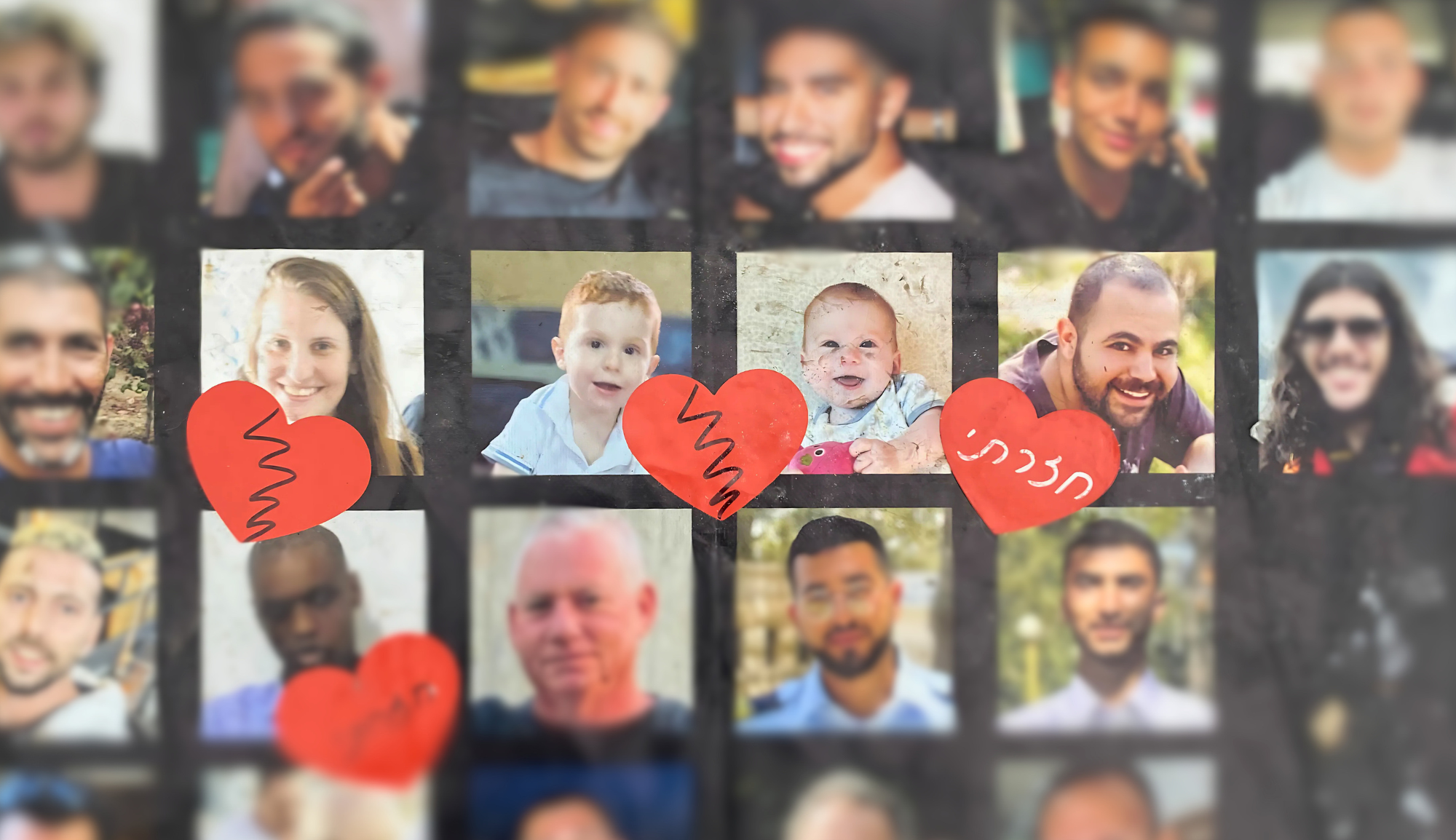
Zachor—as we approach the second year since Simchat Torah 5784 (October 7, 2023) we remember the 1,200 kedoshim murdered solely for being Jews in the land of Israel.
Zachor—we remember Carmel Gat, Eden Yerushalmi, Hersh Goldberg-Polin, Ori Danino, Alexander Lobanov, and Almog Sarusi, may God avenge their bloods, executed by their tormentors—after surviving 11 months in hellish captivity—only 24-48 hours before the IDF reached them.
Zachor—we remember the ongoing horrific plight of Omri Miran, Alon Ohel, Bar Kupershtein, Nimrod Cohen, Gali and Ziv Berman, Evyatar David, Eitan Mor, Rom Braslavski, Matan Angrest, and the other remaining hostages.
While the world suffers from memory deficit, and chooses to forget, Zachor—we remember, lo tishkach—we shall not forget.
My grandfather, Yitzchak ben Moshe, Isaac Kaftan z’l, wrote of his experiences during the Shoah. He was from the town of Krasnik, Poland and was 24 years old when the war began. In the Book of Krasnik, compiled by survivors after the war, my grandfather wrote of his experiences with the Amalek of his day. In addition to losing his family to the Nazi beasts, his first wife, Reitza (whom he married in December 1939), and their daughter, Devorah Hy”d (born January 1941), were murdered in the Shoah.
The following is an excerpt from his memoirs, entitled “In Seven Camps in Three Years.” The original was written in Yiddish, and some years ago, my mother had it professionally translated into English.
I did not see my father or my sisters any more. In the morning, on Shabbos, when they hurried us from the barracks, 83 young Jews were chosen to work – and the older men, women and children, were gathered before our eyes and were hurried to the train station where there were already the other Jews from the city. We saw with our own eyes how they herded everyone into the box cars. When the transport with the unfortunates rolled past, their final “Be well!” wafted to us through the dilapidated openings.
A few days later, we were driven from Pi Park and (they) took a count to determine whether the count corresponded to the earlier one – 83 men. Meanwhile, there arrived at the camp Natan Meizels and his brother-in-law, Alter Edelstein, may G-d avenge his blood. When we were recounted and they saw (that there were) two extra, they took out the first two from the row – I was one of them – and they said we would be shot immediately. I saw the black revolver aimed at me and looked Death in the eye. At the last minute, our foreman approached the SS man and risked payment of a sum of money. They let us go.
After that they drove us to Budzin, where there were already hundreds of Jews from Krashnik and the area. And here the true hell began. As soon as we were delivered to the murderous commandant we had at once a free morning before we went out to work, they told everyone to march single file. He removed from the line whoever did not please him. As we exited the camp, those who had been removed (from the line) were taken to a grave and shot. That day, one hundred and five Jews were killed…
Reb Peretz Feder and I slept on one pallet and talked continually about the murderers that they were sent by G-d and their end is near. We suffer now so that Moshiach will come. Whoever will survive this hell will see a Jewish state…
Zachor—we remember, but not in order to wallow in the past. We remember to build the future.
Zachor—we remember for the sake of the longevity, eternity and continuity of our nation.
Zachor—we remember for the ongoing building of our old-new land, Eretz Yisrael-Medinat Yisrael.
Zachor—we remember so that we remain a beacon of light, morality, goodness, hope and triumph in a world often beset by clouds of heavy darkness.
Zachor—we remember so that our children will walk in the path of their fathers, and their fathers before them, and live proudly Jewish lives.
Zachor—we remember so that when the nations who rise to destroy us ultimately fall, Am Yisrael—beaten but never extinguished—remains strong and ever-present.
Zachor—we remember that God has protected our nation since time immemorial and that He will continue to do so until the End of Days.
In a most-famous piece, Mark Twain pondered the existence of the Jewish nation, and he wrote:
The Egyptian, the Babylonian, and the Persian rose, filled the planet with sound and splendor, then faded to dream-stuff and passed away; the Greek and the Roman followed, and made a vast noise, and they are gone; other peoples have sprung up and held their torch high for a time, but it burned out, and they sit in twilight now, or have vanished. The Jew saw them all, beat them all, and is now what he always was, exhibiting no decadence, no infirmities of age, no weakening of his parts, no slowing of his energies, no dulling of his alert and aggressive mind. All things are mortal but the Jew; all other forces pass, but he remains. What is the secret of his immortality?
The secret is our adherence to the Torah and her mitzvot. The secret is our commitment to education and our love of learning. The secret is the unity of our people. The secret is our tenacity of spirit. The secret is our long and hallowed memory. It is our memories of generations come and gone, of our Biblical fathers and mothers, of righteous Jews in every time who sanctified God in life, and often, in death; our memories of our homeland, from which we were exiled so long ago, and to which—in modern times, and by the good grace of God—we recently returned.
Zachor: A nation of memory shall not fall, nor shall she falter.