

I Read This Over Shabbos is a weekly newsletter about Jewish book culture, book recommendations, and modern ideas. Receive this free newsletter every week in your inbox by subscribing here. Questions, comments, or feedback? Email Rivka at Shabbosreads@18forty.org.
At the beginning of 2020, when I was looking to embrace my Judaism despite having virtually no background, I heard this thing called Daf Yomi was starting over. Curious about it, I put on the Tablet’s Take One Daf Yomi podcast, and on its first episode, I heard someone named David Bashevkin explain that Brachos 2a says you’re supposed to say something called the Shema every night before midnight. So I started doing that.
“I’ll slowly learn and do everything the Talmud says,” I thought, “and in seven-and-a-half years I’ll be a fully functioning Jew.”
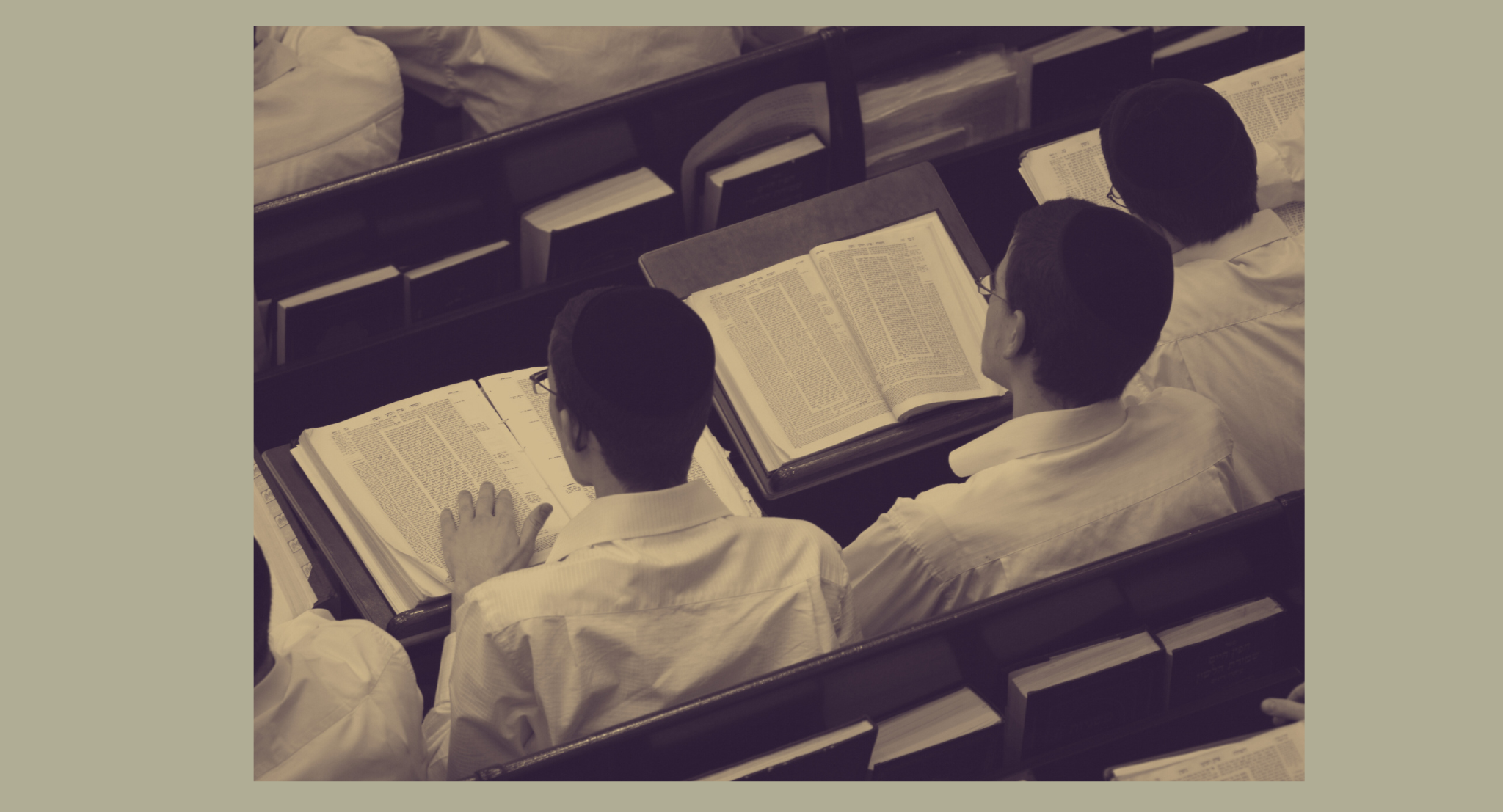
By the time we got into Maseches Eruvin, it became clear to me that the Talmud was not a how-to guide, and that quarantining in near-total isolation and expecting to find the path to fulfillment exclusively in books was not going to cut it. Evidently, I did not pay enough attention to what David said earlier in the first episode: “Daf Yomi is that metronome, that beat, that cadence of starting to merge the rhythms of your day into the text itself.”
Dr. Haym Soloveitchik, in his famous 1994 essay, “Rupture and Reconstruction,” addresses this exact dissonance, between the recent expectation of learning being a means to an end versus the Old Country model of learning as a practice in itself:
Study of primary sources is a slow and inefficient way to acquire information, but in traditional Jewish society, the purpose of study (lernen) was not information, nor even knowledge, but a lifelong exposure to the sacred texts and an ongoing dialogue with them. Lernen was seen both as an intellectual endeavor and as an act of devotion; its process was its purpose. The new generation, however, obtained its knowledge in business and daily affairs, in all its walks of life, from books, and these books imparted their information in a self-contained, straightforward and accessible format.
The thrust of Dr. Soloveitchik’s thesis is that, after the “mimetic” way of Jewish life (of learning Judaism by absorbing it from those around us) was eroded by modernity and all but destroyed by the Holocaust, we largely turned instead to the pages of books.
The issue, Dr. Soloveitchik explains, is that “Books cannot demonstrate conduct; they can only state its requirements.”
While all of this is true, and while Dr. Soloveitchik does not at all, God forbid, suggest that we try to undo the culture of book-learning, I still can’t help but find text-study to be the most pleasurable and rewarding part of Jewish life.
When I’m deep into several tabs on Sefaria.org, Chabad.org, and HebrewBooks.org, I often wonder what my ancestors would have given to have this kind of access to information, of almost any Torah book you could imagine, as well as explanations, translations, and shiurim. Sure, they learned their Judaism from their parents because they could, but also because they often had to. Most people didn’t have the luxury of being a Torah scholar, the way just about all of us do today.
Dr. David Ellenson of the Reform Movement joked that, though his father spoke Yiddish and put on tefillin every day, if you were to try to have a serious conversation about Jewish thought with him, he might say, “The Tannaim? What are they, some band you’re talking about?”
As lovers of books, we wouldn’t be willing to trade what we have now for a return to the world in which we could be sure of the halacha just by virtue of having seen what our parents did, even if we could. The joy of being a bibliophile is just too great.
So how are we to add some of the spirit of the Old Country to the culture of books we hold so dear? I don’t have an answer, but I think it has to start with projects such as I Read This Over Shabbos, with turning our otherwise solitary reading experiences into insights and reflections we can share with others. Perhaps we can salvage some kind of mimetic tradition by being book-obsessed together.