

Reading Jewish History in the Parsha is a weekly newsletter from 18Forty, where guest writers contribute their insights on Jewish history and its connection to the weekly parsha. Receive this free newsletter every week in your inbox by subscribing here. Questions, comments, or feedback? Email Rivka Bennun Kay at Shabbosreads@18forty.org.
This Rosh Hashanah will be my last in the UK after 12 years of serving as Senior Rabbi to the Spanish and Portuguese Sephardi Community of the UK—the oldest Jewish community in Britain. The weight of that awareness colors my reflections this year. I am contemplating the years that I’ve spent here—the experiences, challenges, achievements, friendships, colleagues, and the sharing that I have had the privilege to be a part of. And now, as my family and I prepare to close this beautiful chapter of our lives and move to Israel in December, I am attempting the work of integrating these years into the whole of my life.
I’ve come to believe that the central spiritual task of our lives is integration: both the integration of the various parts of ourselves and of our people.
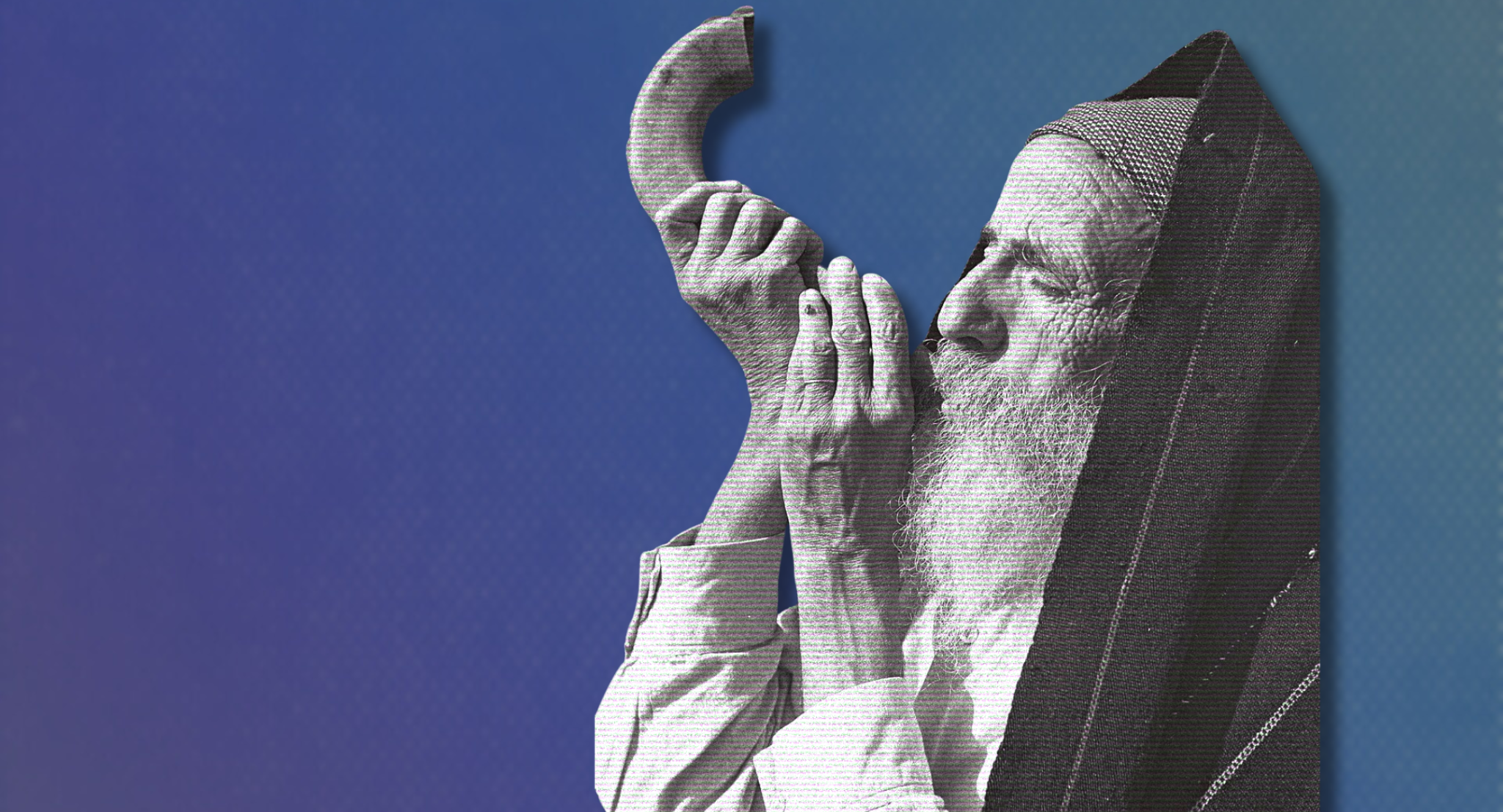
Rosh Hashanah is a time in which that work is most appropriate. Rosh Hashanah is not introduced to us in the Torah as a day of judgment, or of awe, or even of prayer. It is described only as a day of memory: Yom Zikaron (Vayikra 23:24) and Yom Teru’ah (Bamidbar 29:1), a day of sounding the shofar. Memory and shofar are its most primal markers. Everything else—the prayers, the melodies, the rituals, even the Machzor itself—is later adornment. Take it all away, and you are left with shofar and memory.
Memory is in essence about integration. It is in memory that all our experiences and knowledge are collated into a conscious, working identity. The Yom HaZikaron, the Day of Memory that is Rosh Hashanah, is a day for integration, and thus, integrity.
Integration is the root of integrity. People of integrity are valued because they are coherent and consistent. And in that consistency lies trust and dependability. They are recognisably themselves in every context, and one can depend on the fact that they will continue to be so. They do not live divided against themselves. Such a person commands respect—not because they are flawless, but because they are whole.
To live with integrity is among life’s greatest challenges. We live scattered lives. We are one person at work, another at home, yet another online. We speak differently to our parents than we do to our partners. We show our friends one part of ourselves and hide another from our children. These parts are not problematic. We are not meant to be homogenous people, acting the same no matter the setting. But in all the elements of the self, we often lack integration. It is difficult to find a home base of consistency within ourselves. In Judaism, we might call this home base the soul. The fragmentation of daily life becomes so familiar that we can get lost in it and lose ourselves. But the soul notices. And this is what the shofar comes to awaken on Rosh Hashanah.
It is meant to rouse us from the unconscious self-fragmentation of daily living. It prompts us to ask ourselves: Who am I when I am whole? What parts of myself have I exiled to the dark?
In this sense, Rosh Hashanah precedes Yom Kippur for good reason. We cannot atone for a self we have not yet reclaimed. We must first gather our disparate selves and meet God as whole as we are able—or at least willing—to be. And that requires honesty, and a willingness to identify and articulate the various aspects of ourselves—even the hidden ones.
But integration is not only a personal task. It is a national one. For we, the Jewish People, are also scattered. We are splintered across continents, cultures, and ideologies. We are held together, often, by habit or history more than by affection or understanding. To celebrate Rosh Hashanah while nursing resentment toward other Jews is a contradiction. To hear the shofar and yet refuse to hear the fears, struggles, and plight that vex our brothers and sisters—whether in Israel or in the diaspora—is a kind of spiritual deafness. The call of the shofar is a summoning of souls.
Yes, unity is difficult. Indeed, it often feels out of our reach. Unity does not require uniformity. It requires that we allow ourselves to see the whole—that we see one another not as interruptions to our ideology, but as essential organs in the same body. That is not to say that every opinion is valid and every choice is to be accommodated. These days are as much about rectification and repair as they are about integrity and integration. But they are so because we, as a people, open the dialogue for it every year at this time. And doing so for generations immemorial has formed who we are.
Included in this service is the recognition of our collective past. On Rosh Hashana, during the Zichronot section of Musaf, we say before HaKadosh Barukh Hu: Atah zocher ma’aseh olam—You remember the acts of history. As we engage in mutual judgment with G-d on this auspicious day, we too must endeavour to recall the acts and events of our people through history. We must this year, at a time when it feels like the world has reclaimed its penchant for antisemitism, remember that we have carried on through time not simply by fluke, but by a deep mutual conviction between us and G-d to carry on and choose life. It is more than rhetoric when we say on these days, zochrenu lehayim! Remember us for life! We proclaim our commitment not just to living, but to life itself in all its challenges and fullness. Integration in this sense means seeing our Judaism as more than a commitment to Torah and mitzvot and a dedication to righteousness and justice. It is also a dedication to taking our place in the ever-unfolding story of our people. It means seeing ourselves as essential players in the ongoing saga of the Jewish People.
When we read Tanach, we are not just reading ancient stories. We are reading the lives and deeds of our own ancestors. When we study Gemara and halacha we are not just determining Torah law, we are ourselves engaging in the live and dynamic discussions with Rebbi Akiva and the Rambam. In this we must find our true strength as a people.
This Rosh Hashanah, I invite you to join me in the work of integration. Begin by integrating the self: take a quiet hour, draw a timeline of your life, write down the major events—both positive and negative—that have shaped you. Then go further. Sketch a spider graph—list the domains of your life: family, work, friendships, study, service. Ask yourself: Who in my life knows all of these parts of me? Is there a central aspect of myself that binds them all? Articulate your whole self. Bring it into speech. Bring it into the world.
And from there, extend outward. Reach for another Jew who confounds you—a family member you’ve not spoken to, a congregant you avoid, a Jew in Israel whose world feels far from yours. Even if you cannot speak with them, try to wish good for them, see them as your brother or sister, pray for them.
Integration is not only inward. It is collective. We need each other. And we will not survive divided.
And finally, take your place as a full-fledged member, rather than an observer, of your remarkable people.
The sound of the shofar is ancient and primal. It cuts through the clutter. It says: Wake up. Come back. Remember who you are.
May God bless the Jewish People with grace and prosperity. May we see the return of our hostages, an end to the war in Gaza, and an end to antisemitism. May we know peace, in the fullness and pride of our whole identity.