

Editors’ Note
18Forty is proud to present The Dance of Teshuva, a collection of essays and poetry by Rav David Ebner zt”l on the Days of Awe. When Rav Ebner’s students approached 18Forty about the possibility of collecting his writings in a reader such as this, we jumped at the opportunity, recognizing how deeply his teachings resonate with so many of the religious themes we have tried to explore here at 18Forty.
We hope that our readers and listeners will find meaning, joy, and comfort in Rav Ebner’s teachings. You can read the introductory letter from Rav Ebner’s students below, and download and print the full reader here.
With deep wishes for a shana tova umetuka, a sweet and happy new year, for you and your loved ones.
Rabbi Dovid Bashevkin and the 18Forty Team
Click Here to Download and Print The Dance of Teshuva in PDF Format
Why This Reader? A Letter from Rav Ebner’s Students
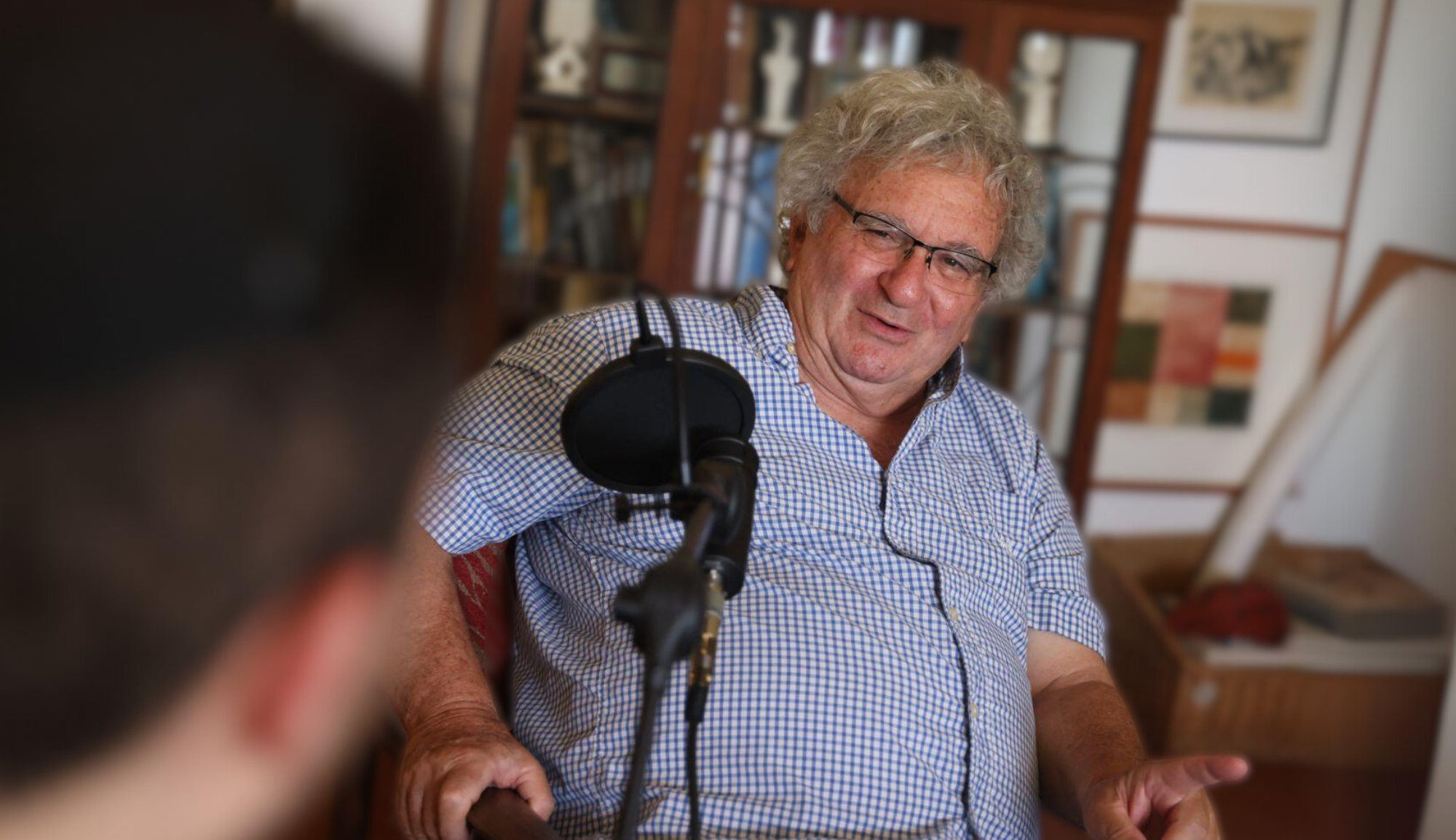
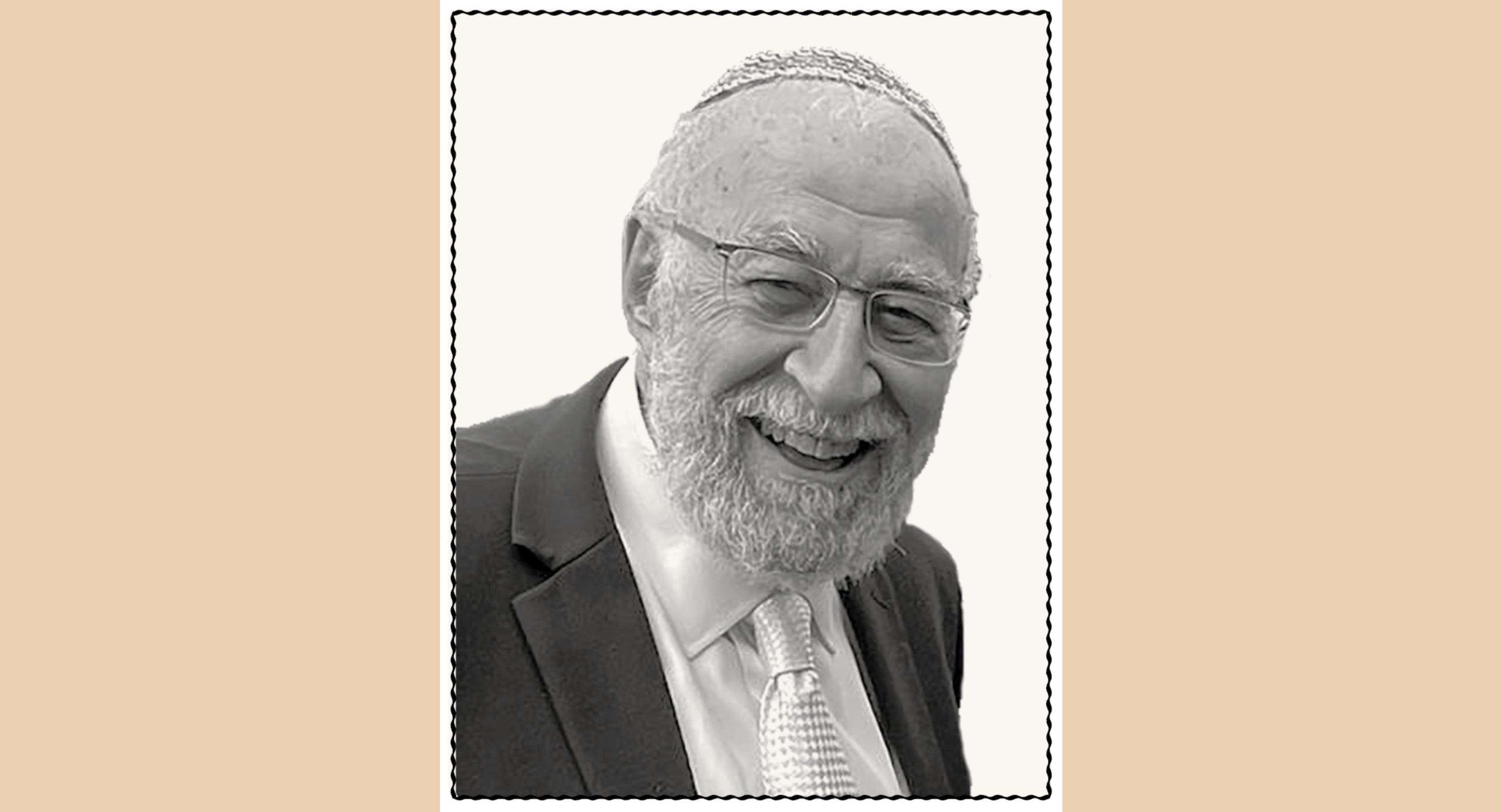
Rav David Ebner zt’l liked to say that the length of an introduction should be inversely proportional to your respect for the person being introduced. He would have preferred no introduction to this book at all.
So, first, plainly: What follows are his thoughts for the teshuva season. They are short pieces, composed mostly of Torah from the schools of Pshischa, Kotzk, Rebbe Nachman, the Alter of Novardok, with Thoreau and Wordsworth wandering through when they have something to add. They were not written to establish anything about their author, though they do say a lot about his intellectual range and understanding of the human condition. They were written for reflection in the weeks when a Jew is supposed to be doing something about his or her life.
He died in Elul, one year ago, at 80, in the season he had spent his life teaching so passionately. Many of us cannot enter these days without hearing his voice, rousing us with lines from the Rambam’s Hilchot Teshuva (“uru yesheinim misheinatchem … awake sleepers, from your slumber”) or describing the story of characters in the Jewish story awakened to repentance. “Yesh koneh olamo besha’a achat”—”there are those who acquire eternal life in a single hour, a single moment, a single turn.”
Born in Bradford, Pennsylvania, in 1945, Rav Ebner received semikha at Yeshiva University. He trained as a sociologist and a Talmud scholar. In 1982, he moved with his family to Israel. For more than two decades he served as mashgiach ruchani at Yeshivat HaMivtar, and then as rosh yeshiva and mashgiach ruchani at Yeshivat Eretz Hatzvi. He was a pioneer educator and a lamdan (scholar) of the first order who was happiest teaching the beginners’ shiur.
He loved teaching Torah, he loved learning Torah, and he loved struggling with Torah. He railed against the curse of a life as an am ha’aretz, an ignoramus, and he was also its best antidote. “I never met a Jew,” he said, “who wasn’t interested in knowing something about what the Torah teaches. I have met those who didn’t want to be missionary targets; who didn’t want condescension; and who didn’t want to do anything. But nary a one who wasn’t curious.”
As much as he railed against ignorance, he also worried about the literate. He liked German sociologist Max Weber’s phrase for it, “specialists without spirit, sensualists without heart.” And he had his own: We were not to become mere “bureaucrats of Divine, Inc.” As he put it in Tradition, “inwardness, spirituality, and the living presence of God may be the buzzwords of our detractors, but that is no reason to treat them as anything less than critical if we are serious about spiritual excellence.” 18Forty has created content committed to these same ideas, invested in a rich, textured, spiritually fulfilled Orthodox Judaism, and we are grateful that their team (and its leader, Rabbi Dovid Bashevkin) have partnered with us to distribute these essays.
Rav Ebner was a poet, in an age where there are too few poets in the world of rabbis and yeshivot. He published three volumes of his own work (including some poems appearing in this volume), and revered the great writing of others. It was not unusual for him to quote Milton, Galway Kinnel, and Denise Levertov in one sitting in the beit midrash, and to put them in conversation with rabbinic voices. He constantly reminded us that we were learning, reading, singing poetry every day across our davening, and living with it, hashira hazot, in our Torah learning.
He quoted Yeats, who said: “We make out of the quarrel with others rhetoric, but with ourselves, poetry.” The poetry, the soulfulness, the davening, the niggunim (melodies), the merciless and endless prodding toward self-improvement—he modeled it for us in his own life, reminding us that inner conflict, self-doubt, and personal difficulty are not obstacles to insight but its source.
He was an endless striver on the Quest for Authenticity. He was not interested in fakery, imitation, or flattery, communally or personally. He taught us to love Torah for its own sake, but also that it was supposed to make us better people, with new ways of seeing and new ways of being. In his love for his wife and ezer kenegdo Shulamith, and his children and grandchildren, he brought these lessons to life.
The beauty of these short essays is that they represent exactly the kind of teacher Rav Ebner was: They speak, in equal measure, to the veteran of many seasons of teshuva and to someone entering his or her first.
We, his students, heard Rav Ebner say that the goal of a teacher is to free the student from the need of the teacher; in that, he did not succeed. But he left us this wisdom for the season of teshuva, and he was blunt about what to do with it: put the book down at this moment and stand before Him.
His Torah insists that teshuva is, in the end, a single turn. And then, as he writes here of the holy goat whose horns no longer reach the sky, go outside when evening falls and look up. The stars are waiting for us to begin the melody.
—His Students, Elul 5786