

Editor’s Note: It is with deep sadness that we note Rabbi Avi Cohen, who is mentioned extensively in the article, passed away shortly before this article’s publication. The author shared that the beit midrash was packed last week with study partners in tribute to Rabbi Cohen and his vision. May his memory be a blessing.
During a recent discussion on Jewish denominations, Rabbi Bashevkin highlighted that Orthodox Jews typically receive more intensive Jewish education. He suggested it would be valuable for them to partner with non-Orthodox Jews to share this knowledge.
What many may not realize is that such efforts are already underway, particularly within the more right-wing segments of the Orthodox community. Two distinct models have emerged: Partners Detroit, and the national programs Partners in Torah (sponsored by Aish) and TorahMates (sponsored by Oorah). Each offers meaningful opportunities for Orthodox Jews to share their deep Torah knowledge with those seeking to deepen their Jewish education. These partnerships create lasting relationships that break down stereotypes and misconceptions on both sides, fostering a sense of shared Jewish identity that transcends denominational boundaries.
The Detroit Model: Learning Together in Person
Partners Detroit was founded in 1994 by Yeshiva Beth Yehudah. The yeshiva’s leadership recognized that their educational mission shouldn’t be limited to their own students. They wanted to serve the broader Jewish community as well.
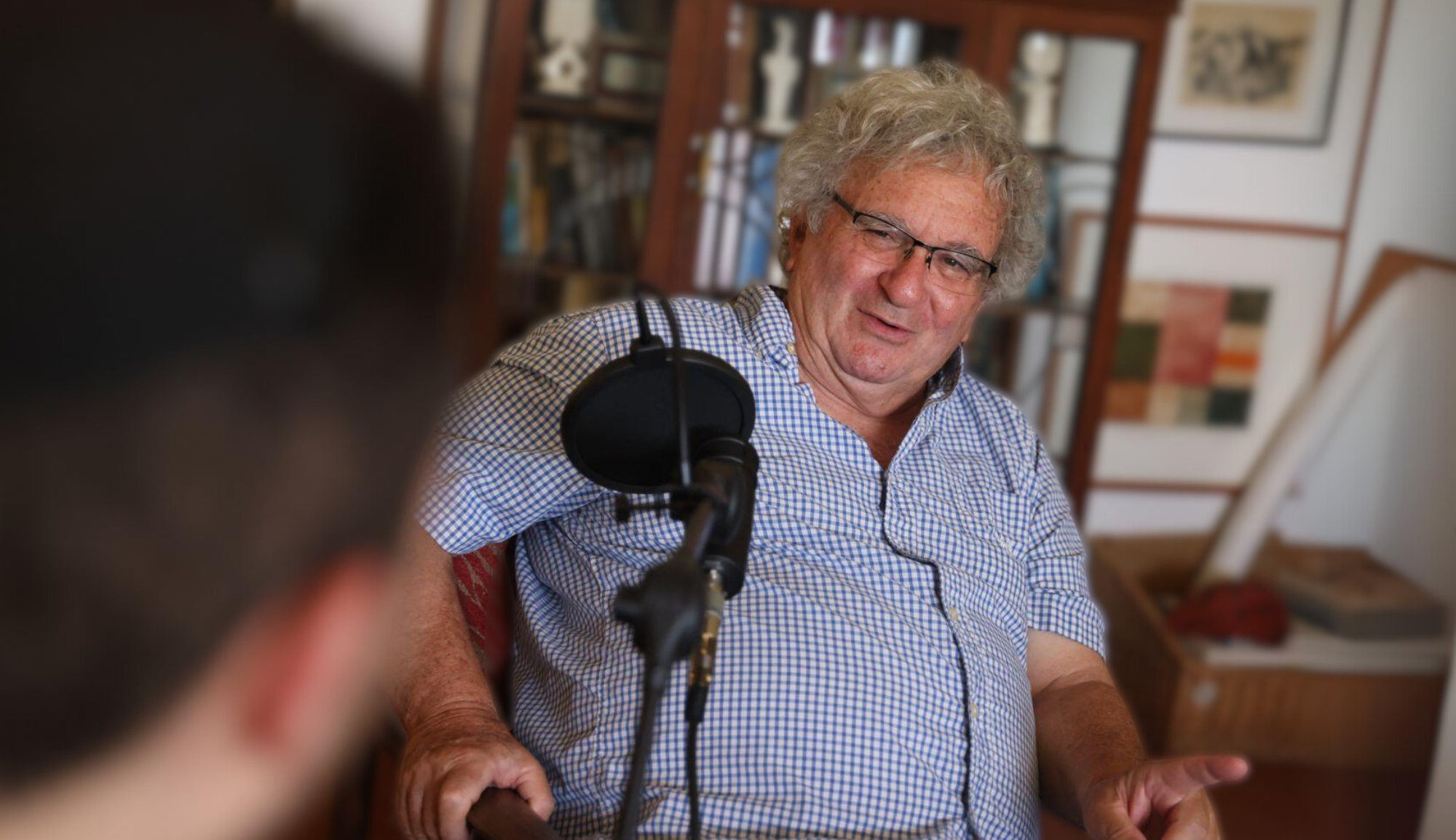
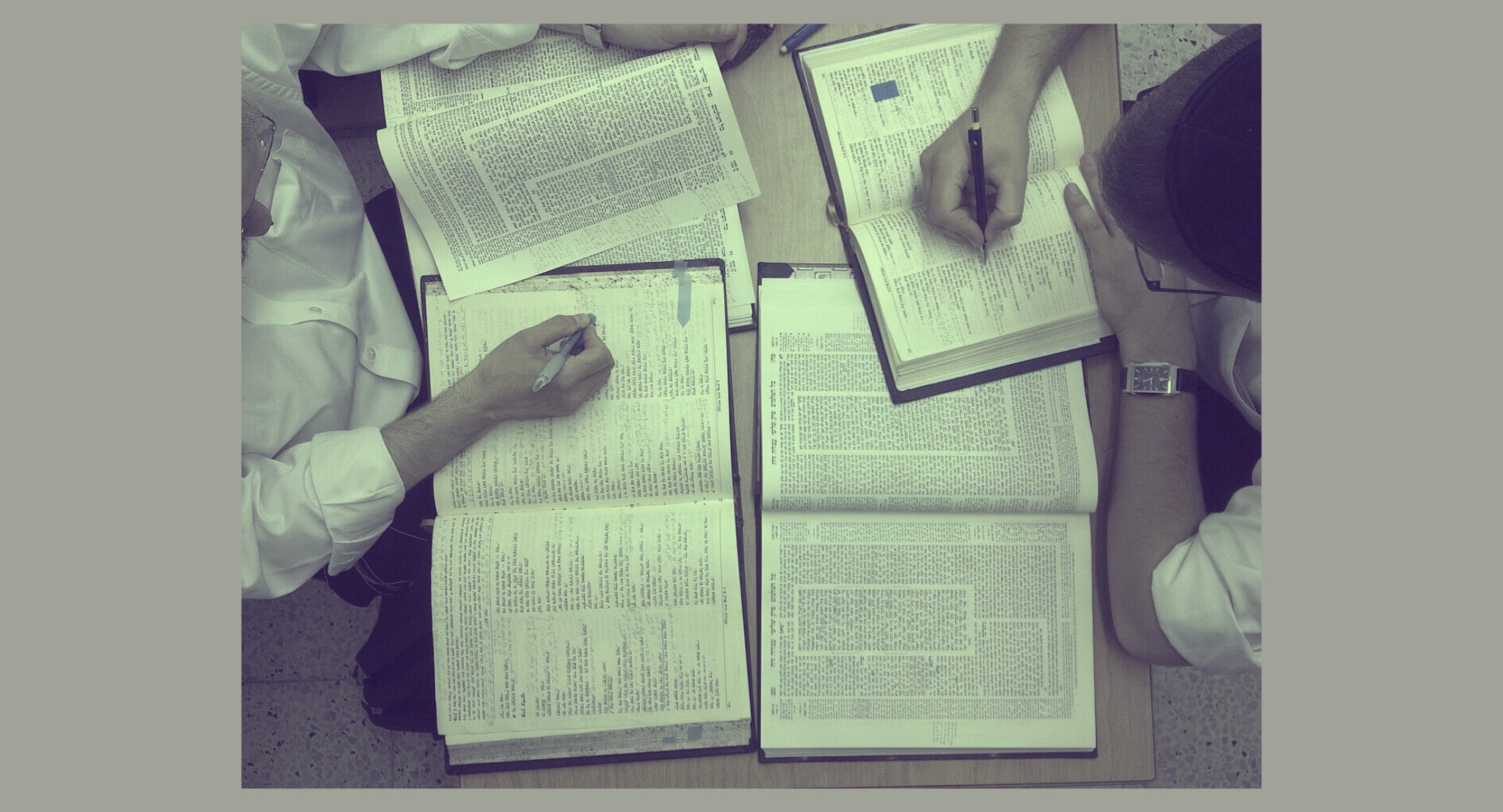
The program started modestly with staff members, some parents, and five non-Orthodox participants. Today, 350 chavrutot (study partners) learn together weekly. According to Rabbi Avi Cohen, the program’s senior educator, “The cornerstone of our program is Tuesday night beis medrash.” Before COVID-19, every Tuesday evening brought Orthodox and non-Orthodox community members together to study in person. While half the pairs now continue on Zoom, 150 men and women still gather in person with their learning partners.
Rabbi Cohen describes a moving scene: a non-Orthodox participant arriving early on Tuesday evenings, walking to the bookshelf to take out an ArtScroll Stone Chumash, and preparing for the week’s Torah portion. He is the same person who, just a year earlier, hadn’t even known there was a weekly Torah reading. The yeshiva’s study hall buzzes with the sound of learning as parents and staff study various Jewish texts with their partners.
Each week, participants receive a booklet with sources on the weekly Torah portion to use as a study guide. While some partners follow the booklet, others have developed their own learning paths over time. Some partners have advanced to Gemara study, others study Mishna, some study Tanach. Some partnerships have lasted over 30 years.
The program includes participants from across the spectrum, including leadership from non-Orthodox synagogues and the Jewish Federation. One notable side effect: The Detroit Federation now provides one of the largest allocations to Jewish education in the country, reflecting a communal understanding of education’s importance.
Rabbi Cohen attributes the program’s success to the chavrusa (learning partnership) model. Partners are paired based on shared interests, leading to genuine friendships. They celebrate life events together, and some non-Orthodox participants have donated classrooms at the yeshiva in honor of their partners.
What makes the program work? It’s non-judgmental and focused purely on learning. As Rabbi Cohen explains, “The ultimate goal is for people to savor the beauty of the Torah and its timeless relevance to our lives.”
The Distance Learning Model: TorahMates
TorahMates, a program of Oorah, offers a different approach that works across geography.
Beth, a divorced woman living in suburban Atlanta, was an active member of her Reform congregation when her children were young. She sent them to a Reform day school for part of their education. Her son eventually became Orthodox and studied at the Shaar, a kiruv arm of Yeshiva Sh’or Yoshuv in Far Rockaway.
When her son got engaged, Beth traveled to Far Rockaway for the aufruf and wedding. Her son insisted she spend Shabbat with an Orthodox family and walk to synagogue, a prospect that made Beth hesitant. Her son reassured her it would be wonderful.
Beth informed her hosts that she wasn’t Shabbat observant and would need to shower and blow-dry her hair Saturday morning. They told her she’d be staying in their guest suite and it wouldn’t offend them at all. The weekend left Beth wanting to learn more. She was welcomed warmly, felt comfortable, and enjoyed the singing and the beautiful way the family celebrated together. She was drawn by the immersive community experience of Shabbat. At the end of Shabbat, she told her hosts how much she had learned. They recommended she contact TorahMates to continue her education.
Back in Atlanta, Beth reached out to TorahMates and was paired with Elkie, a widow from Lakewood, New Jersey. They began learning by phone for an hour each week. Beth made her position clear from the start: “I am not going to become Shabbat observant, and I am not going to keep kosher. I am not going to change my lifestyle.” Her partner was completely non-judgmental, explaining that the purpose was simply to become educated about the richness of Jewish sources. Beth has learned about various nuances of Orthodox practice, which has brought her closer to her son and daughter in law. They usually learned by phone, though they switched to Zoom for the weeks when her partner traveled to Israel.
The summer after the wedding, Beth visited New York, and her partner arranged to see her cousin in Far Rockaway during that time. She invited Beth for lunch, and they spent a lovely afternoon together, their first in-person meeting, though they already felt connected.
This past December, Beth’s first grandchild, a boy, was born to her son and daughter-in-law. The bris was held in Far Rockaway early in the morning, and Elkie traveled from Lakewood to share in the simcha. They have developed a beautiful and lasting friendship.
Two Paths Forward
These programs demonstrate incredible opportunities for Orthodox Jews to share their knowledge and for non-Orthodox Jews to explore Jewish texts. When Jews from different backgrounds learn together, everyone gains: Orthodox participants share their expertise while being enriched by fresh perspectives, and non-Orthodox learners access profound traditions in a welcoming environment. Detroit’s model could be replicated in other cities, offering the unique experience of learning together in the energetic atmosphere of an Orthodox yeshiva. The distance-learning model works beautifully for long-distance relationships. Both Orthodox and non-Orthodox Jews are encouraged to avail themselves of these meaningful opportunities.