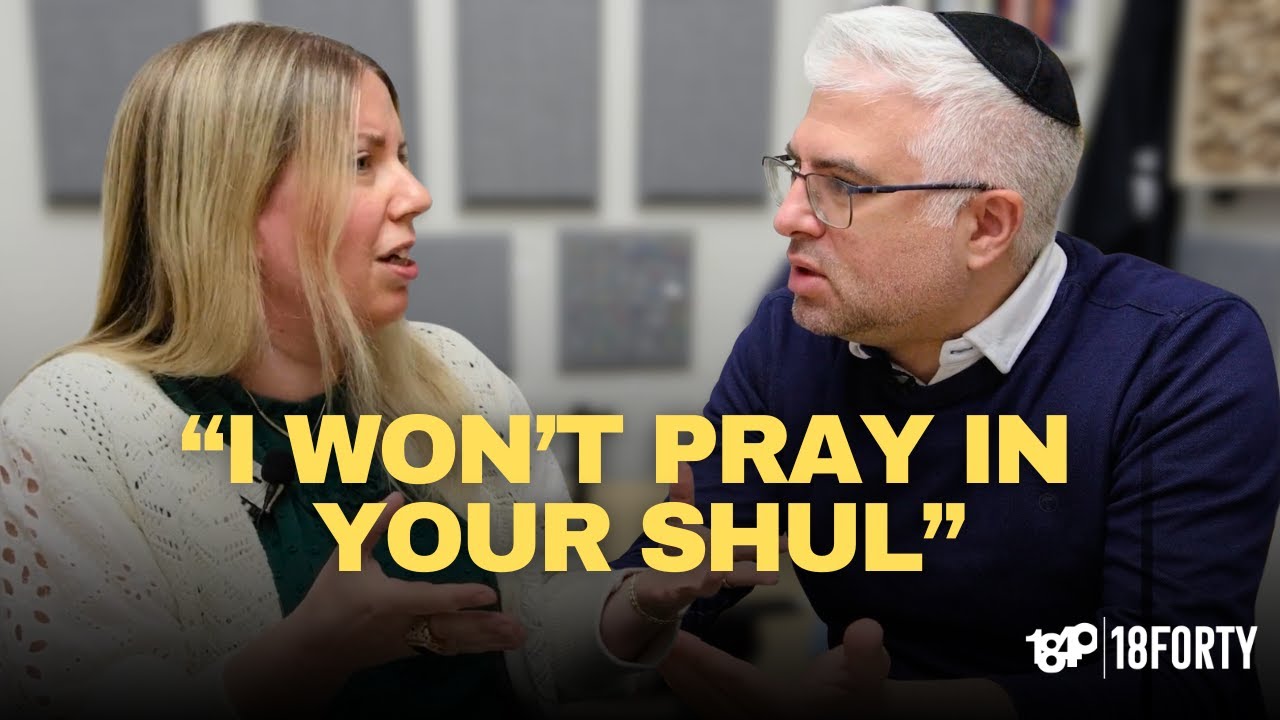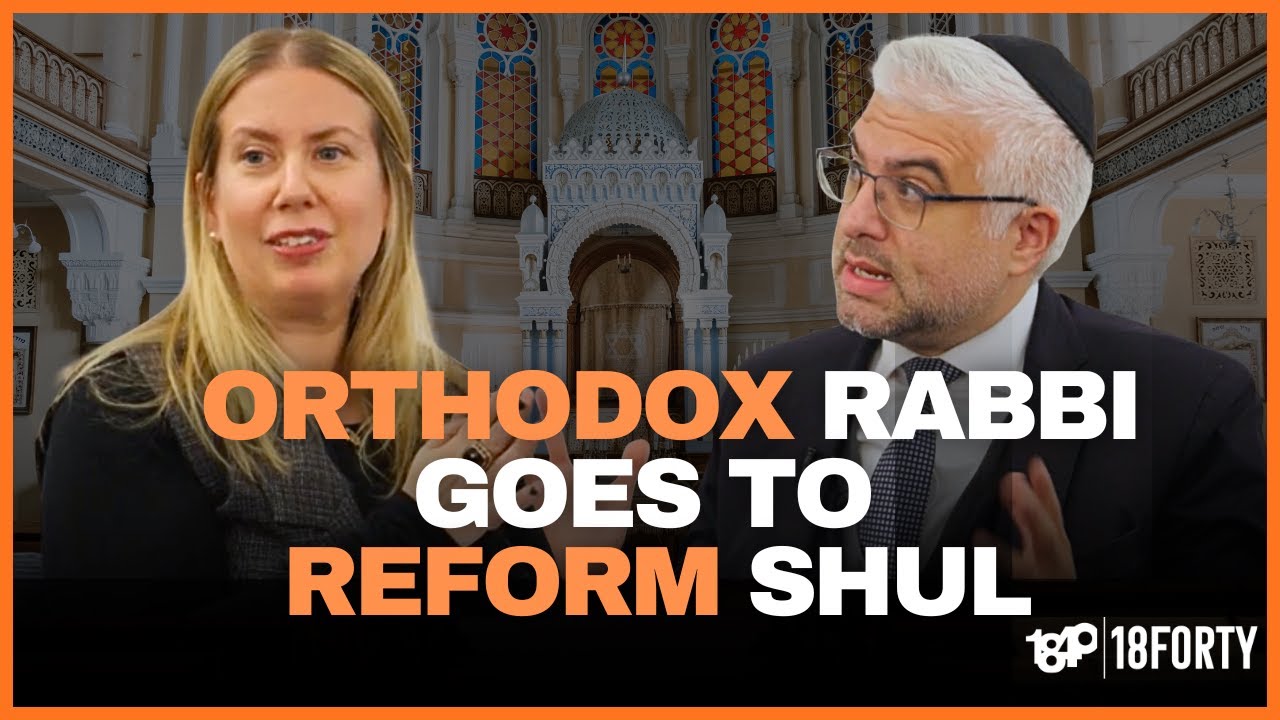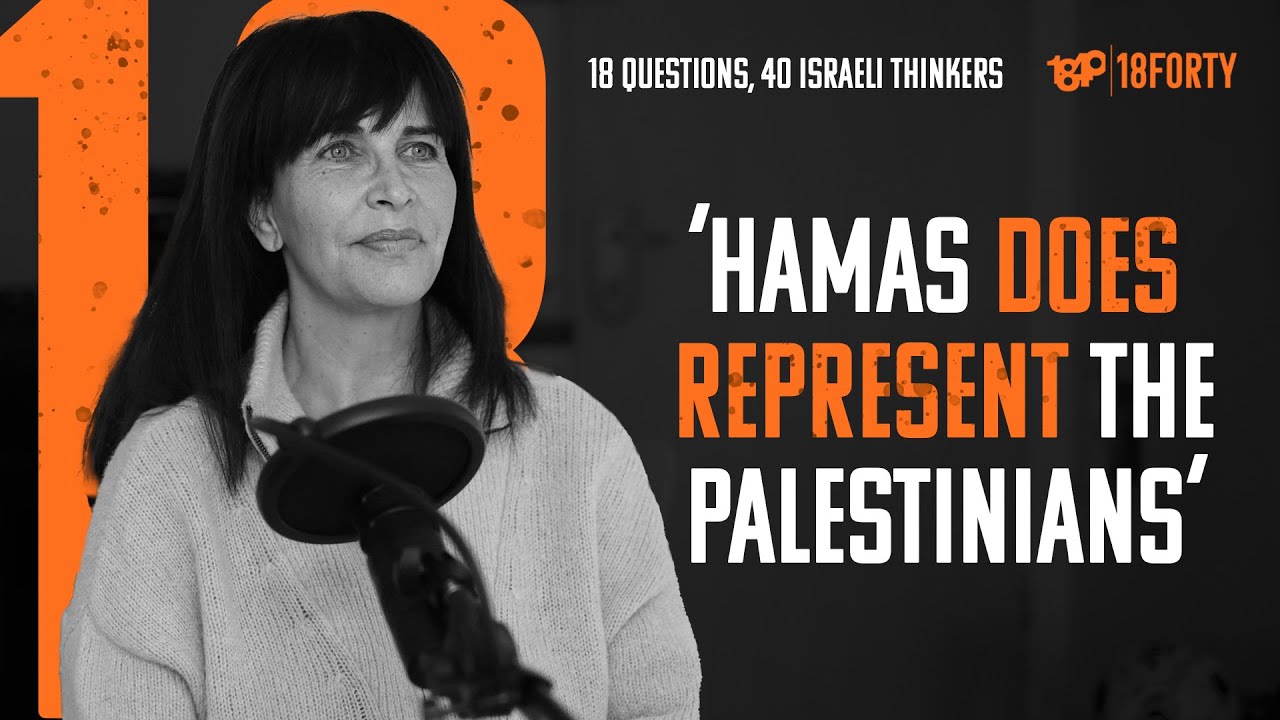



What opinions in the Jewish conversation are valid? Who gets a voice? Laura E. Adkins is the opinions editor for the Jewish Telegraph Agency, an international news agency, and serves as a gatekeeper of sorts of Jewish opinions. In her conversation with 18Forty, she spoke about her willingness to consider opinions different from her own, and the curiosity that drives her openness to differing people.
To consider the broader context of Laura’s role, and her thoughts on the many voices of the Jewish tradition, this week we are looking at the Jewish history of multivocality. To better understand 2020, we have to turn to 70 C.E., to Yavneh, the ancient Jewish city of learning, where this tradition began.
In the aftermath of the destruction of the second Beit HaMikdash, the sages escaped Jerusalem to Yavneh, and built the Oral Torah as we know it. It is in Yavneh that the Mishnah was organized, and it is in Yavneh that the great Jewish project of multivocality emerged. Professor Shaye J.D. Cohen, in an article on the Yavneh tradition, writes that in Yavneh there occurred:
The creation of a society which tolerates disputes without producing sects. For the first time Jews “agreed to disagree.” The major literary monument created by the Yavneans and their successors testifies to this innovation. No previous Jewish work looks like the Mishnah because no previous Jewish work, neither biblical nor post-biblical, neither Hebrew nor Greek, neither Palestinian nor diasporan, attributes conflicting legal and exegetical opin ions to named individuals who, in spite of their differences, belong to the same fraternity.
The great Beit Midrash tradition of Torah learning, in which dissent is invited and disagreement cultivated was birthed in the post-destruction haven of Yavneh, as Cohen writes:
The dominant ethic here is not exclusivity but elasticity. The goal was not the triumph over other sects but the elimination of the need for sectarianism itself. As one Tannaitic midrash remarks, “Lo Titgodedu” [Deut. 14:1]. Do not make separate factions (gagudot) but make one faction all together.” The destruction of the temple provided the impetus for this process: it warned the Jews of the dangers of internal divisiveness and it removed one of the major focal points of Jewish sectarianism.
In the kind of beautiful irony that history occasionally grants us, the Yavneh model itself has been the focal point of sustained debate, as scholars and thinkers since have questioned exactly how elastic the ethic of Yavneh was—after all, even the Mishnah developed in Yavneh categorizes some beliefs as minut (heresy)! Surely the Beit Midrash was not that open! Yavneh is often thought about in terms of a different gathering in a parallel context – the synods of Nicaea, in which the early Catholic Church determined the more rigid boundaries to its dogma. The relationship between Yavneh and Nicaea—multivocality and univocality—is a deep and rich area for thinking about the boundaries of discourse.
This many-voiced beauty is alive and vibrant today, as the beit midrash of the internet has created opportunities and challenges to society’s ability to tolerate dissenting viewpoints.
This is no abstract historical question, but a deeply contemporary one: what are the boundaries for opinions? Does the Jewish tradition value all opinions, or does the rabbinic appreciation for multiple voices have limits? Should opinions be cancelled? For some, Yavneh is a model for the limits of a multi-voiced discourse, and indicates that the ‘cancelling’ of some opinions is in fact necessary for a community of ideas. For others, Yavneh is a model for the need for having an elastic dialogue with ideas, for allowing all ideas a place, and to ensure that ideas don’t ossify into sectarianism.
Consider this beautiful word: heteroglossia. From hetero: different, and glossia: tongue, language, heteroglossia refers to the coexistence of multiple voices or styles in one work. In language, it refers to the coexistence of multiple language varieties within a single language. The poet Gerald Bruns uses this beautiful word in discussing Yavneh:
From a transcendental standpoint, this [rabbinic] theory of authority is paradoxical because it is seen to hang on the heteroglossia of dialogue, on speaking with many voices, rather than on the logical principle of univocity, or speaking with one mind. Instead, the idea of speaking with one mind … is explicitly rejected; single-mindedness produces factionalism.
The many voices in the Jewish tradition: Heteroglossia of dialogue. This many-voiced beauty is alive and vibrant today, as the beit midrash of the internet has created opportunities and challenges to society’s ability to tolerate dissenting viewpoints. Laura E. Adkins is at the front lines of this discussion. As a gatekeeper of multivocality, Laura decides who gets an opinion. What opinions, what voices, should be tolerated and magnified, and which don’t deserve a place in the national conversation? Laura discusses her role in this national conversation with purpose and sensitivity, and brings to 18Forty her perspective on how she stays centered when confronted with dissenting viewpoints and opinions. Laura’s curiosity and humility are lessons for all denizens of the 21st century—how do we engage with viewpoints with which we disagree? With humble curiosity, and a desire to learn.
Click here for our podcast with Laura E. Adkins.