

This piece first ran on our Substack, Reading Jewish History in the Parsha. We’re pleased to share it here on our website.
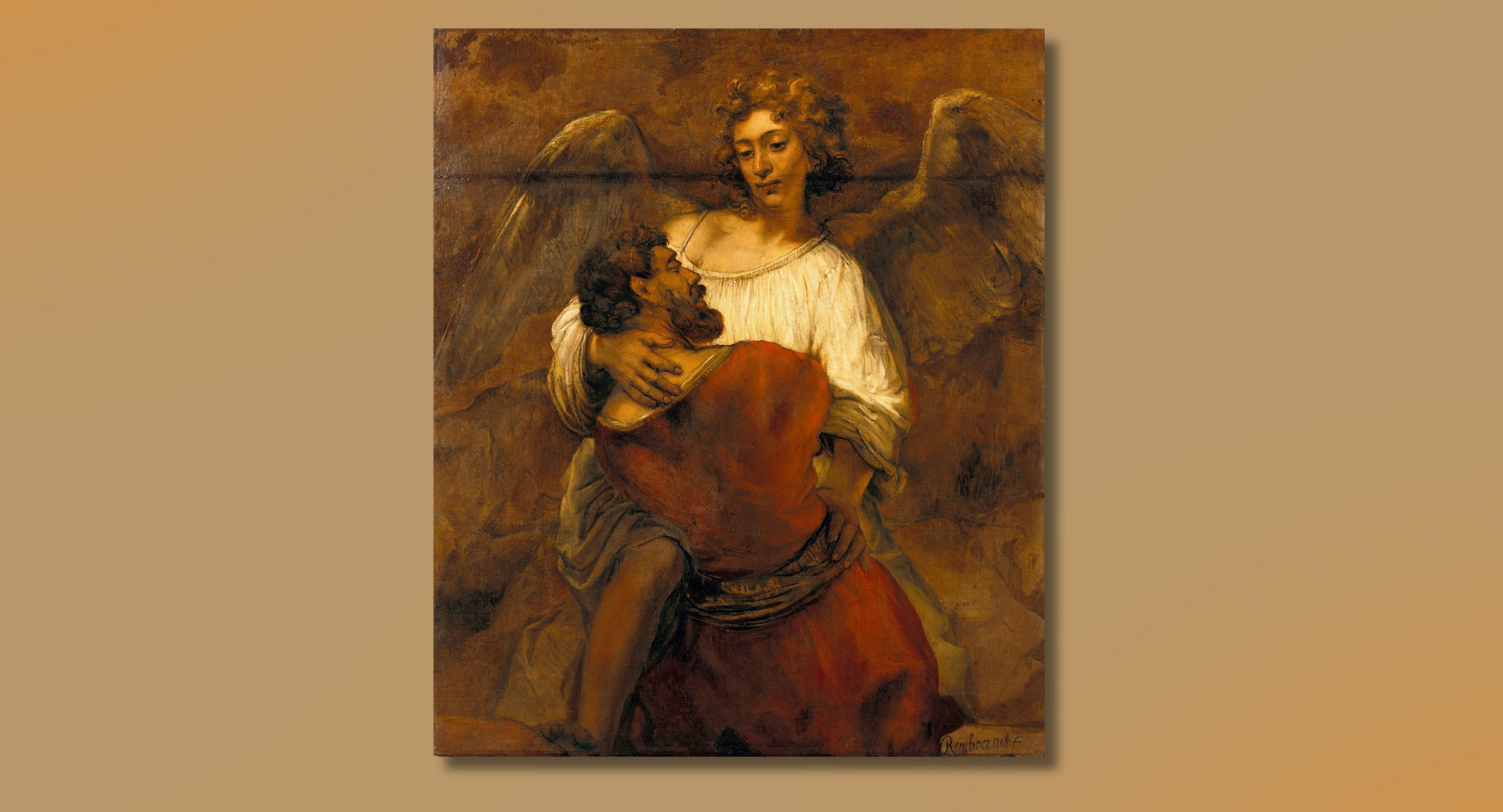
In Vayishlach, we read of Yaakov wrestling with an unnamed figure. This brief story is filled with mystery. Its connection to the larger narrative of Yaakov’s journey home isn’t immediately clear, and the enigmatic conversation between Yaakov and his anonymous opponent hints at deeper meanings. This is why the Rambam counts it among those biblical stories that should be read as prophetic visions rather than historical accounts.
By looking closely at the details and incorporating insights from midrashic sources, we can uncover a reading that reverberates throughout Jewish history.
The story takes place at the Yabok crossing, which Devarim identifies as the boundary of the territory settled by the tribes of Gad and Reuven—essentially the outer edge of Jewish settlement. Yaakov has brought his family across but “remains alone” because, as the midrash (cited by Rashi) explains, he has gone back for some trifles.
At this pivotal location, each detail of the story takes on deeper significance. When Yaakov brings his family across but returns alone for trivial items, we see the first hint of a pattern. When he wrestles until dawn with a mysterious man—whom the midrash (cited by Rashi) identifies as Esav’s guardian—we begin to see a broader meaning emerge. The struggle that leaves him limping, followed by the puzzling exchange about names and blessings, completes this pattern.
What unfolds here is more than just a personal encounter. Yaakov, standing at the threshold of the promised land, signals his descendants’ future journey. His hesitation over small possessions mirrors a deeper uncertainty about moving forward. His nightlong struggle with this heavenly representative of the nations foreshadows the travails of his descendants.
Seen this way, the story reflects deeply on exile and return. It points to a time when the Jewish people will stand at the edge of return to their ancestral homeland, but hesitate to take the final step.
As dawn approaches and the wrestling match winds down, the “man” can’t defeat Yaakov but strikes his sciatic nerve—just as when the period of Jewish redemption dawns, the nations will be unable to prevent it but they will be able to slow the Jews’ progress by inducing a loss of nerve that turns their confident walk into an uncertain limp. When dawn breaks, it is not Yaakov but the “man” who asks to disengage—foreshadowing the nations of the world beseeching the Jewish People to just go home. And it’s Yaakov who holds back, insisting on receiving a blessing before letting go.
The blessing comes as a change in identity: He is no longer Yaakov, the younger brother clutching his elder’s heel, but Yisrael, one who struggles to be free of his brother and prevails. Yet Yaakov, not quite ready for this new self, first wants to know his opponent’s name—suggesting a people with an exaggerated need to fully understand the cultures of their exile before they can finally leave them behind. The man’s response —that his name doesn’t matter—becomes the final push forward. As the sun shines brightly in the sky, Yaakov heads off to his destination—blessed but still limping.
And the Jewish people refrain from eating the sciatic nerve until this very day.