Begin exploring
today’s 
biggest Jewish
questions…

×
  • Topics

    Most Popular Topics

    • Artificial Intelligence
    • Jewish Outreach
    • Israel & Diaspora
    • 18 Questions, 40 Israeli Thinkers
    • Denominations
    • Mental Health
    • Israel at War

    View all

    All Topics

    • Prayer & Humanity
    • Zionism
    • Jewish Education
    • Romance & Commitment
    • Origins of Judaism
    • Books, Books, Books
    • Abuse in Our Community
    • Halacha
    • Wealth
    • Is Religion Rational?
    • Shabbos
    • Teshuva
    • Summer Unwind
    • Loss
    • Censorship
    • Agunah Crisis
    • Intergenerational Divergence
    • God
    • Why 1840?
    • Social Justice
    • Science & Religion

    View all

  • Discover

    Podcasts

    Essays

    Guests

    Videos

    Swag Shop

    Popular for Discover

    • Elissa Felder & Sonia Hoffman: How the Jewish Burial Society Cares for the Dead
    • Shlomo Brody & Beth Popp: Demystifying Death and the End of Life
    • Michael Oren: ‘We are living in biblical times’
    • Micah Goodman: ‘I don’t want Gaza to become our Vietnam’

    View All Podcasts

    OTD: Leaving Religion

    Ayala Fader: How Do Haredi Jews Deal With Religious Doubt?

    18 Questions, 40 Israeli Thinkers

    Jonathan Rosenblum: ‘Would you want to live in a country run by Haredim?’
  • Book Culture

    Book Joureys

    • How Do Morality And Values Guide Jewish Law?
    • ‘Anti-Zionism is an existential threat to the Jewish People’

    Shabbos Reads

    • Books, Books, Books
    • I Read This Over Shabbos on X

    FEATURED BOOK

    How Do Morality And Values Guide Jewish Law?

    FEATURED BOOK

    ‘Anti-Zionism is an existential threat to the Jewish People’
  • About

    About us

    Who we are

    Submissions

    Contact us

    Donate

    WHY 18
    Forty

    The year 1840 was a turning point: the Industrial Revolution peaked, the Damascus Affair sparked Jewish unity, and modernity opened new paths for enlightenment. Mystics called it the moment that “the gates of wisdom would open.” For us, 1840 is a symbol of how global upheaval can lead to a reimagined world. Today, we face another “1840 moment”—troubled by tech disruption, mental health crises, and declining faith—that calls for bold questions, timeless sensitivity, and modern sensibilities. That’s what 18Forty is here to explore.

  • Donate
Subscribe
Donate
Home / Topics / Abuse in Our Community

Abuse in Our Community

This month, we explore the question of abuse in our communities, as we learn about the pragmatic and particular changes that we can make in our lives to build a safer Jewish world for all.

  • Essays

    What Abuse in the Jewish Community Means to Me

    Phone Call “Do you have time to discuss something later?” the email asked.…
    David Bashevkin
    What Abuse in the Jewish Community Means to Me
  • Essays

    It Takes a Village: Communal Guidance from an Orthodox Criminologist

    What does Dr. Guila Benchimol, an Orthodox criminologist, want you to know about…

    Guila Benchimol
    It Takes a Village: Communal Guidance from an Orthodox Criminologist

Abuse in Our Community

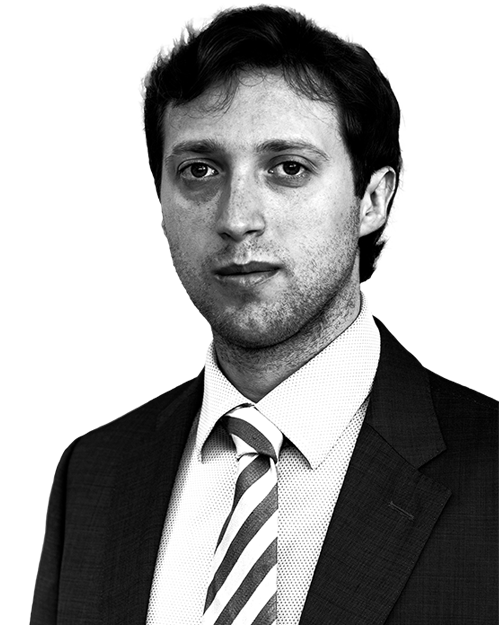
Aharon Schrieber: What Happens When You Call the Police?

In this episode of the 18Forty Podcast, we talk to ADA Aharon Schrieber about what actually happens when you call the police to report a domestic violence or abuse crime.
01:27

podcast

Aharon Schrieber: What Happens When You Call the Police?

In this episode of the 18Forty Podcast, we talk to ADA Aharon Schrieber about what actually happens when…

01:00

podcast

Rahel Bayar: Developing Healthy Boundaries

In this episode of the 18Forty Podcast, we talk to Rahel Bayar, founder of The Bayar Group, about…

01:33

podcast

Shira Berkovits: Creating Safe Spaces

In this episode of the 18Forty Podcast, we talk to Shira Berkovits, president and CEO of Sacred Spaces,…

book

Tempest in the Temple: Jewish Communities and Child Sex Scandals

Although there has been much news on the topic, there has been a dearth of scholarly material investigating sexual abuse within the Jewish clergy. Tempest in the Temple brings together fifteen practicing rabbis, educators, pastoral counselors, sociologists, mental health professionals, and legal advocates for abuse victims, each of whom offer insights into different facets of the problem. This book has three sections: The first describes rabbis who “break their vows” by abusing others, the second outlines community dynamics surrounding abuse, and why victims are often ignored or cast off, and the third deals with how Jewish communities can overcome stigma to deal with clergy abuse. This book deals with scandals with clarity and precision, to ensure that Jewish communities build a better, safer future.

Buy on Amazon

book

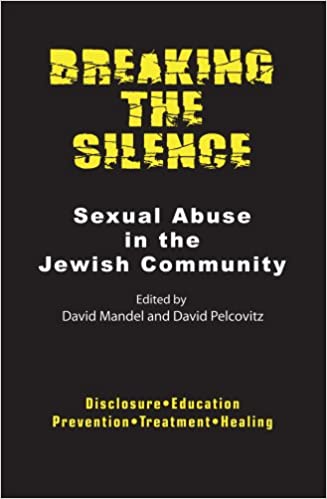
Breaking the Silence: Sexual Abuse in the Jewish Community

This book is a guide for parents, mental health professionals, and community leaders on how to deal with prevention and intervention of sexual abuse in the Jewish community. This work is practical and pragmatic above all else, and deals with the cultural sensitivities and needs of Orthodox communities in dealing with teachers, parents, children, and community leaders to effectively implement prevention efforts in homes, schools, and communities. The book also contains sections describing the impact of abuse in the voices of survivors, a summary of how traditional Jewish law views the responsibility of the community in dealing with sexual abuse, and a section for mental health professionals that details psychotherapeutic approaches in work with victims and perpetrators.

Buy on Amazon

book

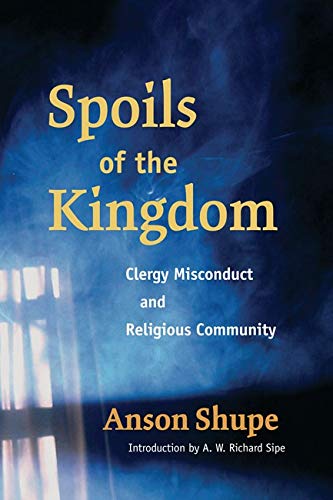
Spoils of the Kingdom: Clergy Misconduct and Religious Community

In this book, Anson Shupe investigates clergy misconduct as it has unfolded across five faith-based groups. Looking at episodes of abuse in the Roman Catholic, Mormon, African American Protestant, white Evangelical Protestant, and First Nations communities, Shupe tackles hard questions not only about the sexual abuse of women and children, but also about economic frauds perpetrated by church leaders (including embezzlement, misrepresented missions, and outright theft) and cases of excessively authoritarian control of members’ health, lifestyles, employment, and politics. Drawing on case evidence, Shupe employs classical and modern social exchange theories to explain the institutional dynamics of clergy misconduct, arguing that there is a sort of contract of reciprocity and compliance between congregants and religious leaders, that, when amplified by charismatic awe of religious authorities, can lead to misconduct. 

Buy on Amazon

DEDICATED TO THE MEMORY AND LEGACY OF PHILIP EICHEN, EPHRAIM FISHEL BEN MORDECHAI Z”L AND ROSLYN EICHEN, RAZEL BAT GERSHON, Z”L

Newsletters

Sign up for our Newsletter

We’ll keep your inbox stocked fresh with new topics, thoughts and ideas.

TOPICS

  • Topics
    • Topics

DISCOVER

  • Podcasts
  • Essays
  • Videos
  • Guests
    • Podcasts
    • Essays
    • Guests
    • Videos
    • Swag Shop

BOOK CULTURE

  • Book Journeys
  • Shabbos Reads
    • Book Journeys
    • Shabbos Reads

ABOUT US

  • Who we are
  • Submissions
  • Contact us
  • Donate
    • Who we are
    • Submissions
    • Contact us
    • Donate

Copyright ©

2025

18Forty

All Rights Reserved

Privacy Policy

Cookie Policy

Welcome to 18Forty's New Website!

This is your address for today’s biggest Jewish questions. Looking for something in specific? Search on our homepage or browse on your own.