Science & Religion: Old Foes or New Friends?
Science and religion have long had a complicated relationship. At times friends, other…



Science and religion have long had a complicated relationship. Though they ask some of the same questions, one attributes things to God and the other to mathematical laws, often resulting in claims that are at face value mutually exclusive. But religion can be seen to operate within a different domain, serving to fill in the…
Science and religion have long had a complicated relationship. At times friends, other…


Thinking through the relationship between the natural world and God, many point to…

In this episode of the 18Forty Podcast, we sit down with Dr. Jeremy England, physicist and biologist, to discuss his lives as a Jew and an academic, and how, if at all, those lives interact.

In this episode of the 18Forty Podcast, we sit down with Dr. Jeremy England, physicist and biologist, to…
In this episode of the 18Forty Podcast, we sit down with Professor Allison Coudert, of the Department of…
In this episode of the 18Forty Podcast, we sit down with Rabbi David Fohrman – author, lecturer, and…
In this episode of the 18Forty Podcast, we sit down with Rabbi Meir Triebitz – Rosh Yeshiva, PhD,…
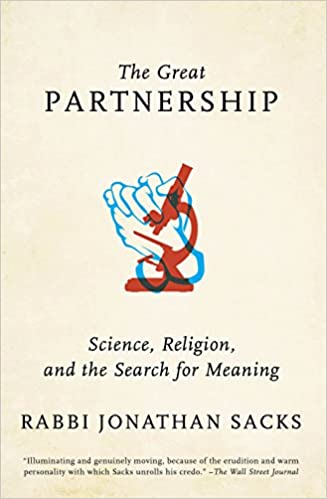
Two of the greatest explicators of the boundaries between Jewish thought and western thought of this era were Rabbis Jonathan Sacks and Norman Lamm, two great thinkers that we lost in 2020. To better appreciate the contributions each thinker made on the questions of science and religion, read Rabbi Jonathan Sacks’s instant classic, The Great Partnership, and Rabbi Lamm’s great Torah Umadda. In The Great Partnership, Rabbi Sacks looks at the relationship between science and religion with deep respect for each. He considers science the search for an explanation, but religion the search for meaning. In Torah Umadda, Rabbi Lamm provides a powerful presentation on the broader dynamics narrating the Jewish relationship with Western thought.
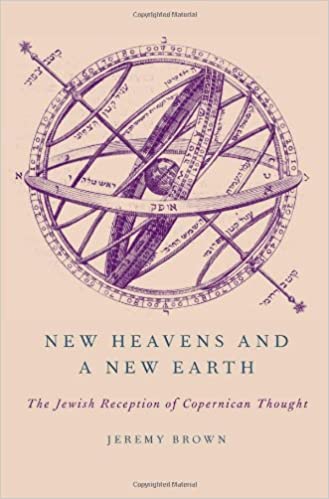
For those interested in history, science, and Jewish thought, Jeremy Brown’s New Heavens and New Earth should be on your book list. Jeremy’s study of the Jewish reception of the Copernican revolution portrays how centuries of Jewish thinkers have considered the matter, and also serves as a powerful case study into how the broader dynamics between Judaism and science play out in one particular issue. This fascinating history moves comfortably between past and present, science and Torah, and Jewish and Christian writing, to provide a study that is deeply relevant today. This book pairs well with David B. Ruderman’s Jewish Thought and Scientific Discovery in Early Modern Europe, which offers a comprehensive review of the ways Jewish thinkers thought about science in Early Modern Europe.
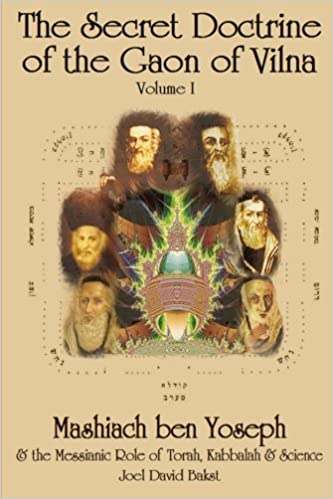
For readers looking to have a good time, this work is for you. This book is centered around the mysterious document, Kol HaTor. Published by the Rivlin family of Jerusalem, this document is a messianic work based on the thought of the Vilna Gaon (how direct the Gaon’s influence was is the topic of extremely spicy scholarly debate). A creative trip through the messianic vision of the Kol HaTor, The Secret Doctrine brings readers into the world of the spiritual possibilities of the technology age. Our favorite pivotal year, 1840, plays a significant role in this book, as the pivotal year in which the advancements of the industrial revolution converged with the advancements in Kabbalistic study. Readers might want to pair this book with the somewhat more soberly written The Gaon of Vilna and his Messianic Vision by Arie Morgenstern, which provides a more grounded view…