


Begin exploring
today’s
biggest Jewish
questions…
×

OTD: Leaving Religion Conclusion
As we challenge the stereotype of those who leave religion, we can begin to understand on a deeper level why some choose to leave, why some choose to stay, and how a third option of existing in the moment with doubts and uncertainty is also okay.

Summary
As we challenge the stereotype of those who leave religion, we can begin to understand on a deeper level why some choose to leave, why some choose to stay, and how a third option of existing in the moment with doubts and uncertainty is also okay.
Recommended Podcasts

podcast
Julia Senkfor & Cameron Berg: Does AI Have an Antisemitism Problem?
How can our generation understanding mysticism, philosophy, and suffering in today’s chaotic world?
podcast
Haviv Rettig Gur: ‘Hamas is upset the death toll in Gaza isn’t higher’
Haviv answers 18 questions on Israel.
podcast
What Garry Shandling’s Jewish Comedy Teaches About Purim
David Bashevkin speaks about the late, great comedian Garry Shalndling in honor of his 10th yahrzeit, which is this Purim.
podcast
Aaron Kotler: Inside the Lakewood Yeshiva
We speak with Rabbi Aaron Kotler about the beginnings of the American yeshiva world.

podcast
Yehuda Geberer: What’s the History of the American Yeshiva World?
We speak with Yehuda Geberer about the history of the yeshiva world.
podcast
Alex Edelman: Taking Comedy Seriously: Purim
In this episode of the 18Forty Podcast, David is joined by comedian Alex Edelman for a special Purim discussion exploring the place of humor and levity in a world that often demands our solemnity.
podcast
Pawel Maciejko: Sabbateanism and the Roots of Secular Judaism
In this episode of the 18Forty Podcast, we talk to historian and professor Pawel Maciejko about the false messiah Sabbatai Zevi, Sabbateanism, and the roots of Jewish secularism.

podcast
The Dardik Family: A Child Moves Away From Zionism
In this episode of the 18Forty Podcast, we talk to Judah, Naomi, and Aharon Akiva Dardik—an olim family whose son went to military jail for refusing to follow to IDF orders and has since become a ceasefire activist at Columbia University—about sticking together as a family despite their fundamental differences.
podcast
Einat Wilf: ‘Jews Are Never Allowed To Win, and Arabs Are Never Allowed to Lose’
The true enemy in Israel’s current war, Einat Wilf says, is what she calls “Palestinianism.”
podcast
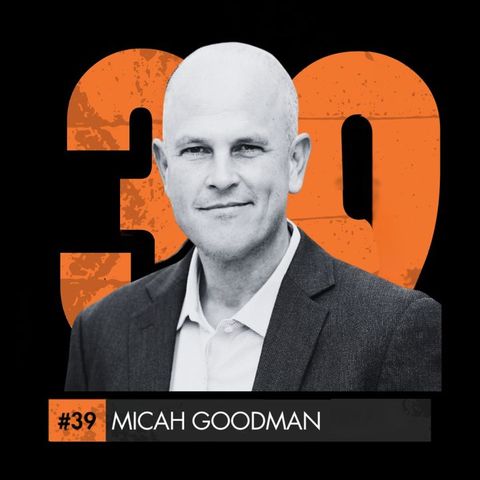
Micah Goodman: ‘I don’t want Gaza to become our Vietnam’
Micah Goodman doesn’t think Palestinian-Israeli peace will happen within his lifetime. But he’s still a hopeful person.
podcast
Anshel Pfeffer: ‘The idea that you’ll obliterate Hamas is as realistic as wanting to obliterate Chabad’
Prime Minister Benjamin Netanyahu did not surprise Anshel Pfeffer over the last 17 months of war—and that’s the most disappointing part.

podcast
On Loss: A Spouse
In this episode of the 18Forty Podcast, we talk to Rabbi Josh Grajower – rabbi and educator – about the loss of his wife, as well as the loss that Tisha B’Av represents for the Jewish People.

podcast
Bruce Feiler: The Stories That Bind Us
In this episode of the 18Forty Podcast, we talk to author Bruce Feiler about family narratives.
podcast
When A Child Intermarries
In this episode of the 18Forty Podcast, we talk to a son who almost intermarried, the mother of a daughter who married a non-Jew, and Huvi and Brian, a couple whose intermarriage turned into a Jewish marriage—about intergenerational divergence in the context of intermarriage.
podcast
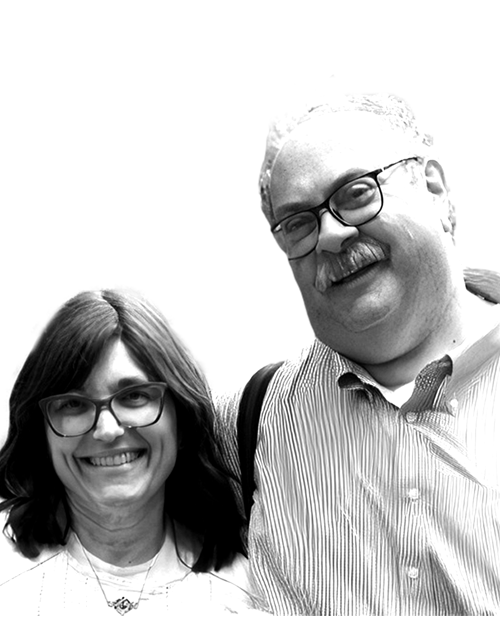
Aliza and Ephraim Bulow: When A Spouse Loses Faith
In this episode of the 18Forty Podcast, we talk to Aliza and Ephraim Bulow, a married couple whose religious paths diverged over the course of their shared life.
podcast
Benny Morris: ‘We should have taken Rafah at the start’
Leading Israeli historian Benny Morris answers 18 questions on Israel, including Gaza, Palestinian-Israeli peace prospects, morality, and so much more.
podcast
Netta Barak-Corren: ‘I hope that Gaza will see a day when it is no longer ruled by Hamas’
Israel is facing several existential crises—at least three, by Netta Barak-Corren’s account.

podcast
Lizzy Savetsky: Becoming a Jewish Influencer and Israel Advocate
In this episode of the 18Forty Podcast, we talk to Lizzy Savetsky, who went from a career in singing and fashion to being a Jewish activist and influencer, about her work advocating for Israel online.

podcast
Modi Rosenfeld: A Serious Conversation About Comedy
In this special Purim episode of the 18Forty Podcast, we bring you a recording from our live event with the comedian Modi, for our annual discussion on humor.

podcast
Elisheva Carlebach & Debra Kaplan: The Unknown History of Women in Jewish Life
We speak with Professors Elisheva Carlebach and Debra Kaplan about women’s religious, social, and communal roles in early modern Jewish life.
podcast
David Aaron: ‘I believe that the Divine is existence and infinitely more’
Rabbi David Aaron joins us to discuss ease, humanity, and the difference between men and women.
podcast
Yishai Fleisher: ‘Israel is not meant to be equal for all — it’s a nation-state’
Israel should prioritize its Jewish citizens, Yishai Fleisher says, because that’s what a nation-state does.

podcast
Ken Brodkin: A Shul Becomes Orthodox
In this episode of the 18Forty Podcast, we talk to Rabbi Ken Brodkin, rabbi of New Jersey’s Congregation B’nai Israel, about how he helped turn it into “the Orthodox synagogue for all Jews.”

Recommended Articles

Essays
3 Arguments for God’s Existence
Perhaps the most fundamental question any religious believer can ask is: “Does God exist?” It’s time we find good answers.

Essays
What is the Megillah’s Message for Jews of the Diaspora?
For some, Purim is the triumph of exile transformed. For others, it warns that exile can never replace the Land of Israel.

Essays
How Orthodox Jews Are Sharing Torah Knowledge Across Denominations
Two programs are already bridging the Orthodox and non-Orthodox divide through the timeless tradition of chavruta learning.

Essays
Ki Tisa: The Limits of Seeing God’s Face
We spend our lives searching for clarity. Parshat Ki Tisa suggests that the most meaningful encounters may happen precisely where clarity ends.

Essays
The American Yeshiva World: A Reading Guide
A guide to the essential books that tell the story—past and present—of the American yeshiva world and its inner life.

Essays
A Jew in the King’s Court: Dual Loyalty in the Book of Esther
The Book of Esther suggests that diaspora is not merely a temporary or anomalous state but an integral part of Jewish history…

Essays
(What) Do Jews Believe About the Afterlife?
Christianity’s focus on the afterlife historically discouraged Jews from discussing it—but Jews very much believe in it.

Essays
Why We Need to Live With Radical Laughter This Purim
Brother Jorge asks: Can we laugh at God? We might answer: We can laugh with God.

Essays
5 Lessons from the Parsha Where Moshe Disappears
Parshat Tetzaveh forces a question that modern culture struggles to answer: Can true influence require a willingness to be forgotten?
Essays
How Jewish Communities Can Help Couples Going Through Divorce
Divorce often upends emotional and financial stability. A Jewish organization in Los Angeles offers a better way forward.

Essays
What the 18Forty Team is Reading This Adar
Identity, desire, women in fiction, and more: What we’re reading before Purim.
Essays
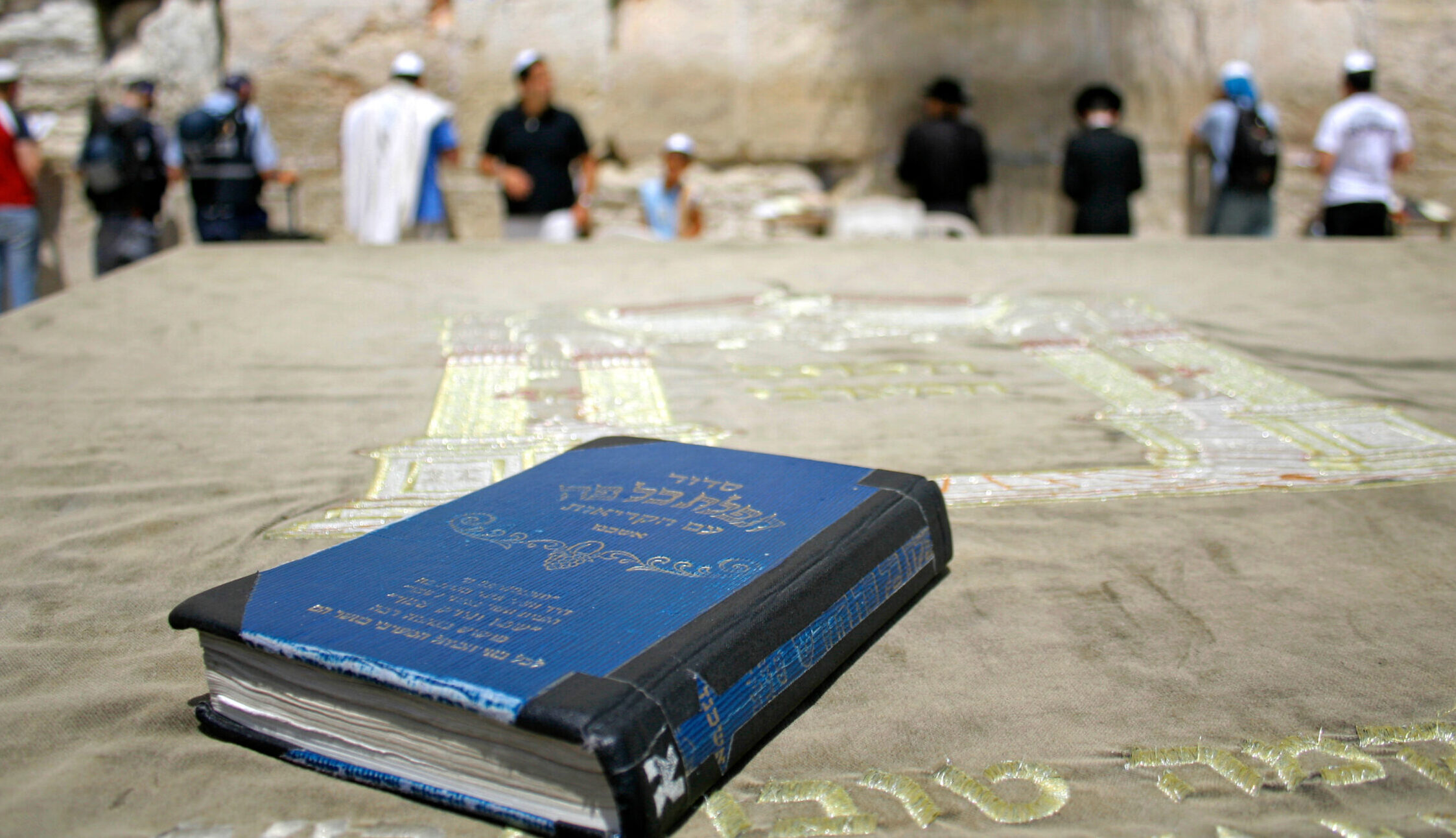
The Siddur Has a Lot of Prayers. Where Did They Come From?
Between early prayer books, kabbalistic additions, and the printing press, the siddur we have today is filled with prayers from across history.

Essays
A Brief History of Jewish Mysticism
To talk about the history of Jewish mysticism is in many ways to talk about the history of the mystical community.

Essays
What Haredim Can Teach Us About Getting Off Our Smartphones
Kosher phones make calls and send texts. No Instagram, no TikTok, and no distractions. Maybe it’s time the world embraces them.

Essays
A Letter to Children Estranged From Their Parents
Children cannot truly avoid the consequences of estrangement. Their parents’ shadow will always follow.

Essays
Towards the Derech: How Does a Reform Jew Return?
The “way” of myself and other formerly Reform Jews is unclear, but our desire for spiritual growth is sincere.
Essays
Why Is Meir Kahane Making a Comeback Among Orthodox Jews?
Israeli minister Itamar Ben-Gvir wears the mantle of Kahane in Israel. Many Orthodox Jews welcomed him with open arms.

Essays
The Hardal Community Explained: Torah, Am Yisrael, and Redemption
Religious Zionism is a spectrum—and I would place my Hardal community on the right of that spectrum.

Essays
Between Modern Orthodoxy and Religious Zionism: At Home as an Immigrant
My family made aliyah over a decade ago. Navigating our lives as American immigrants in Israel is a day-to-day balance.
Essays
How Archaeology Rewrote the History of Tefillin
From verses in Parshat Bo to desert caves, tefillin emerge as one of Judaism’s earliest embodied practices.

Essays
Did All Jews Pray the Same in Ancient Times?
Jews from the Land of Israel prayed differently than we do today—with marked difference. What happened to their traditions?
Essays
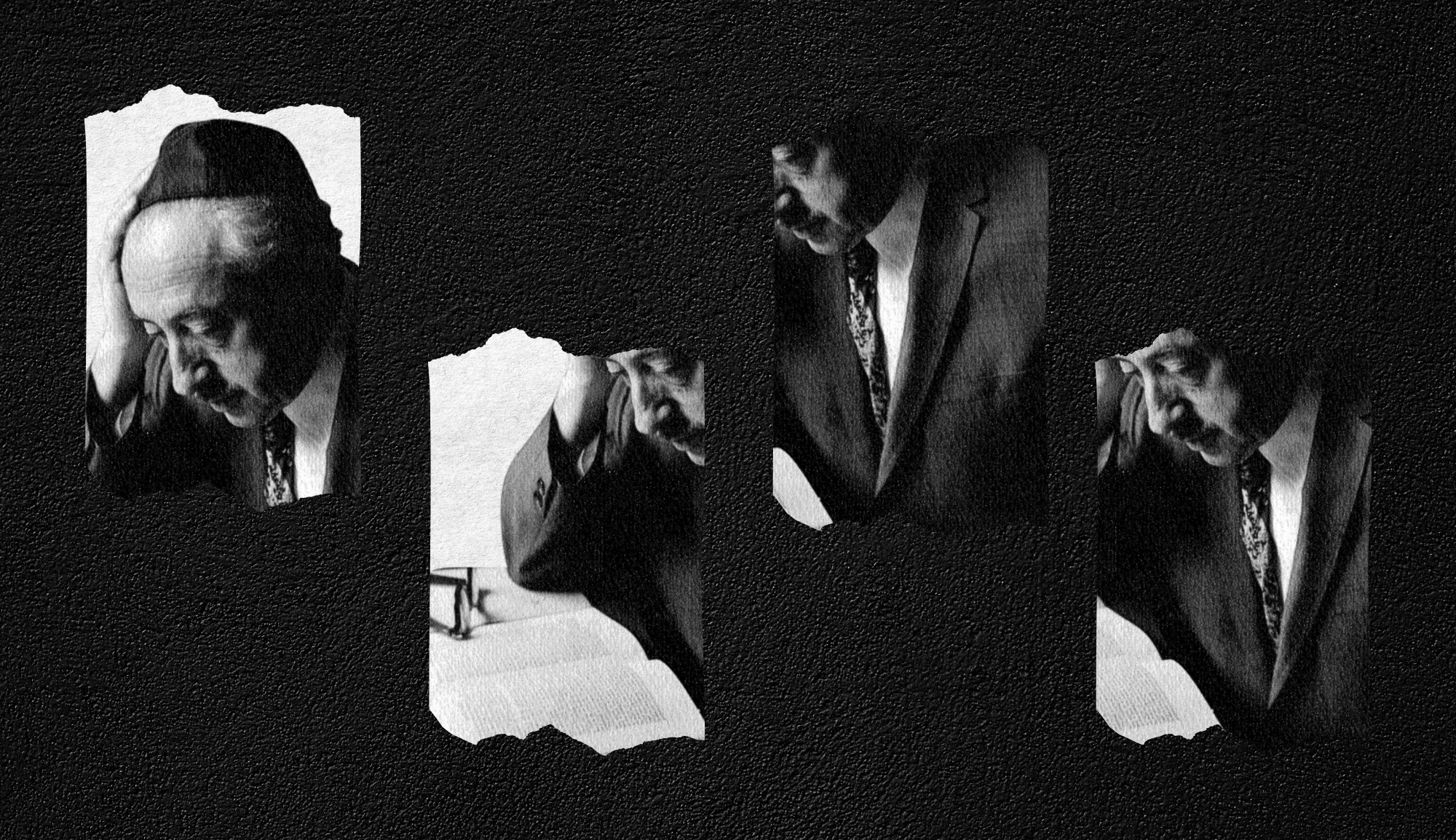
Rabbi Eliezer Berkovits’ Complicated Portrait of Faith
Meet a traditional rabbi in an untraditional time, willing to deal with faith in all its beauty—and hardships.

Essays
Judith Herman Is Giving Voice to Survivors
Dr. Judith Herman has spent her career helping those who are going through trauma, and has provided far-reaching insight into the field.

Essays
3 Questions To Ask Yourself Whenever You Hear a Dvar Torah
Not every Jewish educational institution that I was in supported such questions, and in fact, many did not invite questions such as…
Recommended Videos

videos
Rachel Goldberg-Polin and Jon Polin: How Torah Gives Us Faith and Hope
In this special Simchas Torah episode of the 18Forty Podcast, we speak with Rachel Goldberg-Polin and Jon Polin—parents of murdered hostage Hersh…

videos
A Vulnerable Conversation About Shame, Selfhood, & Authenticity with Shais Taub & David Bashevkin
In this episode of the 18Forty Podcast, we speak with Shais Taub, the rabbi behind the organization SoulWords, about shame, selfhood, and…

videos
An Orthodox Rabbi Interviews a Reform Rabbi | Dovid Bashevkin & Diana Fersko
In this episode of the 18Forty Podcast, we speak with Diana Fersko, senior rabbi of the Village Temple Reform synagogue, about denominations…


videos
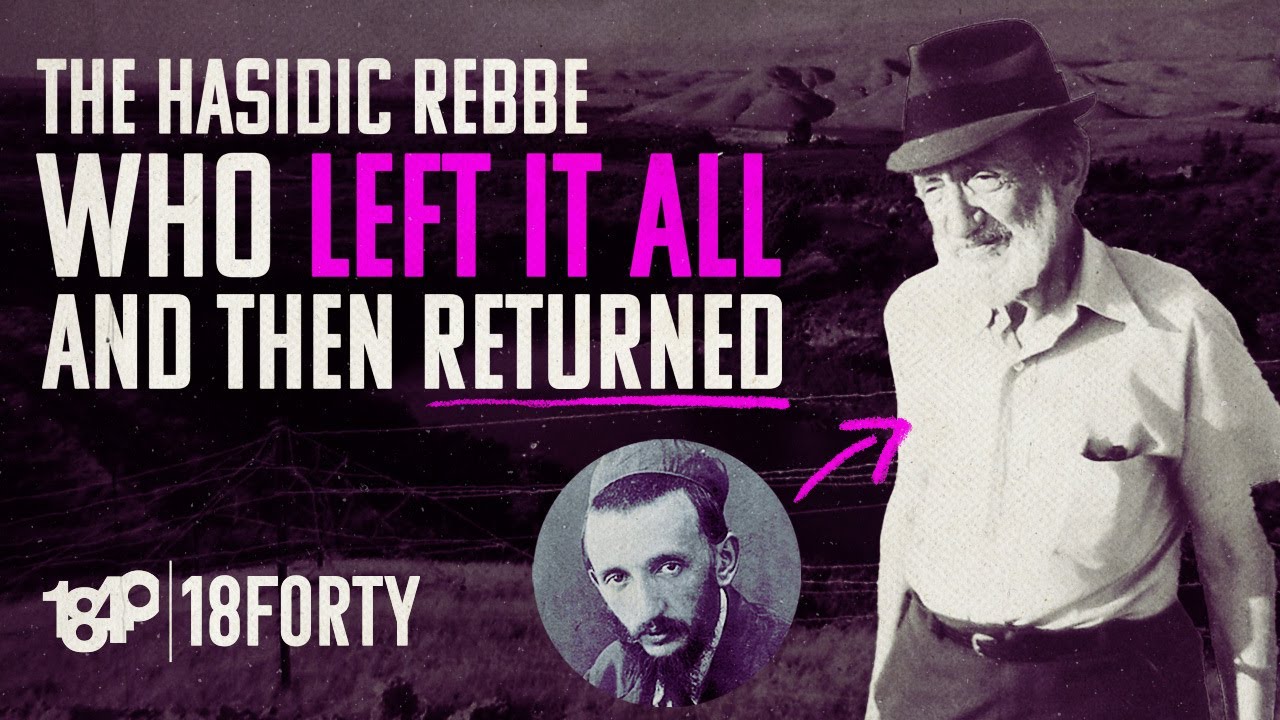
The Hasidic Rebbe Who Left it All — And Then Returned
Why did this Hasidic Rebbe move from Poland to Israel, only to change his name, leave religion, and disappear to Los Angeles?


videos
Why Naftuli Moster Left Haredi Education Activism
We speak with Naftuli Moster about how and why he changed his understanding of the values imparted by Judaism.
videos
Moshe Benovitz: Why Religious Change Doesn’t Always Last
In this episode of the 18Forty Podcast, recorded live at Stern College, we speak with Rabbi Moshe Benovitz, director of NCSY Kollel,…
videos
Is Modern Orthodox kiruv the way forward for American Jews? | Dovid Bashevkin & Mark Wildes
In this episode of the 18Forty Podcast, we speak with Mark Wildes, founder and director of Manhattan Jewish Experience, about Modern Orthodox…

videos
Torah Study and ChatGPT: How Should Jewish Education Respond to AI?
On this 18Forty panel, we speak with Alex Jakubowski of Lightning Studios, Sara Wolkenfeld of Sefaria, and Ari Lamm of BZ Media…
videos
Moshe Gersht: ‘The world of mysticism begs for practicality’
Rabbi Moshe Gersht first encountered the world of Chassidus at the age of twenty, the beginning of what he terms his “spiritual…


videos
Mysticism
In a disenchanted world, we can turn to mysticism to find enchantment, to remember that there is something more under the surface…
videos
What are Israel’s Greatest Success and Mistake in the Gaza War?
What has been Israel’s greatest success and greatest mistake?
videos
A Reform Rabbi Interviews an Orthodox Rabbi | Dovid Bashevkin & Diana Fersko (Part 2)
In this episode of the 18Forty Podcast, David Bashevkin answers questions from Diana Fersko, senior rabbi of the Village Temple Reform synagogue,…
videos
Moshe Weinberger: ‘The Jewish People are God’s shofar’
In order to study Kabbalah, argues Rav Moshe Weinberger, one must approach it with humility.