

I Read This Over Shabbos is a weekly newsletter about Jewish book culture, book recommendations, and modern ideas. Receive this free newsletter every week in your inbox by subscribing here. Questions, comments, or feedback? Email Rivka Bennun Kay at Shabbosreads@18forty.org.
Secondhand bookstores have a certain charm, a quiet mixed with adventure. For me, a small Tel Aviv store made the perfect stop before one round of miluim (reserve military service). This is also characteristic of my military usefulness. Other people presumably stop for tactical equipment; I bought Carl Jung’s Selected Writings.
The timing turned out to be perfect.
My role on a tank crew is a lot like being a car mechanic: You need to understand how physical objects work and how to change enormous tank wheels. (I’m someone who views changing a light bulb as a small victory.) I serve out of a sense of obligation, not because I’m very competent or thrive in military situations. In civilian life, though, I like to think I have moments where I flourish and self-actualize.
Reserve duty is the quintessential double life. One week you are in a tank, covered in oil and dust, operating weapons; the next you are back at work, taking children to school, answering emails, and returning to a life that continued while you were somewhere else. The jokes, the norms, the skills that matter all change.
The army taught me to take myself less seriously. I found myself slipping into a personality closer to my 18-year-old self: always looking for the next thing to laugh at and far less concerned with appearing impressive.
Some of that followed me home, but the dissonance remained. The serious, kind, and (sometimes) competent husband and father still felt more like the “real” me. The army version felt real too, but somehow less me.
That tension, between where we feel most ourselves and what we nevertheless feel obligated to do, became harder for me to ignore. Caught between two worlds, in a life of constant transition, I felt inauthentic. I was losing my sense of self.
So my accidental purchase of the writings of Carl Jung—the Swiss psychiatrist and the founder of analytical psychology—proved timely. His concept of the shadow spoke directly to my situation.
You might imagine the shadow as the really dark stuff: aggression, jealousy, cruelty, desires we would rather not admit to having. But Jung’s idea is broader. The shadow includes aspects of ourselves that don’t fit comfortably into the image we consciously construct of who we are.
Jung saw the confrontation with the shadow as crucial to self development:
Filling the conscious mind with ideal conceptions is a characteristic of Western theosophy, but not the confrontation with the shadow and the world of darkness. One does not become enlightened by imagining figures of light, but by making the darkness conscious.
—Alchemical Studies (1967)
The army exposed motives I’d rather not examine. I might seek leadership for noble causes—to contribute to Am Yisrael and to give to others. Reading Jung made it harder to dismiss the less flattering motives that might sit alongside them.
In civilian life I might be seeking leadership partly because of my relationship with authority, my quest for independence, and how much I care about being seen as competent. In the army, where I’m low in the hierarchy, fairly low in competence, and taking orders from officers younger than I am, all of these are tested. I began to see that leadership, for me, was about more than a will to give. Mostly, it was about a need not to feel mediocre. What if the identity I had built was also about feeling uncomfortable with being unexceptional? That was my shadow.
We tend to think our authentic self is the person we are when we feel most comfortable and competent. Perhaps that’s because this is the version of ourselves we like best. The army posed an internal question: Can I be mediocre at something without immediately finding somewhere else where I can at least think I’m impressive?
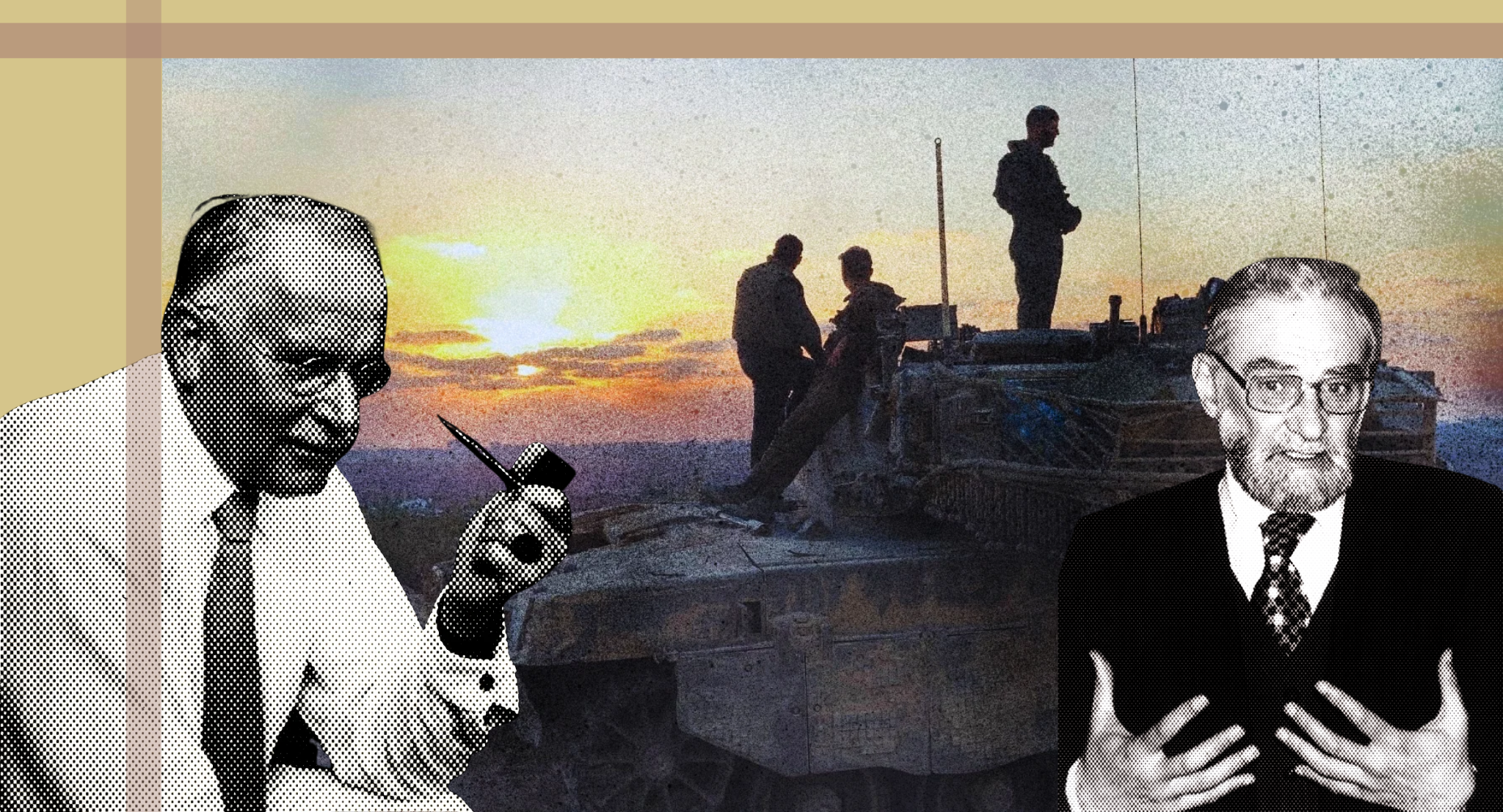
In civilian life, we have the freedom to choose environments that don’t make us confront that. Here I was in Gaza for hundreds of days, where I was the furthest thing from Rambo. I was mediocre at best, but it was where I felt I was morally obligated to be.
Looking at the rubble of Gaza in my green overalls, Jung’s words stood out to me:
Normally the unconscious collaborates with the conscious without friction or disturbance, so that one is not even aware of its existence. But when an individual or a social group deviates far from their instinctual foundations, they then experience the full impact of unconscious forces.
—The Archetypes and the Collective Unconscious (1939)
After countless days of firing ammunition, living inside a tank, losing friends, and missing my family, Jung’s words about distance from our instinctual foundations struck a nerve. At times I felt terribly claustrophobic. Fresh air was a luxury; my only soothing image was a glimpse, through a tiny periscope, of the Mediterranean beyond the destruction. Weeks passed without seeing my children. I was living in a different world, and home felt impossibly far away. Far from our instinctual foundations, what unconscious forces were we living with?
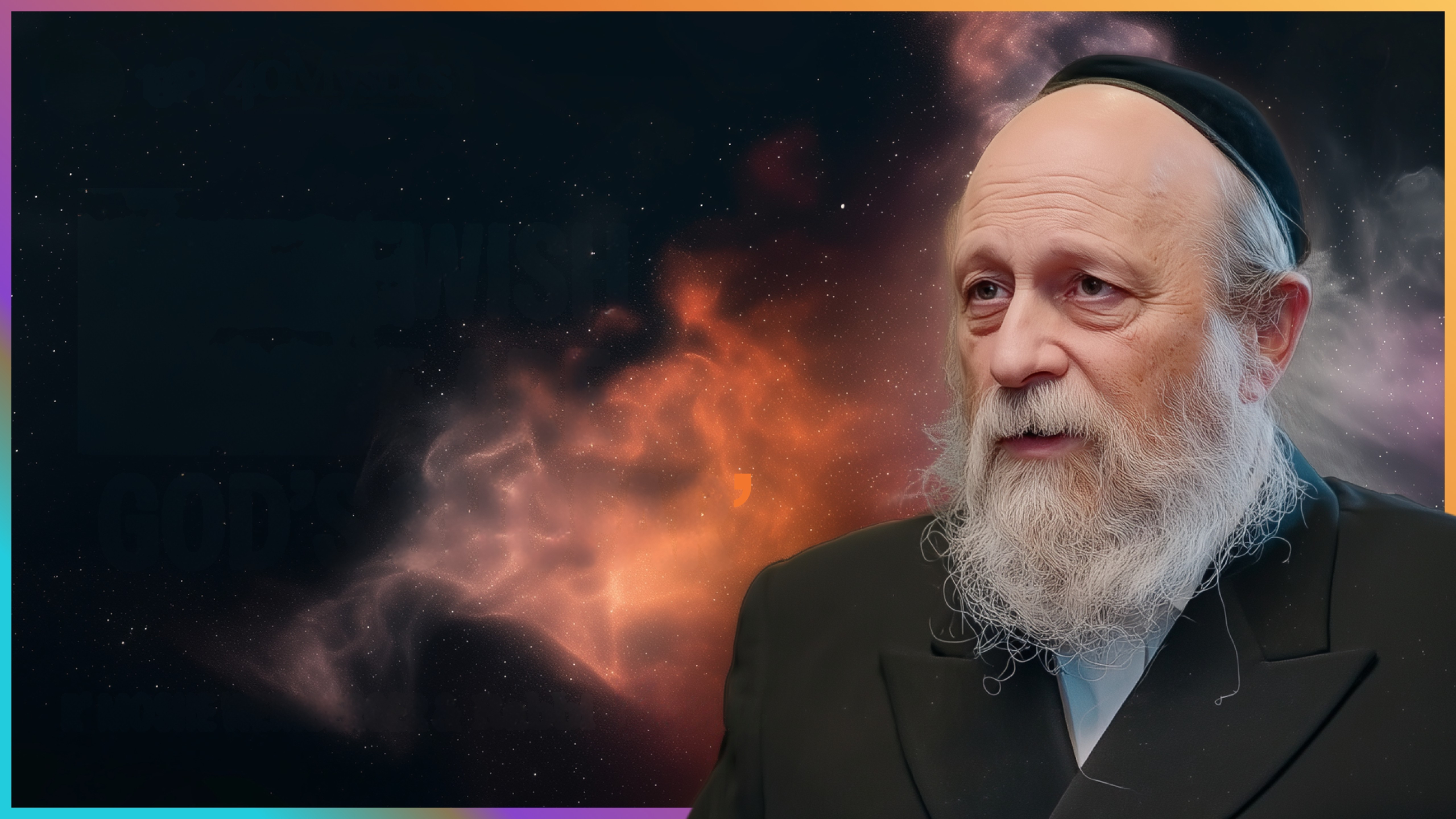
Around the same time, I’d begun learning the thought of Rabbi Yehuda Leon Ashkenazi, known as Manitou. Manitou, the Algerian-born 20th-century leader of French Jewry, was a kabbalist, philosopher, and teacher. He is little known in the English-speaking world, but his Torah had been gaining popularity in Hebrew.
One of his central ideas is yichud hamidot, the unification and the differentiation of the qualities within a person. I was compelled by the idea that a person can contain different middot, different forces, sometimes pulling in different directions. The question isn’t simply which one is really me. The harder and more important question is how to integrate them into one fully formed personality, while holding contradictions.
For Manitou, Abraham’s defining trait, Chesed, is repeatedly tested, challenging him to integrate Gevurah. Through his relationship with Yishmael, his attempt to save Sodom, and ultimately the binding of his son, Abraham is forced to confront the limits of his boundless kindness. The result is a more complete and balanced personality, in which Chesed is deepened through the integration of Gevurah (Sod Midrash HaToladot, volume IV).
Jung emphasizes the need to confront the shadow, bringing the hidden and rejected parts of ourselves into consciousness and integrating them into a more complete self. Manitou, like others in the kabbalistic tradition, describes a similar process but emphasizes holding opposite traits together in balance. In other words, you may be both kind and strict, agreeable and disagreeable. The task is not to find the real you but to hold both together.
I used to think authenticity meant trying to identify the real me underneath all these competing versions. Strangely, after spending so much time moving between radically different environments, I feel that I know myself better than I ever have. Jung and Manitou have given me language for why that is the case.
Jung taught me that I had to confront my shadow for any meaningful growth, while Manitou helped me understand leadership and obedience, giving and restraint, openness and discipline as seemingly opposing qualities whose integration leads to a more complete self.
When people think of reservists’ experience over the past three years, they often jump to combat. Those moments are hard and have real ramifications, but they are not the whole story. Many of us are also living with the constant alternation between very different environments. It hasn’t been easy, but I understand the quest for authenticity that defines so many of us a little better.
The quest for the authentic self is a winding road. Milluimnikim have had to travel it more than we ever wanted to, but perhaps along the way we have discovered parts of ourselves we might never have met.