


Thinking through the relationship between the natural world and God, many point to the miracles of nature as the greatest proof to the existence of a Creator. ‘Life itself’ proves God, the seeming naturalness of this world is a testimony to the miracles of creation. But as we continue to study the origins of life, at times the supposed miracles can cut against the findings of scientists. What then? In Professor Jeremy England’s moving Wall Street Journal op-ed, “The Creator’s Calling Card,” he writes:
Living things are the most intricate and marvelous things in the universe. The simplest organism has such dazzlingly complex architecture that one has never been observed coming into being without help from another life form. This is why life itself is perhaps the best expression of transcendent intention in the arrangement of this world.
But if that’s true, isn’t explaining life’s natural origins through science the most effective way to debunk biblical religion? Arguing that God had to have been there at the beginning seemingly would get harder if life’s very existence were to stop looking so miraculous. Yet lately the science appears to point in that direction.
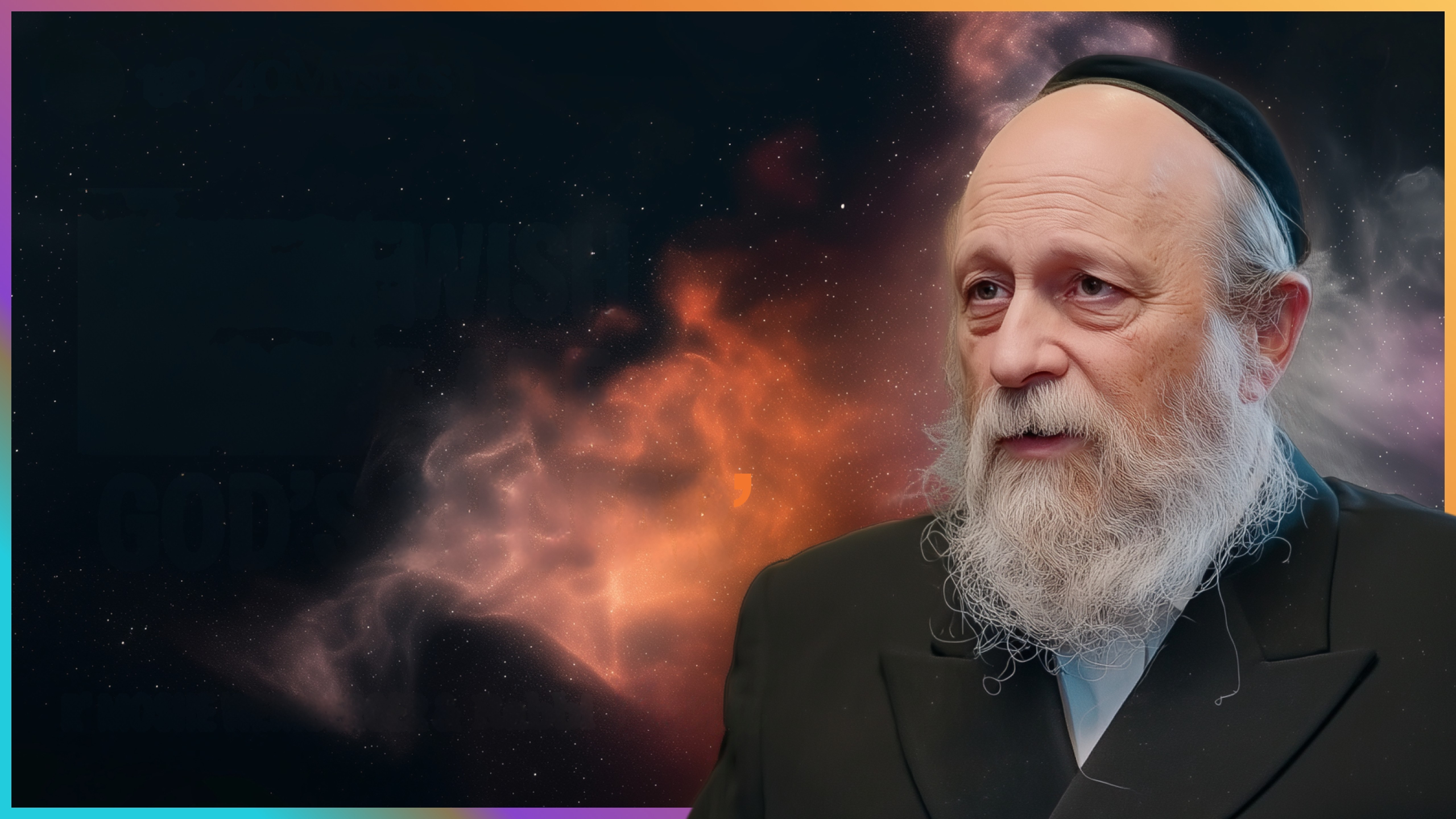
Jeremy may be one of the best poised to engage with this question. As an Orthodox rabbi and physicist who studies artificial intelligence and evolution in some of the most elite institutions in the world, Jeremy is an expert in the origins of life. His hypothesis on the subject, ‘dissipation-driven adaptation,’ has attracted attention in scientific journals, and he lectures widely on the crossroads of Torah and science. Dedicated just as deeply to exploring the nature of life’s origins as to the Torah, what happens when scientific findings run against the grain of religious doctrine?
… Tanakh is not trying to keep you comfortable with the idea of natural law, it is trying to make you uncomfortable with the idea of fixed, natural laws.
This is the question Jeremy deals with in his op-ed, turning to the miracles of Exodus to better understand how God “gives away the secret of his greatest trick. Then … teaches us how to go on seeking him nonetheless.” This sentence speaks well to who Rabbi Dr. Jeremy England is: one who approaches the secrets of the universe, and seeks God nonetheless.
The question everyone has for Jeremy is simple: how does a biophysicist—or any scientist—relate to religion? He says:
I don’t want to have a divided mind. It has to be acknowledged that Tanakh is not trying to keep you comfortable with the idea of natural law, it is trying to make you uncomfortable with the idea of fixed, natural laws. That’s at least one current within it. (There are other ones that are countercurrents. There is also the Psalmist’s idea of mah rabu ma’asecha Adonai kulam be-chochma asita [how many are the things you have made, O Lord; you have made them all with wisdom]—the idea that Hashem made everything in wisdom and it has all this natural order and regularity to it. So, there are these currents in tension with one another.) But papering over that tension and saying, “It’s easy, we don’t have to worry about it”—that can come at a cost.
Engaging with these questions can mean living with discomfort, and it can also provide the wonder associated with seeing the world in a less rigid light. Jeremy’s approach is built on a foundation of dedication to sincerity with the scientific world—and the Torah:
I think it’s also possible to be very committed to Torah in ways that are very authentic and ancient, and still be fully committed to scientific reasoning. I see a lot of people who have a great desire to act on a commitment to Yahadut and their tradition, but they also put a box on it that comes from outside the tradition. That which is kosher according to theoretical physics or biology—that I can think and do. There’s a real, serious danger there, especially in an era when a lot of people are going off the deep end and turning science into not just a way of reasoning about what is predictable about the world, but into a full-blown belief system that has a mystical component to it.
For those curious about science and Torah—or for any people possessing a curiosity about our world—Jeremy England is an important voice to listen to. Jeremy brings depth, knowledge, and humility to his every encounter. Jeremy’s deep engagement with the spiritually fruitful relationship that science and Torah can have manifests powerfully in his latest book, Every Life is on Fire: How Thermodynamics Explains the Origins of All Living Things. A powerful exploration of the origins of life, Jeremy’s full comfort in science, religion, and finding wonder in each, are on full display. Listen now to his conversation with 18Forty about his life, work, and thought on science and religion to hear from someone who brings intellect and heart to all his work.
Listen to this episode with Jeremy England.