

My father kept his diagnosis a secret for a month. He told us he didn’t want to spoil our High Holidays, and he especially didn’t want to spoil my daughter’s first birthday party. But once he told my brother and me about his Stage IV pancreatic cancer, our lives changed overnight.
Hospital visits became routine, and almost every trip to the emergency room came with an expectation that we would be there anywhere from a couple of days to a week, trying to manage his latest health challenge. On one occasion, my father had been in the hospital for over a week, and I came to visit him on a Friday morning. Before I left, he wanted to give me the bracha parents offer their children on Shabbat evening.
יְשִׂימְךָ אֱלֹהיִם כְּאֶפְרַיְם וְכִמְנַשֶּׁה. יְבָרֶכְךָ יְ-הֹ-וָ-ה וְיִשְׁמְרֶֽךָ. יָאֵר יְ-הֹ-וָ֧-ה פָּנָיו אֵלֶיךָ וִֽיחֻנֶּֽךָּ.
יִשָּׂא יְ-הֹ-וָ-ה פָּנָיו אֵלֶיךָ וְיָשֵׂם לְךָ שָׁלֽוֹם.
May you be like Ephraim and Menashe. May God bless you and protect you.
May God show you favor and be gracious to you. May God show
you kindness and grant you peace.
Growing up, he gave my brother and me this bracha every week at our home, just before Friday night dinner, between kiddush and washing for challah. Taking turns, we’d each stand in front of him as he put his hands on our heads, closed his eyes, and recited the bracha. As we grew up and moved out, I called him every Friday, sometimes just to get that bracha. Those brachot were special, but if I’m being honest, those calls and that bracha were more for his sake than my own. I knew they meant a lot to him. But now, on that Friday morning in the hospital, things were different.
Despite barely being conscious, knocked out on medication and trying to sleep through his pain, he mustered the strength to lift his hands just enough to touch mine and recite the bracha slowly, breathing through the pain of his cancer pressing up against his nerves. Mid-bracha, I quickly pulled out my phone to record audio of him reciting the bracha, afraid I wouldn’t get the chance to hear it again. As he reached the end of the bracha, his pain spiked, eyes shut, and he started repeating: “No, no. I don’t want to go. I’m not ready to go.”
My brother offered words of encouragement, “We know. We’re still fighting dad.” My father did not answer—because he wasn’t talking to us.
Sometime later, not remembering what happened, my father told us that he dreamt that he was Yaakov, his Hebrew namesake, fighting an angel, presumably for his life.
The story his subconscious was referring to is in Genesis when Yaakov prepared for battle with his brother, Esav, and was accosted the night prior by a stranger. The two wrestled all night long, one trying to best the other, only for Ya’akov to come out on top and receive a blessing: “Your name shall no longer be Jacob, but Israel, for you have striven with beings divine and human and have prevailed” (Genesis 32:25-30). Midrashic literature identifies his attacker as Esav’s guardian angel.
The importance of this story cannot be understated. It literally changed the name of our people, the Children of Israel—and it set a precedent. For a people constantly striving or struggling to survive one devastation after another, it viewed struggle as valuable and praiseworthy.
However, what confuses me about this story is that Yaakov’s blessing feels like a natural ending to the story, but it continues. The Torah tells us about Yaakov’s injury after being struck on his sciatic nerve, the gid hanashe, and that it was significant enough to establish a new law that “the children of Israel to this day do not eat the thigh muscle on the socket of the hip, since Jacob’s hip socket was wrenched at the thigh muscle” (Genesis 32:33).
Why, if Ya’akov won, do we need to remember how badly he was hurt? After the experience I had caring for my father, I’ve come to recognize one reason: Victory—the result of our struggles—may not always look the way we expect it to, but it can still be a victory.
The life expectancy of someone with stage IV pancreatic cancer is short—often a year from diagnosis at most. We were told on multiple occasions that it was time to throw in the towel and move into hospice, but my father refused. He wanted to live, and he, my brother, wife, sister-in-law, and I fought tirelessly to make that happen—calling doctors, scheduling visits, cooking him food, showing him how much we loved him. Ultimately, it wasn’t enough.
My father passed away in June of the following year, and the sense of loss I still live with over a year later is painful. However, there’s a different dimension to the sense of loss that I—and perhaps others who have lost loved ones to illness, are currently caring for a sick loved one, or are fighting one themselves—have experienced. For my father to die after we fought for him to live for almost a year feels like I lost, like I failed to save him. I began to wonder why I even fought in the first place.
What the story of Yaakov reminds me of is that victory can lie in what we accomplish throughout our struggles, not just their conclusions.
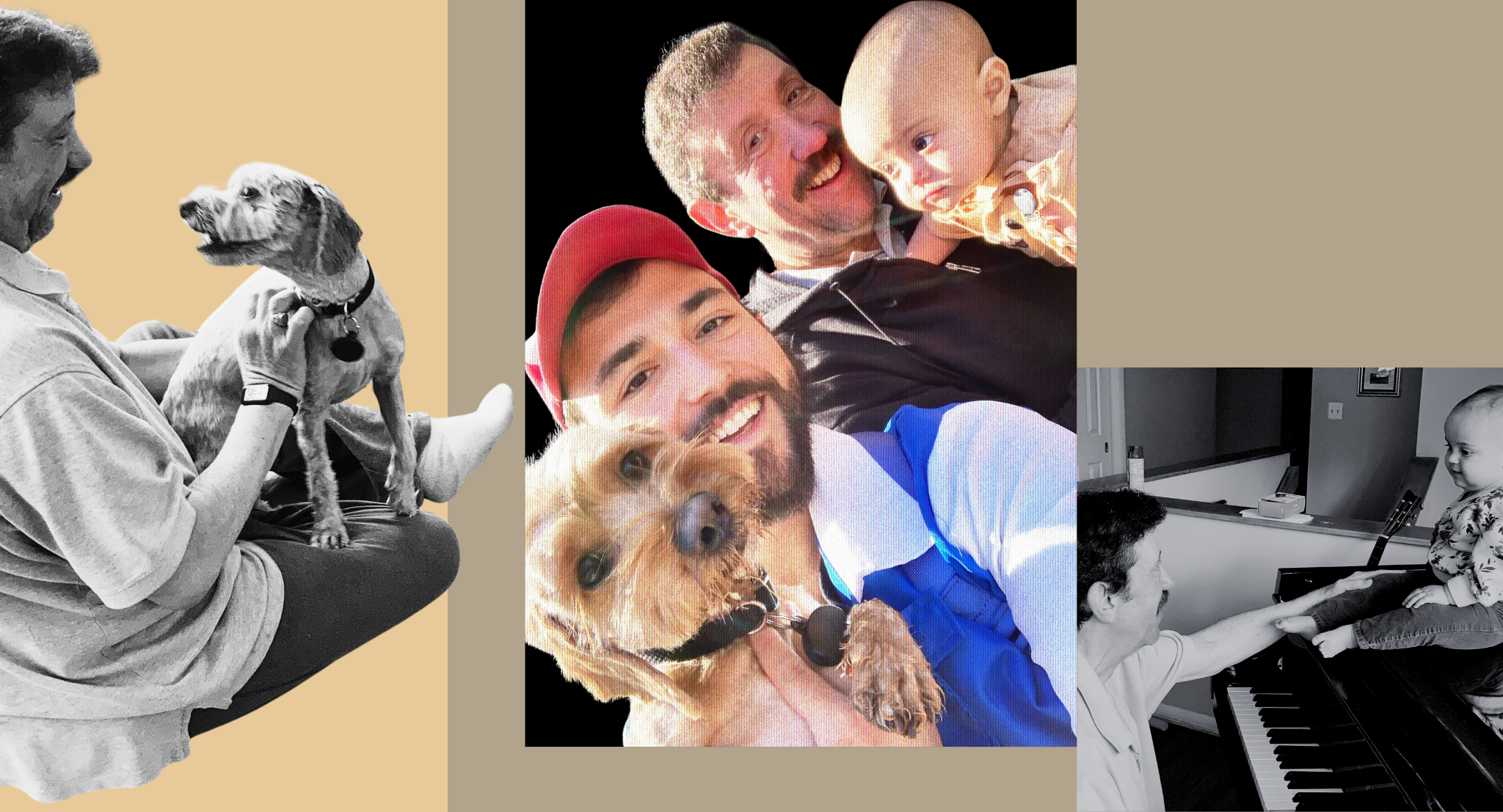
Over that year, my one-and-a-half year-old daughter and I regularly visited my dad in my childhood home for Shabbos, and I got to see the world I once knew, and was slowly losing, through the eyes of someone just learning about it.
My daughter and I walked to the cow field across the street and ventured through thick snow to the edges of our tree-filled backyard. She mastered walking in my childhood living room, a space bigger than our New York City apartment. She learned to say “Zaidy,” and even today, she still asks to see him. On Pesach, my wife rented a boat for us to cruise around over Chol HaMoed, knowing my father loved being on the water. It was the most at peace we had seen him during his illness, aside from the moment his soul departed a few months later, ironically in the hospital that faced the dock where our boat set sail. Fighting for him is what gave us—and him—those moments. In a way, that was a victory, even if it was not the one we hoped for.
To crystallize Ya’akov’s experience into a mitzvah—prohibiting the consumption of the gid hanashe—instills within our people a constant reminder to face challenges the way Ya’akov did when he kept moving forward despite his injuries. We mustn’t give into momentary pain or despair. Instead, we should strive to emulate people like Rabbi Akiva who—in addition to sharing the root of Ya’akov’s name, עקֹב—shared this outlook when he traversed the ruins of the Beit Hamikdash and laughed while his compatriots cried (Makkot 24a). Where his colleagues wallowed in the misery of the devastation of the present, he laughed at the glimmer of future redemption he sensed amidst the destruction. We need to look for what lies beyond or outside of our pain, and not linger in it. Victory doesn’t just include surviving, but finding goodness in moments of darkness along the way.
The Zohar connects certain mitzvot with specific days of the year, claiming that something about the particular mitzvah is relevant to that particular day, and the mitzvah it connects to Tisha B’Av is to refrain from eating the gid hanashe. While offering its own explanation, I would like to suggest that their connection can also teach us about the nature of the loss we are supposed to experience on Tisha B’Av. As we recall the loss of our Temples in Jerusalem, like Ya’akov we must withstand the pain of our history, stand up at midday, look for the good in our lives, and move forward.
Looking back at the memories of my father, Jay Hollander, called to the Torah as “Yaakov Eliyahu ben Tzvi Yitzchak,” I hold onto the memories of his life, rather than ruminate on the moments of his death. I choose life, despite my pain and loss, like Yaakov our forefather did, and I fight for life like Yaakov my father did that Friday morning, in the hospital, as he held my hand to give me that bracha. Each day I do that is a victory.