

I Read This Over Shabbos is a weekly newsletter from Rivka Bennun Kay about Jewish book culture, book recommendations, and modern ideas. Receive this free newsletter every week in your inbox by subscribing here. Questions, comments, or feedback? Email Rivka at Shabbosreads@18forty.org.
Have you ever read a book and thought to yourself that it would make an amazing movie? Here’s my little secret: I have not only done this, but on three separate occasions I have actually reached out to the author to find out if the movie options were available.
The first time was for Bruce Coville’s Magic Shop series, which was like an earlier version of Harry Potter. Mr. Coville was actually gracious enough to respond to my email, but alas his books have still not been produced into a film (let me know if you want to chip in!).
The second time I did this was after reading Alan Lightman’s Einstein’s Dreams, an incredible collection of short stories that imagine a world operating under different conceptions of time. This book was, in fact, made into a play—but the movie still has never happened.
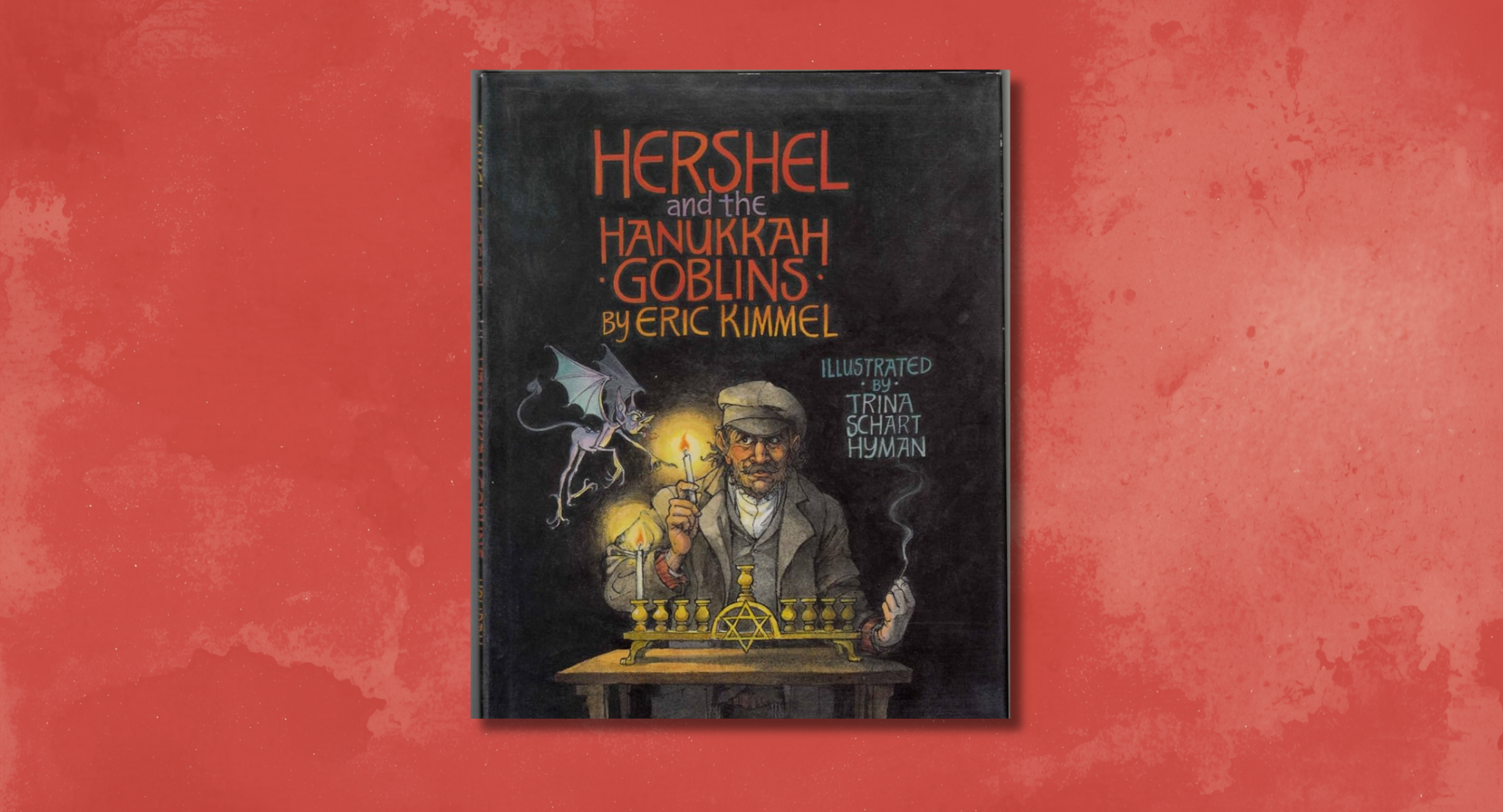
Finally, I emailed Eric A. Kimmel whose book Hershel and the Hanukkah Goblins remains for myself and so many others an absolute Chanukah favorite. It’s still not a movie, but he responded quite graciously! Before we discuss his response, allow me to share a brief refresher course for those who may be unfamiliar with this classic work of children’s fiction.
Hershel, a peripatetic Jew, wanders upon a Jewish village on Chanukah and notices that no one is lighting Chanukah candles. The villagers explain to him that a group of goblins have been tormenting the village during Chanukah and the only way to stop them is to get the king of the goblins to light the Chanukah candles himself. Hershel, ever the brave adventurer, treks to the shul on top of the hill to defeat the Goblins.
Each night of Chanukah a different goblin comes to stop him from lighting Chanukah candles and each night Hershel outsmarts them. He convinces one goblin he’s super strong by crushing an egg, which he convinces the goblin is a rock. Another goblin is thwarted when Hershel, playing into the goblin’s greed, gets his hand stuck in a pickle jar.
Finally, Hershel is visited on the last night by the King of Goblins. But Hershel has a plan. The lights in the synagogue are all extinguished and when the imposing silhouette of the King of the Goblin appears, Hershel remains stoic. “IT IS I, THE KING OF THE GOBLINS!” the imposing figure announces. Hershel remains unmoved. “Don’t be silly, you’re one of the boys from the village—you’re trying to scare me.”
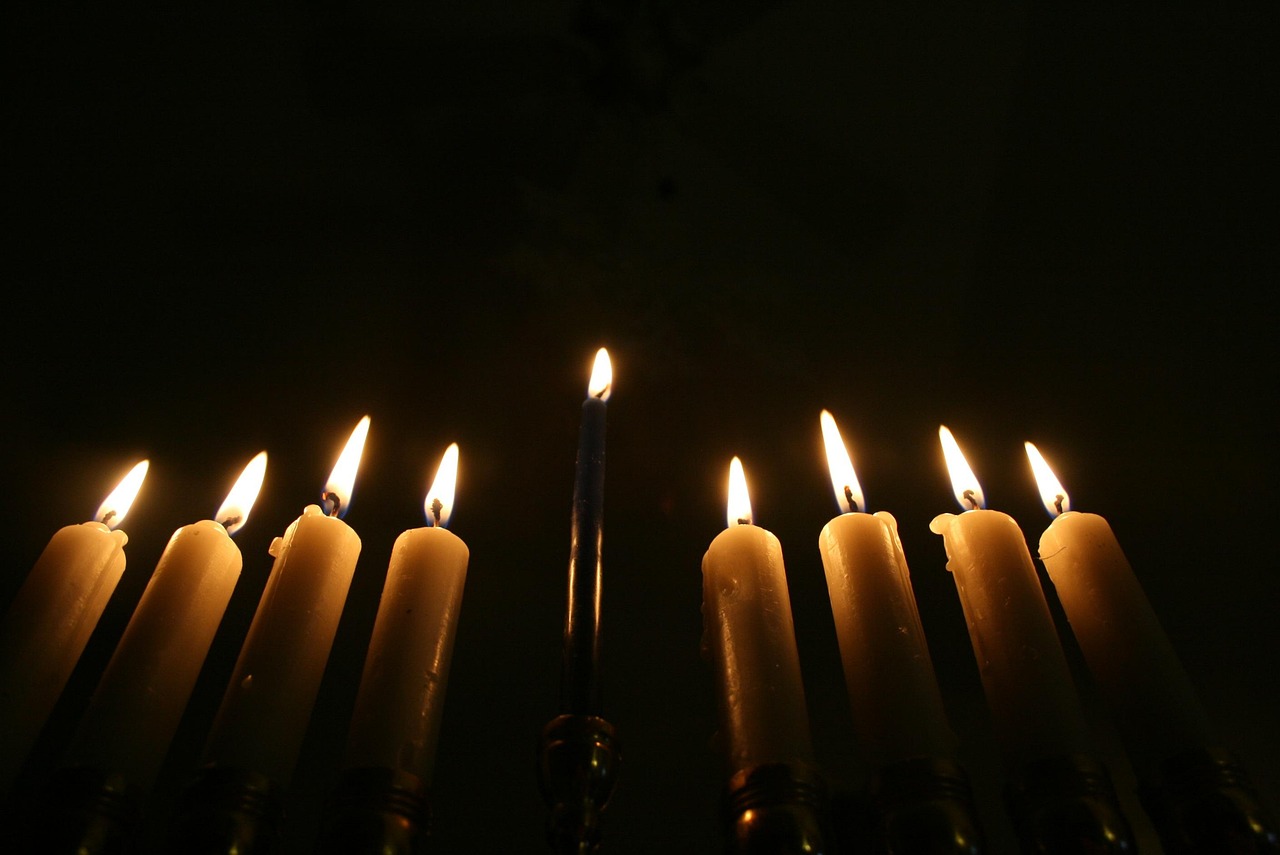
Frustrated, the King of Goblins tries to figure out how he can convince Hershel that he is, in fact, the King of the Goblins. And here is where Hershel makes his move. “It’s too dark,” Hershel explains, “if you want to convince me you need to make it brighter.” So the King of the Goblins, in order to convince Hershel who he is, lights some candles. Unbeknownst to the King, these are the Chanukah candles and with that the Goblin’s reign of terror is ended.
It’s a cute enough story. It certainly remains a part of my nostalgic Chanukah memory. But there is also a rather profound lesson contained within. “In the very place you struggle most,” explains Rav Tzadok of Lublin (Tzidkat HaTzadik #49), “is the area that contains the most potential for spiritual transformation.”
There are two ways to approach a person’s struggles: you can ignore them or you can transform them. Sometimes we try to distract ourselves—we ignore our deficiencies; we focus on areas other than our failure. Chanukah, however, reminds us that there is indeed another way. Instead of fleeing from our proverbial goblins, we transform them into sources of light. Instead of waiting for daybreak, on Chanukah we illuminate the night and transform the darkness.
I shared this message with the author Eric Kimmel. His response was powerful:
I didn’t write Hershel with a particular message in mind. My task, as I see it, is to tell a story. Readers will create their own understandings that grow out of their own experiences and needs. Your response is a good one, and valid. One point I hoped the story would make is that Hershel defeats the goblins without magic or super powers. If kids think superheroes are going to save the day, we’re lost. Those folks don’t exist. All we have are the powers within us.
And this is, I think, the lasting message of Chanukah. In a darkened world, Chanukah reminds us that the true power to change and transform the world for good is not by wearing a cape and flying around fighting crime. It’s not, despite all of my original efforts, from the characters we find in movies. “All we have are the powers within us.”