

Reading Jewish History in the Parsha is a weekly newsletter from 18Forty, where guest writers contribute their insights on Jewish history and its connection to the weekly parsha. Receive this free newsletter every week in your inbox by subscribing here. Questions, comments, or feedback? Email Rivka Bennun Kay at Shabbosreads@18forty.org.
Why do we fast on the ninth day of the month of Av, why are the first nine days of the month a time of mourning, and why should we still mourn today? The answer to the first two questions is found in the Mishna Ta’anit iv.6, while the answer to the third is connected to current events in Israel. The Mishna teaches that five calamities befell the Jewish People on the 9th of Av:
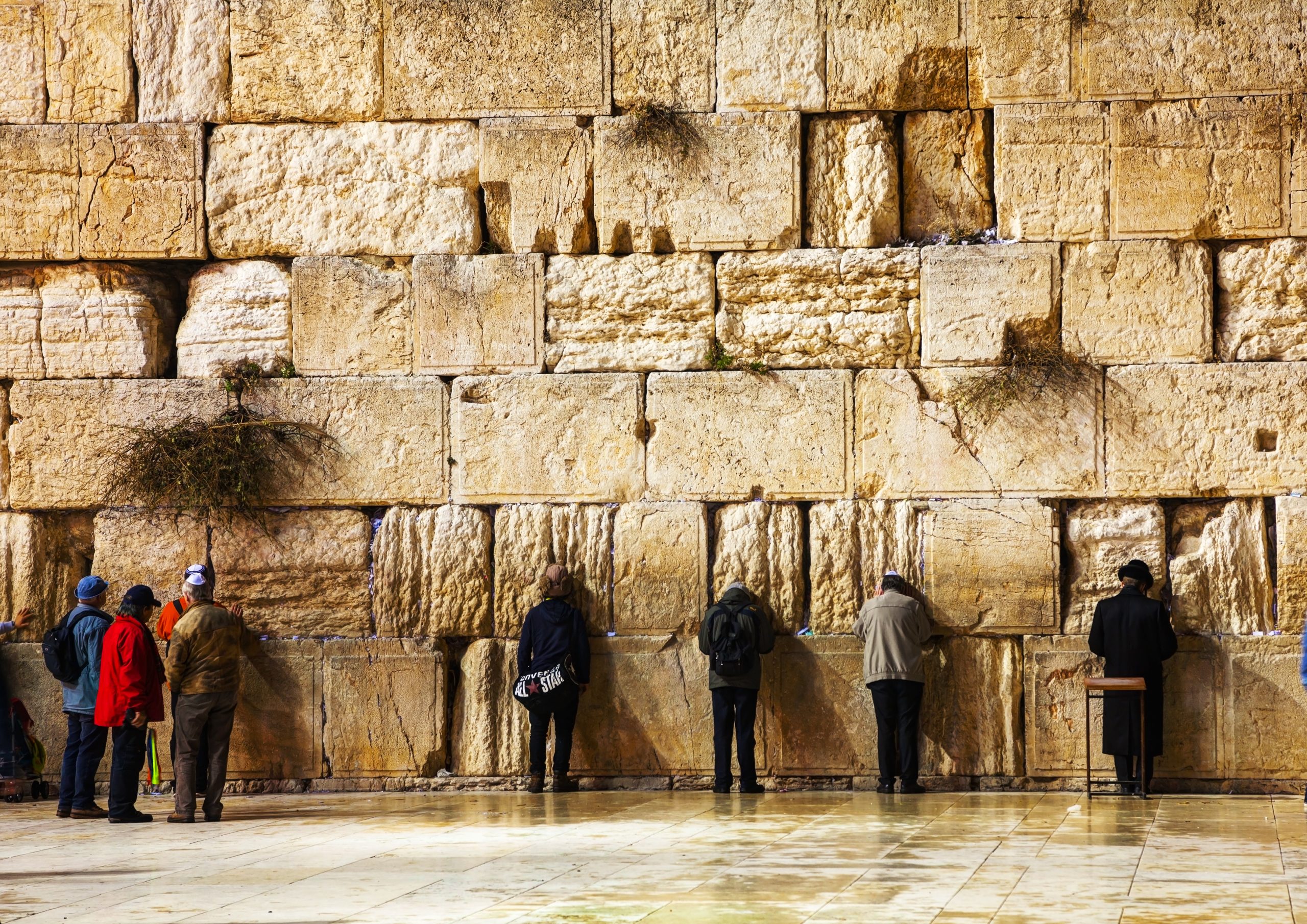
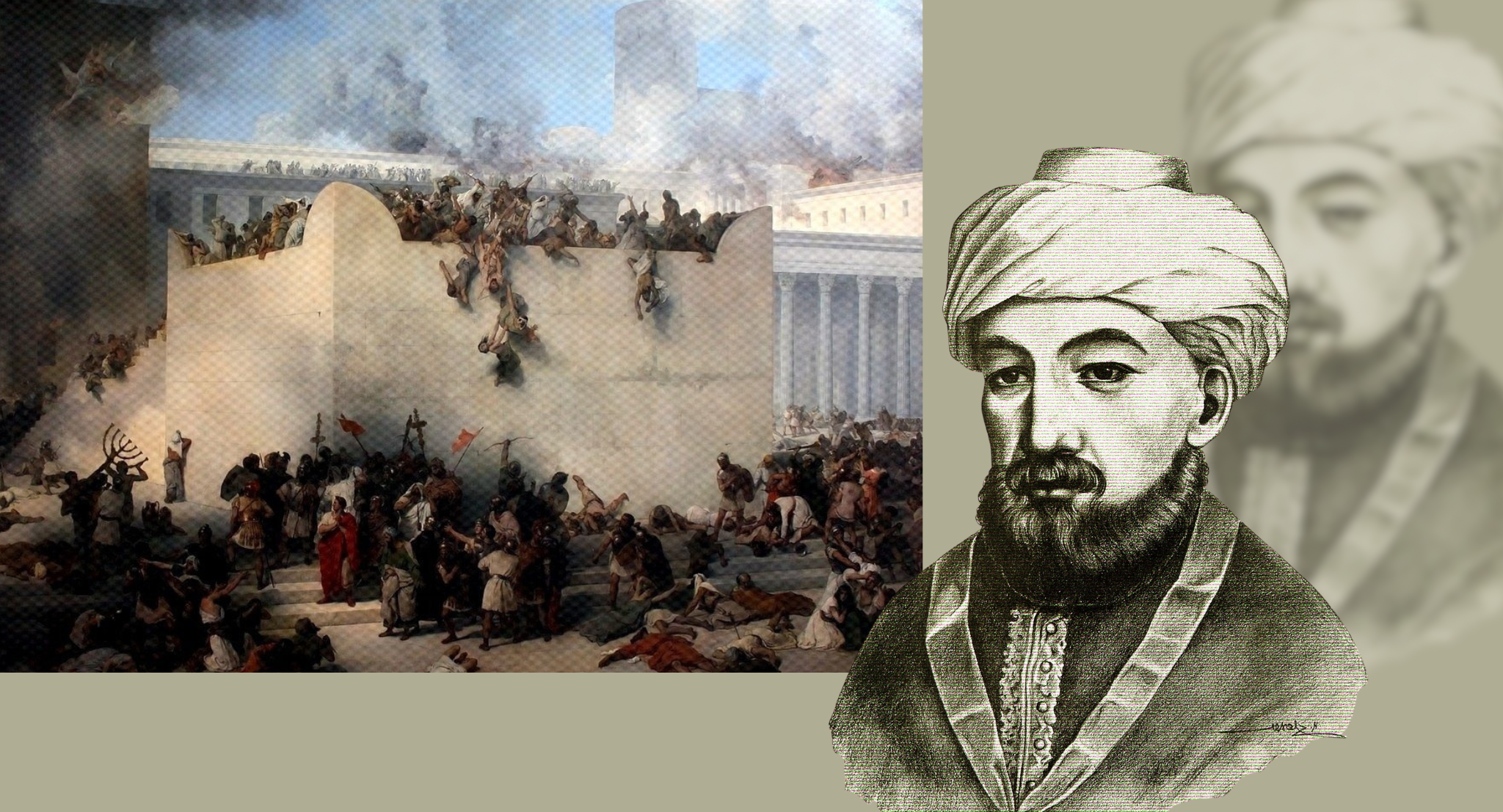
On the Ninth of Av it was decreed upon our ancestors that they would all die in the wilderness and not enter Eretz Yisrael; and the Temple was destroyed the first time, in the days of Nebuchadnezzar, and the second time, by the Romans; and Beitar was captured; and the city of Jerusalem was plowed, as a sign that it would never be rebuilt. Not only does one fast on the Ninth of Av, but from when the month of Av begins, one decreases acts of rejoicing.
Rambam explains that we fast on the Ninth of Av in order to repent for our sins, and the sins of our ancestors (Mishneh Torah, “Laws Concerning Fast Days,” chapter 5):
There are days when the entire Jewish people fast because of the calamities that occurred to them then, to arouse [their] hearts and initiate [them in] the paths of repentance. This will serve as a reminder of our wicked conduct and that of our ancestors, which resembles our present conduct and therefore brought these calamities upon them and upon us. By reminding ourselves of these matters, we will repent and improve [our conduct], as [Leviticus 26:40] states: “And they will confess their sin and the sin of their ancestors.”
Rambam continues by describing our behavior during the eight days of mourning before the fast: “When the month of Av enters, we reduce our joy. During the week of Tisha B’Av [itself], it is forbidden to cut one’s hair, to do laundry, or to wear a pressed garment—even one of linen—until after the fast.”
Rambam describes his own behavior on the day before the fast:
A person would sit alone between the oven and the cooking range. Others would bring him dried bread and salt. He would dip it in water and drink a pitcher of water while worried, forlorn, and in tears, as one whose dead was lying before him. The scholars should act in this or a similar manner. We never ate cooked food, even lentils, on the day before Tisha B’Av, except on the Sabbath.
It is comforting to note that Rambam ends his discussion our chapter of “Laws Concerning Fasts,” as follows:
All these [commemorative] fasts will be nullified in the Messianic era and, indeed ultimately, they will be transformed into holidays and days of rejoicing and celebration, as [Zechariah 8:19] states: “Thus declares the Lord of Hosts, The fast of the fourth [month], the fast of the fifth [month], the fast of the seventh [month], and the fast of the tenth [month] will be [times of] happiness and celebration and festivals for the House of Judah. And they shall love truth and peace.”
But for the moment, we have not yet reached the Messianic era and still have much for which to repent. For which sins do we repent? The prophet Jeremiah (ch. 9) asks, “Why is the land in ruins, laid waste like a wilderness, with none passing through?” The prophet answers in God’s name: “Because they forsook the Teaching I had set before them. They did not obey Me and they did not follow it, but followed their own willful heart and followed the Baalim, as their ancestors had taught them.”
Reflecting Jeremiah, our Sages explained in our liturgy that “It is because of our sins that we were exiled from our Land…” What were the sins that brought about the destruction of the first Temple? The Sages say that it was the three so-called cardinal sins (Yoma 9b): idol worship, forbidden sexual relations, and bloodshed.
Thus far—Bible and Talmud. In that context, Rambam asks what was our “wicked conduct,” from which we are meant to repent? In a remarkable text, Rambam focuses on the first of the three sins, and interprets it in an unusual fashion:
This is why our kingdom was lost and our Temple was destroyed and we were brought to this: for our fathers sinned and are no more because they found many books dealing with these themes of the stargazers, these things being the root of idolatry, as we have made clear in “Laws Concerning Idolatry” (i.1 and xvi, end). They erred and were drawn after them, imagining them to be glorious science and to be of great utility. They did not busy themselves with the art of war or with the conquest of lands, but imagined that those studies would help them. Therefore, the prophets called them “fools” and “dolts.” And truly fools they were, “for they walked after confused things that do not profit” (1 Sam 12:21).
Let us unpack this answer and then try to understand what brought Rambam to his clearly realpolitik answer to Jeremiah’s lament. The first temple was destroyed, and the Jewish people exiled from their land, because of something they did, not because of any punishment sent by God. Destruction and Exile were consequences of the behavior of the Jews, not a punishment ordained by God. Rambam’s answer is political, not theological: Instead of learning the “art of war,” the Jews relied upon astrology to guide their behavior. Astrology, Rambam insisted, was the root of idolatry. That is the burden of the first chapter of “Laws Concerning Idolatry.” Idolatry in turn is the opposite of Torah (“Laws Concerning Idolatry,” ii.1; Guide to the Perplexed iii.29, iii.30, and iii.37).
Anyone who has carefully studied Rambam’s views on the Messianic process (“Laws Concerning Kings and their Wars,” chapters xi and xii) will not be surprised by Rambam’s political take here. Why do we blame God for not sending the Messiah? Rather we should blame ourselves; it is up to us to make the world “Messiah-worthy.” God empowers us so that we are responsible for what happens to us; God does not make events happen (except in the most general sense). This is parallel to Rambam’s views of prophecy, providence, immortality and of reward and punishment: Each is a consequence of what we do, not a gift from God. In Rambam’s Judaism God challenges us; God does not give us presents on a silver platter. Thus, prophecy is an attainment of the prophet, not a gift from God (Guide, ii. 32-48). Providence and human immortality are a consequence of what we do, as are divine rewards and punishments.
Rambam’s view is immensely empowering. What happens to us is up to us. God is not excluded from this picture; it is the way He created the world. The sense of human empowerment here is vastly different from the Kabbalistic sense of human empowerment, according to which our behavior theurgically satisfies a divine need—nothing could be further from Rambam’s Judaism. Rambam’s God does not need our help, but, rather, challenges us to help ourselves.
We are now able to answer the question posed above: Why do we still mourn today?
Failure to serve in the IDF in our day reprises the sin which brought about the destruction of the first Jewish Commonwealth in 586 BCE. In my view, relying upon miracles (such as the view that Torah study protects a country at war which does not make the effort to protect itself) instead of learning “the art of war” is tantamount to idolatry. Idolatry is the one unforgivable sin, no matter who or what we idolize.