

I Read This Over Shabbos is a weekly newsletter from Rivka Bennun Kay about Jewish book culture, book recommendations, and modern ideas. Receive this free newsletter every week in your inbox by subscribing here. Questions, comments, or feedback? Email Rivka at Shabbosreads@18forty.org.
My first Elul after midrasha was challenging. I felt stuck in Midtown, ever so distant from where I wanted to be—in the beit midrash with hundreds of other women, singing the tunes of the Yamim Noraim loudly and passionately, praying and demanding for closeness to God. That Elul, I needed to read something that would make me feel like it was Elul.
That’s how, one Sunday evening in late August that year, I found myself on the beach, pencil in hand, and a copy of When God is Near by Rabbi Yehuda Amital.
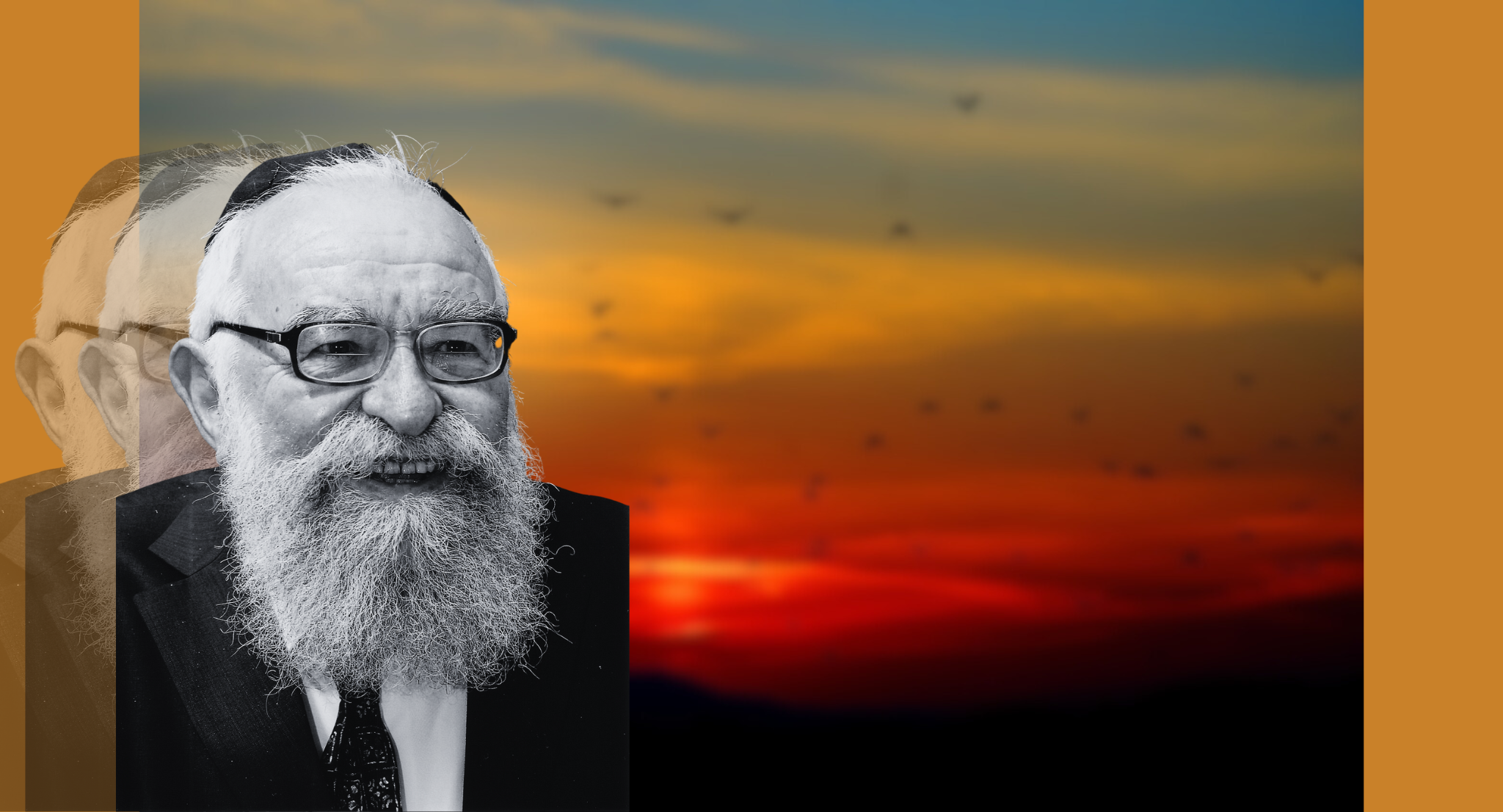
Rav Amital, whose 15th yahrtzeit was commemorated last month, is someone whose Torah I often return to, because it is a Torah of humility, compassion, and integrity. When God is Near is a compilation of decades of sichot that Rav Amital would deliver at Yeshivat Har Etzion during the Yamim Noraim.
Below, I have compiled a number of passages from the book that have struck me over the years. I encourage you to read this book over the next few weeks; beyond enhancing my appreciation for Rav Amital as a leader and visionary, it has shaped the way I approach teshuva and the Yamim Noraim.
Interpersonal teshuva means looking for the best in others:
Repentance begins between man and his fellow, in the home and the beit midrash, in the way one receives other people. All of us are excellent at criticizing and judging others. On the other hand, we are adept at justifying and rationalizing. Generally, we apply our criticism to others, while we justify our own behavior. At this time of repentance, we need to do the reverse: We need to be critical of ourselves, and look for the best in others.
God as Shaliach Tzibbur:
The verses emphasize the loftiness of the Lord. Yet, we move from these expressions of God’s grandeur to the Thirteen Attributes of Mercy. This reminds us that, even though God is great and grand, when the Thirteen Attributes were said, He wrapped Himself in a tallit like the sheliaḥ tzibbur. In so doing, He was saying to Moses: Even though I am lofty and grand, I put Myself in the midst of the Jewish people, I pray with them as their sheliaḥ tzibbur. When I reveal Myself, I take a human form and exhibit human attributes. This is why Hazal teach us that this would be forbidden to say were it not written explicitly in the biblical text. When God dwells in our midst, it is as if He joins us in prayer.
The redemption of man’s true self:
We must open our hearts to our true identity, our true calling and destiny, instead of trying to run away from it as Jonah tried to run away from God. It is said in the name of the Shelah (Kitzur Shelah 101) that there is special merit in reciting a verse at the end of one’s daily prayers that begins and ends with the same letters as one’s own name, in order to remember one’s name on the Day of Judgment. This teaches us the danger that a person may forget his name on the Day of Judgment; he may deny his true identity. Throughout the year, throughout one’s life, a person can conceal his real “I,”and present an artificial self, while the real “I” is in exile, in the sense of “I was in the midst of the exile”…
But on the Day of Judgment and Yom Kippur, we try to identify our true nature, our inner essence. On the Day of Judgment and on Yom Kippur a person stands with his real name… We should pray from the depths of our hearts and the inner chambers of our souls, and plead, “Purify our hearts to serve You in truth.”
Before God, no one’s blood is redder:
It is important to emphasize we stand in judgment before God as individuals. The thought that I might be judged favorably simply because I have observed more mitzvot than someone else is totally wrong … Unfortunately, some people think they are more beloved to God than others because they belong to a community that is more religious, more spiritual, more exacting in its fulfillment of the commandments. They believe that by virtue of their mitzva observance their “blood is redder.” That is simply unspeakable. We cannot know another person’s history, where he came from, or where he began. Maybe I received a better religious education than he did; maybe if he had grown up where I did and in the same circumstances, he would have achieved far more than I have done.
Man as Shaliach Tzibbur:
Every Jew in every generation is a sheliaḥ tzibbur. Nearly all of the High Holiday prayers speak not of the individual, but of Israel, the world, the restoration of Jewish monarchy, and so on. If we said only those prayers composed by the Members of the Great Assembly, we would not say a single personal prayer. Fortunately, the Sages over the years added such prayers as Avinu Malkenu and UNetaneh Tokef, which also give expression to personal concerns. But the primary prayers speak exclusively about Israel as a people. As a result, an individual must stand in prayer as a sheliaḥ tzibbur.
God seeks our kindness and our emotions:
God seeks the attribute of kindness within us. “You have sought praise from those full of feeling, who set forth their cry, calling out supplication, awaiting pardon, and that is Your honor” (from the Yom Kippur service). God does not expect us to be angels or robots devoid of emotion, unfeeling, incapable of crying out. God seeks the person in whose heart rages the ongoing struggle between the obligation to perform the commandments of the King and his instinctive feelings of kindness and mercy.
The Zichronot bring us into God’s inner chamber:
Why does our remembrance before God bring us into that holiest of places? Because when our remembrance comes before Him, it is not a distant recollection, as when a person says, “From afar the Lord appeared to me” (Jer. 31:2), or “Remember the Lord afar off” (51:50). It is a memory in which God accompanies the person, as it were, and brings him into His inner chamber. Then a person really feels God’s Presence. This is a remembrance in the sense of “This is my God and I shall extol Him” (Ex. 15:2).
The teshuva of Shabbos:
The source for the mitzva of teshuva is, “Then they shall confess their sin which they have committed (Num. 5:7). As we know, on Shabbat we do not say Viduy; what mode of teshuva, then, is appropriate for Shabbat? It seems that the teshuva of Shabbat is undertaken not through words – verbal confession – but rather through self-examination…
The teshuva of the individual entails examination of oneself, of God’s demands of him as an individual. This self-examination must take place within the person. When we examine things from without, we tend to attribute events and actions to external circumstances, but when one engages in self-examination, a person comes to the realization that “it is because my God is not in my midst that these troubles have befallen me (Deut. 31:17). I must look to myself for the explanation.