

When I first encountered the religious worldview of Orthodox Judaism, I was already a year into a degree in microbiology. Questions about the relationship between Torah and science naturally shaped my early journey into Jewish thought. And though subsequent years spent in yeshiva, kollel, and graduate study in Jewish philosophy have given me many satisfying answers—they have also opened a deeper question.
Amid the debates about evolution, cosmology, or miracles, I found striking consensus on one point: that studying nature itself, with an eye toward its moral and spiritual meaning, is a core Jewish value. Yet I was puzzled to see how little this ideal seemed to shape the life of the yeshiva community—and the broader Orthodox community—I had come to love.
My surprise only deepened as I turned to the classical sources. An emphasis on worldly wisdom appears throughout our tradition, grounded both in Talmudic teachings and later works of Jewish thought. Rabbi Yaakov Tzvi Mecklenburg, author of HaKsav VehaKabbalah, expressed this vividly in his approbation for Yosef Schoenhack’s Toldos HaAretz, a Hebrew work on natural science:
Regarding the author’s request that I give my approval for publication … I am very astonished … For a book dealing with such lofty subjects, the request for an approbation is superfluous. For which Israelite does not know the great benefit that comes from sciences such as these? Who does not understand that from the laws of creation, every intelligent person will recognize his Creator?
Rabbi Mecklenburg goes on to cite the medieval ethical classic, the Chovos HaLevavos, as well as the foundational text of the Kabbalah, the Zohar, as important precedents for this view. He also notes that Rabbi Eliyahu of Vilna, the illustrious Vilna Gaon, instructed his students to translate as many works of science into Hebrew as possible. Rabbi Mecklenburg’s approbation gives the impression that across the spectrum of Jewish thought—from philosophers to kabbalists, from Ashkenaz to Sefarad—the study of God’s creation is embraced as a vital aspect of avodas Hashem, as a pathway to serving our Creator.
And yet, it is difficult to find a major Orthodox institution that devotes sustained attention to this dimension of Torah. Within my own religious journey, I repeatedly encountered the view that the natural world has little to teach us. The sense of wonder I had experienced peering through my microscope was, at best, a spiritual stepping stone, but it certainly had no place in a formal yeshiva education.
This bias seems to be implanted directly by our institutions. In most yeshiva high schools, the study of science appears only as part of the required “secular” curriculum, largely detached from the spirit of Torah learning that animates the rest of the day. The result is that a pursuit once envisioned by our sages as a path to deeper faith has become, in practice, a marginal concession to foreign concerns.
To be fair, there have been voices within the yeshiva world that urged renewed attention to the wonders of creation. Among them, Rabbi Avigdor Miller stands out. His books and lectures continue to inspire countless students to see God’s wisdom in every corner of creation. Yet his position is often invoked without appreciating just how far he took it.
After cautioning that one should not interrupt Torah study merely to enjoy the beauty of nature, Rabbi Miller adds:
But if he’s enjoying it in order to see the chochmas Hashem and chesed Hashem, and to express his gratitude to Hakodosh Boruch Hu, that’s not stopping. Suppose a person is learning Bava Kama, and he stops Bava Kama to learn Bava Metziah in the middle, is it a sin? What of it? It’s stopping Torah to learn Torah.
Rabbi Miller’s equation of textual Torah study with the “Torah of nature” is striking. It suggests that seeing the hand of the Creator in the natural world is not a diversion from Torah learning but an expression of it, no less valuable than studying a tractate of Talmud. Even so, this outlook rarely finds institutional expression in Orthodox education today. For those who care about the flourishing of these institutions, the question now becomes: Can and should we attempt to reintegrate these two facets of Torah study, and if so, what form should such a reintegration take?
Fortunately, we need only look back to one of the great architects of the yeshiva world itself, Rabbi Yerucham Levovitz, who wrote extensively on this subject and firmly endorsed an integrated approach.
Rav Yerucham (1875–1936), the legendary mashgiach of the Mir Yeshiva, remains one of the central pillars of the yeshiva world. His works—intellectually rich and psychologically profound—continue to shape the moral and spiritual imagination of generations of students. Among his many teachings, one stands out for its enduring relevance yet relative neglect: Rav Yerucham taught that the very purpose of Torah study is to reveal the world itself as a boundless beis midrash—a universal house of Torah study.
Rav Yerucham lived at a time of rising antisemitism, poverty, and secularism—an era that demanded courage simply to preserve Torah life. He would likely have marveled at the stability and abundance of today’s Jewish institutions. Yet he never saw the continuity of the yeshiva world as requiring retreat from the wider world. On the contrary, he taught that true commitment to Torah demands a deeper engagement with God’s creation—a view firmly rooted in the classic sources of Jewish thought.
The Universal Beis Midrash
The beis midrash is the heart of Jewish learning—the study hall where Torah is pored over day and night. Yet for Rav Yerucham, its walls must not constrain the universality of Torah study. All of reality is stamped with divine insight, and man’s task is to treat the world itself as a vast beis midrash.
In his Daas Chochmah U’Mussar (I:67), Rav Yerucham makes a striking claim:
The difference between nature and the commandments is only in the force of the inclination … With respect to the learning itself there is no difference at all, only that in the marketplace it is harder, because of the force of the inclination that is there.
In other words, Torah study and the study of nature are not two distinct pursuits. Both reveal the same divine truth, expressed through different media. The beis midrash provides a quieter space in which to discern it; the “street” demands greater strength of focus.
This perspective reframes the familiar discussion of Torah and “secular” studies. The question is not whether Torah wisdom exists beyond the beis midrash—Rav Yerucham insists that it does—but whether we have the inner discipline to perceive it amid the noise of the marketplace.
But why, we might ask, do we need both? If Torah already contains God’s wisdom in a more digestible format, why turn to the natural world at all?
A Trip to the Zoo
Rav Yerucham seems to address this question through a personal recollection:
Once, when I was in a zoo of animals and birds, I grasped many things which I never would have grasped otherwise—and yet all of that is as nothing compared to what we can discern from the great zoo that is the whole of creation. It is a mistake to think that only a special corner, a dedicated house of study, deserves to be considered a place of wisdom. In truth, there is no part of creation that is empty of wisdom, for all of it was designed to teach man.
—Daas Chochmah U’Mussar I:97
For Rav Yerucham, the zoo offered lessons that could never have been learned within the traditional beis midrash. It revealed wisdom embedded in life itself. He challenges the assumption that Torah is confined to sacred space and urges us to study the “great zoo” of creation with the same reverence and curiosity we bring to the study hall.
This study, he insists, is not an elective pursuit but the fulfillment of our natural capacity for understanding. Commenting on the Talmudic saying, “Had the Torah not been given, we would have learned modesty from the cat” (Eruvin 100b), he writes:
We see that human beings by nature are fashioned in such a way as to learn from others. If a person sees precious qualities in creation—exalted traits of great refinement—and discovers within himself an endless dignity and nobility that renders him capable of the same, then why indeed should he not learn from them? The deficiency lies in man’s mistaken thought that nature is nothing but lifeless pieces of wood, while he alone is the wise one. How then could he learn from nature? But if he knew that ‘there is no sage like nature’ (Avos d’Rebbi Nosson 28:1), and that he stands before a great sage, then he would surely think differently. He would stand before nature with the greatest respect—as before a supreme wisdom, which indeed it is.
—Daas Torah, Parshas Naso
For Rav Yerucham, the world itself is a Torah text. To ignore its lessons is not humility but blindness—both to the purpose of creation and to our own divine capacity for understanding.
The Torah’s Ultimate Goal
Rav Yerucham takes this vision even further. In Daas Chochmah U’Mussar I:15, he writes: “The ultimate purpose of the Torah is to make known to us the essence of nature.” The Torah is not merely a parallel track of wisdom, offering simplified truths about reality; it is a divine guide to the wisdom within the world itself. The mitzvos are not substitutes for creation’s wisdom, but the practices that train us to recognize it.
Here, the physical beis midrash assumes its true role. Rav Yerucham explains that synagogues and study halls are necessary because “the path to reaching this level is only through the quality of being a ‘dweller of tents.’ That is the order of things: through the life of one who ‘dwells in tents’ (Bereishis 25:27), a person becomes worthy that all of creation will turn into a house of study for him.” Immersing ourselves in Torah within the walls of the beis midrash trains us to see that the greatest beis midrash is nothing less than the world itself.
This is perhaps the most revolutionary aspect of Rav Yerucham’s vision. Even among those who find a place for madda within the halls of Torah, or who feel that Torah must be complemented by derech eretz, the relationship between the two domains often remains poorly defined. But it is precisely here that Rav Yerucham offers exceptional clarity: Like a detailed map, Torah shows us how to navigate the world and discover the moral beauty that permeates it.
Yet Rav Yerucham warns that the process can reverse:
Just as, from the side of holiness, when a person makes a house of study, gradually all of creation becomes for him a house of study—so too, in the opposite direction, on the side of estrangement: when creation itself is transformed for him into nothing but wood and stone, then with time he will reach the point where even the house of study itself is transformed for him into nothing more than a street. For just as creation can be profaned, so too can the house of study be profaned.
This is a sobering thought. To the extent that we fail to see the world as Torah, we risk hollowing out even the beis midrash itself. A house of study that does not open outward to the greater beis midrash of creation will eventually collapse inward, becoming just another building—no different from the street outside.
Rav Yerucham is not describing an abstract harmony between Torah and nature. He is calling for an active discipline: to study the sugyos of reality itself, to draw living lessons from the “great zoo” of creation. For him, true Torah learning culminates not in withdrawal from the world but in perceiving the divine wisdom that animates it.
Roots and Branches
Though Rav Yerucham’s formulation is distinctive, the idea has deep roots. The Talmud relates that when Rabbi Akiva studied the laws of ritual impurity concerning various animals, he would pause to reflect on their habitats, noting that what sustains one species is fatal to another. From within his halachic study, he was moved to exclaim, “How great are Your works, Hashem; You made them all with wisdom!” (Chullin 127a). Crucially, Rabbi Akiva did not claim that this ecological insight was explicit—or even implicit—within the halacha. Rather, his Torah learning naturally expanded into contemplation of the created order. The halacha simply served as the bridge to wonder.
The great sages of the medieval period carried this discipline forward. For sages like Maimonides, Gersonides, Abarbanel, and Rabbi Moshe Isserles, the commandments are designed to guide the mind and heart toward perceiving the divine wisdom embedded in the world. The Torah’s laws are not alternatives to nature’s wisdom but instruments for attuning ourselves to its depth.
Rav Yerucham’s own disciples made this orientation a lived practice. Rabbi Shlomo Wolbe, in his Alei Shur, instructed his students to derive moral insight from animals three times a day—also emphasizing that actionable lessons for moral behavior should take precedence over a general appreciation of the divine wisdom manifested in these creatures. In other words, the natural world must be studied, not merely admired.
Perhaps it is Rabbi Tzadok HaKohen of Lublin who gives this principle its most precise formulation: God’s book is the world itself, and the Torah is its commentary. The world is meant to be read as a sacred text, and the Torah’s greatness lies in making that text intelligible to us.
The Untapped Torah of Reality
Rav Yerucham’s vision is as urgent now as it was in interwar Mir. Our batei midrash overflow with brilliance, producing a steady stream of new volumes and insights. Each year brings illuminating works on the most intricate sugyos of the Talmud. But where are the sacred books on the sugyos of reality—the Torah of the forest path and the city street, the wisdom hidden in architecture and ecology, in the flight of birds, the rhythms of society, and the stars that move above us?
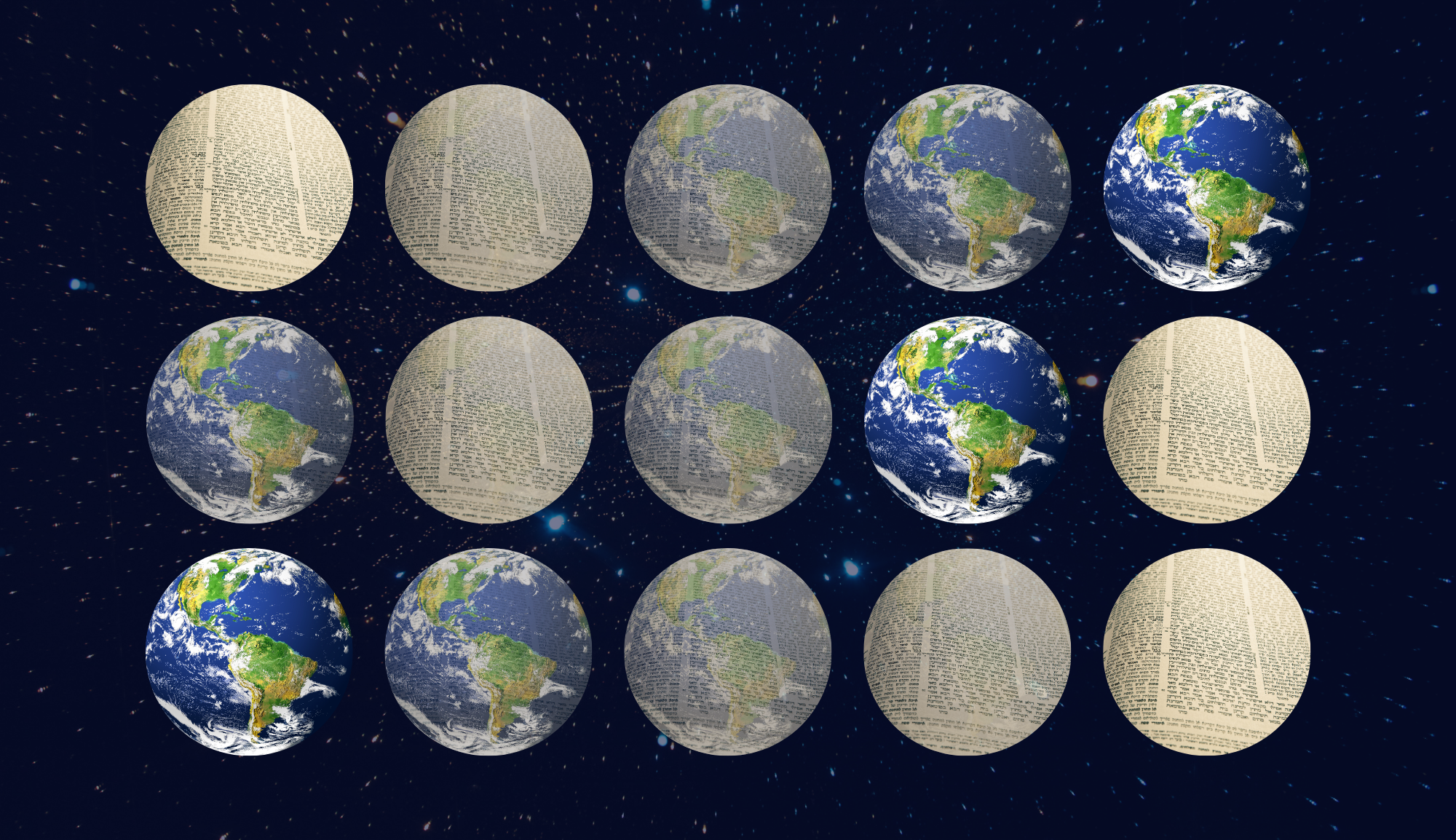
If Rav Yerucham is right, the domain of the beis midrash is not meant to contain Torah but to expand it. It is a laboratory for cultivating eyes that can see Torah everywhere. The true measure of our institutions is therefore not the number of pages learned, nor the depth of their chiddushim, but whether their students walk outside and recognize that the world itself continues the shakla vetarya—the give and take of Jewish wisdom.
For Rav Yerucham, this vision demands daily discipline: “A person, all the days of his life, must occupy himself with the honor of creation … and not a day should pass without him reflecting on this matter and engaging with it.” Torah learning reaches its fullness when it becomes a constant posture—when every detail of creation is honored as an articulation of divine wisdom.
Perhaps our generation is ready to take up that challenge: to build a new branch of Torah literature and education devoted to the sugyos of the world around us. To write seforim and deliver shiurim that explore the holiness of the everyday—the moral and spiritual wisdom latent within biology, astronomy, psychology, or design. To embrace the Torah, not as a self-contained system of texts, but as an orientation to reality that seeks revelation in the midst of life itself.