


There’s a common phrase amongst observant Jewish families: “off the derech,” or “OTD” for short. It describes an individual who has deviated from the common ways of the observant community and now lives a secular life, outside of religious structure.
I can imagine the OTD individual, moving away from Jewish practice and life, occasionally looking over towards a familiar but undesired way. Just the same, I can see a family, a community, watching as a brother, sister, or child takes an unfamiliar exit to an unknown destination. Like two vehicles traveling down a highway, one taking an off-ramp into the night, they might watch each other’s farness grow and their paths arc away, headlights fading into darkness.
This might be an experience of going OTD—but to us secularized, Reform Jews, this experience is entirely imagined. We have never traveled off the derech because we were never “on” the derech.
We have never traveled off the derech because we were never “on” the derech.
We instead might find ourselves, as I myself did, midway through our thirties, married, with a growing family, and realizing that we were, as the Talmud explores, a tinok shenishba! That is, the equivalent of an infant captured and raised amongst gentiles who could not know any better.
I don’t use that terminology to upset my Reform friends and family, or as a form of self-chastisement, but rather to accurately reflect the starting point from which I begin my Jewish growth. Raised in a Reform household in the North Suburbs of Chicago, I wouldn’t have considered my religious path ‘secularized’.
Only upon marriage, family, a move to Denver, and a re-engagement with my Jewish traditions did I realize that what I considered fully “Jewish” throughout my upbringing in Reform synagogues rang hollow into my adulthood. Without a deeper study of Torah and practice of mitzvot, Reform Judaism sublimates into a morally flexible set of cultural practices revolving around an obscure mandate for tikkun olam. While this may be fulfilling for some, it surely isn’t for me.
Today, I often look to my observant rabbis and rebbetzins as lights on a path I am not ready to travel. While my family and I have been welcomed in their homes, classes, and shuls, there is the stark awareness when we arrive at a Shabbos meal in our car, and leave later that night, that this is a world and lifestyle that isn’t mine today. What’s more, while my wife adores our Jewish traditions and community, she married a secularized Reform kid from Chicago, not an aspiring talmid chacham!
Questions and insecurities instantly arise: Am I embarrassing the community when they hear the exhaust note of my car pulling away? Are we merely “faking the funk,” and soon going to be exposed as frauds? Do the neighborhood families see us as tourists instead of fellow Jews?
Having spent the first 35 years of my life eagerly growing into an adult, then working to become a well-rounded man, husband, and father, it is unsettling to find oneself experiencing childhood insecurities of years past. Yet, my insecurities disappear when I remember that my feelings are not irregular, nor are they ignored in Jewish literature.
Spiritually, I have found myself like a child, yet materially I have the responsibilities of an adult, husband, and parent.
In the Talmud, the idea of tinok shenishbah is discussed in reference to Shabbat observance, in the Mishneh Torah’s discussion of accountability to the Oral Law, and in Rabbi Moshe Feinstein’s work “Igrot Moshe” and the discussion of contemporary Judaism. While these works address customs and accountability, and not group of individuals themselves, they are a welcome entry point for my own Jewish study and development.
Spiritually, I have found myself like a child, yet materially I have the responsibilities of an adult, husband, and parent. Where does that leave me if not some Dantean “dark wood” midway through the journey of my life? (Hopefully not taking the same journey as Dante, however.)
Do I quit my day job and join a yeshiva? Do I sell my home and move the family to Israel? What if I merely move across town and into the eruv? Or, is it best to simply grit our teeth and shlep across town to visit and daven with our local community and leaders?
My path thus far has been to delve into weekly parsha study via the exceedingly accessible Sefaria app and website, and to participate in the available community events (or as much as a 35-minute drive each way and a toddler allow for). In the quiet moments of the early mornings and evenings, I have taken to working through the study of shemiras ha-lashon, watching one’s speech. If I can’t commit to a major lifestyle change now, the least I can do is begin working on myself and the language I use.
My local rabbis have offered invaluable and varied advice. Some caution against a deliberate, unrushed spiritual progression, akin to a trainer advising against a crash diet or magic solution for sustained spiritual development. Others have cited Hashem’s commandments to first perform mitzvot, regardless of your particular feeling of “readiness,” which will necessarily uplift and positively change one’s soul for the better.
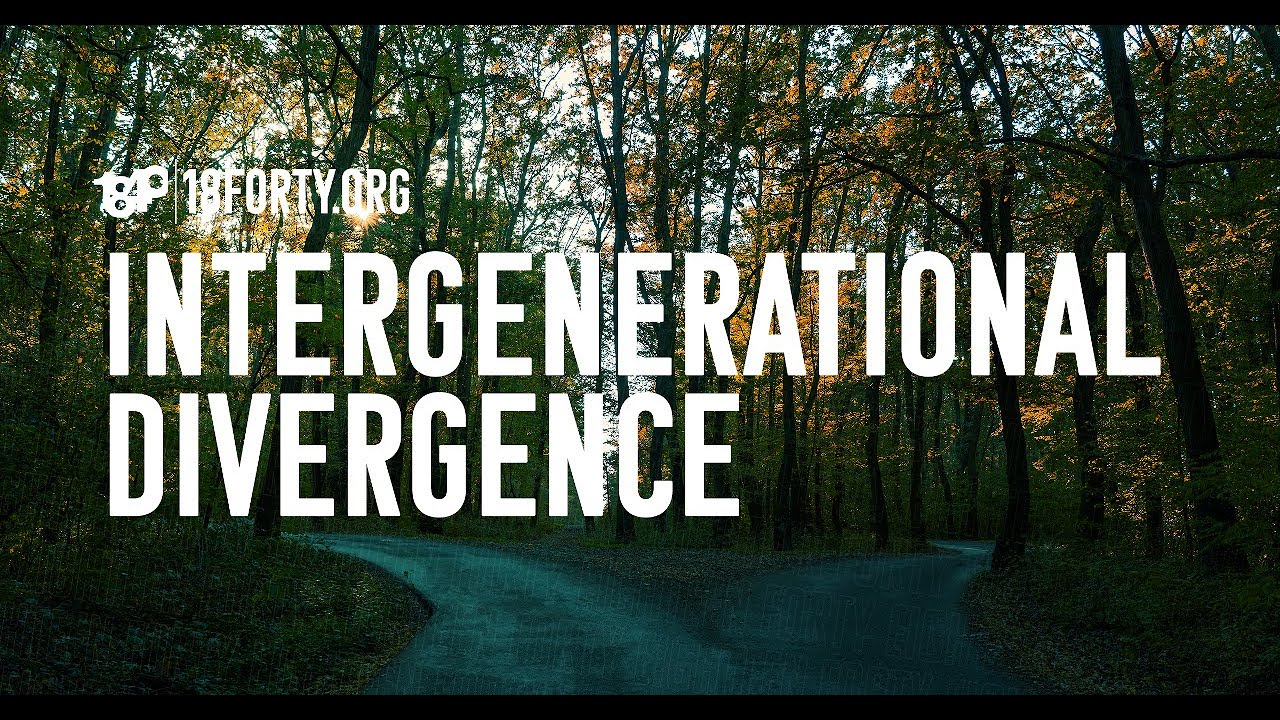
If this varied advice has reinforced anything, it is that there is no singular way “towards the derech” (if it can even be said that there is a derech to begin with!).
Our “way” is unclear, but our desire for spiritual growth is sincere.
My spiritual growth and development have been nothing like merging on or off an interstate! There is no clear signage with directions, speed limits, and distance markers to direct my Jewish journey. Rather, I am backcountry hiking, bumbling through the underbrush, misreading the map, and taking frequent stops to call my trusted rabbinic sherpas who often give differing advice on the way forward.
I say this not to condemn or denigrate myself or the lessons of the Rabbis who have poured some small bit of their deep wisdom into me, but rather to illuminate a common experience I and my fellow tinokot shenishbaot share. Our “way” is unclear, but our desire for spiritual growth is sincere. We are often materially adult, but spiritually children. Like children, we require a community of trusted guides to help us grow spiritually into our Yiddishkeit.