

This piece explores a Jewish perspective on expressing religious emotions instead of keeping them private. The last piece was the counter-perspective.
What role could talking about feelings in general—and religious feelings, in particular—play in a Jew’s spiritual life?
This is not merely a theoretical question. As we saw previously, the extent of one’s emotional privacy or expressiveness can directly impact the texture of their prayer experience. It also carries significant educational ramifications.
Some schools focus on teaching material: Students study a verse from the Torah, a comment of Rashi, or a page of Talmud and try to understand it to the best of their ability. Once the teacher is satisfied with their mastery of the material, the class proceeds onto the next passage. These classrooms are about learning content, not expressing feelings.
Other schools, however, integrate emotional expressiveness into the classroom conversation. For example, in my daughter’s Religious Zionist high school, it is common that, after studying a section of the Torah, her teacher will ask the class, “And how do you feel about this material?” The goal is for students to discuss how they personally connect the Torah they just learned. (This is not the forum to explore the propriety of asking high school students about their feelings regarding a comment of Rashi. It is clear, however, that these teachers assume that to inculcate their students with this skill of emotional articulation is valuable.)
Is there a religious value not only in internally loving God and Torah, but also harnessing the ability to express that to others?
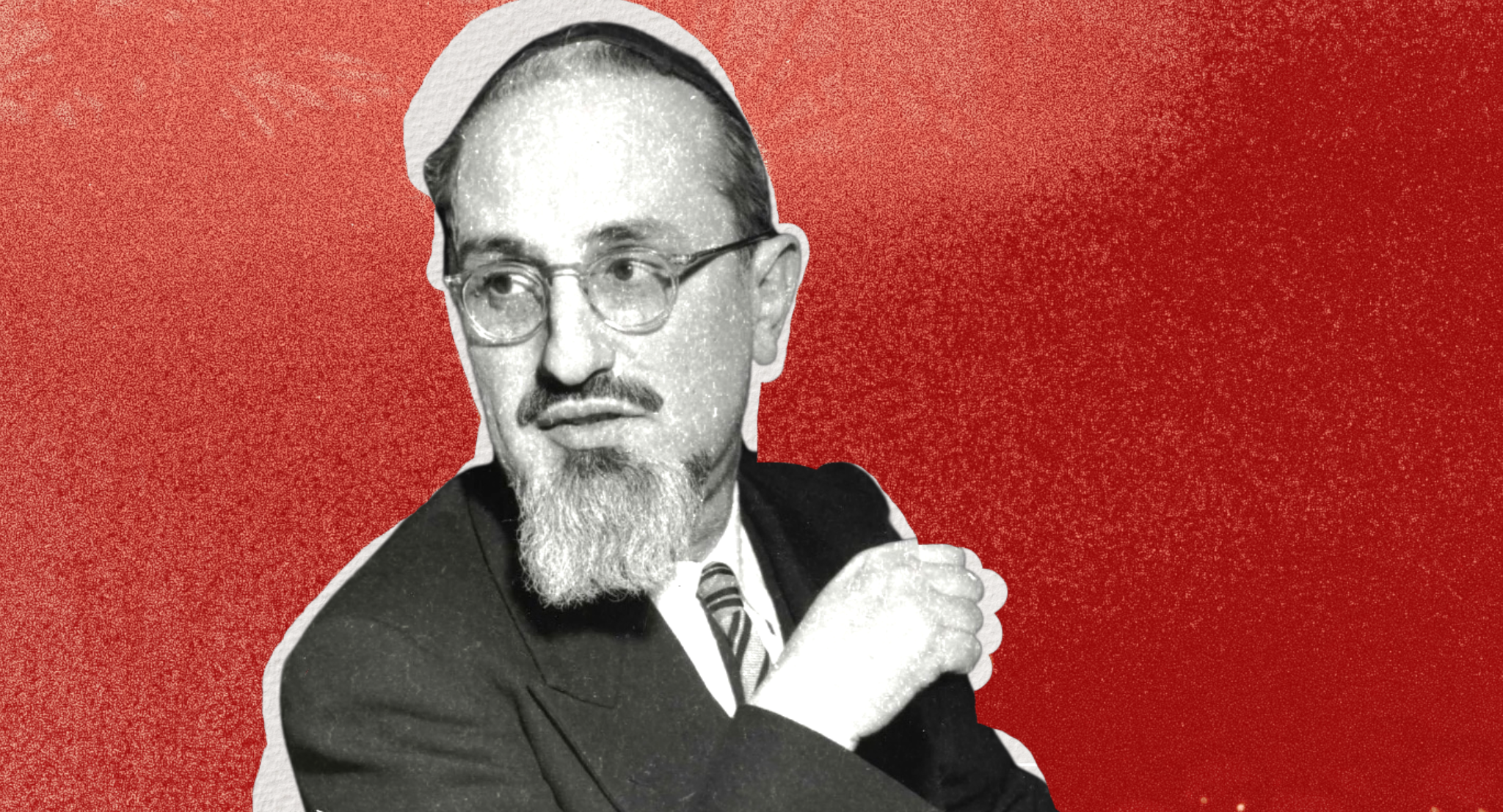
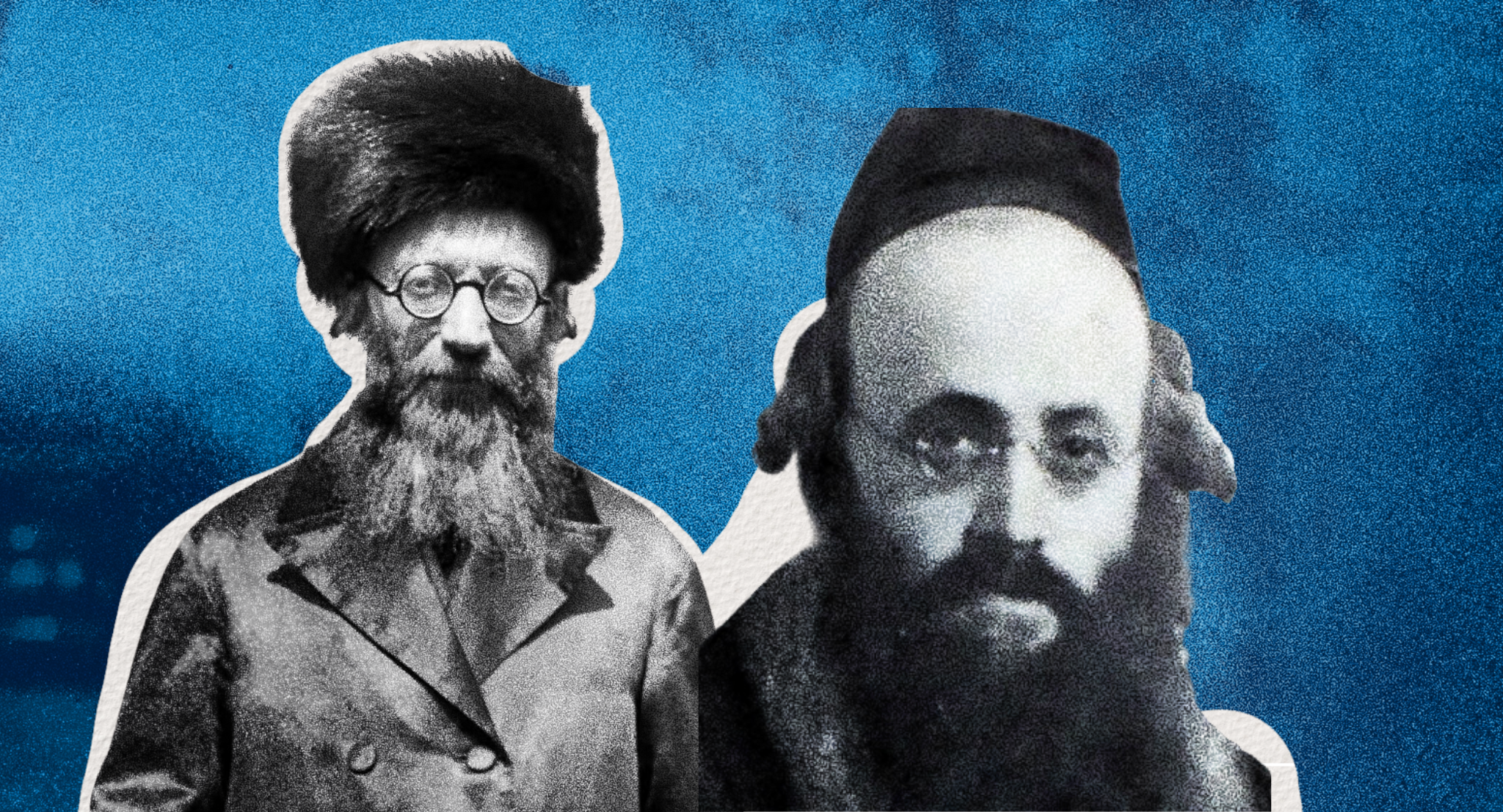
I want to explore one theme in the writings of two Torah authorities whose lives overlapped with that of Rav Soloveitchik—the 20th century Torah leader whose perspective we explored before—Rabbi Klonimus Kalman Shapira and Rabbi Avraham Yitzhak Kook. The former headed a large yeshiva before dying in the Warsaw Ghetto, and the latter was the first Ashkenazi Chief Rabbi of British Mandatory Palestine. These two leaders were heirs of Jewish mystical traditions and drew from such sources when arguing for emotional expression. Interestingly, though they shared many of Rav Soloveitchik’s assumptions about emotions, they reached different conclusions.
Feelings as the Language of the Soul
Rav Soloveitchik described deep emotions as the Holy of Holies of the human psyche. The Piaseczna Rebbe, as Rav Shapira was known, could not have agreed more. Throughout his writings, he emphasized that emotions are the primary language of the soul.
“Becoming emotional, even the most basic feelings within man,” he writes in Hachsharat Ha-Avrekhim, “this is his soul, for it is the beginning of the soul’s revelation that a person can sense.” Later, he says: “It is impossible to serve God without sanctifying one’s essence—one’s feelings—and without being a person who becomes emotional (Ish Mitragesh) from holy things. For becoming emotional (hitragshut) is the entirety of a person…”
The soul itself is a divine substance and therefore undefinable. Emotions, though, are the part of the conscious human psyche that are most closely associated with the essence of the soul. When a person feels something, it is due to a movement of the elusive soul.
Not all Jewish thinkers view emotions as the conscious phenomenon that most directly expresses the divine soul. In fact, someone as great as Maimonides seems to disagree. In his introduction to Pirkei Avot, Maimonides outlined five aspects of the human soul. In his scheme, the “rational faculty”—the part of the soul that has the ability to logically reason—is the most divine-like expression of the soul. For Maimonides, the rational faculty is the “image of God” that is vested in a human being. While Maimonides does speak of the importance of emotions, he identifies them as a less sublime expression of the human soul.
The Piaseczna Rebbe, though (and perhaps Rav Soloveitchik as well), inverses the hierarchy between emotions and cognitions. For the Piaseczna Rebbe, emotions are more connected to the divine soul than cerebral cognitions. Therefore, feeling emotional about holy things such as God and His Torah is the primary mark of a good Jew. It is an emotional attachment to Torah which indicates that the person’s divine soul is revealing itself in a proper manner. In line with this construct of the soul, the Piaseczna dedicated an entire book—Hakhsharat HaAvreichim—to the importance of and techniques to become an “Ish Mitragesh”—a person who becomes emotional about holy matters.
Expressing Feelings as an Act of Soul-Revelation
Thus far we have seen an argument that relates to the importance of feeling emotions. What does it tell us about the value of externally expressing these emotions? Here, Rav Soloveitchik and the Chasidic mystics part ways. As we saw in the previous essay, Rav Soloveitchik argued that halacha demands that sanctified items be hidden from public view. Therefore, emotions, as the holiest and most soulful part of the psyche, must remain concealed within. Several Jewish mystics, though, take the exact opposite approach. It is precisely the soul’s sanctity and inherent divinity which mandate us to reveal it through emotional expression.
For this step of the argument, we will turn to the writings of Rav Kook. As a mystic, Rav Kook defined the mission of Judaism as the revelation of divinity in this world. God permeates our world and yet, is utterly concealed. It is incumbent upon humanity in general and the Jewish People in particular to reach beyond the concealment and disclose divinity from its place of hiddenness. This perspective has a profound impact on the meaning of traditional Jewish activities such as Torah study and performing mitzvot: Everything is oriented towards revealing more divinity in the world.
Within this framework of revealing divinity, we learn the value of self-expression. The mystics taught that the soul is a spark of divinity placed within the human being at birth. It follows, then, that drawing the soul out from its place of concealment to increasing states of revelation is essentially bringing more divinity into the world.
But how are we to reveal our souls? What techniques are available to us in this mysterious task?
It is here that the above formulations of the Piaseczna Rebbe can become applicable. The soul speaks in the language of emotions. Accordingly, externally expressing our emotions and especially religious emotions is a way to reveal the soul and the divine spark that is within us. The more we learn to emotionally express ourselves, the more soul/divinity we are bringing into the world. Eventually, the entire world will become flooded with more and more divinity.
Soul Revelation in Diary-Keeping
This perspective on the nature of emotions would understandably lead a person to write or talk about one’s inner world. Accordingly, both the Piaseczna Rebbe and Rav Kook kept diaries in which they recorded first person passages about their own feelings and struggles. In addition, Rav Kook’s diaries contain explicit programmatic statements about the importance of autobiographical speech and writing. In one such instance, Rav Kook bluntly wrote: “I need to speak a lot about myself.”
By all accounts, Rav Kook was not a narcissist or arrogant. Rather, articulating his inner world in speech or writing was an act of soul-revelation. It was a way for him to become more in touch with the spark of divinity that lay within him and simultaneously to reveal it to the rest of the world.
Soul-Revelation in Literature
Seeing self-expression as a form of soul-revelation has many implications in Rav Kook’s thought system. One interesting application of this idea is Rav Kook’s understanding of the potential spiritual value of literature. Many prominent Jewish authorities discount reading fiction as a waste of time. Others argue that there is functional significance to literature as a good story might teach a person information or sensitivity in a way that nonfiction cannot.
Rav Kook, though, made a more fundamental argument in favor of writing and reading literature. Our mission in life, he contended, is to reveal divinity within this world. The human soul is a divine spark within us and accordingly should be revealed. Inner thoughts and emotions are the languages of the soul. Therefore, articulating emotions through literature or other forms of art can potentially be an act of soul-revelation.
In Rav Kook’s words:
Literature, painting and sculpture are meant to bring out all the spiritual concepts which are embedded in the depths of the human soul. So long as even one image which is in the depths of the thinking, feeling soul has not been brought out—it is the obligation of the arts to bring it into the light of day.
Note Rav Kook’s language. Revealing the soul through literature is not optional – it is an obligation that is incumbent upon people who can express themselves in this way.
We now have the basics of the basis for our two attitudes regarding the value of expressing emotions. Both emotional privacy and emotional expressiveness can be traced back to an assertion that the deepest and holiest part of a human being are one’s emotions. For Rav Soloveitchik, this leads to an attitude of privacy and protectionism. For the mystics, this can lead to a desire to reveal the soul through expressing and articulating one’s emotions.
A Messianic Shift Towards Emotional Expressiveness
Rav Kook describes this sort of soul-revelation as an act of potential messianic potency. The ideal utopia is a world in which God’s presence is fully revealed. As history progresses and we approach the advent of the messianic era, the desire to reveal God in all aspects of reality becomes an increasingly sharpened and attainable goal. Therefore, the return of the Jewish People to the Land of Israel indicates that a special emphasis should be placed on revealing the divinity in all of creation. Part of this general push towards the messianic era is a need to articulate the inner emotional churnings of the soul as an avenue of revealing the divinity that is within each of us.
It is for this reason that Rav Kook connects finding and expressing the “inner I” of an individual to the notion of redemption more broadly. Just as the Jewish People are in exile, the same is true regarding each person’s “inner I.” The inability or lack of desire to speak about one’s inner emotions, for Rav Kook, is emblematic of an exilic state. While the soul is still present, it is concealed, and therefore conversations become shallow and mitzvot are performed without the expression of proper passion.
The messianic ideal is for each person to understand his “inner I,” feel comfortable in his own individuality, and also share his soul, to whatever degree possible, with others through speech and writing. This process of identifying the essence of one’s soul and being able to express it is a form of homecoming and redemption in the psychological-spiritual realm. It parallels our national redemption which consists of the Jewish People returning from exile to their homeland. Only when an individual or nation is in touch with its core identity and feels at home can it begin to express the divinity that is embedded within.
Interestingly, then, it is possible that Rav Kook understood the worldview described by Rav Soloveitchik. He perhaps studied with Torah teachers who embodied the value of emotional privacy. Yet, Rav Kook felt that the shift from emotional privacy to expressiveness was part of the process of redemption that he saw as slowly unfolding in the 20th century. As Jews returned to the Land of Israel, the texture of our emotional language and soul-revelation should slowly but inexorably shift.
This general shift and the context that Rav Kook built around it is not lost on contemporary Religious-Zionist thinkers. For example, Rav Eliezer Melamed and Rav Yehoshua Shapira, two heads of prominent Hesder yeshivot, both note that the increasing levels of comfort with discussing emotions openly in recent times is part and parcel of the process of redemption. While there are dangers and pitfalls associated with this growing phenomenon, they consider the general shift of giving language to emotions to be positive and of messianic potency.
So who is right—my grandmother or her Carlebachian prayer-partners? It depends on who you ask. As we have seen there are a range of approaches—across communities, space, and time. It is my hope that understanding some of the values embodied by these different approaches can help us intentionally and sensitively find our own point in this spectrum.
May God grant us the ability to emotionally connect with Him and with others and redeem the Jewish people from all suffering.