

Your 18Forty Parsha Guide is a weekly newsletter exploring five major takeaways from the weekly parsha. Receive this newsletter every week in your inbox by subscribing here. Questions or feedback? Email Rivka Bennun Kay at Shabbosreads@18forty.org.
You have almost certainly read a passage of Torah and felt somewhat uncomfortable. Maybe it was a law about slavery, or a command to annihilate a nation, or something else that troubles you. You kept reading, or you didn’t, but either way the discomfort lodged somewhere and stayed. Parshat Naso delivers one of those moments with unusual force.
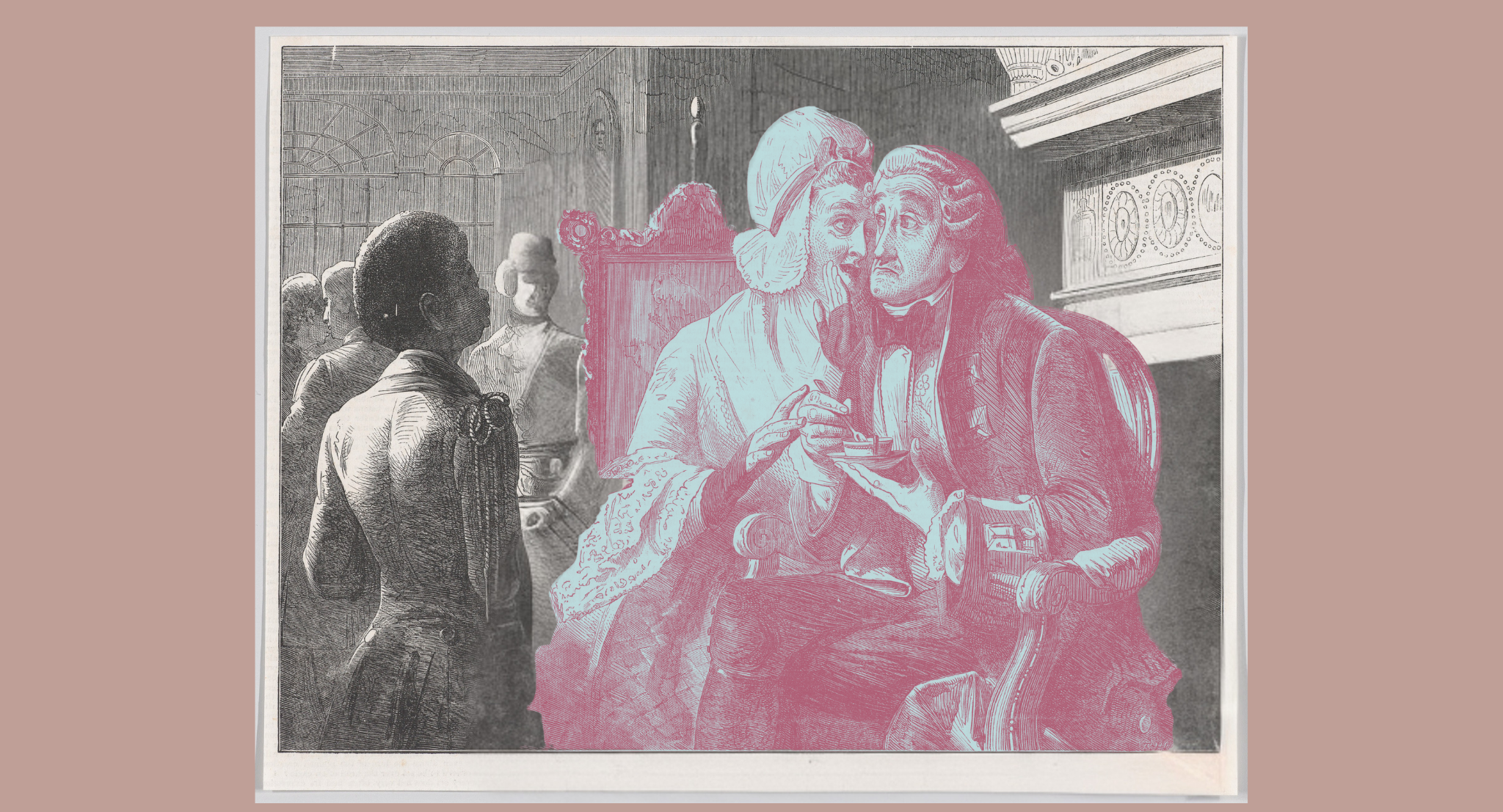
In Bamidbar 5:11-31, a husband overcome by jealousy can bring his wife before the priest, force her to drink a potion of dust and dissolved ink, and wait for God to render a verdict through her body. The ritual assumes that a man’s suspicion is enough to trigger the process, that a woman’s body is the site on which guilt and innocence are inscribed, and that a cup of bitter water can adjudicate what human courts cannot. It offends modern sensibilities, and this might give us pause.
The Talmud suspended this ritual nearly 2,000 years ago, and the rabbis who did so offered a reason that implicates the husbands at least as much as the wives. The Torah preserves the text, the tradition paused the practice, and the question of how to live with both has no clean answer.
1. The Anatomy of Jealousy
The verse that launches the Sotah (a woman suspected of adultery) ritual is striking for what it does and does not require. Bamidbar 5:14 says that “a spirit of jealousy comes over him and he is wrought up about his wife,” and the Torah specifies that this jealousy may be warranted or entirely baseless. The woman may have been unfaithful, or she may be completely innocent. Either way, the ritual proceeds.
Rashi reads the “spirit of jealousy” as the husband’s act of kinui (formal warning), in which he tells his wife before witnesses that she may not seclude herself with a particular man. The warning channels raw emotion into a legal procedure, converting a volatile accusation into something the community can track and adjudicate. Ibn Ezra adds that this spirit “comes upon his mind,” locating jealousy as a psychological event that seizes a person from the inside. The Torah legislates around what a husband feels, recognizing that you cannot outlaw an emotion, only build a structure around it that channels it away from violence.
Why would the Torah accommodate a feeling that might be completely baseless? Tikva Frymer-Kensky, an Assyriologist and biblical scholar, argued in In the Wake of the Goddesses that the Sotah ritual belongs to a family of ancient Near Eastern ordeal practices designed to prevent something worse. She approaches the text through the lens of comparative anthropology, placing it alongside Mesopotamian trial-by-river practices where the accused was thrown into the Euphrates and the gods decided whether she surfaced alive. Read from that angle, the biblical version takes the judgment out of the husband’s hands entirely and puts it in God’s. The husband does not get to punish, and he does not get to decide.
Rabbi David Fohrman has spoken about the necessity of staring directly at the uncomfortable anomalies in the biblical text rather than rushing to smooth them over. One reading of the Sotah passage bears this out. If you read too quickly, you see only the humiliation of the woman. Slow down, and you see the Torah legislating around the most dangerous person in the room, the jealous husband, stripping him of every tool of violence. Every step of the proceeding is public, witnessed, and controlled, and throughout it the husband can only watch. The ritual does not vindicate his suspicion; it replaces it with a divine proceeding in which he is a bystander. If the woman is innocent, she walks away and the text promises she will conceive, while the husband has publicly exposed his jealousy to the entire community. That reading deserves serious consideration, but it is one interpretation of the text’s purpose, not the only one, and it should not obscure the cost of the ritual to the woman standing in the Temple courtyard.
2. God’s Name in the Water
The priest writes the oath on a scroll, including the name of God, and then dissolves the scroll in the bitter water. The Torah describes this in Bamidbar 5:23: “The priest shall put these curses in writing and rub them off into the water of bitterness.” Shabbat 116a records the teaching that God declared, “My name, written in sanctity, shall be erased in the water in order to make peace between a husband and his wife.” Erasing God’s name is one of the most severe prohibitions in the Torah, and here God commands it to happen. The dissolution of the divine name into liquid that a woman drinks is the theological center of the entire ritual.
Vayikra Rabba 9:9 draws the principle outward: “Great is peace, as the Holy One blessed be He said that the great name that is written in sanctity should be erased in water in order to institute peace between a man and his wife.” Peace is not one value among many in this accounting. It sits above all of them, including the reverence owed to God’s own name.
Rabbi Jonathan Sacks wrote about this passage in his Covenant and Conversation series, pointing out that the rabbis were struck most by God’s willingness to let something sacred be destroyed for the sake of a relationship. If you have ever watched someone destroy a family in the name of principle, Rabbi Sacks’s argument hits with force.
Shira Berkovits has discussed the work of Sacred Spaces, the organization she leads, which helps Jewish institutions confront abuse and protect the vulnerable. Her argument pushes in a similar direction: Institutions that prioritize their own reputation over the safety of the people they serve have inverted the theological hierarchy that the Sotah ritual establishes. If God is willing to have His name erased for a single broken relationship, then communal honor and institutional prestige rank lower than the wellbeing of the people in the pews.
But is celebrating God’s sacrifice of honor just a sophisticated way of looking away from what the woman endures? Rambam provides the grounds for that skepticism, describing the scene in visceral detail: the woman standing in the Temple courtyard, the priest tearing her garments, the crowd watching, the terrifying solemnity of the oath. Even in a reading that centers the theological generosity of God’s name being erased, you cannot avoid the fact that the method of achieving that peace involves the public humiliation of a woman whose guilt has not been established. The tradition holds both realities simultaneously, marveling at God’s willingness to sacrifice honor for peace while recording, without flinching, the price the woman pays.
3. The Rabbis Who Paused the Ritual
Mishna Sotah 9:9 records one of the most consequential halachic decisions in the Talmud: “When adulterers proliferated, the performance of the ritual of the bitter waters was nullified. And it was Rabban Yochanan ben Zakkai who nullified it.” The man who rebuilt Judaism after the destruction of the Temple also suspended the Sotah ritual, and the reasoning matters. The Talmud in Sotah 47a explains that the bitter waters could only function when the husband bringing the accusation was himself free of sexual sin. When male adultery became widespread, the ritual lost its power, because the waters could not expose a wife’s infidelity while her husband’s own went unaddressed.
The implications reach further than you might expect. A ritual that the Torah presents as a permanent feature of Israelite religious life was effectively retired because the men using it failed to meet its moral prerequisites. Ramban writes that the Sotah ritual was “the only ordinance of the Torah which depends upon a miracle,” and that this miracle required the majority of Israel to live in accordance with the divine will. The ritual ceased because a test designed to evaluate women’s fidelity had no legitimacy in a society where men’s fidelity had already collapsed.
Rabbi Shlomo Weissmann, who serves as the head of the Beth Din of America, has discussed how rabbinic institutions navigate the gap between ancient law and modern circumstances, particularly in the agunah crisis. The Sotah abolition belongs to a broader pattern in which the oral tradition includes constraints that sometimes effectively retire biblical laws. The halachic prenuptial agreement that Rabbi Weissmann’s beit din promotes descends from the same instinct: When the system no longer works due to social changes, the tradition utilizes tools from within to limit the damage.
Ishay Rosen-Zvi spent years studying the Mishnaic Sotah text at Tel Aviv University and came to a provocative conclusion in The Rite That Was Not: The elaborate Talmudic descriptions of the Sotah ceremony may never have reflected actual practice. He reads the Mishnaic account as a theoretical construct, a site for rabbinic debate about gender, purity, and divine justice rather than a manual for a functioning ritual. His work approaches the text through academic literary analysis, and the 18Forty reader should know that his interest is in the rabbinic imagination rather than in defending the tradition. Even so, his central observation strengthens the traditional reader’s position: The rabbis spent enormous intellectual energy on a ritual they never intended to practice, treating the text as a site of moral struggle rather than a set of operating instructions.
4. What the Ritual Reveals About Marriage
The Sotah passage does not exist in isolation. It sits inside a larger Torah architecture of laws governing marriage, fidelity, and covenant, and reading it alongside those other texts changes what you see. Bamidbar 5:12 opens the entire passage not with the woman’s sin but with the husband’s suspicion: “If any man’s wife goes astray and acts unfaithfully against him.” The Hebrew word for “unfaithfully,” ma’al, carries a specific legal resonance throughout Tanakh. It is the same word used when Israel betrays God, when a person misappropriates sacred property, when the covenant between two parties is violated at its deepest level. The choice of that word lifts the Sotah passage out of ordinary domestic conflict and places it inside the Torah’s central preoccupation: the nature of faithfulness itself.
The rabbis read the placement of the Sotah passage carefully. It arrives immediately after a section dealing with communal financial integrity and immediately before the laws of the Nazirite. The Gemara in Sotah 2a asks why these two sections are juxtaposed, and answers: Whoever sees a Sotah in her disgrace should take upon himself the abstentions of the Nazirite and separate from wine, because wine is what dissolves the inhibitions that lead to adultery. Rashi cites this teaching in his commentary on Bamidbar 6:2. The Torah is building a moral ecology. The collapse of a marriage does not begin at the moment of suspicion. It begins earlier, in smaller erosions of care, judgment, and self-discipline. The ritual is placed where it is because the tradition wants us to trace the full arc of how sacred relationships unravel.
The psychologist John Gottman spent decades studying married couples at the University of Washington, and his research identified what he called “the four horsemen”—contempt, criticism, defensiveness, and stonewalling—as the most reliable predictors of marital breakdown. What is striking about Gottman’s framework, considered from the outside, is how much it resembles the Torah’s implicit diagnosis. The husband in the Sotah passage has not simply become suspicious overnight; something in the architecture of the relationship has already corroded. Gottman’s research suggests that by the time a couple arrives at crisis, the warning signs have typically been accumulating for years. The Torah’s insistence on situating the Sotah ritual after laws of communal integrity and before laws of personal discipline may be making the same point: fidelity in marriage does not stand alone. It is downstream of a whole structure of ethical habit.
The 18Forty Podcast episode “Infidelity: Consequences and Aftermath” explores what happens after that structure breaks down entirely—featuring an anonymous guest alongside clinical psychologist Dr. Malika Bhowmik, who works on re-establishing intimacy after violations of trust. One of the central questions the episode turns on is whether an unfaithful spouse should disclose what happened or carry the weight of it alone, and what it even means to save a relationship that has been fundamentally altered. That question—how much truth a damaged relationship can bear—sits at the heart of the Sotah passage too. The ritual does not exist because the Torah is indifferent to whether the wife is guilty. It exists because a marriage in which the husband’s suspicion goes unresolved is already a marriage in crisis, and the Torah would rather bring that crisis into the open than let it fester in silence.
5. Why We Still Read It
If the ritual was suspended almost 2,000 years ago, why does the Torah reading cycle bring us back to Numbers 5 every single year? Midrash Tanchuma records God saying to Israel: “Even though the Temple is destined to be destroyed and the sacrifices to be nullified, be careful to read about them and review them. And if you occupy yourselves with them, I will count it for you as if you were occupied with the sacrifices themselves.” The study of an abolished law carries the same spiritual weight as its performance.
Rambam took a practical line, suggesting that the Sotah laws functioned as a deterrent: The wife’s awareness of the ritual discouraged infidelity, and the husband’s awareness that the ritual would expose his own failings discouraged false accusation. Rabbi Joseph B. Soloveitchik pursued something different in Halakhic Man, arguing that the study of theoretical halacha, including laws that can never be practiced, constitutes an encounter with the divine mind. The religious value of studying Sotah does not depend on whether you would ever want the ritual performed. It depends on what the text reveals about the intersection of jealousy and justice.
David Bashevkin has spoken about religious life as something that requires showing up to commitments you did not design and may not fully understand, especially in the context of marriage and religious devotion. The Sotah passage asks something similar. You did not write this text, you may feel uncomfortable with some aspects of it, and the tradition insists that you read it anyway. A tradition that holds theological beauty while raising moral questions trusts its readers to hold the tension with or without resolving it. The discomfort is not incidental to the reading. It is an important part of grappling with the text.
Questions for Reflection
- When you encounter a Jewish text that challenges your moral sensibilities, what is your first instinct, and what do you think happens when you resist that instinct long enough to sit with the text instead?
- God allowed the divine name to be erased for the sake of a single marriage. What in your life might you need to let go of, something you hold sacred about yourself, for the sake of a relationship that matters?
This project is made possible with support from the Simchat Torah Challenge and UJA-Federation of New York. Learn more about the Simchat Torah Challenge and get involved at their website.