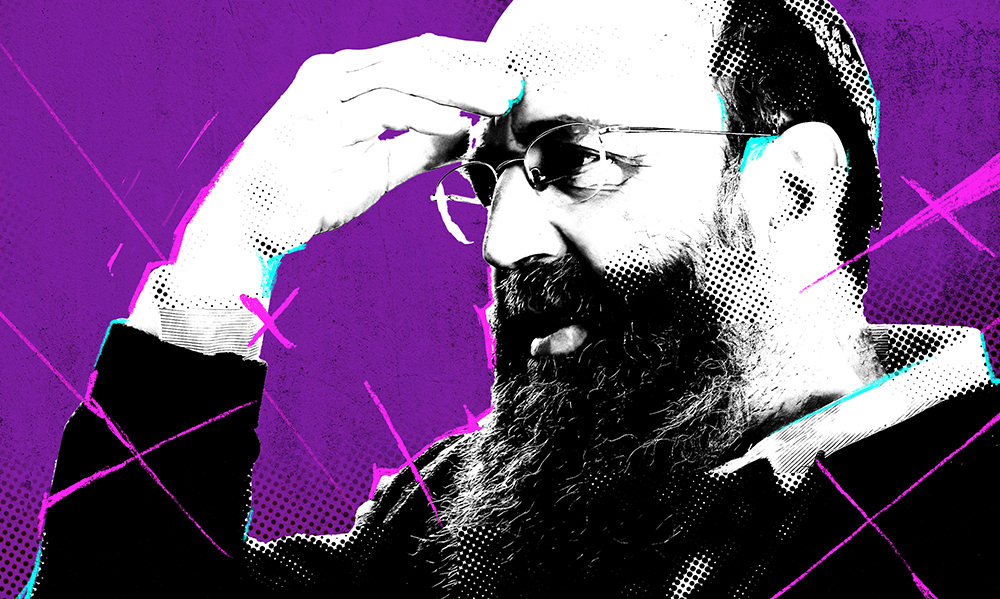


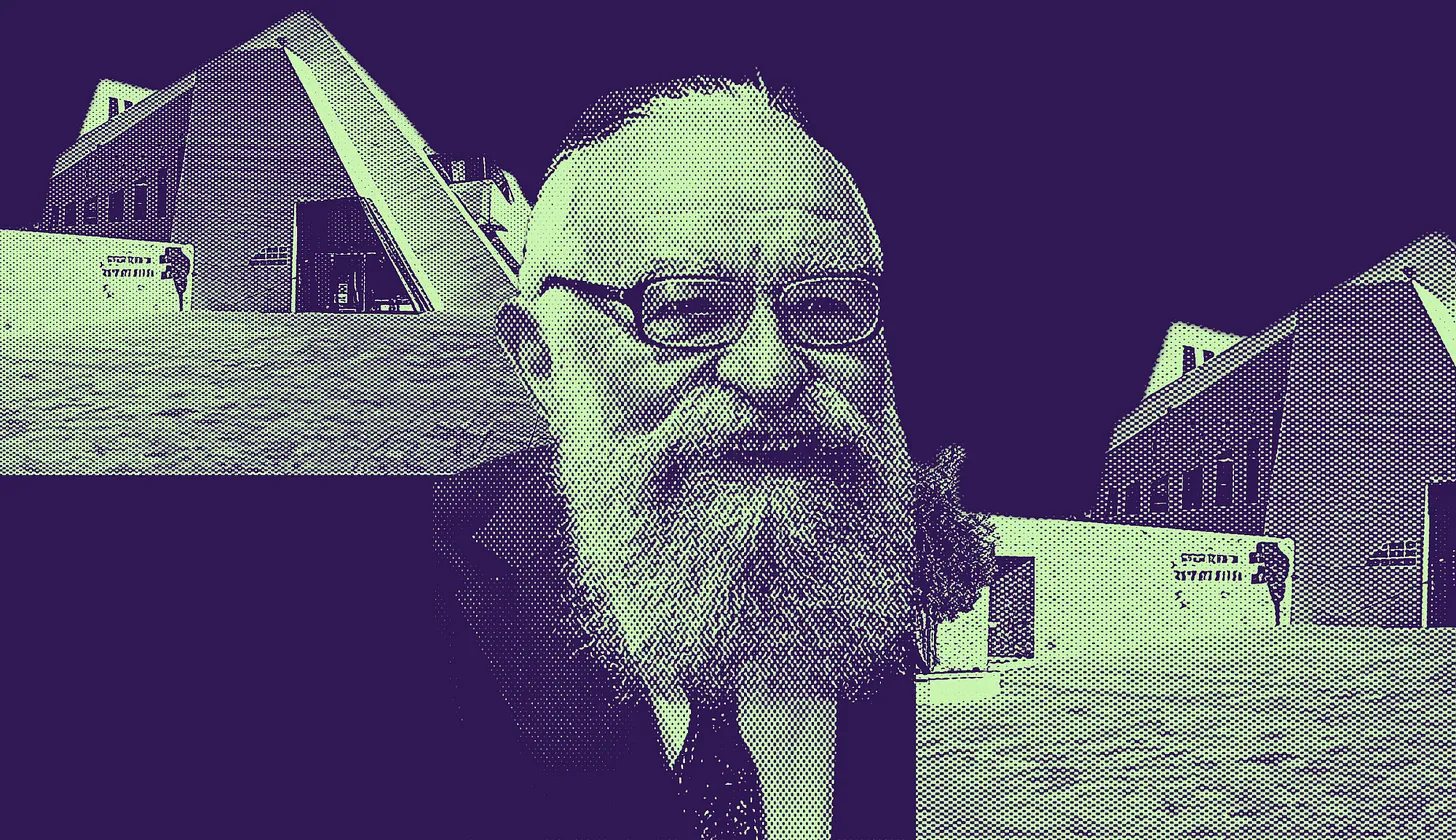
This coming week, the 27th of Tammuz, will mark the 15th yahrtzeit of my master and teacher, Rav (Rabbi) Yehuda Amital, of blessed memory. As is so often the case with those who matter most deeply to us, his meaning for me, and countless others—students of course, but also from so many walks of life—is hard to put into words. This difficulty in sketching a life that so deeply affected one’s own, is of course something we all experience. Yet it is in some ways of his essence as a thinker, educator, moral beacon and spiritual genius, who plumbed Jewishness and humanity to their depths. He always eschewed large formulas, doctrines, and pronouncements—because they ran counter to his notion of what truth and Torah really mean.
Over the years I brought him many questions—and perhaps the most callow was my puzzlement that the posthumous collection of the teachings of a major rabbinic educator left me so unimpressed. Another educator might have tongue-lashed me, and rightly so. Instead, he breathed deeply and said, “Listen, there are those whose Torah is in their books, and those whose Torah is in their lives.” I immediately grasped that he was in some ways talking about himself. Not only because he didn’t write all that much in his lifetime, but because for him, the truths of God, Torah and Israel must truly be alive, in the fullest senses of the word, in order to be anything at all.
He did write, if not as much one would have hoped, but it is a measure of how deeply his students loved him and still needed his voice, that since his passing, a number of volumes of his writings and teachings have appeared in English and in Hebrew, as well as a full length biography and a growing bookshelf of works about him, and many writings and recordings available online.
His life was dramatic, to be sure. Born in 1924 in prewar Hungary, he lost his entire immediate family in the Holocaust, which he spent in a Nazi Labor camp, in which he still managed to learn Torah, studying the writings of Rav Kook. On liberation, he came to Jerusalem, quickly establishing himself as a rising scholar, before joining the Israeli army the day after independence was declared in May 1948. In the years after he stood with his father-in-law at the head of a yeshiva in Rehovot, where he was one of the first to conceive of a new kind of yeshiva, in which rigorous study and army service would be combined. After the Six Day War he was asked to stand at the head of a new yeshiva in Gush Etzion, a bloc of kibbutzim destroyed in 1948 and now being rebuilt, on the road between Bethlehem and Hebron.
His distinctive educational philosophy revealed itself on the very first day; he wasn’t there, and when students called to ask why, he said, because the yeshiva is not for me, but for you. That one gesture—setting the students free while bringing them face to face with their responsibilities, gently diminishing his own stature while trusting them and himself to build something together—set the tone for all that would come. And it gives a sense of why so many came to love and admire him so much.
That mix of humility and self-confidence showed itself again and again, when he invited a younger American rabbi, Aharon Lichtenstein, to take his place as head of the yeshiva (Rabbi Lichtenstein said he would accept only if the two served side by side); when, distraught by the killing and wounding of his students in the Yom Kippur War, he left the yeshiva for months to tend to them and their families; when he articulated powerful reflections on that war that consoled his listeners while challenging them to renewed introspection; when, with time, he came to support the idea of land for peace, bravely criticizing the steep costs of the first Lebanon War in lives and morals, the idealistic excesses of the left and of his own Religious Zionist camp, effectively forgoing his role as one of that camp’s chief leaders.
A thread running through it all was his belief that the world is complicated, and that there are no shortcuts or easy answers, and that recognizing that complexity does not mean forgoing our moral or spiritual compass but rather directing it and ourselves to the truth—with courage and humility.
This understanding of the truth, at once complex and straightforward, also guided him, in guiding us—in our paths and in our religious and communal lives. This happened in many ways, but I focus here on one of them: Instilling in us the conviction that passion and steady commitment, that zeal and patience, can go hand in hand.
I remember a talk he gave one Shabbat when many alumni gathered at the yeshiva with their wives and children. Looking around, he quoted the Talmud’s discussion (Sanhedrin 92b) of what became of the resurrected dead from the Valley of the Dry Bones of Ezekiel Chapter 37. The rabbis offer differing opinions, each one more dramatic than the next, except for one: “Rabbi Elazar the son of Rabbi Yose the Galilean said, they went up to the Land of Israel, and married, and had sons and daughters.”
This seemingly prosaic comment, Rav Amital said, held a deep truth: That the seemingly most prosaic things are themselves the portal to the life of God and Torah. He went on to cite the biblical passage we’d read that morning, describing the children of Israel at Sinai, so fearing God’s “great fire” (Deut. 4:36) that they asked Moshe to approach God by himself for all of them (Ibid. 5:4-5).
People say they want the fire, the fire of God, but a small one, easily contained, that won’t singe anyone, because they don’t think they can live with it. Don’t be like that. Always be among those who seek the great fire.
Living a life of commitment to family and community, day in and day out is itself the way into the Great Fire of revelation, if we pay attention and take care, he said. And that is something that each of you will have to figure out for yourselves.
If you’ve patiently read thus far, you are no doubt asking what if anything all this has to do with this week’s Torah portion?
In my last conversation with Rav Amital shortly before he died, I asked him what he had been thinking about of late. He answered, “It’s time for the young people to think thoughts.”
I knew he was saying goodbye, and it was hard. But he was also telling us to the end what he always had—go out there and think, take responsibility, for yourselves and the world around you, with passion and humility both. And this brings me to the reflections I present to you on the story of the Bible’s arch-zealot, Pinchas.
Since Rav Amital’s passing I, like so many, have felt his absence and it hurts—and has hurt the most since October 7. What would he have said and thought and done, what would he have told us to do?
And of course, he would have told us to think for ourselves, while being as honest and faithful as we can.
We are all, since that awful day, living through a series of immensities, of suffering, of sacrifice, of courage, and of moral challenges, immensities that we likely will not be able to think through in our lifetimes. But we have to do the best we can now.
One of the mind-bending features of this war has been the death and destruction visited on us, and that we have been visiting on others, while all the while so many of our brothers and sisters are trapped deep in a hell on earth.
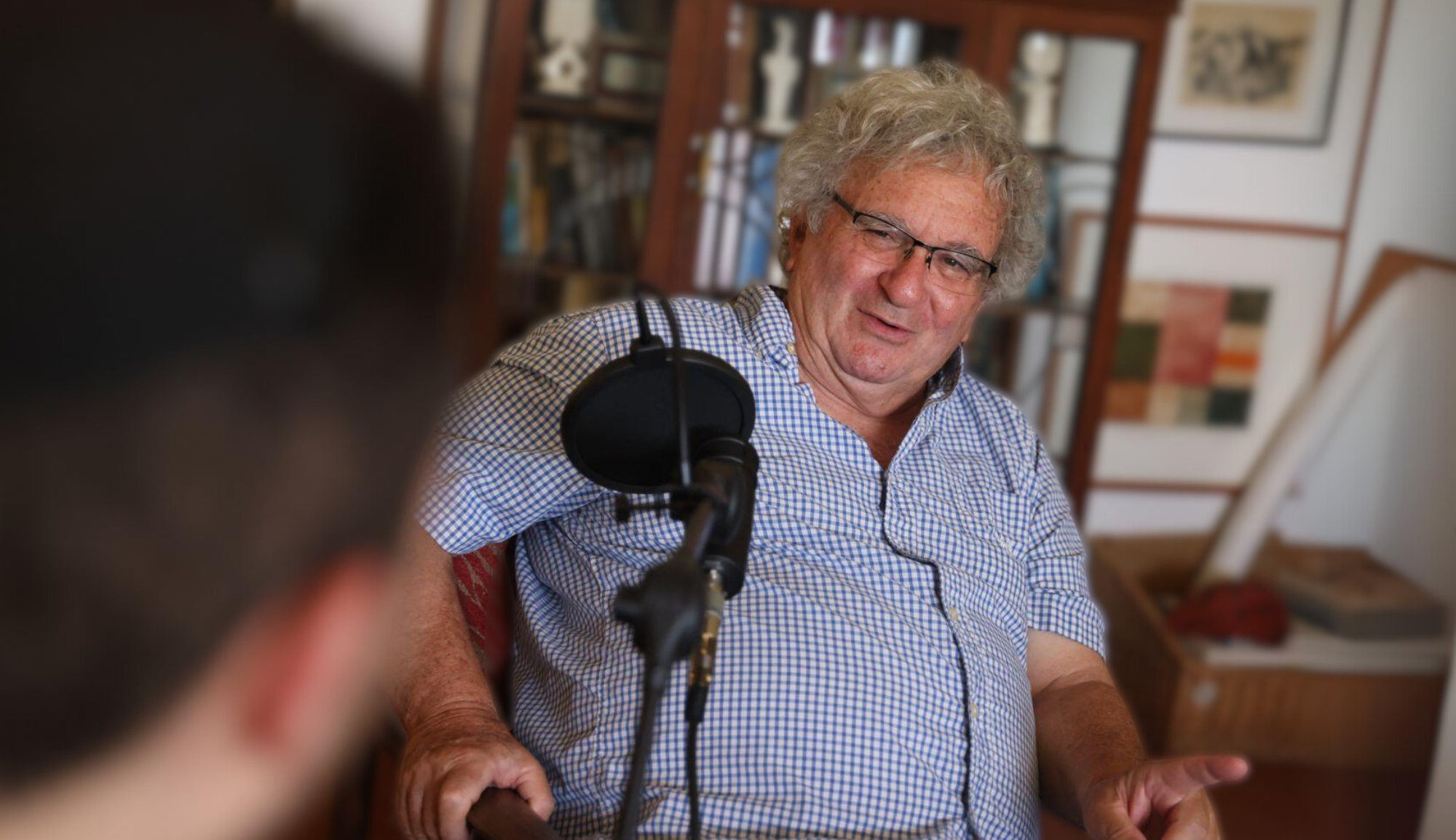
The reflection in the form of Midrash I have written here is one Israeli civilian’s attempt to try and think some of this through.
The Portals of Hell Above and Below: A Reflection in the Form of Midrash
Rabbi Yehudah said in the name of Rabbi Eliezer, hell has three portals, one in the desert, one in the sea, and one in Jerusalem, as is written, says the Lord, who has a fire (ur) in Zion and a furnace in Jerusalem (Isaiah 31:9) [Eruvin 19a]
The question was asked in the Beit Midrash of the Galilee: What is that portal of hell that is in Jerusalem?
They said, it’s none other than the heavenly Jerusalem, “for the fire of Hell descends1 from the midst of the fire of the Hell above and reaches below.”
They were asked: And from where does the fire of Hell above come from?
They were silent. Until their students’ student Moshe of Safed2 came and said: It is from the fire of strength (gevurah) that is set aflame with judgment (din) in the celestial chambers, “and that is the Hell that is in Heaven … ‘God made them facing one another’” (Ecc. 7:14). And he further taught: “This is the current of the River of Fire (Nehar Dinur) which flows outward, it is the fire chamber of the souls of the guilty, and from there fire falls onto the heads of the guilty, and there the Angels of Destruction torment them.”3
They learned from here that the Hell on high—is a special fire designated for the guilty, and a flame of zeal (kinah), for when God has lost His patience with the guilty the fire descends from on high to the very bottom of the netherworld, as is written, “I am zealous for Zion, with great fury I was zealous for her” (Zech. 8:2) and it is said, “for fire kindled in my nostrils and burned to the very bottom of the netherworld” (Deut. 32:22).
Their student Yehudah the Later One asked: This fire of Hell from above, does it only descend on the guilty? But isn’t it written: “And I will pour My anger onto you and blow my anger’s flame onto you in the hands of flaming men, artisans of destruction” (Ezek. 21:36). And our rabbis have taught us, “Once the Destroyer is permitted out he does not distinguish between guilty and the innocent” (Bava Kamma 60a). And could it be that God’s flame pouring from that same River of Fire4 in times of judgment cannot distinguish between guilty and the innocent? But it’s written, “for zealotry turns into a man’s anger and he will show no mercy on the vengeance day” (Prov. 6:34). And it isn’t fitting that there be zealotry in administering judgment, for we have learned, “a zealot who spontaneously attacks (a sinner), acts not by the will of the sages, and Pinchas acted without the will of the sages (Talmud Yerushalmi Sanhedrin 9:7, 4a).
Yehudah went on to add: I have seen that fire from above—a zealous fire in judgment which at times does not distinguish between innocents and evildoers—descending now from Israel’s weaponry, cast onto our enemies and even onto Israel themselves jailed in Hell below, and it goes deep and descends to the very bottom of the netherworld, to the point where we see the prophetic words being fulfilled, “And I will send fire to the ramparts of Gaza and it will devour her citadels” (Amos 1:7).
The Sages asked one another: If Pinchas-like zealotry that doesn’t distinguish between innocent and guilty was not by the Sages’ will, can Israel’s weaponry acting without regard to innocent and guilty, too, be not by the Sages’ will?
Their student answered, it is written: “says the Lord, who has a fire (ur) in Zion and a furnace in Jerusalem” (Isaiah 31:9); don’t read it as ur, fire, but rather as or, light, and light is none other than Torah, as is written “for the commandment is a lamp and the Torah is light” (Prov. 6:23). So long as we act by the Torah’s light, which is to say executing judgment without zealotry, we master that furnace that is in Jerusalem.
They asked him: And how will we know if we are acting by the Torah’s light, or, God forbid, the flame of zealotry’s furnace?
He answered: If we act with humility. For our Rabbis have taught us: “Why are the words of Torah represented by water, as is written, “O all you who thirst, go to the water” (Isa. 51:1)? To tell us, just as water leaves the high places and heads below, so too the words of Torah will only be fulfilled by one of lowly mind” (Taanit 7a). And our master Rabbi Chaim of the northern lands5 has explained that thus “the Torah rolled down to Moses, for he was the humblest of all.” Let the waters of Torah come and chill zealotry’s flame, until there will be fulfilled, “And justice will flow down like water, and righteousness like a powerful stream” (Amos 5:24).
They asked him: But can a humble person who vindicates the poor6 in justice be able to kill an evildoer?
He answered, Rabbi Menachem the beacon of the Western lands7 has taught us that Moses’ lowliness was with regards to himself and his affairs, but for the needs of others he bravely stood “to stamp out evil and establish good … with desirable intention … to be zealous to the utmost against every ugly deed … for instance, when he killed the Egyptian taskmaster … (and he knew) when not to be zealous.”
They asked him again, how will we know the precise time and place when zealotry is by and for the sake of Torah’s light, so it will be a balm for life8 and not a poison of death?
They were silent, all of them, for a long while, until “they concluded that it would have been better for one never to have been created at all, but now that he is, he should look carefully at what he does” (Eruvin 13b).
Below is the original Hebrew text of Prof. Mirsky’s reflections:
פתחו של גיהנם: מעין מדרש לימינו
א”ר יהודה א”ר אליעזר: ג’ פתחים יש לו לגיהנם, אחד במדבר ואחד בים ואחד בירושלים דכתיב, נְאֻם ה’ אֲשֶׁר אוּר לוֹ בְּצִיּוֹן וְתַנּוּר לוֹ בִּירוּשָׁלָ͏ִם (ישעיהו לא:ט).
(תלמוד בבלי, עירובין יט ע”א)
נשאלה להם בבית מדרש שבגליל: מאי אותו הפתח של גיהנם שבירושלים?
השיבו, אין אותו הפתח אלא בירושלים של מעלה: “דאשא דגיהנם מטי לתתא מגו אשא דגיהנם דלעילא ומטי לההוא גיהנם דלתתא…” [תרגום: שהאש של גהינם מגיעה למטה מתוך האש של גיהנם שלמעלה ומגיעה לזה הגיהנם שלמטה].
נשאלו: ומהיכן היא אש הגיהנם שלמעלה?
שתקו עד שבא תלמיד תלמידם רבי משה דמן צפת ואמר: אש גיהנם—מאש הגבורה היא, המשתלהבת בדין בהיכלות עליונים, והיינו גיהנם בשמים…”גַּם אֶת זֶה לְעֻמַּת זֶה עָשָׂה הָאֱלֹהִים” (קהלת ז:יד). ולימד: “זהו משיכתו של נהר דינור, הנמשך ויוצא, שהוא בית מוקד לנפשות של הרשעים ומשם יורד אש על ראשיהם של הרשעים ושם מלאכי חבלה המציקים להם.”
למדו מכאן שגיהנם שלמעלה—אש מיוחדת השמורה לרשעים, ואש קנאות היא, שבשעה שקצרה אפו של הקב”ה מחמת הרשעים, אז האש יורדת מלמעלה עד שאול תחתית, דכתיב: “כֹּה אָמַר ה’ צְבָאוֹת קִנֵּאתִי לְצִיּוֹן קִנְאָה גְדוֹלָה וְחֵמָה גְדוֹלָה קִנֵּאתִי לָהּ” (זכריה ח:ב). ונאמר: “כִּי אֵשׁ קָדְחָה בְאַפִּי וַתִּיקַד עַד שְׁאוֹל תַּחְתִּית” (דברים לב:כב).
הקשה להם תלמידם יהודה בתראה (נ”א יהודה בן תמיהה), אש גיהנם מלמעלה, על ראשי הרשעים בלבד יורדת? והלא נאמר: “וְשָׁפַכְתִּי עָלַיִךְ זַעְמִי בְּאֵשׁ עֶבְרָתִי אָפִיחַ עָלָיִךְ וּנְתַתִּיךְ בְּיַד אֲנָשִׁים בֹּעֲרִים חָרָשֵׁי מַשְׁחִית” (יחזקאל כא:לו). וכבר למדונו רבותינו, “כיון שניתן רשות למשחית אינו מבחין בין צדיקים לרשעים” (בבלי בבא קמא ס ע”א). וכי מאותו נהר דינור ניתכות שלהבותיה בשעת הדין ואינן מבחינות בין צדיק ורשע? והכתיב “כִּי קִנְאָה חֲמַת גָּבֶר וְלֹא יַחְמוֹל בְּיוֹם נָקָם” (משלי ו:לד), ואין ראוי שתהיה קנאה בדין שהרי למדנו “’הקנאים פוגעין בהן’ תני שלא ברצון חכמים ופינחס שלא ברצון חכמים”.
והוסיף אותו יהודה תלמידם: אני ראיתי אותה אש מלמעלה—אש קנאות בדין שיש ואינה מבחינה בין צדיק לרשע—יורדת בימינו אנו מכלי זינן של ישראל, מוטלת על אויביו ואף על ישראל עצמם השבויים בגיהנם של מטה, והיא הולכת ויורדת עד שאול תחתיות עד שמתקיים מה שנאמר, “וְשִׁלַּחְתִּי אֵשׁ בְּחוֹמַת עַזָּה וְאָכְלָה אַרְמְנֹתֶיהָ” (עמוס א:ז).
שאלו חכמים זה מזה: אם מעשה קנאה של פנחס, שלא מבחין בין צדיק לרשע, לא היה ברצונם של חכמים, מעשה כלי זינן של ישראל, בשעה שאינו מבחין בין צדיק לרשע, לרצון חכמים הוא?
השיבם תלמידם: כתיב, “נְאֻם ה’ אֲשֶׁר אוּר לוֹ בְּצִיּוֹן וְתַנּוּר לוֹ בִּירוּשָׁלָ͏ִם” (ישעיהו לא:ט). ללמדנו: גם אם “וְתַנּוּר לוֹ בִּירוּשָׁלָ͏ִם,” עדיין “אוּר לוֹ בְּצִיּוֹן.” אל תקרי אוּר אלא אוֹר, ואין אוֹר אלא תורה כדכתיב: “כִּי נֵר מִצְוָה וְתוֹרָה אוֹר” (משלי ו:כג). כל עוד שאנו עושים מעשינו באור התורה, דהיינו מעשה דין ללא קנאה, אנו שולטים באותו התנור שבירושלים.
הקשו עליו: ואיך נדע אם מעשינו באור התורה נעשים או חלילה באש תנור הקנאה?
השיב להם, אם בענווה אנו עושים. שהרי רבותינו אמרו “למה נמשלו דברי תורה למים? דכתיב “הוֹי כָּל צָמֵא לְכוּ לַמַּיִם” (ישעיהו נה:א) לומר לך: מה מים מניחים מקום גבוה והולכין למקום נמוך אף דברי תורה אין מתקיימין אלא במי שדעתו שפלה” (בבלי, תענית ז ע”א). וכבר פירש רבנו חיים ממדינות הצפון שמשום כך “נתגלגלה התורה עד משה שהוא היה העניו מכל”. יבואו מימיה של התורה ויקררו את אש הקנאה עד שיתקיים “וְיִגַּל כַּמַּיִם מִשְׁפָּט וּצְדָקָה כְּנַחַל אֵיתָן” (עמוס ה:כד).
שאלוהו, וכי עניו שופט בצדק דלים יכול להמית רשע?
השיבם, כבר אמר רבנו מנחם מאור ארצות המערב שענוותנותו של משה בענייני עצמו הייתה, אך בצרכיהם של אחרים התגבר “לבער הרע ולהעמיד הטוב … על צד הכוונה הרצויה … לקנא תכלית הקנאה בכל מעשה מכוער … כענין [הריגת] המצרי” וידע גם מתי “לא היה בראוי” לקנא.
חזרו ושאלו, וכיצד יודעים המקום והזמן המדויק אז הקנאה לאור התורה לשמה היא ומתקיימת כסם חיים ולא כסם המוות?
נשתתק שעה ונשתתקו כולם, עד ש”נמנו וגמרו נוח לו לאדם שלא נברא יותר משנברא עכשיו שנברא יפשפש במעשיו.” (בבלי עירובין, יג ע”ב).
הערותדאשא דגיהנם מטי – זהר ח”ב: ק”נ ע”ב והיינו גיהנם בשמים – רמ”ק, אור יקר, כרך י עמוד יא. זהו משיכתו של נהר דינור – רמ”ק פרדס רימונים, כד:ח. לימדנו דניאל שזהו הנהר – ראו דניאל ז:ט-י: ” ט חָזֵה הֲוֵית, עַד דִּי כָרְסָוָן רְמִיו, וְעַתִּיק יוֹמִין, יְתִב; לְבוּשֵׁהּ כִּתְלַג חִוָּר, וּשְׂעַר רֵאשֵׁהּ כַּעֲמַר נְקֵא, כָּרְסְיֵהּ שְׁבִבִין דִּי-נוּר, גַּלְגִּלּוֹהִי נוּר דָּלִק. י נְהַר דִּי-נוּר, נָגֵד וְנָפֵק מִן-קֳדָמוֹהִי, אֶלֶף אלפים (אַלְפִין) יְשַׁמְּשׁוּנֵּהּ, וְרִבּוֹ רבון (רִבְבָן) קָדָמוֹהִי יְקוּמוּן; דִּינָא יְתִב, וְסִפְרִין פְּתִיחוּ. “ שהרי חכמינו אמרו על מעשי הקנאים – ראו תלמוד ירושלמי, סנהדרין, ט:ז, ד. וכפי שלמדנו רבנו חיים – רבי חיים מוולוז’ין, רוח חיים על מסכת אבות א, א. שופט בצדק דלים – על פי ישעיהו, יא, ד. ואמר רבנו מנחם – רבנו מנחם המאירי, חיבור התשובה, מהדורת הרב משה צוריאל (ירשלים, תש”עח), עמ’ קה-קו. ותרד כסם החיים – על פי בבלי תענית, שם.
- Zohar II: 150b
- Rabbi Moshe Cordovero (1522-1570), Sefer Ha-Zohar im Perush Or Yaqar ‘al , vol. 10 (Jerusalem, 1979), p.11
- Rabbi Moshe Cordovero, Sefer Pardes Rimonim 24:8
- Book of Daniel 7:10-9
- Rabbi Chaim of Volozhin [Lithuania] (1749-1821), Ruach Chaim on Pirkei Avot 1:1
- See Isaiah 11:4
- Rabbi Menachem Hameiri [Provence] (1249-1315), Sefer Chibur Ha-Teshuvah, Rabbi Moshe Zuriel, ed. (Jerusalem, 2018), pp. 105-106
- See Babylonian Talmud, Taanit 7a