

I Read This Over Shabbos is a weekly newsletter from Rivka Bennun Kay about Jewish book culture, book recommendations, and modern ideas. Receive this free newsletter every week in your inbox by subscribing here. Questions, comments, or feedback? Email Rivka at Shabbosreads@18forty.org.
Jewish literature is having a moment.
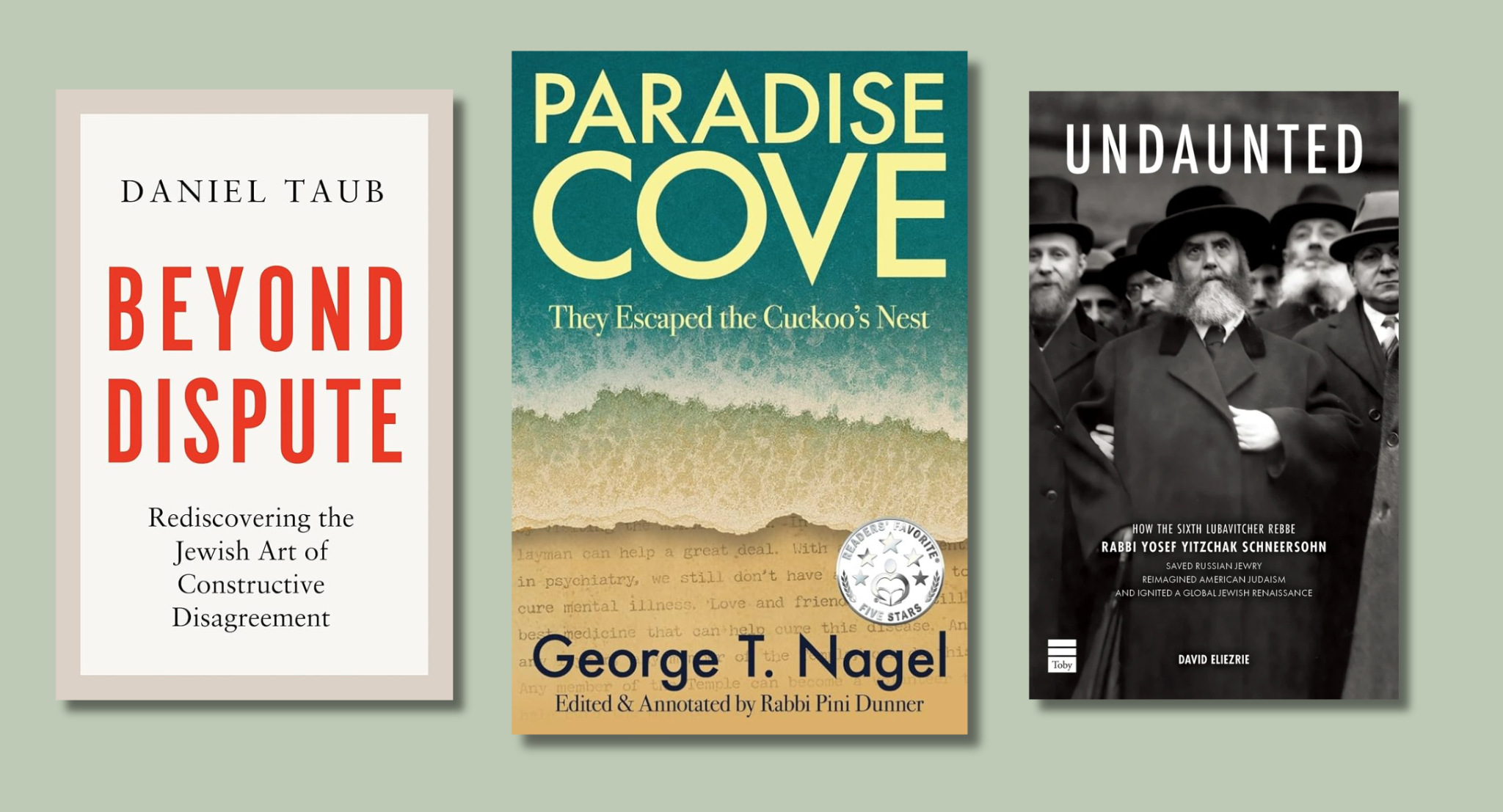
From explorations of faith and argument to untold Jewish stories continuing to be brought to light, some phenomenal works of Jewish nonfiction have emerged in the past few months.
Whether you’re drawn to rigorous debate, the hidden parts of history, or transformative leadership, the three books discussed below reveal the depth and diversity of contemporary Jewish thought. Here are three works worth your time.
Beyond Dispute by Daniel Taub
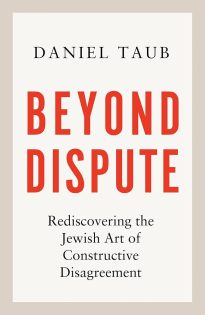
In an age of toxic debate and polarized discourse, is there still space for us to learn how to have good arguments? In Beyond Dispute, Daniel Taub argues that there is—and that we can learn this from the Talmud.
A diplomat and lawyer who previously served as Israel’s Ambassador to the UK, Taub draws on insights from the Mishna and Gemara, modern social psychology, and his own experiences to present a nuanced approach to healthy debate. For Taub, argument is “not so much a combat zone but more a joint enterprise, and its disputants are not sole custodians of the truth but collaborative explorers in search of it.”
He begins with this very question—the definition of truth and how we can develop a “confident humility” in our convictions while engaging those who disagree. Taub also weaves in the Jewish concept of “argument for the sake of Heaven,” and asks how we can build relationships strong enough to withstand differences. He captures this tension when he describes his observations at an Israeli-Syrian negotiation in 2000—the first in decades—and, in the coldness and silence of the Syrians, Taub detects fear: “Talking, without a safety net as it were, might open minds or, even worse, hearts”—a moment that illustrates the courage required for genuine dialogue.
Combining humor, historical anecdotes, and behind-the-scenes stories from his diplomatic career, Taub humanizes the struggle to nurture constructive conflict. Unlike typical debate guides focused on winning, Taub reminds us that if we can learn to argue with dignity and humility, then difference of opinion itself will hold the potential for inspiration and creative thinking.
Paradise Cove by George T. Nagel, ed. Pini Dunner
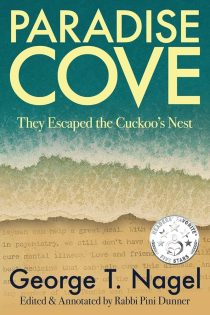
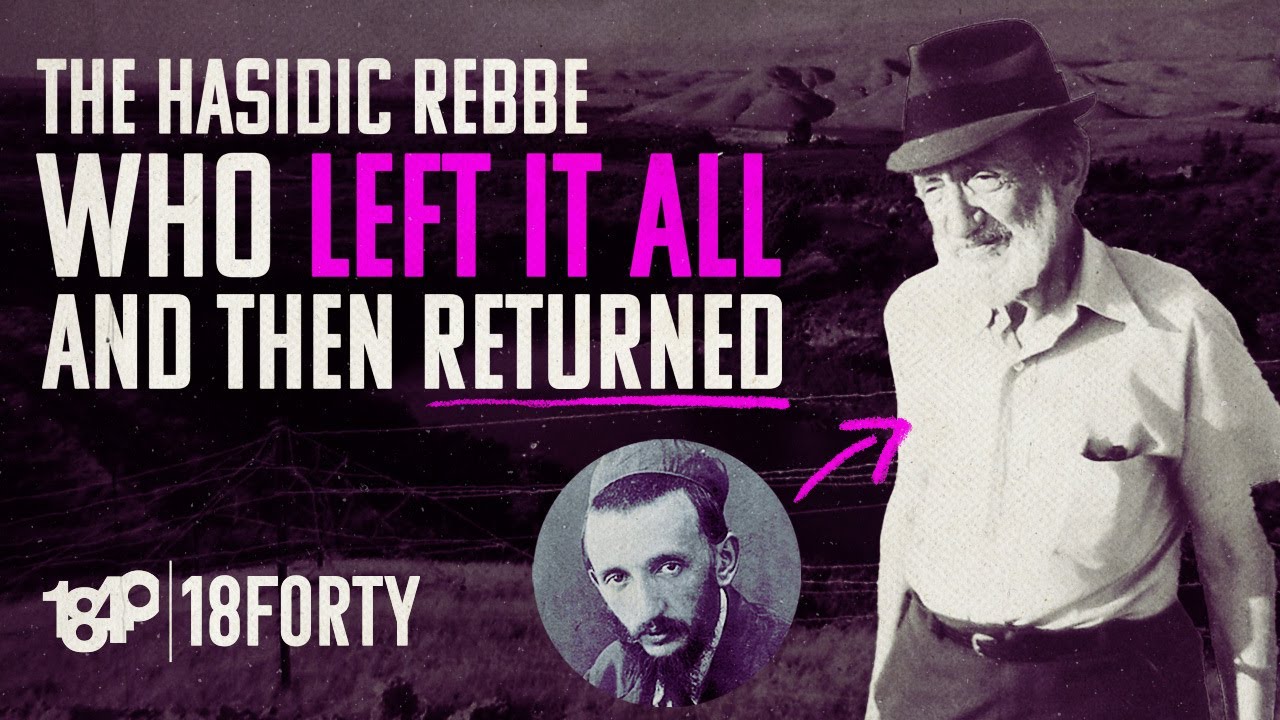
Can a person truly reinvent themselves—and can they ever fully return? We’ve asked these questions in relation to the Yabloner Rebbe before; now, we’re asking them in relation to his own writing.
(If you are not familiar with the profoundly moving story of the Yabloner Rebbe, listen to our interview with Rabbi Pini Dunner here to fill yourself in. You won’t regret it.)
In Paradise Cove, Rabbi Dunner presents a firsthand account of life inside a Southern California residential facility for recovering psychiatric patients, told by George T. Nagel—also known as Rabbi Yechezkel Taub, the Yabloner Rebbe—an 80-year-old graduate student volunteering there in the 1970s as part of his psychology fieldwork. With frankness, empathy, and a healthy dose of humor, Nagel observes people often overlooked by society who are struggling to reclaim their independence.
Written as a series of letters to his academic advisor for what would have been his master’s thesis, the manuscript reveals a man who still acts like a Rebbe, even if he no longer is one. This is seen in the way Nagel documents his work with many residents: “She talked, and I listened.” Rabbi Dunner discovered this lost work while researching the Yabloner Rebbe’s mysterious disappearance and has now restored it with extensive annotations, a preface, and an epilogue. Through meticulous research, he traces Nagel’s extraordinary journey from revered spiritual leader to anonymous immigrant, and finally, his quiet return to Israel as the Yabloner Rebbe in his final years.
In the words of Rabbi Dunner: “Paradise Cove is the document of a rebbe who never stopped being a rebbe—even if no one else knew it. Though it contains almost no overtly Jewish teachings, its core claim—that every soul matters, that healing begins with presence, and that dignity can be restored—is profoundly Jewish. And profoundly Hasidic.”
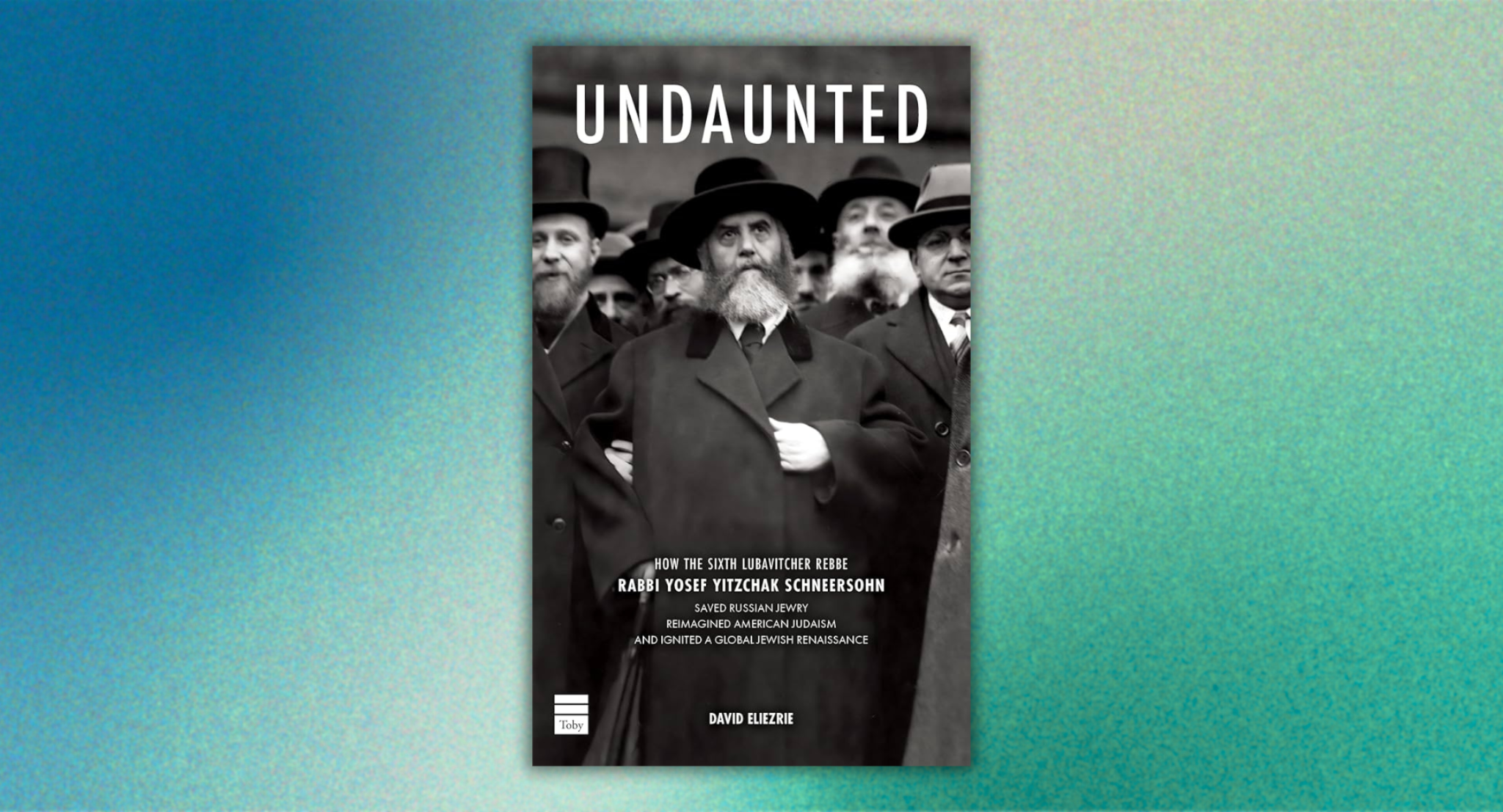
Undaunted by David Eliezrie
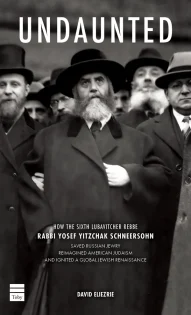
How do you lead when everything is collapsing around you? In Undaunted, Rabbi David Eliezrie chronicles the sixth Lubavitcher Rebbe, Rabbi Yosef Yitzchak Schneersohn, who faced down czarist Russia, Soviet oppression, Nazi invasion, and American assimilation—and emerged victorious at every turn. Drawing on thousands of letters and rare archives, Rabbi Eliezrie traces Rabbi Schneersohn’s extraordinary journey from his childhood in Lubavitch through imprisonment and torture by Soviet authorities to his dramatic arrival in America.
The biography reveals a man of remarkable courage and vision. After escaping war-torn Poland, he boldly declared upon arriving in America: “America is not different”—directly challenging the widespread belief that Judaism must conform to American culture.
For a deeper analysis of the book, 18Forty’s very own Cody Fitzpatrick has already written an excellent review, where he explores the Frierdiker Rebbe’s love of books and his unwavering commitment to creating a Torah-centered community in the United States.