

I Read This Over Shabbos is a weekly newsletter from Rivka Bennun Kay about Jewish book culture, book recommendations, and modern ideas. Receive this free newsletter every week in your inbox by subscribing here. Questions, comments, or feedback? Email Rivka at Shabbosreads@18forty.org.
I’ll just say it for those of us who feel this way every year: Adar is not my favorite month, and Purim is not my favorite holiday. I’ve never quite been able to grasp the profound joy we are supposed to feel on Purim. I just haven’t gotten there yet.
But to respect the holiday and what it represents for the Jewish People—faith, salvation, courage, hiddenness—I try to choose a certain idea or theme with which to orient myself during this time of the year. I asked the 18Forty team what they’re currently reading to get an idea of where people are as we head into Purim.
Not everything we’re reading this month connects directly to Purim—but that feels right for a holiday whose themes have a way of surfacing unexpectedly. What are you reading this Adar?
Sruli Fruchter — Director of Operations
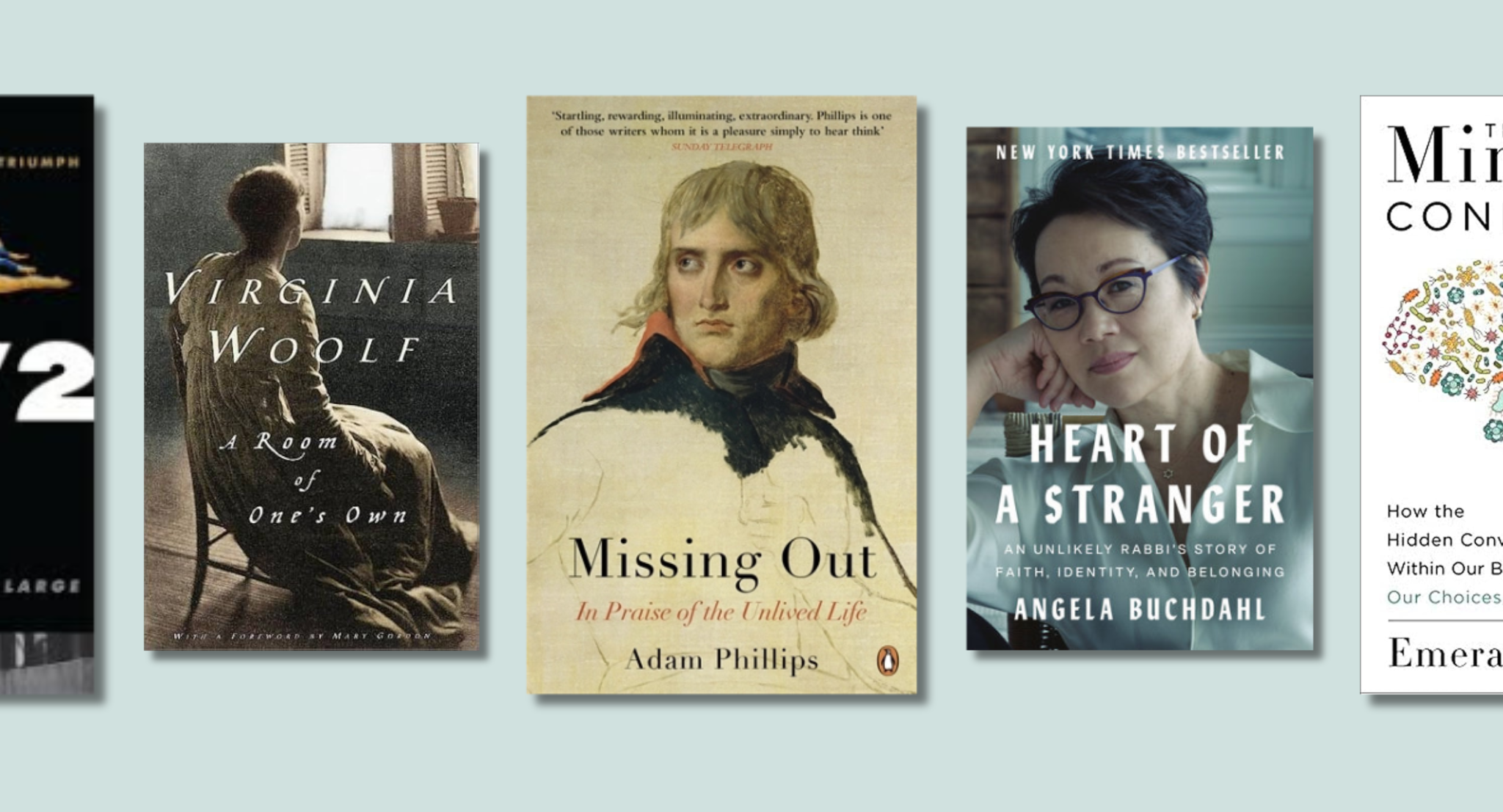
Missing Out: In Praise of the Unlived Life by Adam Phillips

I don’t think it’s an overstatement to say much of life is spent wondering about other versions of our lives—attending different schools, marrying different people, pursuing different careers, making different choices. The fantasy of “What if” presents a reality that exists only in our minds.
In Missing Out, the brilliant psychoanalyst Adam Phillips explores desire in many subtle forms. Frustration, misunderstanding, deception, and more are examined by him to deliver a thoughtful, provocative muse about the things we want, the things that stand in our way, and the things left as a result.
Why am I reading this during Adar? Not consciously, but perhaps subconsciously, I want to wonder what I’ll discover if I turned my life inside out.
Denah Emerson — Podcast Editor
Heart of a Stranger by Angela Buchdahl

Heart of a Stranger by Rabbi Angela Buchdahl is a memoir about identity, belonging, and spiritual leadership. In it, Buchdahl reflects on growing up as a Korean-American Jew and navigating spaces where she often felt like an outsider. She writes about the tension between visibility and invisibility, and about learning to embrace the parts of herself that made her different.
The book feels especially meaningful to read during Adar. Just as Queen Esther conceals and then reveals her identity, Buchdahl explores what it means to live both concealed and revealed in Jewish life. Adar invites joy that emerges from complexity, and this memoir models that kind of hard-earned joy.
I wanted to read it in Adar because it speaks to finding courage in vulnerability and connection in moments of estrangement. The theme of the “stranger” becoming central rather than marginal feels deeply aligned with the spiritual energy of the month.
Cody Fitzpatrick — Associate Editor
Munich 1972: Tragedy, Terror, and Triumph at the Olympic Games by David Clay Large

Over the past couple of weeks, I’ve been swept up by the thrill of the Winter Olympics, with the “Shul Runnings” Israeli bobsled team, the American hockey squad featuring Jewish stars Jack and Quinn Hughes, and the silver-medal–winning Jewish curler Korey Dropkin.
I can’t think of the Olympics, however, without also remembering the 1972 Munich massacre, in which the terrorist group Black September killed two members of the Israeli Olympic team before kidnapping and eventually killing nine more, plus a German police officer.
Munich 1972 is a near-comprehensive history of those Olympics, which also included member-of-the-tribe Mark Spitz’s then-record seven gold medals in swimming, against the backdrop of a mid-Cold War Germany rehabilitating its image post-World War II.
Part of that rehabilitation effort meant the absence of armed police in the Olympic Village, which organizers hoped would put people at ease. This infamously backfired when terrorists got into the Israeli team’s living quarters, where they committed, as the book puts it, “history’s first globally televised act of terrorism.”
What struck me most from the book was how little the world seemed to care. The Olympics went on—both during and after the crisis—and the pockets of people who opposed the Israelis and refused to condemn the attack felt eerily reminiscent of what we experienced after October 7.
Israel’s place among the nations of the world in the Olympics, and the world’s reaction to it, brings to my mind the words of Hillel: “If I am not for myself, who is for me?”
Rivka Bennun Kay — Shabbos Reads Editor
“A Room of One’s Own” by Virginia Woolf

I’ve been returning to the classics lately, and I’ve been slowly digesting “A Room of One’s Own”—not for a college class, not for a paper, but for my own reading and internalization.
The 1929 landmark essay is considered one of Virginia Woolf’s best works, yet I initially found her stream-of-consciousness style difficult to follow. Her wanderings around “Oxbridge,” a fictional blend of Oxford and Cambridge, from which women were barred at the time, are absorbing enough that the reader almost forgets what the essay is about until Woolf pulls back and begins drawing conclusions from what she’s witnessed.
She establishes her thesis: that creative and intellectual work requires privacy, independence, and financial autonomy—none of which women have historically been granted. She reflects on the history of women’s education and argues that women’s literary potential has been systematically suppressed rather than proven absent.
“Anything can happen,” Woolf writes, “when womanhood has ceased to be a protected occupation.” Woolf’s “room”—that space of autonomy carved out against resistance—feels resonant this Adar, as I find myself thinking about the heroines of Jewish history, and the way their bravery and resistance move our collective story forward.
Tzila Hadad — Social Media Manager
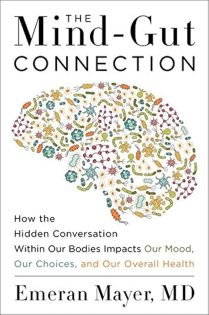
The Mind-Gut Connection by Emeran Mayer
Training for a marathon has made my body impossible to ignore, revealing what I eat, the quality of my sleep, and how stressed I’ve been.
That’s what drew me to The Mind-Gut Connection by Emeran Mayer. Mayer, a gastroenterologist and neuroscientist, explores the “gut-brain axis,” a constant communication between body and mind.
The premise sounds trendy, but the science is compelling. The gut isn’t just processing food—it produces neurotransmitters, shapes stress responses, and influences mood, focus, and decision-making.
As my gut improved, the changes affected more than my pace. My mind felt sharper, more focused, less irritable, and fully present. Mayer explained that this wasn’t random, but biological: the body directly impacts the mind.
This insight has shaped my religious life. Spirituality is often seen as purely mental, rooted in thought, prayer, or study. But clarity and steadiness rely on the body, opening space for deeper focus and reflection.
The Mind-Gut Connection doesn’t argue theology or promote extreme diets. It makes a simple point: The mind and body are deeply integrated. Taking care of the body is not separate from higher pursuits—it supports them.