

I Read This Over Shabbos is a weekly newsletter from Rivka Bennun Kay about Jewish book culture, book recommendations, and modern ideas. Receive this free newsletter every week in your inbox by subscribing here. Questions, comments, or feedback? Email Rivka at Shabbosreads@18forty.org.
We’re well into Elul already—the shofar’s sounding, Selichot has started, and mornings feel a little more urgent than they did in August. As always this time of year, I asked the 18Forty team what books they’re picking up. Here’s what we’re reading this month: some of it about teshuva directly, some of it about the questions Elul tends to raise anyway—memory, choice, guilt, and the work of becoming who we’re supposed to be.
David Bashevkin — Founder
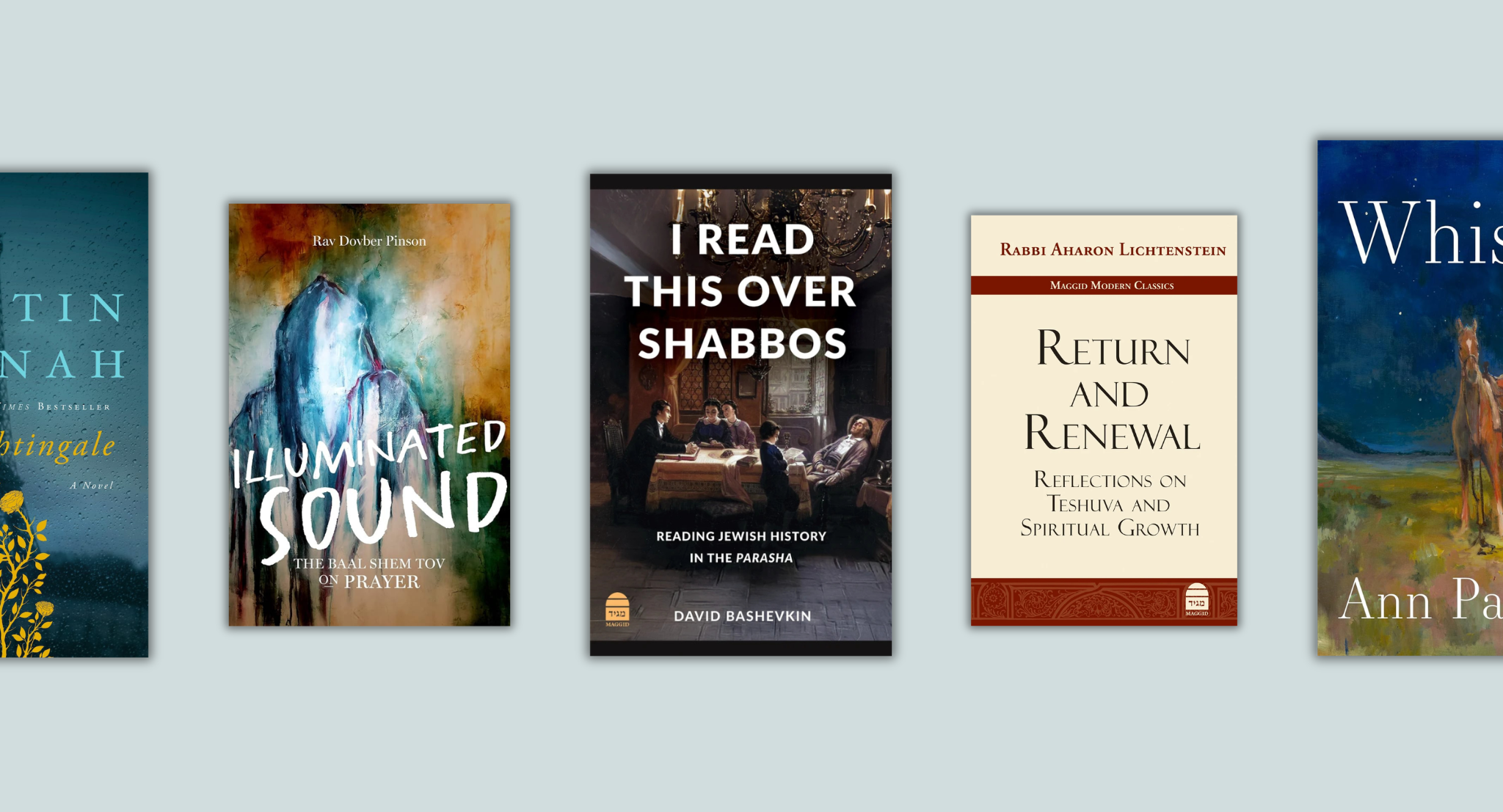
I Read This Over Shabbos: Reading Jewish History in the Parasha by David Bashevkin
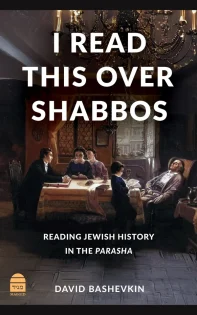
There is a unique joy in recommending your own book. Sorry not sorry.
But I Read This Over Shabbos: Reading Jewish History in the Parasha is more than a book about the parsha, and it’s more than a book about Jewish history. It is a book about the stories in Jewish history that shaped our contemporary Jewish lives.
Each chapter begins with the weekly parsha and uses it as a doorway into a different moment, personality, controversy, or idea from Jewish history. Why does Jewish life look the way it does today? How did our communities, institutions, debates, and assumptions take shape? From German reparations and the State of Israel to synagogue controversies, Rav Soloveitchik, Rav Steinsaltz, and so much more, these are the stories that help explain how we became the Jews we are today.
The goal is not simply to read the Torah into our lives, but to read our lives back into the Torah—to see how the themes of the parsha continue to reverberate through Jewish history and into the questions we are still asking.
And this is very deliberately a book that keeps on giving. Every chapter ends with Shabbos Reads: a curated list of the best books and articles I found on that subject. You can read a chapter in one sitting—or use it as the beginning of an entirely new reading journey.
More than anything, I hope this book helps people fall a little more in love with the Jewish People, with our history, and with reading itself.
Because the best time to start reading is now.
And if not now, then on Shabbos.
Sam Gelman — Director of Operations
The Eleventh Plague: Jews and Pandemics from the Bible to COVID-19 by Jeremy Brown
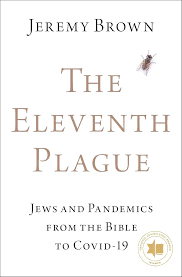
The Yamim Noraim always bring mortality to the forefront for me, so this year, I am reading The Eleventh Plague: Jews and Pandemics from the Bible to COVID-19 by Jeremy Brown. I still remember the first time I heard the chazzan chant the words umi vamagefah,“and who by plague,” during Unetaneh Tokef in our first year back in shul following the COVID-19 pandemic. It was the first time I truly felt the weight of Unetaneh Tokef, and it was as terrifying as it was stirring. I’m not sure if reading The Eleventh Plague will make Unetaneh Tokef any easier, but maybe it’s not supposed to. Maybe I don’t want it to?
The weight of Unetaneh Tokef may be heavy, but its reminder that everything can be taken in an instant makes all the moments before feel all the more full.
Denah Emerson — Podcast Editor
Whistler by Ann Patchett
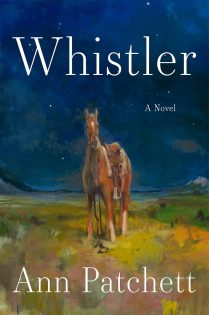
I’m reading Ann Patchett’s new novel Whistler during Elul, and it feels almost too perfectly timed. The book begins when Daphne Fuller unexpectedly encounters Eddie Triplett, the former stepfather she hasn’t seen since she was nine, and a relationship that lasted only a brief time suddenly brings more than 40 years of memory rushing back.
Whistler is interested in the choices we make, the choices that are made for us, and the small moments that end up quietly determining the course of our lives. Those questions feel particularly resonant in Elul, a month that asks us to look backward in order to figure out how we want to move forward. I’m drawn to the idea that cheshbon hanefesh (personal reckoning) doesn’t only mean cataloguing what we did right or wrong, but reconsidering the stories we’ve been telling ourselves about who we are and how we got here. Patchett is especially good at finding enormous meaning in seemingly ordinary relationships, and here she asks what it means to have been truly known by another person—even if only for a short time.
There’s something very Elul about allowing the past to become present again, not so that we can remain there, but so that we can understand it differently. As I head toward Rosh Hashanah, Whistler feels like exactly the kind of book I want beside me: one that makes room for memory, reckoning, love, and the possibility that looking back honestly might change the way we move forward.
Cody Fitzpatrick — Associate Editor
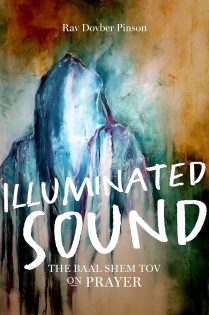
Illuminated Sound: The Baal Shem Tov on Prayer by Dovber Pinson
You don’t need to wait until Rosh Hashanah to celebrate a holiday when there’s a lesser-known one that was celebrated last week: Chai Elul, which marks the birthday of the Baal Shem Tov—the founder of Hasidic Judaism—as well as the birthday of the Baal HaTanya, the founder of Chabad.
As I approached that day, I opened a book by friend of 18Forty Rav Dovber Pinson, who was part of our teshuva series last year.
“For the Baal Shem Tov,” Rabbi Pinson writes in the introduction to Illuminated Sound: The Baal Shem Tov on Prayer, “davening is not just another discipline to be learned, or just another tool to be acquired in a life of avodah … It is the discipline and tool. It is the ikar.”
During Elul, we say that “the King is in the field,” meaning we have the opportunity to get to know the Aibishter in a more informal setting ahead of our encounter with Him in the palace during the High Holidays.
“Tefillah,” Rabbi Pinson writes in chapter one, “is the path we travel through the wilderness, into the courtyard of the castle, through the winding, maze-like hallways, past the decadent ballrooms, and into the Holy of Holies, the inner chamber.”
I hope this book prepares me to make the most of the palace visit.
Rivka Bennun Kay — Shabbos Reads Editor
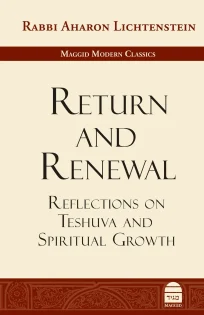
Return and Renewal by Rabbi Aharon Lichtenstein
I wrote, in the beginning of Elul, about how I think a lot about interpersonal relationships this time of year. When I want to think about working on my character and becoming a better person, I like to read the writings of Rav Aharon Lichtenstein.
Return and Renewal gathers Rav Lichtenstein’s essays and addresses on teshuva, delivered over a few decades. Rather than treating teshuva as a single dramatic turn, Rav Lichtenstein probes it as an ongoing, demanding process woven into religious growth. The essays move between halachic analysis and searching questions about sin, guilt, and the possibility of genuine change.
Return and Renewal is a rigorous, honest reckoning with what it means to change—which is exactly what I needed this Elul.
Tzila Hadad — Social Media Manager
The Nightingale by Kristin Hannah
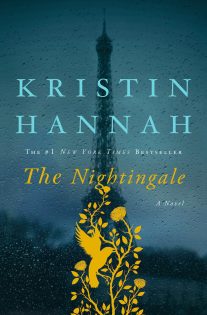
This Elul, I’m reading The Nightingale by Kristin Hannah, a historical fiction novel set in France during World War II. It follows two sisters, Vianne and Isabelle, whose lives take very different paths under the Nazi occupation. Vianne is a mother focused on protecting her daughter and surviving the war, while Isabelle, younger and more rebellious, chooses to join the French Resistance and risk her life helping Allied soldiers escape.
At its heart, The Nightingale is a story about choices, courage, guilt, and how we live with the decisions we make.
One of the things that makes the book especially meaningful to read during Elul is the way it asks us to reflect on the choices that shape our lives. The story is told from the perspective of an older woman looking back on her experiences decades earlier and revisiting the person she was then.
Elul asks us to do the same: to look back at the year we’ve lived, examine our choices, acknowledge where we fell short, and decide what we want to do differently. That reflection is at the heart of teshuva—not simply feeling regret, but using that reflection as an opportunity to change.