


A New Approach to Elul
This is not a guide to teshuva, an approach to moral accounting, or an attempt to deepen the religious experience of Elul. Those are worthy projects. This is something different.
A Good Enough Elul borrows the reflective posture of Elul, not its religious framework. The shofar is blowing, the mood is introspective, and the community has agreed that something worth examining is happening. This program makes use of that readiness to introduce a body of thinking that has nothing specifically to do with teshuva, and everything to do with what it means to have an inner life.
Psychodynamic thinking is among the oldest traditions in modern psychology. While it may be less visible today than other contemporary approaches, including AI-based systems that offer insight without a relational field, it remains deeply effective. Many of its core ideas have been absorbed into all forms of therapy and now quietly shape our understanding of what therapy is.
The ideas presented here originate in psychoanalysis, but the program does not describe psychoanalytic technique. Psychoanalysis is an intensive clinical method that differs from psychodynamic therapy. This program draws on the concepts that emerged from that tradition, not the therapeutic process itself.
Religious readers will disagree with Sigmund Freud’s view of religion as an illusion, yet his observations about human psychology can stand independently of that conclusion. Within any religious community, it is often apparent that unconscious processes influence thought and experience. Bringing underlying motivations into awareness can deepen religious life by making it more reflective, more intentional, and more personally chosen.
The program opens with a podcast episode describing how psychodynamic thinking takes seriously the idea that much of what drives us is not visible to us, that early relationships shape us in ways we did not choose, and that becoming conscious of these forces has value. It also clarifies that the program is not a substitute for therapy or a religious agenda in disguise.
Thirty daily entries unfold in a consistent six-part structure:
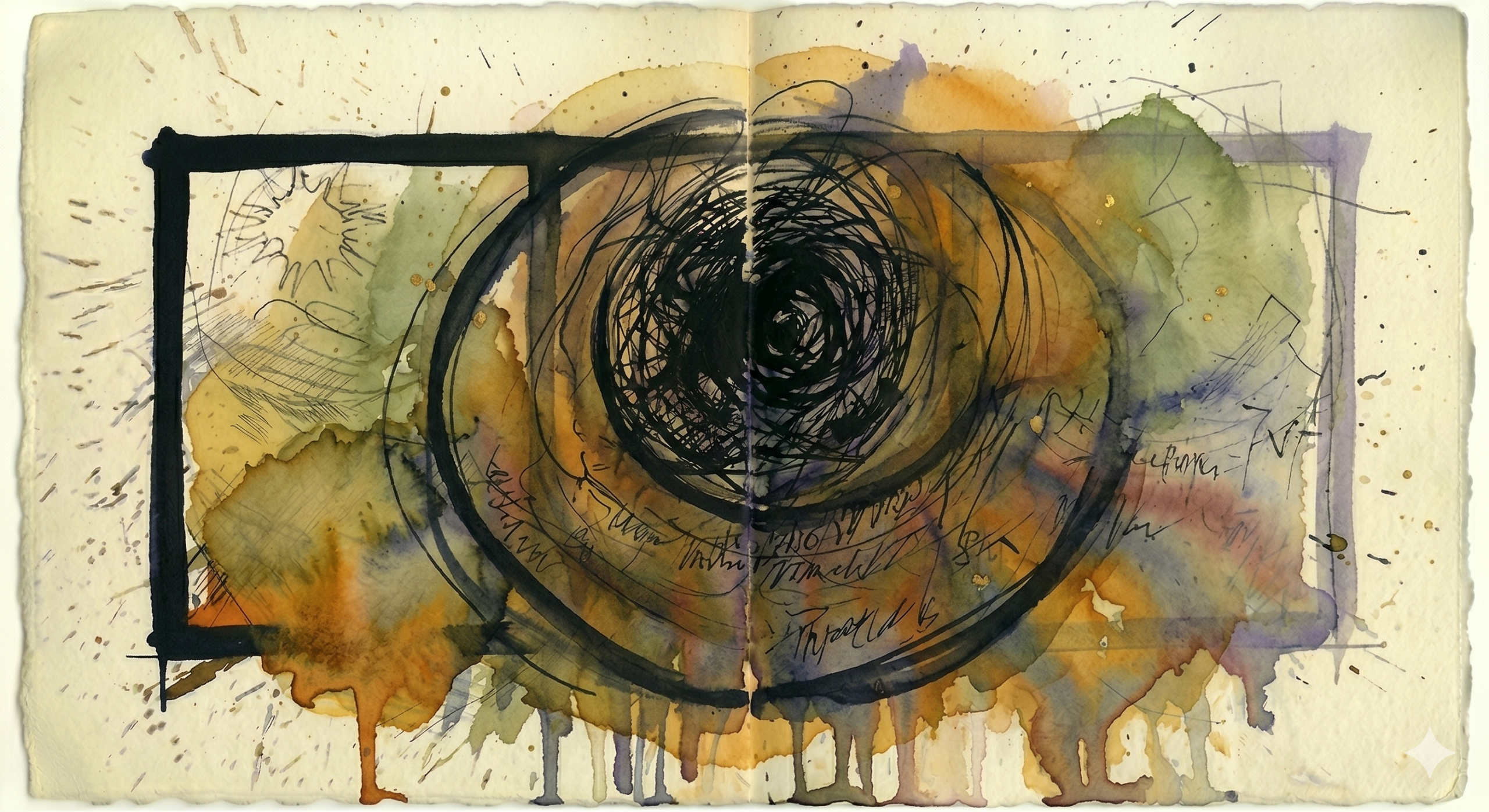
- “In color” – An illustrative representation.
- “In theory” – A concept situated within its tradition.
- “In experience” – An instance that illustrates the concept without over-explaining it.
- “In thought” – A reflective outcome that becomes thinkable through the concept.
- “In print” – A brief suggestion for those who wish to explore further.
- “In attention” – A point of attention for the reader’s own noticing.
The entries follow the arc of therapy itself, moving sequentially through stages of the work. In practice, these stages are not discrete and often overlap. By the end of the month, readers will have encountered the vocabulary that informs psychodynamic therapy, not as a system to apply, but as a way of thinking that can be recognized, returned to, and possibly pursued further.
The psychodynamic tradition does not promise healing. But becoming conscious of what was previously unconscious has implicit effects. Patterns become recognizable. Hidden motivations begin to surface. As they do, choices that were previously unavailable become possible. This is more modest than immediate transformation and, in practice, more durable.
Psychodynamic therapy is a relational process between two people over time and cannot be self-administered. Symptoms are expressions of what is fundamental to personality, not problems to be targeted. In this relationship, development may become possible where it had once been interrupted, and symptoms may recede.
This program reflects a relational psychodynamic lineage rooted in Sigmund Freud and developed through British object relations theory, attachment research, and contemporary relational approaches to psychotherapy. It remains within those psychodynamic and relational traditions and does not extend beyond that frame.
The entries introduce such thinking in the hope that encountering these ideas might bring some of their value. They cannot replicate therapy itself.
Program Outline
1. The Frame (Days 1–6)
Before anything, the container has to be established. The reader is introduced to what kind of attention psychodynamic thinking requires, and what makes that attention possible.
- Day 1: The Unconscious
- Day 2: The Therapeutic Frame
- Day 3: Early Relationships
- Day 4: The Holding Environment
- Day 5: The Therapist’s Neutrality
- Day 6: Free Association
2. The Material (Days 7–12)
What gets brought into the room once the container is trusted. The unconscious residue of early experience, and how the mind protects itself from what it cannot yet bear.
- Day 7: Attachment
- Day 8: Internalization
- Day 9: Shame & Guilt
- Day 10: Defense Mechanisms
- Day 11: Splitting
- Day 12: Resistance
3. The Relationship (Days 13–18)
Where the material becomes visible between two people. What each person brings, what gets generated between them, and what that reveals.
- Day 13: Intersubjectivity
- Day 14: Transference
- Day 15: Countertransference
- Day 16: Mirroring
- Day 17: Enactment
- Day 18: Rupture & Repair
4. The Interior (Days 19–24)
What becomes available once the defenses have softened. The emotional life that was being protected against is now, finally, in the room.
- Day 19: Afterwardsness
- Day 20: The True & False Self
- Day 21: Repetition Compulsion
- Day 22: Ambivalence
- Day 23: Mourning
- Day 24: The Depressive Position
5. The Threshold (Days 25–30)
What the later phase of the work feels like. Not resolution, but a different and more honest relationship to the self.
- Day 25: Working Through
- Day 26: Integration
- Day 27: Object Constancy
- Day 28: The Capacity To Be Alone
- Day 29: Sublimation
- Day 30: Tolerating Uncertainty