

I Read This Over Shabbos is a weekly newsletter from Rivka Bennun Kay about Jewish book culture, book recommendations, and modern ideas. Receive this free newsletter every week in your inbox by subscribing here. Questions, comments, or feedback? Email Rivka at Shabbosreads@18forty.org.
This piece first ran on our Substack, I Read This Over Shabbos. We’re pleased to share it here on our website.
I’m terrible at remembering what I read. I’ve touched on this topic before when I wrote about David Bashevkin’s method for remembering the books that he reads, but I have, sadly, yet to implement his extremely thorough system for documenting the books he reads.
I’ll see a book I remember having loved, but I simply cannot explain why I loved it or describe it beyond a very basic and often hazy overview. It’s a little better for nonfiction because I spend more time with nonfiction books, but even those tend to dissolve and dissipate with time. I think reading is, in and of itself, a worthwhile pastime, simply for the things it does for your brain and for the alternatives it stops you from pursuing (no, not drugs, I mean your phone) but it does seem a shame to spend so much time reading and not remember even a tenth of what I read.
When I complained to a friend about this, they reminded me of this Ralph Waldo Emerson quote:
I cannot remember the books I have read any more than the meals I have eaten; even so, they have made me.
I absolutely love the quote and wholeheartedly agree with the sentiment behind it. Nevertheless, I still want to remember more of what I read. I don’t care whether it’s the plot of a thriller or the history behind a world event, if I read about it, I want it to stay in my brain.
As this has been somewhat of an ongoing issue for me, I’ve been collecting ideas and tips for retaining more of what I read for a while now. These are not note-taking systems per se, although I would be interested in exploring different methods for annotating and summarizing books, but more general tips to improve focus, comprehension, and memory. (Read to the end for a list of books that tackle this topic more in-depth.)
Don’t: Choose your books based on what “everyone is reading” or the latest release
Reading should be something you do for your own pleasure, enrichment, or education. Choosing your reads based on other people’s preferences or just because it’s the hottest thing to hit #bookstagram or #booktok isn’t just silly, it’s counterproductive. The less interested you are in a book, the less likely you are to approach it with interest and passion, and for it to keep your focus. Choose books that you genuinely want to read and you’ll find yourself paying more attention while you read, helping you to remember more of it later.
Don’t: Speedread (Ugh)
Speedreading is just another example of a good thing killed by “productivity culture.” The goal should never be just to “read as much as possible.” The point of reading is not to cram as many books in as you can; the point is to actually enjoy, savor, and understand what you’re reading. Instead of speeding up—slow down. Apps like Headway try to sell you on the idea that a book can be condensed into its most basic concepts and consumed in a short summary when in reality, we learn by investing time, energy, and focus.
Do: Think if you don’t have time to write
Don’t have time to write a full summary of every book you read? Take the pressure off and just think about it instead. Take time to deliberately clear your mind—take a walk (As Nietzsche said: “It is only ideas gained from walking that have any worth.”) or even just sit on the couch and think about what you’re reading (or what you’ve just read). This will help the information or story settle into the crevices of your brain and help stop it from slipping away as soon as you turn the last page.
Do: Leave reviews
If figuring out a system for taking notes on the books you’re reading seems too daunting, use the built-in structure of an app like Goodreads or Storygraph to help you keep track of what you’re reading, and your thoughts on said books. You can leave a star rating along with as detailed or broad a review as you like. Take an extra minute to write the things you think you’ll want to remember so that it will all be there when you look back at it. You can also keep your to-read list there so all your reading lists (past, present, and future) will be in one safe place.
Don’t: Focus on the numbers
I find there is way too much talk of “how many books I read in X amount of time”—who cares about the numbers? A book is not something to check off a list and rush onto the next one. This mindset just takes the focus away from the contents of the books and turns reading into a chore or a bore. Every minute you spend with one book is a minute you could be spending with the next book on your list. Forget about the numbers and just enjoy what you’re reading. Slow down, you’re doing fine!
Do: Know why you’re reading
Starting with a question or a goal in mind can help crystallize your intentions before starting a book. Are you looking for an answer to a question? To educate yourself about a certain subject? To be entertained? Knowing your why can help you know what to look for while you’re reading, and turn your reading into a more active experience. It can also help you know when to put a book down (if you’re looking to be entertained and aren’t, for example).
Do: Read out loud
This one might be best for nonfiction, as well as for those living with people not easily annoyed, but reading out loud can definitely help with reading comprehension and memory. Hearing the words spoken out loud can help you process them better and ultimately retain more of what you read.
Don’t: Keep it all to yourself
A great way to cement what you read into your deep subconscious is the Feynman Technique. Richard Feynman was a brilliant physicist known for his exceptional ability to explain complex scientific concepts in simple terms. Feynman believed that if you couldn’t explain a concept in an easy-to-understand way, you didn’t understand it well enough. The technique consists of four steps:
1. Identify the topic you are interested in learning about.
2. Teach what you’ve learned to a child or a novice in that area in simple terms.
3. Identify gaps in knowledge and return to the source material.
4. Refine your lesson or notes on the subject and test for more gaps in knowledge.
Feynman once said, “I was born not knowing and have had only a little time to change that here and there.” The ability to teach a child, or someone with no knowledge of the subject you’re interested in, forces you to simplify and crystallize your knowledge and helps you realize where you may be falling short.
Do: Get some context
Something I find useful before starting a book is to get some context on the author or the background of the book. Learning about Virginia Woolf’s suicide gave me context that deepened my experience reading Mrs. Dalloway. Reading about Charlotte Bronte’s experiences as a child in a boarding school with her sisters deepened my connection to Jane Eyre. Getting context can help you feel more connected to a book and its author, ultimately giving it more of a lasting impact in your mind.
Don’t: Multitask
It’s great to always be reading, and bringing a book with you wherever you go is a better use of your time than scrolling on your phone while you wait at the dentist or doctor’s office, but if you’re really trying to remember what you’re reading, you’re going to want to focus deeply—and that can’t be done in short bursts. In Deep Work, Cal Newport says, “First, distraction remains a destroyer of depth.” To truly engage with a book, you have to clear distractions—no phone, a quiet room, and no interruptions—it’s the best way to really focus and sink your teeth into whatever you’re reading.
You don’t have to remember every sentence of every book you’ve read. You don’t even have to remember reading every book you’ve read. The bad ones, the irrelevant ones, the ones that didn’t speak to you—let go of them, let them drift and float out of your mind. But the great ones, the ones that made you think, made you feel—those you should remember—or at the very least remember that you want to remember. A great meal is fleeting—you eat, you enjoy, and then it’s gone. But a book, a truly great book, can make an impact whose echoes can be heard for the rest of your life.
Have a great week and keep reading,
Arty
P.S.
If you’re looking for books about improving your reading and your memory, these are worth your time:

How to Read a Book by Mortimer J. Adler and Charles Van Doren
This classic book is considered a foundational guide to reading comprehension and retention. It explores different levels of reading—from elementary reading to analytical and syntopical reading—and provides strategies for getting the most out of your reading.
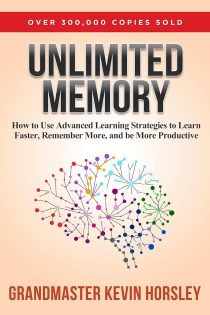
Unlimited Memory by Grandmaster Kevin Horsley
This book reveals powerful techniques used by top memory experts to improve focus, recall, and concentration, helping you eliminate distractions, double your productivity, and master the art of remembering anything at will.

The Memory Book by Harry Lorayne and Jerry Lucas
Learn a simple, foolproof memory system that enhances recall, boosts productivity, and makes it easier to remember everything from names and dates to foreign languages and important details.

The Intelligent Reader’s Guide To Reading by Thinknetic
Packed with proven techniques and strategies from cognitive science and reading experts, this guide will help you unlock the power of active reading and conquer the challenge of retaining what you read.
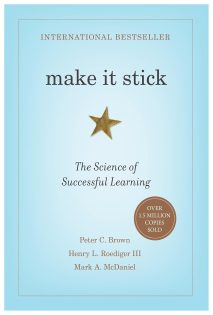
Make It Stick by Peter C. Brown, Henry L. Roediger III, and Mark A. McDaniel
Rooted in cognitive science, this book offers evidence-based strategies for improving learning and retention. “An indispensable guide for all those interested in the challenge of lifelong learning and self-improvement.”