

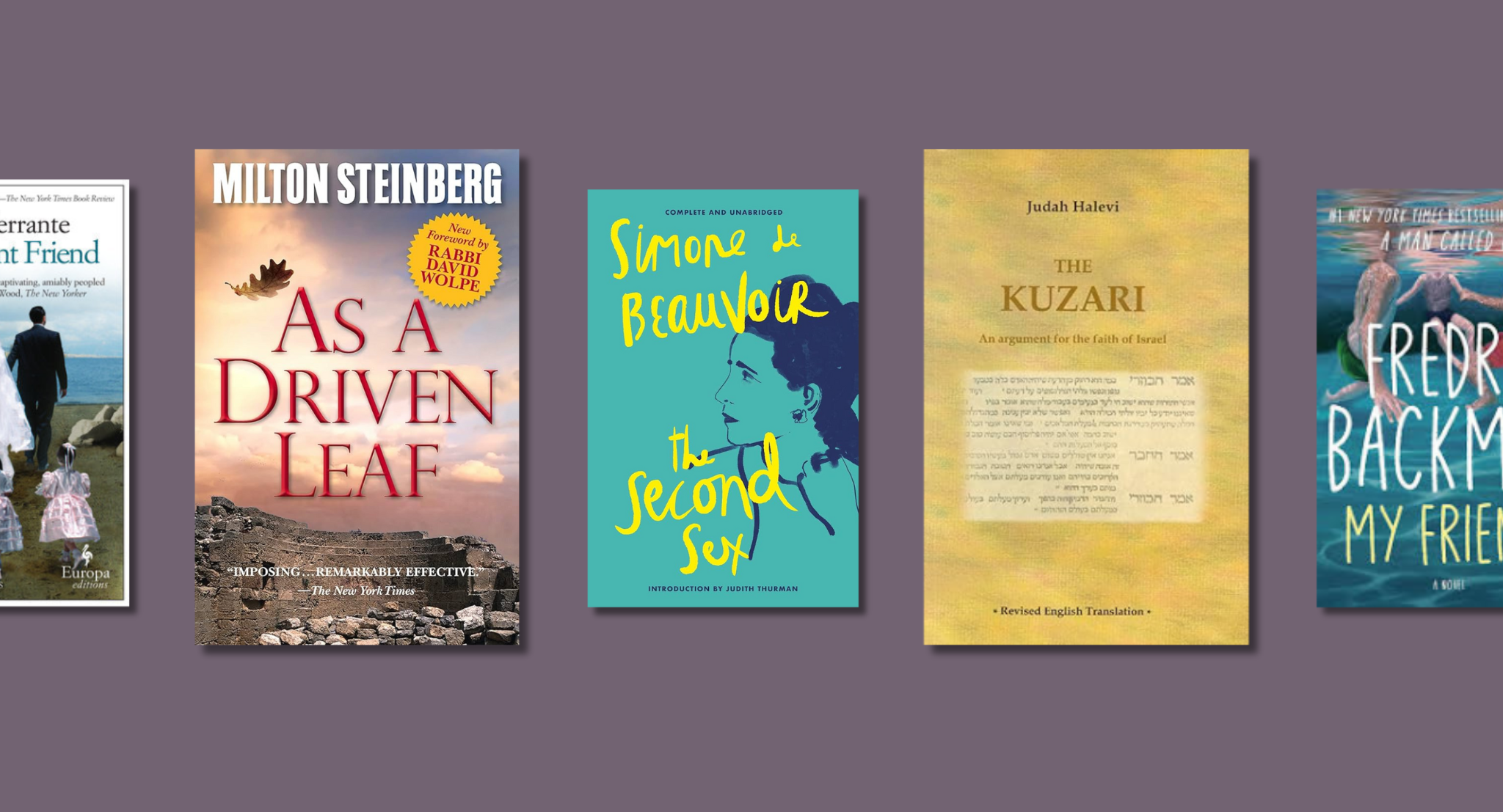
We’re nearing the final stretch of summer, a time when people tend to kick back, relax, and enjoy the last few weeks of sunshine before autumn hits. Naturally, a good read is in order, so we bring you 18Forty’s picks for the month of August. This month, our team is reading a range of genres—whether it’s groundbreaking 20th-century feminist theory or Medieval Jewish philosophy, you’ll always find us with something interesting to read. Let me know what books you’ve picked up recently, and happy reading!
Sruli Fruchter — Director of Operations
The Second Sex by Simone de Beauvoir

A book like The Second Sex—the magnum opus of feminist philosophy, written by 20th-century philosopher Simone de Beauvoir—is not something I would typically encounter in day-to-day life as a YU semikha student. That’s really why I bought it.
Beauvoir argues that womanhood is a social role prescribed by a patriarchal society that innately oppresses, disenfranchises, and exploits those categorized as “woman” (i.e. any female). She demonstrates the biological, sociological, psychological, and historical mechanisms used to do so. However, Beauvoir is not concerned with women’s rights for voting, finances, and the like. Instead, she is concerned with the institutions used to, as she sees it, ensure women remain tethered to domesticity and subservient to men. She targets motherhood and family in particular.
I love reading ideas I might never encounter otherwise. Considering the merits of her argument (say, how certain social norms are accepted as divine necessity) and also its limitations (such as, motherhood and family being inherently oppressive) is satisfying. But I’m not just interested in thinking about ideas in the abstract. For me, this book offers a lens to see how historical realities can build frameworks into our foundations that make it difficult to question the assumptions forming our reality.
Despite the disagreements I have with Beauvoir, I appreciate her willingness to think big-ly. I hope The Second Sex will help me to do the same.
Cody Fitzpatrick — Associate Editor
Tract on Prayer by Sholom Dovber Schneersohn
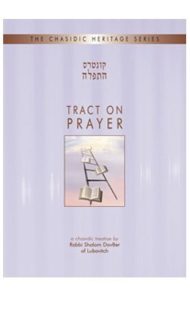
My regular minyan is splitting up for about 10 days while the rabbi is on vacation, which gives me the chance to return to my other stomping ground, my local Chabad house. Figuring this was as good a time as ever to study the Chabad approach to prayer, I picked up Kuntres Hatefillah, Tract on Prayer, by the Rebbe Rashab, the fifth Lubavitcher Rebbe.
The first thing I learned from it was that Chabad prayer is primarily about meditating on God’s greatness in order to unify the mind and heart with Godliness, which leads to delight.
“This type of pleasantness and delight is an inward and essential one,” Rabbi Sholom Dovber says in the first chapter. “A person’s whole essence is nullified by this delight to the point that actual expiration of the soul is possible.”
While the book is loaded with warnings about how difficult it is to truly pray properly, the Rebbe Rashab tells us, “A person has the ability to concentrate deeply on a concept and to attach himself to it … So when one forges a strong bond, he will obtain the aforementioned spiritual sense-perception and ecstasy, in both his mind and heart.”
Rivka Bennun Kay — Shabbos Reads Editor
My Friends by Fredrik Backman
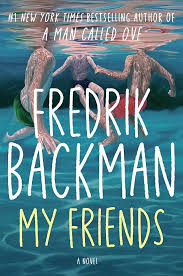
I’d be lying if I told you I was in the middle of some fascinating new book, because the truth is that I finally finished reading A Tree Grows in Brooklyn yesterday. I started it two months ago—it’s been a busy summer for me and I fell behind on my reading! But today I started Fredrik Backman’s latest novel, My Friends, and while I haven’t gotten very far, I have a feeling it’ll strike me the way Backman’s other novels have. Backman has this way of writing about family and relationships that is at once funny, heartbreaking, raw, and emotional.
My Friends combines art, friendship, mystery, and adventure. It follows Louisa, an aspiring artist and a teenager who knows better, who embarks on a journey to uncover the story behind a transcendent work of art. The story simultaneously follows the people in the painting—three friends, lost souls who find in each other love, friendship, purpose, and a reason to dream.
Gabriella Jacobs — Social Media Manager
The Kuzari by Judah Halevi

I read The Kuzari for a class comparing Islamic and Jewish philosophy, expecting to find it interesting but not exactly “my” kind of Jewish literature. My appreciation for the book and its arguments surprised me. It is framed as a conversation between the king of the Khazars and a Rabbi from whom he has requested a defense of Judaism, so it reads like the Platonic dialogues, which I greatly enjoy, just Jewish, not Greek. I usually gravitate toward more rationalist thinkers, and Judah Halevi’s defense of Judaism throughout the book is not that. It is more mystical, and justifies Jewish practice by stressing the value of inherited tradition and obedience to halacha, approaches which I am usually less drawn to, but which were, in The Kuzari, compelling. It made me think about a tension which still shapes Jewish life today: Is belief in Judaism, and acceptance of a halachic lifestyle something we reason our way into, or is it something we live because it’s been passed down to us, and it is our heritage? What is the balance between tradition and reason, and obedience and inquiry?
Ava Eden — YU Summer Intern
As a Driven Leaf by Milton Steinberg
My friends and I have recently been discussing whether or not developing an inner emotional world and personality should be considered a religious pursuit—and reading As a Driven Leaf convinced me that it is.
As a Driven Leaf is a novel by Milton Steinberg that uses stories and accounts from the Talmud to create an emotionally potent fictionalized narrative about the life and fall of Elisha ben Abuyah, the Talmud’s paradigmatic heretic. Fiction literature, in general, has the ability to expand someone’s perspective and develop their sensitivities, and religious fiction literature is no different. Especially when it draws from real events, it can help someone process and feel understood in their religious emotional state, as well as prompt a deeper understanding of the religious experiences of others.
I’ll be frank in admitting that at first I wasn’t totally sold on the legitimacy of the characterization of the sages, and I still consider it sometimes. But when viewing the book not as a historically accurate account of specific people, but as a Talmudically inspired relatable exploration of various religious experiences, I see its religious potential. For me, this book prompted a deeper dive into the emotional experiences of those who choose to leave religion, essentially injecting a painful and potentially divisive topic with sensitivity and an understanding of others’ complicated human experiences. The world is a complex place, and developing a religious inner self that is capable of navigating it richly and head on is, in my mind, a deeply religious pursuit, and one to which As a Driven Leaf heavily contributes.
Emily Goldberg — YU Summer Intern
My Brilliant Friend by Elena Ferrante
When I saw that the New York Times named this the number one best book of the century, I knew I had to give it a read.
Set in Naples, Italy, My Brilliant Friend is the perfect book to wrap up your summer. It tells a story of two friends, Elena Greco and Lila Cerullo, as they navigate their tumultuous relationship while growing up alongside each other. What makes this book truly riveting is that it does not shy away from painting their friendship in a realistic light. Elena and Lila are not made out to be perfect personalities, but rather, their characters are written as the average young adults, allowing the reader to insert themselves into the narrative despite its distinctive plot line. While the story jumps from enduring moments to tense encounters, Elena Ferrante’s quiet writing style makes this book a truly remarkable read. The book touches on themes of social class and community as these two girls navigate the challenges and triumphs of life in their Italian neighborhood, making the reader reflect on the worthiness of friendship despite its hardships.