

I Read This Over Shabbos is a weekly newsletter from Rivka Bennun Kay about Jewish book culture, book recommendations, and modern ideas. Receive this free newsletter every week in your inbox by subscribing here. Questions, comments, or feedback? Email Rivka at Shabbosreads@18forty.org.
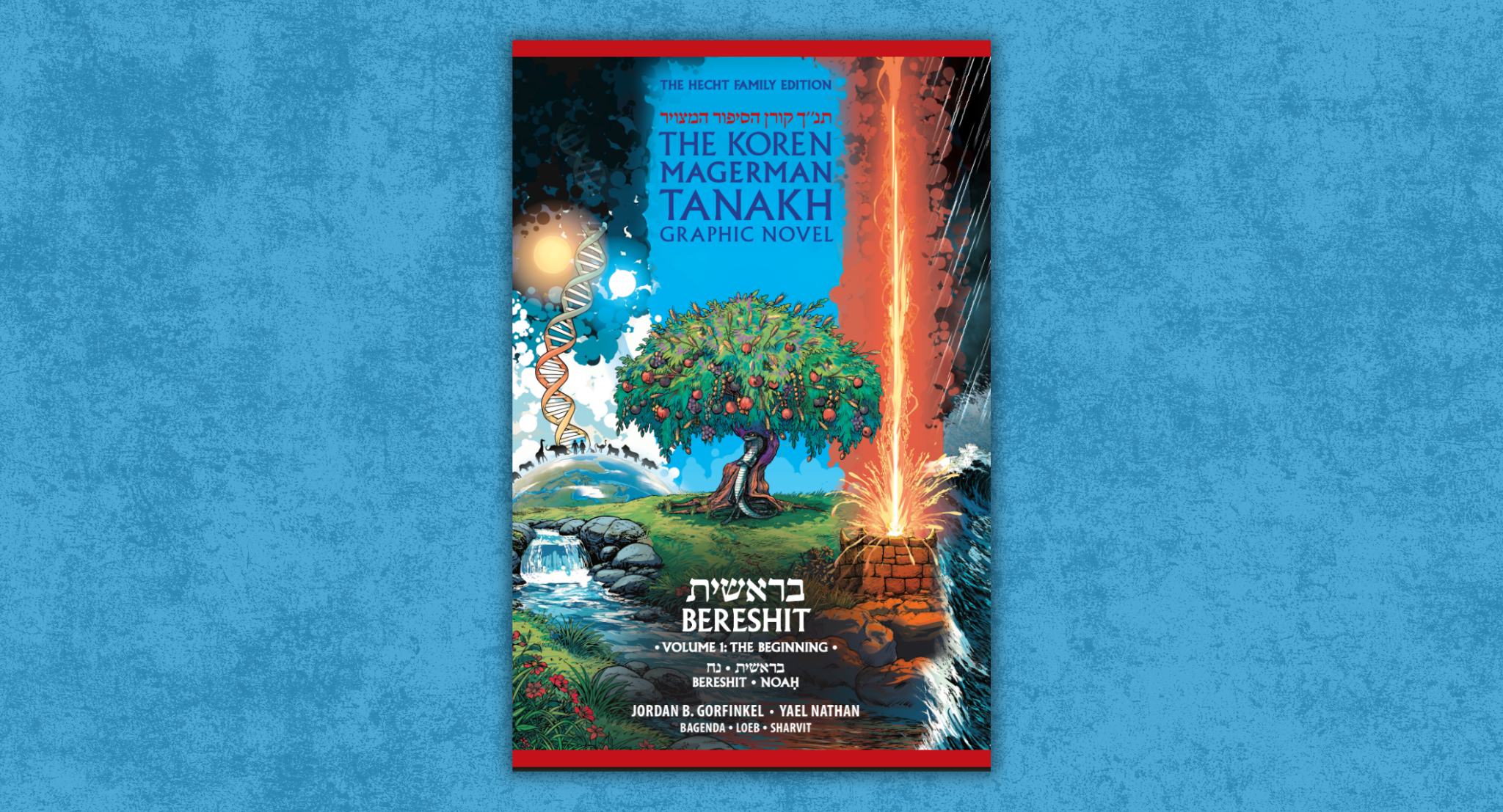
At the start of this new Torah cycle, I’ve been forgoing taking an old, taped-up Chumash from the shelf in shul, bringing in its place a book that’s truthfully made me the envy of the other congregants: the new opening volume of Koren’s Tanakh Graphic Novel, which covers Parshat Bereshit and Parshat Noach.
On the left side of the book, I can follow along with the Hebrew text of the Torah reading. On the right, I get not just English translation, but also intricate interpretation from world-class comic artists: a team led by Jordan B. Gorfinkel—a former leader of DC’s Batman team—and Yael Nathan, who was an artist on several of the recent Star Wars comics.
“What we were doing is what we like to call the ‘new midrash,’” Gorfinkel said on the JM in the AM radio show, “which is essentially what I believe Rashi, Rambam, Ramban, etc. would have done if they had had these tools available to them.”
One example of this comes in the artists’ interpretation of the flood story. If you look very closely, you can see Og the Giant hitching a ride on top of the ark.
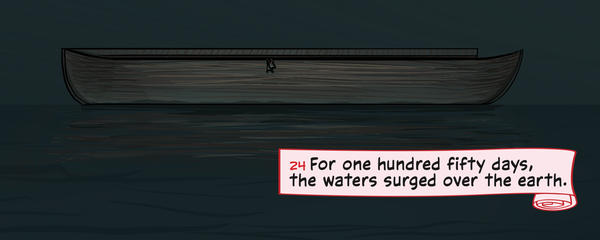
This is their way of representing the midrash found in Targum Jonathan, which tells us:
And Og came, who had been spared from the giants that died in the deluge, and had ridden protected upon the top of the ark, and sustained with food by Noah; not being spared through high righteousness, but that the inhabitants of the world might see the power of the Lord.
“He’s there as a ‘Roasted Egg,’” Gorfinkel notes in the back of the book, “Roasted Egg” being the Pesadik analogue to artists hiding “Easter eggs” in their work.
Whenever I told people I was engaging with this fascinating new midrashic endeavor, they’d invariably ask why it covered specifically the first two parshiot, Bereshit and Noach. Why not include all of Sefer Bereshit in one volume, or why not pick a different stopping point?
The interpretive key, I found, was in the titles assigned to each chapter. Chapter two, in which we witness the creation of Adam and Chava, is called “God Searches for a Partner in Creation.” Chapter seven is called “God Partners with One Tzadik,” the big tzadik being Noach.
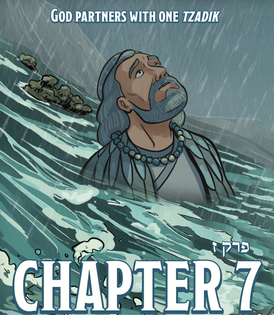
The graphic novel culminates with chapter 11, which asks: “Will God Finally Find a Worthy Partner?” The partner, we discover, is our ancestors Avram and Sarai, who are not yet given the names we know them as when we name the patriarchs and matriarchs of the Jewish family.
So, strangely, Volume 1: The Beginning ends right before we get to the Jewish People’s journey. Bereshit and Noach are not necessarily Jewish stories. Adam and Noach are the forebears of everyone, not just the Jews. We’ve perused 193 gorgeous and vibrant pages, and we’ve covered only what academics call the “primeval history.”
However, the penultimate pasuk tells us where we’re going: “Terah took his son Avram … and his daughter-in-law Sarai … and together they set out from Ur Kasdim to go to the land of Canaan,” which of course in time is known as Eretz Yisrael.
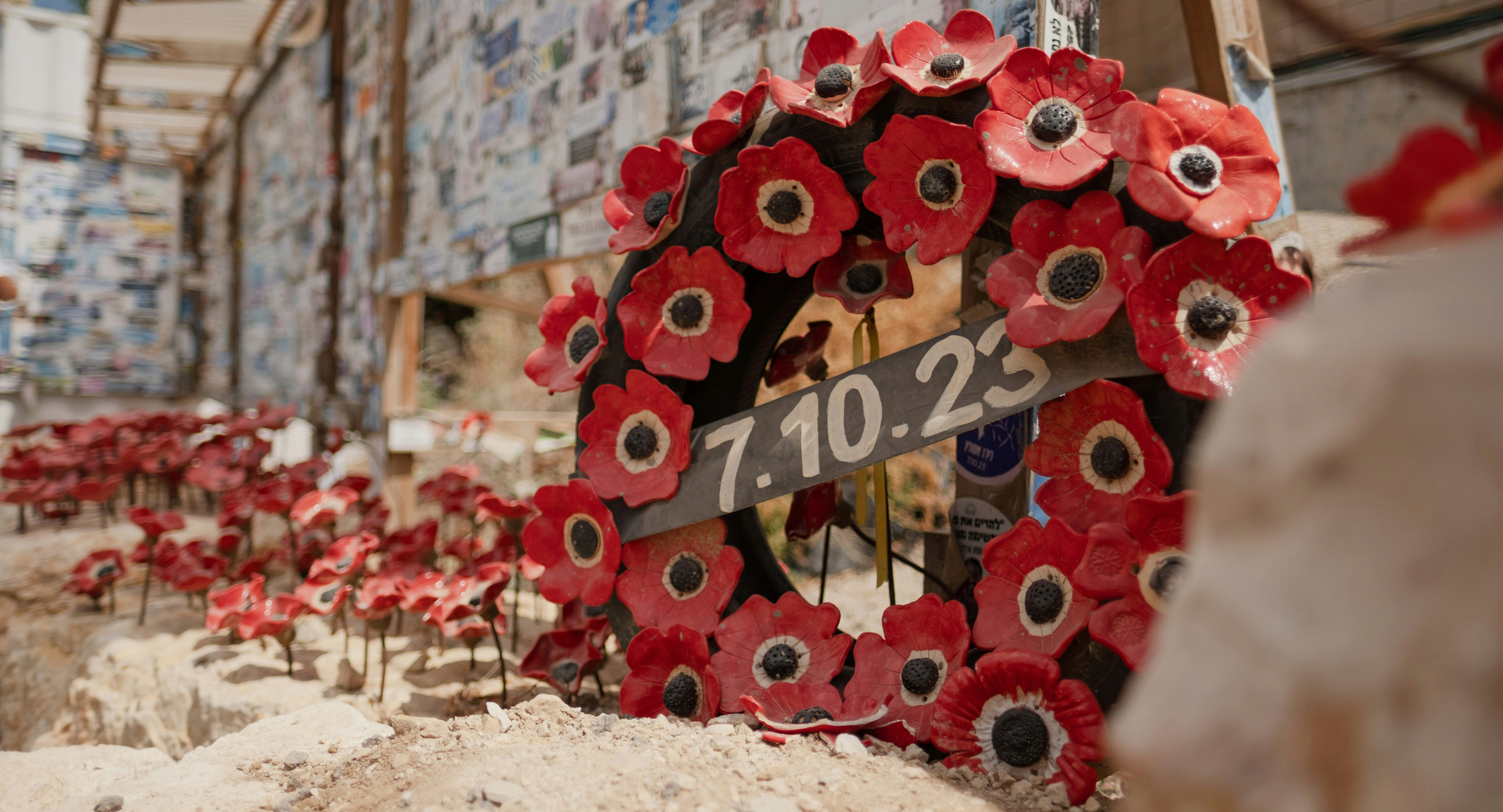
As we’ve come off of the third anniversary of October 7, the Land of Israel has weighed heavily on my heart. And I can’t help but draw a stark distinction between October 7, 2023, and the October 7 that just passed.
In the aftermath of the terror attack, the Jewish People kicked into emergency mode and, at least as I remember it, knew exactly what to do. It felt obvious that all we could do to help was more mitzvot, whether it was fighting Hamas directly, preparing food for Israeli soldiers, or putting on tefillin for the first time from 7,000 miles away.
There was no time to wallow in the pessimism that can arise in response to the world’s political screeching, to the accusations of genocide that surfaced before we even knew which of our loved ones were dead or alive.
This October 7, though, I found myself hanging on every intentionally insulting word of the mayor of New York, of the Green Party of England and Wales, and of anonymous online provocateurs. Personally, I felt I’d gone from being the hero of my own little part of the Jewish story to someone snagged up in the distractions of low-level background anxiety.
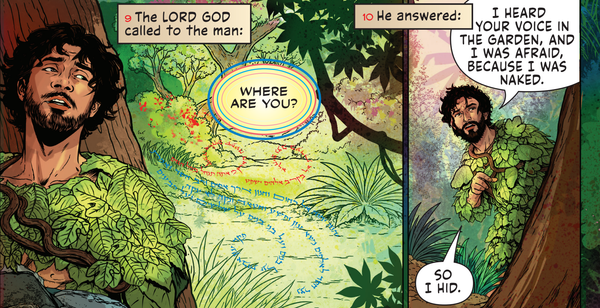
Having begun the Torah anew in this ever-so-complicated time of year that contains both Simchat Torah and October 7, I felt like Adam hiding from God in the garden, being asked: “Where are you?” With the help of this graphic novel, I can picture it even more vividly.
Having been asked where I am, the question is now: What is the mission in front of me? The opening parshiot are just the beginning; God still seeks a worthy partner. Perhaps this is why every year we return to the beginning again.