

Your 18Forty Parsha Guide is a weekly newsletter exploring five major takeaways from the weekly parsha. Receive this newsletter every week in your inbox by subscribing here. Questions or feedback? Email Rivka Bennun Kay at Shabbosreads@18forty.org.
You know what your next month looks like. You know what bills are coming, what deadlines are approaching, what your family needs from you this week. Now imagine being told to stop producing for an entire year with the promise that if you obey, the land will feed you, and if you refuse, everything you have built will be taken away.
At the heart of this double portion is a tension between the Torah’s most ambitious economic legislation and its most troubling theological claims. Vayikra 25:2-4 commands the land itself to observe a Sabbath, while Vayikra 26:3-4 promises rain for obedience and exile for neglect. Together, these texts ask whether you can build a life of trust in a world that rewards control.
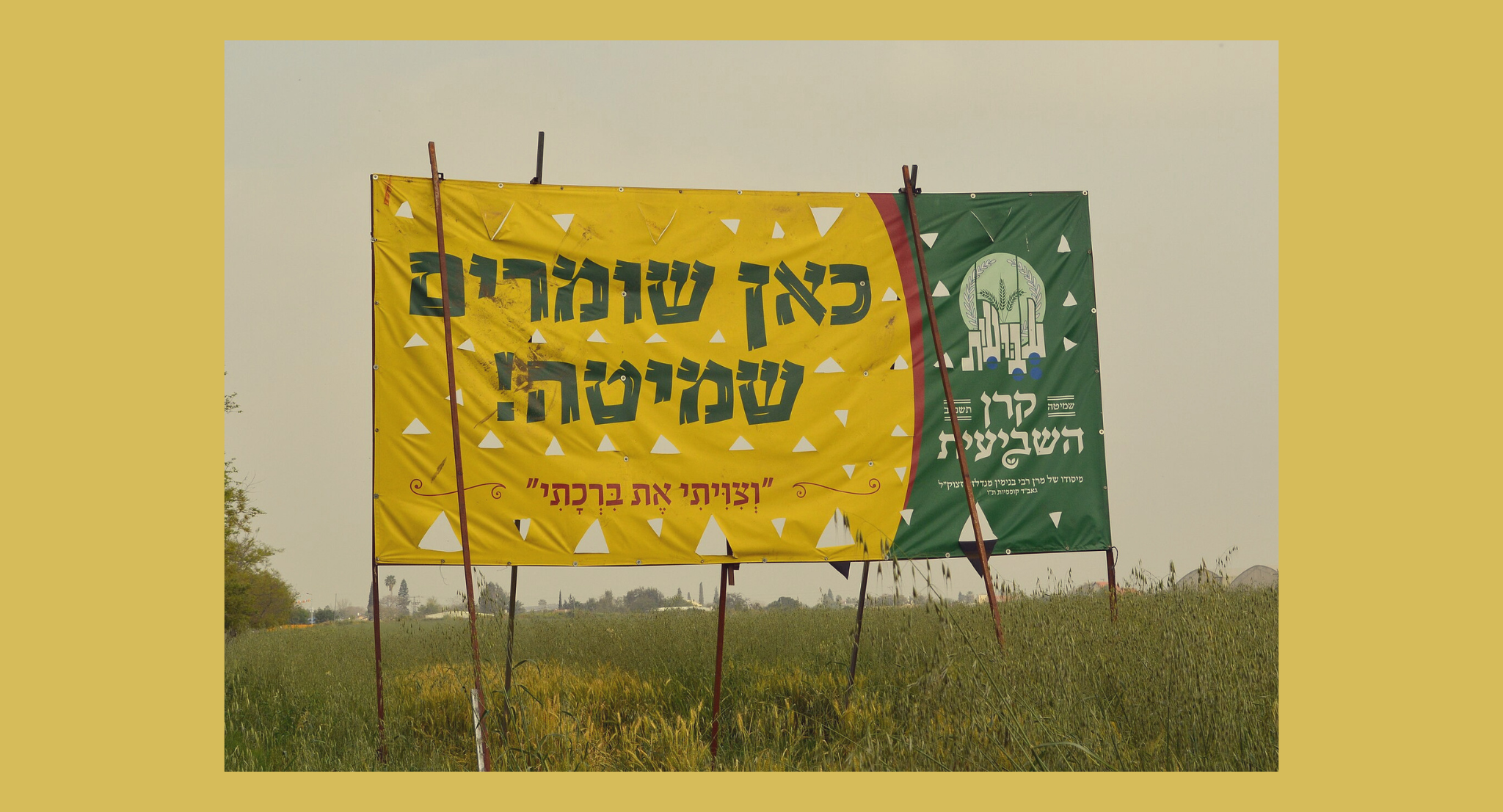
Modern Israel has spent decades arguing about how to actually observe shemittah (the sabbatical year), from the fierce debates over heter mechira (a temporary land sale permitting farming) to how diaspora Jews might apply its logic to their own lives. Bechukotai confronts a God who promises rain for obedience in a world where righteous people visibly suffer. And running beneath both is the Torah’s most unconditional promise, a covenant that will not break.
1. What Shemittah Actually Demands
A farmer who has spent six years working terraced hillsides and pruning vines faces in the seventh year a commandment that says none of it continues. Vayikra 25:2-4 tells the Israelites that when they enter the land, they must let it rest every seventh year. Agricultural activity ceases, from planting through harvest, and what the land produces on its own belongs to everyone.
Sefer HaChinuch explains that this commandment exists to uproot a specific error, the belief that the earth produces solely through human effort. The year of rest forces a recognition that ownership is provisional. Rav Kook pushed the logic further in his introduction to Shabbat HaAretz, arguing that shemittah is a return to an Edenic state where competition ceases and the land recovers its holiness.
The Torah anticipates the obvious objection. Vayikra 25:20 records the question directly: “What will we eat in the seventh year if we may not sow or gather our crop?” The text does not dismiss this fear. It names the anxiety and validates it, then promises a blessing in the sixth year sufficient to sustain through the eighth. Faith here is something you practice while the fear is still alive.
Sendhil Mullainathan and Eldar Shafir spent years studying what scarcity does to the human brain. In Scarcity, they describe what they call “tunneling,” where constant economic pressure narrows cognitive bandwidth until long-term thinking becomes impossible. Shemittah functions as a mandated exit from the tunnel, forcing an entire society to step back from the relentless cycle of production.
Ari Bergmann explores how modern Israel has grappled with implementing this command. The heter mechira allows farming under a technical loophole; the otzar beit din (court-administered storehouse) distributes produce without profit. A skeptic might argue that these workarounds prove the command was never meant as literal economic policy. Rav Kook saw it differently, arguing in Shabbat HaAretz that the heter mechira was a temporary concession preserving the nation’s connection to the land during resettlement, necessary precisely because shemittah was meant literally. The Chazon Ish rejected even that concession, insisting that the command’s economic difficulty was the point, that observing shemittah without workarounds was itself the demonstration of trust the Torah demanded.
Whether through sale or storehouse, shemittah disrupts the assumption that security comes from ceaseless effort. The command acknowledges that stopping feels dangerous and asks you to stop anyway. That logic extends beyond agriculture into how the Torah treats financial relationships.
2. When Your Brother Stumbles
The shemittah legislation does not stop at agriculture. Vayikra 25:35-37 extends the principle to interpersonal economics, commanding that if your brother stumbles and his hand falters, you must support him. You may not charge him interest or take a profit from his food. The word “brother” appears repeatedly in this passage, insisting that financial relationships carry familial obligations.
Rashi on Vayikra 25:35 offers a vivid image. Supporting someone before they fall completely, he writes, is like steadying a load while it is still on the donkey. Once the donkey collapses, five people cannot lift it back up. You have seen this dynamic in your own community, someone quietly struggling, everyone aware, and by the time help arrives the situation has become unmanageable. Intervene early, Rashi insists, because the cost of rescue far exceeds the cost of prevention.
The Rambam codifies the interest prohibition as rooted in the language of brotherhood. Charging interest to a fellow Jew violates multiple negative commandments because it transforms a relationship of mutual obligation into one of extraction. Profiting from another’s desperation is, the Rambam implies, a form of relational theft.
You might ask why anyone would lend under these conditions. The Torah’s answer is the language itself, and you lend because the borrower is your brother and the relationship precedes the transaction. The obligation is framed as obvious because the text assumes a communal bond that makes the question beside the point.
The “your brother” language raises a question that any reader in an integrated society would notice. The obligation here is explicitly to a fellow Jew, and the Talmud’s initial framework for extending protections to non-Jews, darchei shalom (ways of peace) in Gittin 61a, is pragmatic rather than moral, motivated by social harmony rather than equal obligation. The Meiri, writing in 13th-century Provence, argues that any person who lives under the rule of law and ethical conduct holds the same moral standing regardless of religious identity. Rabbi Jonathan Sacks carries the logic further in The Dignity of Difference, arguing that chosenness means responsibility to the world rather than superiority over it.
David Graeber traces how debt shapes entire civilizations. In Debt: The First 5,000 Years, he demonstrates that even the word “redemption” began as financial vocabulary before it became theological, part of an ancient tangle of moral language and monetary obligation. The Torah’s insistence on calling the borrower “your brother” is a deliberate refusal to let that tangle consume the bond.
Eli Langer and Zevi Wolman expose a gap that should trouble any observant community. The laws of ribbit (interest) and ona’ah (fair pricing) are as binding as any other halacha, yet financial literacy lags far behind the energy devoted to kashrut or Shabbat. Their conversation makes clear that meticulous observance in one domain and neglect in another is its own kind of inconsistency.
The “your brother” language pressures you away from neutrality, insisting that economic relationships either serve the community or corrode it. You cannot remain a neutral party when the person across from you is, by the Torah’s framing, family. That insistence opens onto a harder question, about what happens when you follow the rules and the reward does not come.
3. The Just World Trap
Vayikra 26:3-4 makes a promise that sounds almost contractual: “If you walk in My statutes and observe My commandments and perform them, I will give your rains in their season.” Material prosperity, the text seems to say, flows directly from spiritual obedience, rain for mitzvot, abundance for faithfulness.
Abarbanel on Vayikra 26:3 raises the problem that any thoughtful reader would notice. Why is spiritual behavior rewarded with physical rain? The currency does not match the service. If Torah observance cultivates the soul, why is the payoff measured in crops? Abarbanel’s discomfort is itself instructive, pushing the reader to question whether this is a straightforward transaction or something more layered.
Ramban on Vayikra 26:11 offers one resolution by framing the blessings as describing a miraculous state that applies to the collective. The direct link between obedience and material blessing holds only when the entire nation achieves a certain spiritual threshold. Individual suffering does not disprove the promise because the promise was never about individuals but about cosmic harmony between a people and their land. That distinction matters, but it offers cold comfort to someone suffering alone.
Melvin Lerner spent his career studying what he called the just world hypothesis, the conviction that the world is fundamentally fair. In The Belief in a Just World, he showed that this bias is so pervasive most people never notice it operating. Applied to Bechukotai, the danger runs deeper than blaming victims for their suffering. Believers internalize the logic against themselves. A parent whose child falls ill searches the commandments for what they did wrong. A student in a day school absorbs the framework that suffering signals sin and spends years unable to separate growth from self-punishment. This is one of the forces that drives people from observance entirely, when a theology of consequences becomes indistinguishable from a theology of blame.
Rabbi Shalom Carmy describes a different approach to grounding faith, one that demands more of the believer rather than less. Rabbi Carmy argues for holding multiple commitments simultaneously, grounding faith in the totality of religious experience including its unanswered questions. David Bashevkin, in Sin-a-gogue, offers a pastoral counterpart. The tradition’s deepest response to failure is teshuva (return/repentance), and the God who threatens consequences in one verse is the same God who promises that the covenant will never break. Bechukotai itself makes this move, pivoting from the Torah’s most devastating warnings into an unconditional promise of endurance.
The challenge of Bechukotai is that it states the ideal without disclaiming it. For readers who have watched good people suffer, or who have suffered themselves and been told to search their own behavior for the cause, these verses carry real weight. The most honest reading may be the one that acknowledges both the text’s theological framework and the damage it has caused when applied without compassion, that struggling honestly with these promises may be more faithful than accepting them uncritically. That tension sharpens considerably in the verses that follow, where the Torah turns from promise to warning.
4. The Tochacha: What Happens When God Hides
If the blessings of Bechukotai feel uncomfortably transactional, the curses that follow are uncomfortably vivid. Vayikra 26:14-17 begins a catalogue of escalating consequences, from disease to military defeat to exile, that tradition calls the Tochacha (the rebuke). Each stage of escalation is framed around the word keri (chance/randomness), and for anyone uneasy with the reward-and-punishment framework, what follows intensifies the discomfort.
The word keri is unusual and contested. The Rambam reads it as “happenstance” and builds his theology on that distinction. When people attribute suffering to coincidence rather than self-examination, they compound the problem. But self-examination is not the same as self-blame, and the Rambam’s framework works only if the distinction holds. The call is to ask whether something in your life needs attention, not to conclude that misfortune is your fault. You have probably done this too—dismissed a string of difficulties as bad luck rather than pausing to reflect. The Rambam’s point is that indifference, treating life as if nothing is connected to anything else, is its own kind of spiritual failure.
As the curses escalate, they shift from the physical to the psychological. Vayikra 26:36 describes a people so shattered by accumulated calamity that “the sound of a driven leaf shall put them to flight.” Bessel van der Kolk’s research on trauma, synthesized in The Body Keeps the Score, demonstrates that extreme stress reshapes the brain’s architecture, altering how survivors process threat long after the danger passes. If you have ever flinched at a noise that turned out to be nothing, you have felt a faint echo of what this verse describes.
Midrash Tanchuma captures the emotional weight these warnings carry. When the people hear the curses, their faces turn green and they cry out: “Who can survive this?” Moshe reassures them that despite everything, they stand before God alive. The tradition itself recognizes how devastating these words are, preserving the terror of hearing them as communal dread rather than theological abstraction.
Rachel Yehuda extends this further, showing that the biological effects of extreme stress can be inherited through epigenetic modifications. Read alongside the Tochacha, this research gives scientific weight to what the text implies: that consequences do not stay in one generation. The body carries what language sometimes cannot.
One compelling reading is that God withdraws rather than punishes, and the consequences follow from treating the covenantal relationship as meaningless, as keri. Other interpreters read keri as stubbornness, but in either case the result is a covenant unraveling under indifference. For readers who have heard these verses read aloud in shul and felt the weight of a God who punishes, the final verses offer something unexpected, a promise that outlasts the failure.
5. The Promise That Will Not Break
After 98 warnings, after exile and the scattering of a people across hostile nations, the Torah makes its most unconditional statement. Vayikra 26:44 declares: “But despite all this, when they are in the land of their enemies, I will not reject them, nor will I abhor them, to destroy them utterly, to break My covenant with them.” The stubbornness of this promise, arriving on the heels of the Torah’s most devastating warnings, reframes everything that came before.
Rashi on Vayikra 26:42, two verses earlier, explains the mechanism behind this promise. God invokes the merit of the patriarchs in cascading order: If Yaakov’s merit is insufficient, Yitzchak’s joins his, and if that does not suffice, Avraham’s guarantees the redemption. The covenant does not rest on any single generation’s performance but is anchored in something older, a relationship that accumulates across centuries.
Megillah 11a interprets this verse through the lens of historical survival, reading each phrase of the promise as corresponding to a different era of persecution. Haman threatened destruction, and Mordecיai and Esther emerged; the Babylonians destroyed the Temple, and Daniel survived in exile. The Talmud’s pattern is persistence, a thread that never snaps no matter how thin it stretches.
Simon Rawidowicz noticed something strange about Jewish self-perception. In Israel, the Ever-Dying People, he identified a paradox running through Jewish history, where every generation believed itself to be the last. If you have grown up hearing that your generation might be the one to let the tradition die, Rawidowicz would argue you are standing in a very long line, and each generation’s conviction that it was the final guardian became part of the engine of its own continuity.
Does this framing risk turning survival into an end in itself? Dara Horn pushes back against exactly this tendency. In People Love Dead Jews, Horn argues that contemporary culture reduces Jewish identity to its tragedies, as if the only interesting thing about Jews is that people tried to kill them. Vayikra 26:44 insists on something different, and the Jewish story is defined by its refusal to end, by survival as an active project.
The arc across these chapters traces a single argument that keeps tightening, where trust requires releasing control, brotherhood means you lend when the math says you should not, and the covenant promises consequences you can see while delivering a world where you often cannot. The thread holds through all of it, stretching without breaking, because the God who threatens exile in one verse promises never to abandon in the next.
Questions for Reflection
- Where in your financial or professional life do you operate from a scarcity mindset, and what would it look like to practice even a partial Shemittah, a deliberate stepping back from relentless productivity?
- The Torah warns against treating life as keri, as random coincidence. In what areas of your life might you be living as though nothing is connected to anything else?
- Does the promise that the Jewish People will never be destroyed comfort you, or does it feel like it places too much weight on your generation’s shoulders?
This project is made possible with support from the Simchat Torah Challenge and UJA-Federation of New York. Learn more about the Simchat Torah Challenge and get involved at their website.