

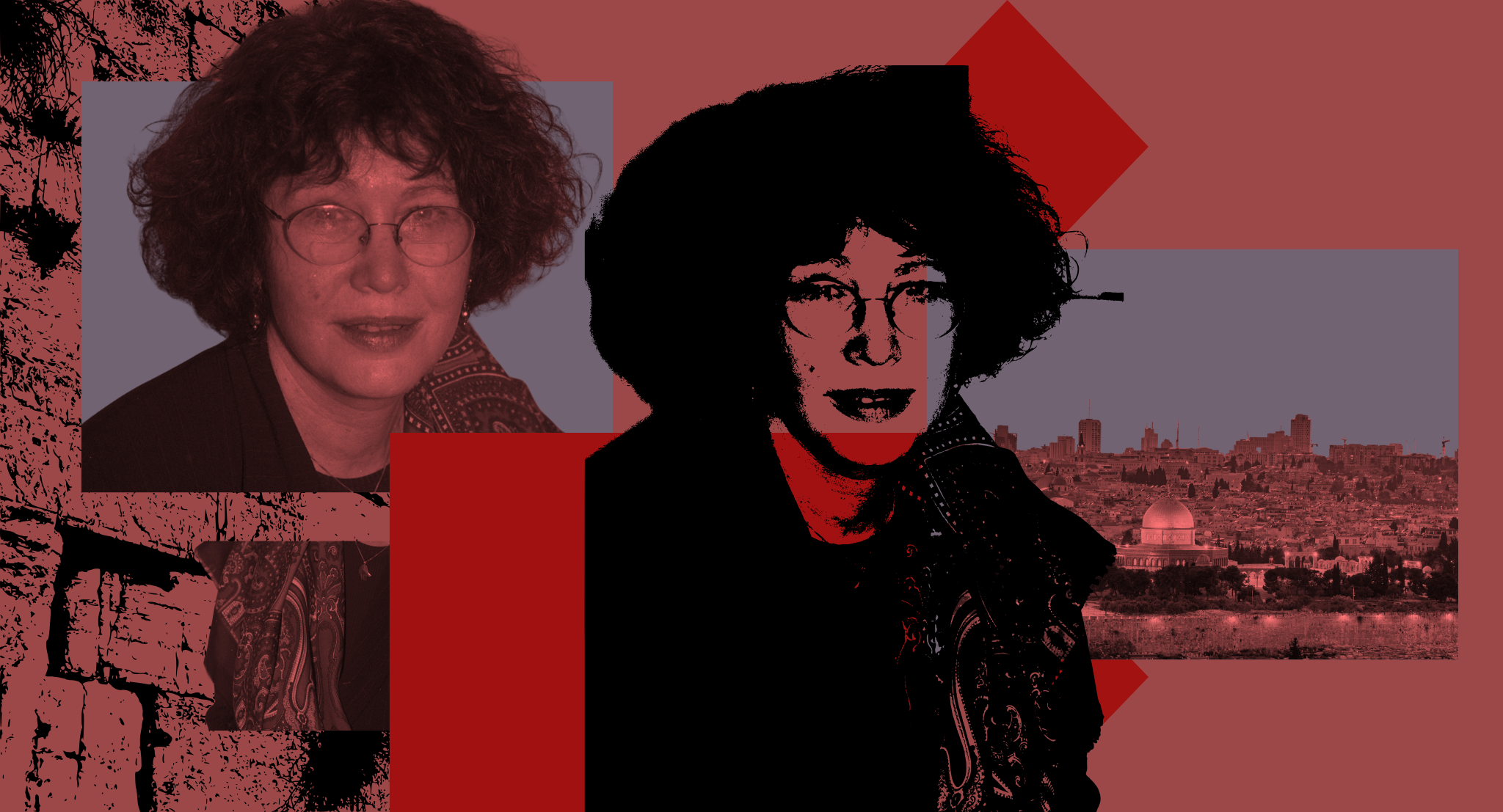
When Israeli poet Dahlia Ravikovitch passed in the summer of 2005, the obituaries mentioned the tragedies that colored her life: the loss of her father, three failed marriages, the loss of custody of her beloved son, and mental illness. Articles touched on the prizes and recognitions she received for her works.
Few remembered Dahlia’s plea, made during a rare 2001 interview in Yedioth Ahronoth—that “everything that happened to me, except for the poems, should be forgotten.”
I learned about Dahlia for the first time in an East Village thrift store, where a collection of her poetry was stashed among hundreds of other donated books. Skimming the book flap and flipping through the pages, I felt like I was having a religious experience.
Maybe I saw something of myself in the poems I glanced at. Like Dahlia, I view the world through the prism of my Jewish identity, refracted in biblical allusions, ethics, ancestry, and love of Israel. And I never knew Dahlia outside of her poems—she died when I was only seven years old—but her words have helped me express some of the complex pain and fear I have felt in the aftermath of October 7.
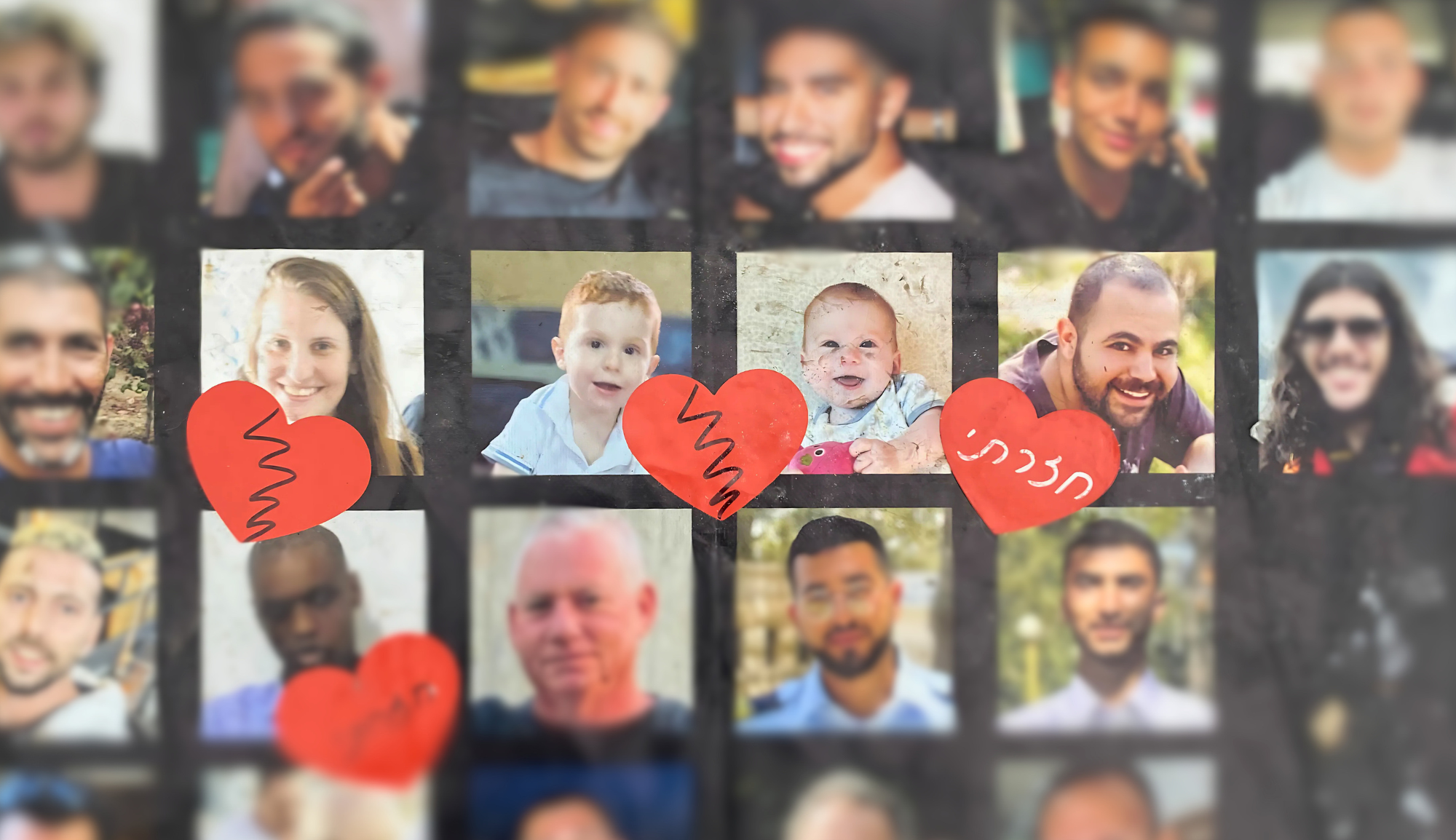
In the last two years, I’ve learned firsthand how difficult it is to hold room for two pains at once. As I write this, major news outlets are reporting mass starvation in Gaza. My instinct to look away from these headlines wars with my instinct to fixate on them. I am caught staring into the eyes of these desperate young children, entangled with the gaunt visage of the hostages and the image of my own toddler’s round cheeks and thighs.
There is something prescient and haunting about Dahlia’s words, especially today—something that might resonate with the Jews and Israelis who strive for nuance and empathy, who struggle to weave tapestries of narrative and history and truth and pain and identity. “Free Associating,” probably my favorite of Dahlia’s poems, is a crystal-clear capture of the murky grief, anger, and love I feel as a Zionist who knows pragmatically that war can be imperfect, government officials can’t be above reproach, and patriotism can be fallible. In this poem, Dahlia oscillates between Israeli narratives seamlessly, moving from accusatory to defiant to self-referential. This poem was written in the aftermath of the 1988 beating of an Arab man, Hani al-Shami, who subsequently died of his wounds.
Why, of all things, on a bright clear Shabbat,
a perfectly happy Shabbat,
does the memory of that man
have to sneak up again, the one they beat to death?
Dahlia grapples with the intrusive thoughts about al-Shami, but this is not only about that one incident; it is also an expression of despair at her own isolating worldview, which mars the beauty of the land around her, so that the “vineyards perched on the mountainside, the shadow of clouds on the plain and light and a fenced-in plot of land” are visually inseparable from the “three rows of olive trees too, uprooted as a punitive measure.”
What makes this poem particularly compelling to me is the way Dahlia’s voice rises in agitation as the poem proceeds, ultimately acquiescing to the voices of her detractors:
She’s not one of us,
she can’t see what’s good and beautiful in life.
She won’t see us the way we are.
Israel is “good and beautiful.” Dahlia saw that clearly—the light, the vineyards, the bright and brilliant skies. And she also understood that for some people who see themselves as victims of Israel’s military and political actions, it was painful, too. Very few pieces of writing capture this tension so honestly and justly—and the ones that do are worth elevating, because they reveal a path forward for those committed to peace and dialogue.
I understand Dahlia’s despair because I live it. It would be easier to choose loyalty to one narrative, blinding me to the truths and suffering of the others. But something in me resists that, making my own experience as a Jew and someone who loves Israel painful and complex. My views are rejected by people I love, who tell me I don’t see clearly. At times there is an overpowering feeling of loneliness that no one else sees what I see—the rays of sun and the hot blue skies and the fields of red anemones, the millennia-old stones, the people warm and overly familiar; and the rubble, and the empty eyes, and the burial shrouds, and the children’s hands grasping for flour.
Dahlia gives me a language to describe the complexity of my feelings. And because of that, her poems give me a home.
It’s hard to imagine Dahlia’s writing being received with warmth today, just 20 years after her death. Some of her critiques of operations in Lebanon and Gaza in the 1980s and 1990s were scathing, even while rooted in her identity as a Zionist. But Dahlia was, according to translators Chana Bloch and Chana Kronfeld, “universally embraced by Israelis, whatever their ideological leanings.” Like today’s Israeli lyricists, such as Ishay Ribo and Hanan Ben Ari, her work is inextricably and effortlessly religious—colored by biblical references, authentically rooted in Jewish ethics and theology.
Dahlia didn’t only write about Israel and Judaism; she is known globally for her feminist poetry. Yet her feminist pieces are deeply Jewish, and her Jewish pieces deeply feminist, such as the acclaimed poem, “A Jewish Portrait”:
She
is not your sort.
She’s a Diaspora kind of Jew whose eyes dart around
in fear.
Wears an old-fashioned dress,
her hair pulled back without a bit of grace.
Doesn’t undo her bundles.
Why should she undo her bundles?
Any place she might stumble on
is a place that won’t last.
Her bed is unmade.
No sense adorning what will not last.
Dahlia’s imagery of the “Diaspora kind of Jew” might seem unflattering—the unpolished, anxious woman—but in my mind, it captures a species of woman that is mostly quiet today: the survivor, the refugee, the voice of warning and warmth to her family. This is a poem about a woman who was my ancestor, whose voice still lives in me, who calls out to me at times. Most of the time, I don’t live as this kind of Diaspora Jew, but I’ve met her: in the weeks after October 7. The day the deaths of Kfir and Ariel Bibas were confirmed. Each time I hear from loved ones in Israel. I know this woman, and she is part of me, and perhaps a part of many of us.
From that day I picked out that second-hand copy of Dahlia’s poems, I could never bring myself to forget her. And yet I understand better, as I grow older, why she asked us to do it. “It’s good to leave blots of forgetting upon things past,” she told a literary version of her grandmother in one of her later works, “We Had an Understanding,” continuing:
Perhaps it’s the transparent skin that unites us—
you without defenses
I without defenses.
It has been 20 years since Dahlia died, slightly over two decades since she asked her readers to forget her but remember her words. Perhaps now, we are ready—those of us who find ourselves raw, without defenses, transparent of skin.