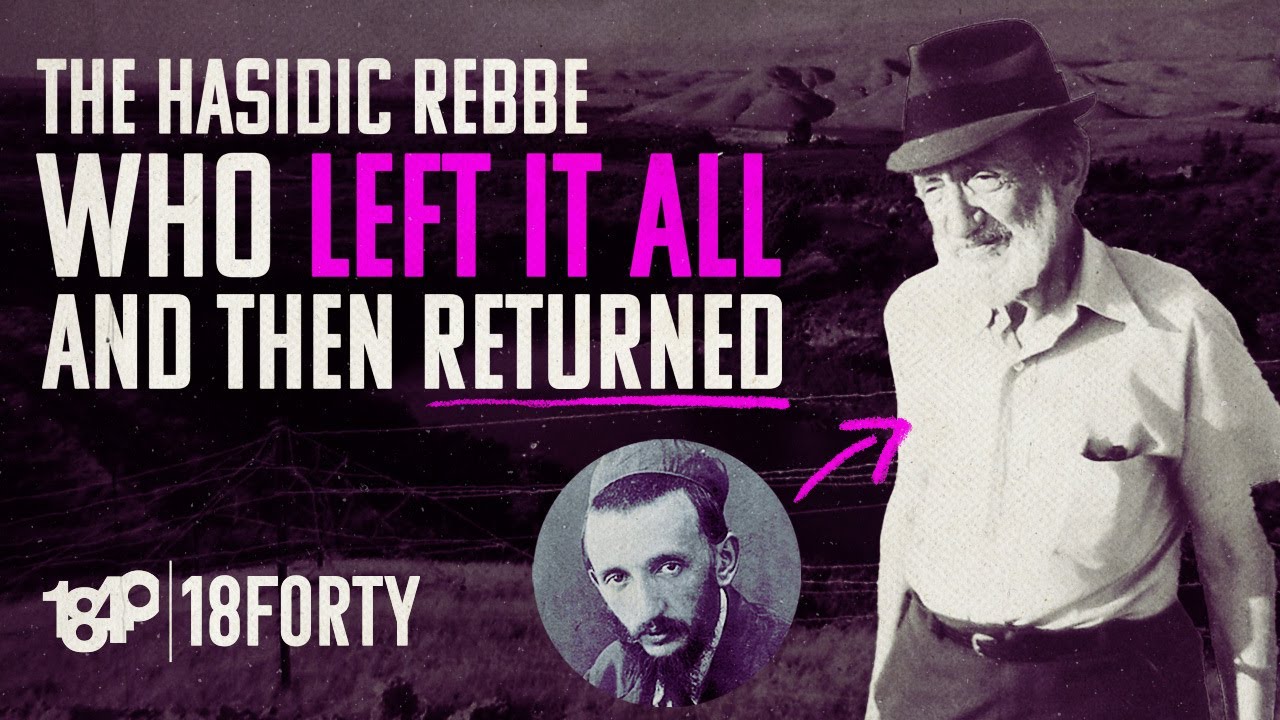


Shulem Deen’s book, All Who Go Do Not Return, retells the moving story of his Hasidic upbringing and why he chose to leave the Hasidic community. In many ways, both his upbringing and his exit are couched in religious language. Even in his subsequent writing since leaving, Shulem remains connected to the Jewish people even if he himself is unsure at times what is connecting him. As he explains:
Memory, however, cannot be erased. A major transition, furthermore, demands not a severing from the past but a greater reckoning with it.
“A rupture creates a fragmented self,” the psychologist and author Dr. Eva Fogelman told me. “There’s the period before, the rupture itself, and the period after.”
Fogelman has written extensively on the effects of collective and individual memory, and, in particular, has worked closely with Holocaust survivors and their descendants. “A person needs to have an integrated self in order to function fully in the present,” she told me. Attempting to repudiate your past, individual or national, is therefore a denial of identity, a refutation of your potentially integrated self, an act of violence to your own consciousness.
Language of doubt isn’t just for those who leave—it can help articulate the experience of those who choose to stay.
The ending of Shulem’s book may be the most moving part. He describes his participation in a renewal Friday night service. The words of the service are familiar, but he is far from the Hasidic environment of his past. He writes:
The congregation quieted down for the Amidah, the silent prayer into which each worshiper disappears into his or her private meditations. It had been years since I had recited it, and I found myself tripping over some of the words, surprised at my loss of fluency, however minor.
Atah kidashta. You have sanctified the seventh day for Your Name…the end goal of Creation…blessed it of all days, and consecrated it of all times, as it is written in Your Torah, Vayechuli…
I imagined a primordial world in which God, Adam, Eve had only one another for company, and the two solitary humans looked at the sun and the rivers and the trees and the sky, and declared, as the Talmud tells us they did: Mah rabu ma’asecha Adonoi, how wondrous are Your works, O Lord.
And for the loss of my faith, for being unable to fully embrace the mythic beauty of those words, for my detachment from all things that I once held dear, I let the stream of tears fall over the open pages of my prayer book.
This closing passage reminds me of something Shulem once said when he was teaching a group of high school students about writing. One student asked him why his book wasn’t angrier. Given everything that he had gone through personally, why he didn’t express more outrage in his writing. He answered, citing an important writing aphorism, “you have to write from your scars not your wounds.” When you write with outrage and contempt, he explained, you’re not leaving any room for your readers. Instead, Shulem’s book allows the reader to step into the world of religious struggle and disappointment and find the relevance in their own lives. You don’t need to leave the community of your upbringing to understand what it means to cry over a loss of faith. In many ways, the story itself is the story of faith—and the struggle and pain it often entails.
Rabbi Joseph Soloveitchik expressed the struggle with faith and religious life as a feature—not a bug—of religious experience. In his oft-cited footnote in Halakhic Man, he writes:
Religion is not, at the outset, a refuge of grace and mercy for the despondent and desperate, an enchanted stream for crushed spirits, but a raging, clamorous torrent of man’s consciousness with all its crises, pangs, and torments. Yes, it is true that during the third Sabbath meal at dusk, as the day of rest declines and man’s soul yearns for its Creator and is afraid to depart from that realm of holiness whose name is Sabbath, into the dark and frightening secular workday week, we sing the psalm “The Lord is my shepherd; I shall not want. He maketh me to lie down in green pastures; He leadeth me beside the still waters” (Ps. 23), etc. etc., and we believe with our entire hearts in the words of the psalmist. However, this psalm only describes the ultimate destination of homo religiosus, not the path leading to that destination. For the path that eventually will lead to the “green pastures” and to the “still waters” is not the royal road, but a narrow, twisting footway that threads its course along the steep mountain slope, as the terrible abyss yawns at the traveler’s feet…Out of the straits of inner oppositions and incongruities, spiritual doubts and uncertainties, our of the depths of a psyche rent with antinomies and contradictions, out of the bottomless pit of a soul that struggles with its own torments have I called, I have called unto Thee, O Lord.
Language of doubt isn’t just for those who leave—it can help articulate the experience of those who choose to stay. And, perhaps even more so, the dichotomy of ‘leaving’ and ‘staying’ as neat definitional categories is challenged as well once our religious vocabulary begins to expand. It’s part of the reason why I don’t even like the term ‘Off the Derech,’ as if it is some clear and obvious path that you are either on or off. For most, different periods in life and perhaps different moods in the day bring different relationships and senses of certainty. Our ability to more clearly express the inner world of religious doubt and struggle helps anyone moving within religious life, no matter the direction.
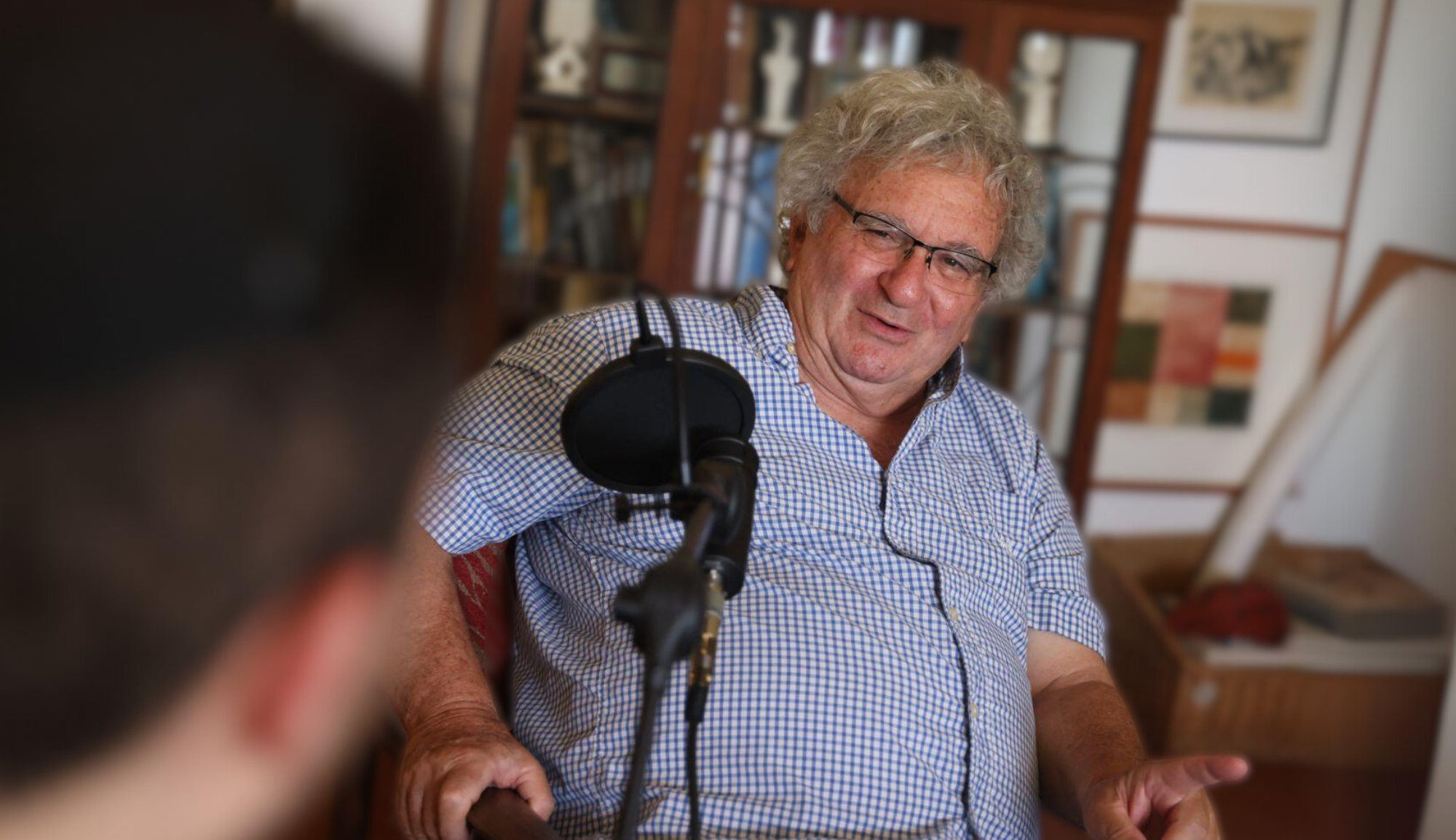
Listen to our episode with Shulem Deen.