
From Mao to Moses: The Life of Benny Lévy

Yehuda Fogel
Share
×

Share

“To be Jewish. To be, in an absolutely singular manner… a thought of the Return. The Return to the Sinai… The thought of the Return (la pensée du Retour) requires a critique of the atheology of the modern Jew. Theology of the silence of God after Auschwitz, critique of theodicy, finally return to the notion of absolute Evil, these are the points through which one must pass in a critical manner…”

– Benny Lévy, To Be a Jew

Who was Benny Lévy? If you haven’t yet heard of this intriguing figure, then you are in for a trip. It would not be an overstatement to say that Lévy (1945–2003) might be one of the most intriguing, and underrated, religious Jews of the 20th century. 

In the articles below, you will hopefully get a more textured and fleshy understanding for who Lévy was, but here’s the clickbait. 

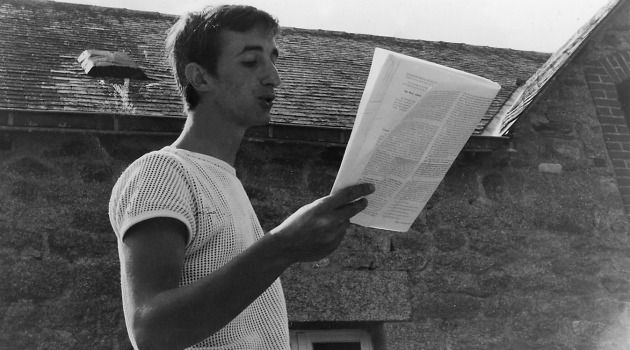
Born in Egypt to Jewish parents, Lévy ultimately became a close student and controversial scribe of Jean-Paul Sartre—the French philosopher and writer—for 6 years at the end of Sartre’s life. Lévy was a Maoist, an editor of the Maoist newspaper The Cause of the People, and was frequently arrested by the French police in the 1960s and 1970s for his political activities. 

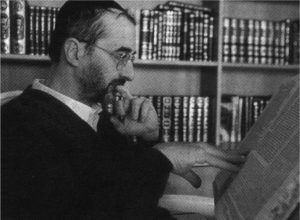
In 1978, Lévy first encountered the work of the great French-Jewish philosopher, Emanuel Levinas, and he started studying Judaism seriously. He read Jewish materials to Sartre, who was blind at the time, the results of which are still resounding today, as Sartre’s comments on messianism at the end of his life has led to vociferous battles over what Sartre truly believed. Lévy immigrated to Israel in 1997, where he co-founded, with his fellow French-Jewish philosophers Bernard-Henri Lévy and Alain Finkielkraut, an institute for the study of Levinas in Jerusalem. Lévy embraced Orthodox Judaism and studied with Rabbi Moshe Shapiro, a profound thinker and rabbi in Israel. Lévy died in 2003. 

As we think about the roads from religion to rationality, rationality to religion, and all the intersecting cross streets and avenues, Lévy is on our mind. How does a Maoist intellectual with a PhD from the Sarbonne, and a close student of Sartre (for the uninitiated, a quick Google search of Sartre should be informative for why this is intriguing!), end up studying Torah in Jerusalem, and all the while being directly interested and engaged in the deepest questions of life and thought? 
To better appreciate and understand who Benny Lévy was, we have a few of our favorite reads on this fascinating individual. We start with an easy read, “The Jewish History of Jean-Paul Sartre’s Private Secretary,” originally published at The Forward. We then have Lévy in his own words, from a 1984 interview with Commentary Magazine, titled “From Maoism to the Talmud (With Sartre Along the Way): An Interview with Benny Levy.” We end our PDF there out of mercy, but if you are still tuned in at that point and looking for more, we recommend checking out Annabel Herzog’s “Benny Levy versus Emmanuel Levinas on ‘Being Jewish,’” Eager readers can also check out Bernard Henri-Levi’s comments about Lévy in his interview with Tablet Magazine, which you can find under the title “Q&A: BHL.” Remember to download the PDF to check out the full reader. And as always, let’s jump in – together. 

Recommended Essays

Essays

A (Talmud) Page is Worth a Thousand Worlds

Beyond the words of the page, the Talmud teaches just as much Jewish history as it does Jewish law, revealing new insights…

Essays

‘It’s Not Great’: What’s the Deal With Jewish Education?

Jewish students, parents, and educators weigh in about what helps, what hurts, and what we need to do.

Essays

‘The Crisis of Experience’: What Singlehood Means in a Married Community

I spent months interviewing single, Jewish adults. The way we think about—and treat—singlehood in the Jewish community needs to change. Here’s how.

Essays

3 Questions To Ask Yourself Whenever You Hear a Dvar Torah

Not every Jewish educational institution that I was in supported such questions, and in fact, many did not invite questions such as…

Essays

American Judaism is Falling Apart. We Have Ourselves to Blame

Until recently, I too found myself almost entirely estranged from Jewish tradition. My return is showing me what we need to do…

Essays

Benny Morris Has Thoughts on Israel, the War, and Our Future

We interviewed this leading Israeli historian on the critical questions on Israel today—and he had what to say.

Recommended Videos

videos

Rachel Goldberg-Polin and Jon Polin: How Torah Gives Us Faith and Hope

In this special Simchas Torah episode of the 18Forty Podcast, we speak with Rachel Goldberg-Polin and Jon Polin—parents of murdered hostage Hersh…

videos

A Reform Rabbi Interviews an Orthodox Rabbi | Dovid Bashevkin & Diana Fersko (Part 2)

In this episode of the 18Forty Podcast, David Bashevkin answers questions from Diana Fersko, senior rabbi of the Village Temple Reform synagogue,…

videos

Is Modern Orthodox kiruv the way forward for American Jews? | Dovid Bashevkin & Mark Wildes

In this episode of the 18Forty Podcast, we speak with Mark Wildes, founder and director of Manhattan Jewish Experience, about Modern Orthodox…

videos

What’s Next for Jewish Students in Secular College?

In this episode of the 18Forty Podcast, we speak with Rabbis Eitan Webb and Ari Israel, head of a campus Chabad and…

videos

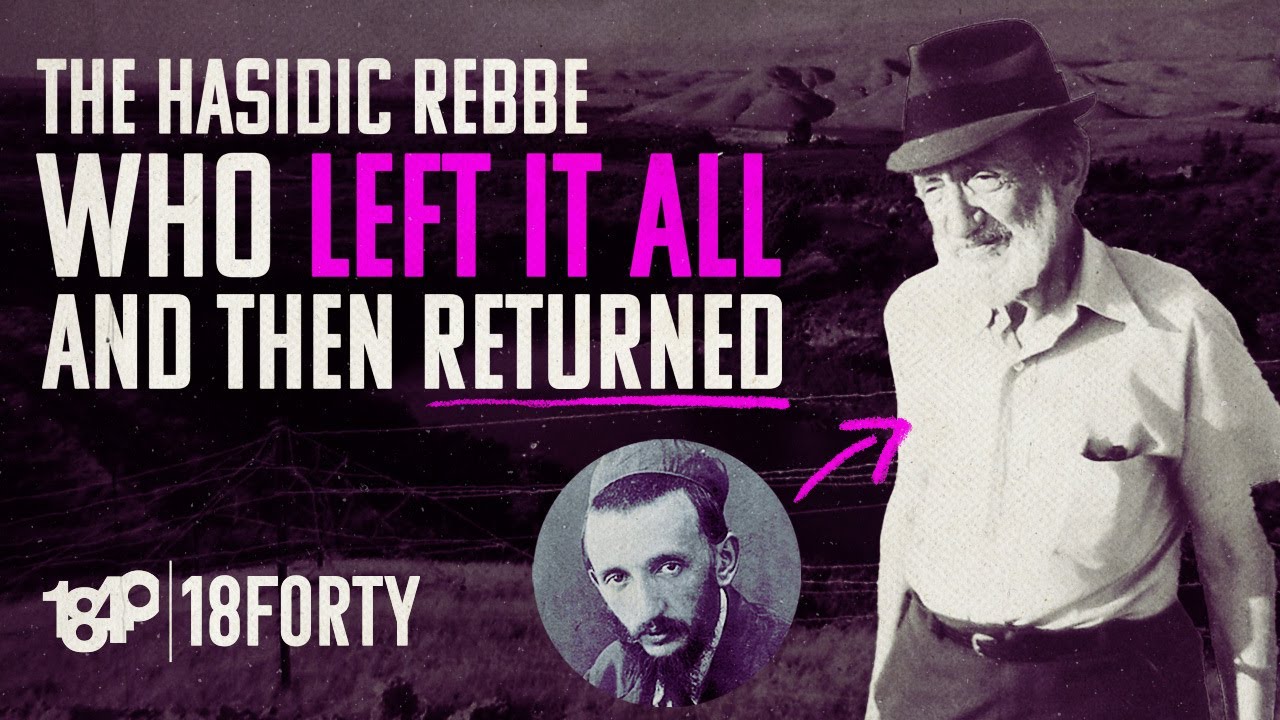
The Hasidic Rebbe Who Left it All — And Then Returned

Why did this Hasidic Rebbe move from Poland to Israel, only to change his name, leave religion, and disappear to Los Angeles?

videos

Talmud

There is circularity that underlies nearly all of rabbinic law. Open up the first page of Talmud and it already assumes that…

videos

Joey Rosenfeld: What Does Jewish Mysticism Say About This Moment?

We speak with Joey Rosenfeld about how our generation can understand suffering.

videos

Why Naftuli Moster Left Haredi Education Activism

We speak with Naftuli Moster about how and why he changed his understanding of the values imparted by Judaism.

videos

Zevi Slavin: ‘To be a mystic is to be human at its most raw’

As a Chabad Hasid, Rabbi Zevi Slavin’s formative years were spent immersed in the rich traditions of Chassidut and Kabbala.

videos

What are Israel’s Greatest Success and Mistake in the Gaza War?

What has been Israel’s greatest success and greatest mistake?

videos

Jewish Peoplehood

What is Jewish peoplehood? In a world that is increasingly international in its scope, our appreciation for the national or the tribal…

videos

Moshe Benovitz: Why Religious Change Doesn’t Always Last

In this episode of the 18Forty Podcast, recorded live at Stern College, we speak with Rabbi Moshe Benovitz, director of NCSY Kollel,…

videos

An Orthodox Rabbi Interviews a Reform Rabbi | Dovid Bashevkin & Diana Fersko

In this episode of the 18Forty Podcast, we speak with Diana Fersko, senior rabbi of the Village Temple Reform synagogue, about denominations…

videos

Mysticism

In a disenchanted world, we can turn to mysticism to find enchantment, to remember that there is something more under the surface…

videos

What Do Love and Romance Mean in a Modern World?

Love is one of the great vulnerabilities of our time. Can we handle it?

videos

Sarah Yehudit Schneider: ‘Jewish mysticism is not so different from any mysticism’

Rabbanit Sarah Yehudit Schneider believes meditation is the entryway to understanding mysticism.

videos

Suri Weingot: ‘The fellow Jew is as close to God as you’ll get’

What does it mean to experience God as lived reality?

videos

A Vulnerable Conversation About Shame, Selfhood, & Authenticity with Shais Taub & David Bashevkin

In this episode of the 18Forty Podcast, we speak with Shais Taub, the rabbi behind the organization SoulWords, about shame, selfhood, and…