

This piece first ran on our Substack, Reading Jewish History in the Parsha. We’re pleased to share it here on our website.
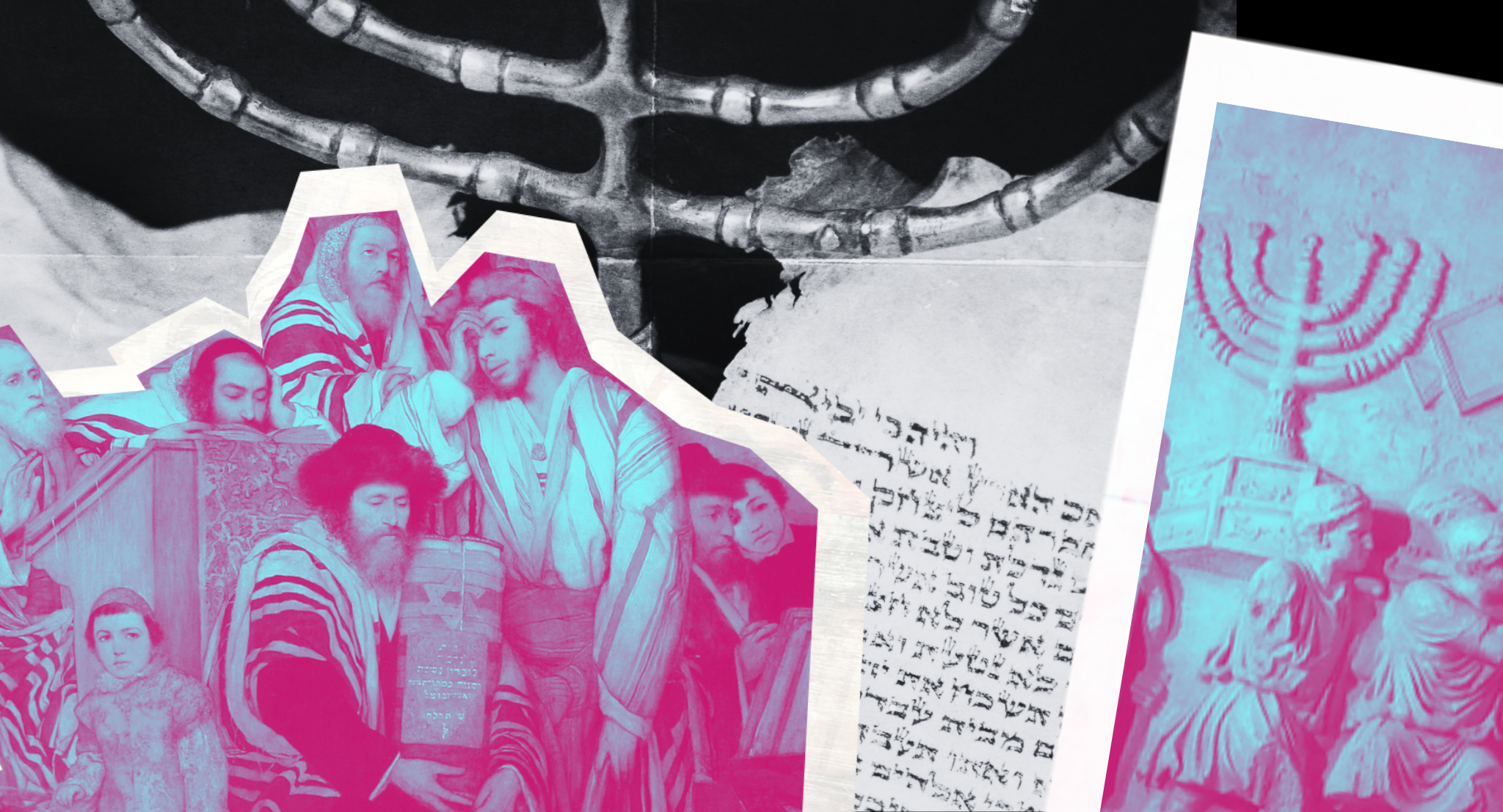
A few weeks ago, we read that God had singled out Bezalel to be the craftsman for the different items used in the Mishkan (Tabernacle). Now, we see Bezalel in action. The Torah describes how he constructed the Ark, the Cherubim, the Temple’s table, various utensils like bowls, jars and jugs, the Menorah, and altars. The Torah lays out each detailed step of the process. Not only that, the Torah also recounts that many other craftsmen from across Bnei Yisroel helped craft different parts of the structure of the Mishkan—the planks, sockets, clamps, rinks, and bars.
While only Bezalel and his assistant Oholiab are mentioned by name, they and all of the anonymous craftsmen that helped construct the Mishkan are described with a very unique phrase—“chacham lev.” From my understanding, this is the only appearance of this descriptor in the entire Torah. Loosely translated as “those who are skilled,” “craftsmen,” or “artisans,” depending on your pick of translation, I think it is valuable to dissect the word into its component parts—wisdom of the heart.
To better understand this particular descriptor, let’s explore a troubling and ongoing part of Jewish history—the unending conspiracy theory that Jews run Hollywood.
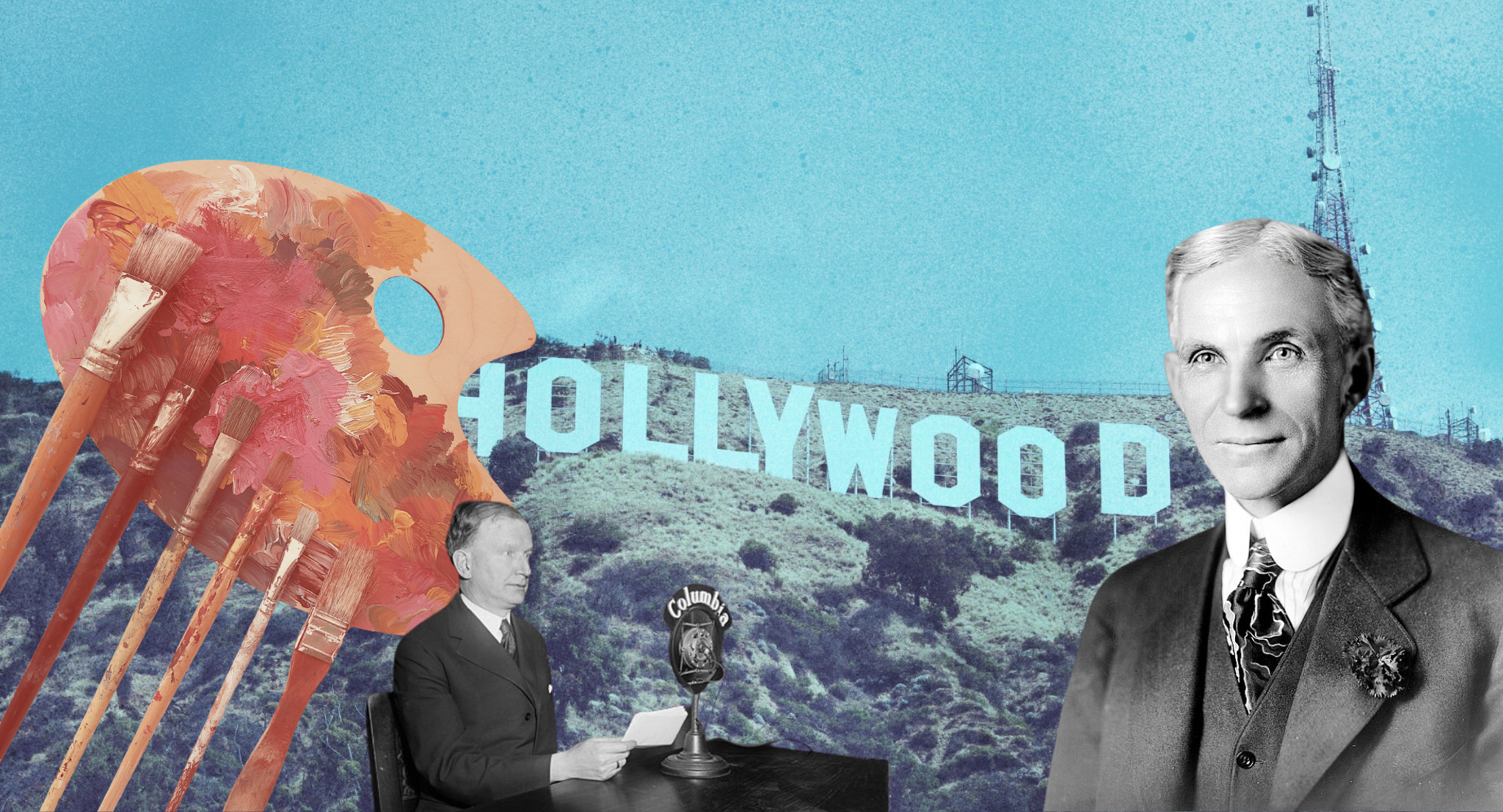
The smear that Jews run Hollywood is as old as the American film industry itself. In the 1940s, G. Allison Phelps, a radio broadcaster and poet known as the “radio philosopher” was a regular fixture on Los Angeles’ local radio stations. While his self professed style was to inspire and turn the world into a “shrine of friendship,” he would go on to publish a series of hateful pamphlets such as America for Americans, America’s Mother Country, and An American’s History of Hollywood: The Tower of Babel. Without being too reductionist, these pamphlets essentially boiled down to the following—that Hollywood was run by communist Jews who intentionally were trying to debase American culture through film and movies.
For instance, in An American’s History of Hollywood: The Tower of Babel, Phelps insinuated that the immigrants running Hollywood were all of Jewish ancestry, only dealt amongst themselves, and operated an “influence of evil.” He specifically called for government investigations into the Hollywood film industry. Soon, Congress would oblige.
Phelps wasn’t the only American at the time to promote such antisemitic conspiracies. Founder of the Ford Motor Company Henry Ford sponsored a weekly paper called The Dearborn Independent, which peddled in similar Jews-control-Hollywood conspiracies, until it was shut down in the late ‘20s following a libel lawsuit brought by the Anti Defamation League against Ford.
These smear campaigns, in part, fueled cries from politicians opposed to America’s entry into World War II, who claimed that Hollywood was pushing pro-war propaganda to influence popular opinion and put pressure on the government to enter the war. Senator Gerald Nye of North Dakota gave a speech in which he accused Hollywood of executing “the most gigantic engines of propaganda in existence.” Though not directly calling out Jewish film producers, he read a list of names during the speech of those who controlled the film industry that he accused of pushing a pro-war agenda. Not surprisingly, this list consisted mostly of Jewish names.
A bipartisan senate subcommittee of isolationist senators was soon formed and subpoenaed witnesses from across the movie industry. Though the investigations did not gain much traction, and the committee’s targets did not have their careers ruined as those suspected of being Communists would in later investigations, the entire episode reflects how antisemitic attitudes were able to infiltrate the highest levels of government. Never explicitly considered an investigation into Jewish control of film, there is however no doubt that this committee was motivated in part by antisemitic attitudes. Senator Burton K. Wheeler from Montana even received a letter claiming, falsely, that Benjamin Franklin had wanted “vampire Jews” to specifically be written out of the constitution. The Senator received many other similar antisemitic letters.
The subcommittee ultimately went nowhere and soon fizzled out. One senator admitted to having never seen some of the films he was accusing of being war propaganda, and nothing was found to tie Hollywood to pushing for American entry into the war. At the start of his testimony, Fox executive Darryl F. Zanuck joked that the senators need not fear him because he was born in Nebraska, mocking the committee members for their paranoia about Jews.
While the conspiracy theory continues to persist, with several noteworthy examples coming about in just the last few years, there is something to learn from why antisemites fear the motion picture industry is controlled by Jews. After all, if all they wanted was to just make their own movies without Jewish influence, then why not just do it somewhere else? Nobody has to work in Hollywood to make a movie.
I think their fear animates from something more. The antisemite isn’t just jealous that a Jew may be famous, or rich, or gets to walk the glitzy red carpets at Hollywood awards shows. It is not envy of material or even social wealth. It is a recognition of the power of the arts and a particular kind of fear that the Jewish perspective on life will be captured by it and disseminated throughout.
Which brings us back to Bezalel and chacham lev. This adjective is used to describe the craftsmen of the Mishkan because it is a recognition of the distinct power of what art can do. The creation of art is not as simple as following an instruction manual. If that were the case, then anybody could have put together the Ark or the Cherubim or the Menorah or any other piece of the Mishkan. By noting that Bezalel had wisdom of the heart, the Torah is noting that art requires a particular perspective to channel the divine. Art has the power to move both hearts and minds towards something greater only when it is created through the artist’s heart and mind as well.
But it is not a piece of the divine, nor is it a representation of the divine, itself. This may be why Bezalel’s appointment is followed immediately by a reminder to observe the Sabbath, when God rested from creation, and then by the story of the Golden Calf, a perversion of mankind’s creative powers. These two passages serve as warnings that the power of art—the power to create—can mislead mankind into believing it is divine itself, or to the creation of deities of its own making.
But art is still distinctly human. It seeks to move humanity towards something greater, to express the complexities of being alive, or illuminate the unexplainable. To do so, it requires human subjectivity to be effective. Its power derives from what makes us human—the heart and mind. This is what chachem lev refers to. Bezalel could not just follow instructions because doing so would negate the power to inspire that the Mishkan had. Crucially, when Moshe finally assembles the Mishkan in Parshat Pekudei, the phrase “as God commanded Moshe” is repeated constantly. That is never found with regard to Bezalel, until the very end when Moshe reviews his completed work. Maybe this is because while Bezalel certainly followed what God instructed, there was something extra that only he and his fellow artists could add. To turn a clamp, a plank, a table, or a candelabra from something utilitarian into something that strikes hearts and minds with feelings of some eternal truth.
So maybe it’s a compliment that some fear Jewish participation in the arts. It’s a testament to what a Jew can do with a pen, a paintbrush, a musical instrument, or a camera. And if we let the wisdom of our hearts move us to create, our art can inspire the whole world closer to the Divine.