

In the summer of 2017, I was invited by a friend on a road trip to see “The Great American Eclipse.” It was a total solar eclipse and the first to cross the contiguous United States from coast to coast since 1918. And while it could be partially observed from all across America, the only place someone could experience a total solar eclipse where the sun would be completely blocked out was in Tennessee, literally turning the day into night. After a short conversation with my boss, I packed a bag and jumped in my friend’s car for a 13-hour drive from New York City to Nashville.
If you’d asked me before we left why I’d taken off work to travel so far, I would have told you something like not wanting to miss a chance to see a rare natural phenomenon—an awe-inspiring moment of recognition of how incredible God’s world is. However, when the moment finally came and the day turned to night in a split second, I didn’t feel the sense of awe, closeness, or connection I’d expected. Instead, I felt small, staring up at massive cosmic movements that were completely indifferent to my existence.
However, it did make me feel closer to something else in my life: the people around me.
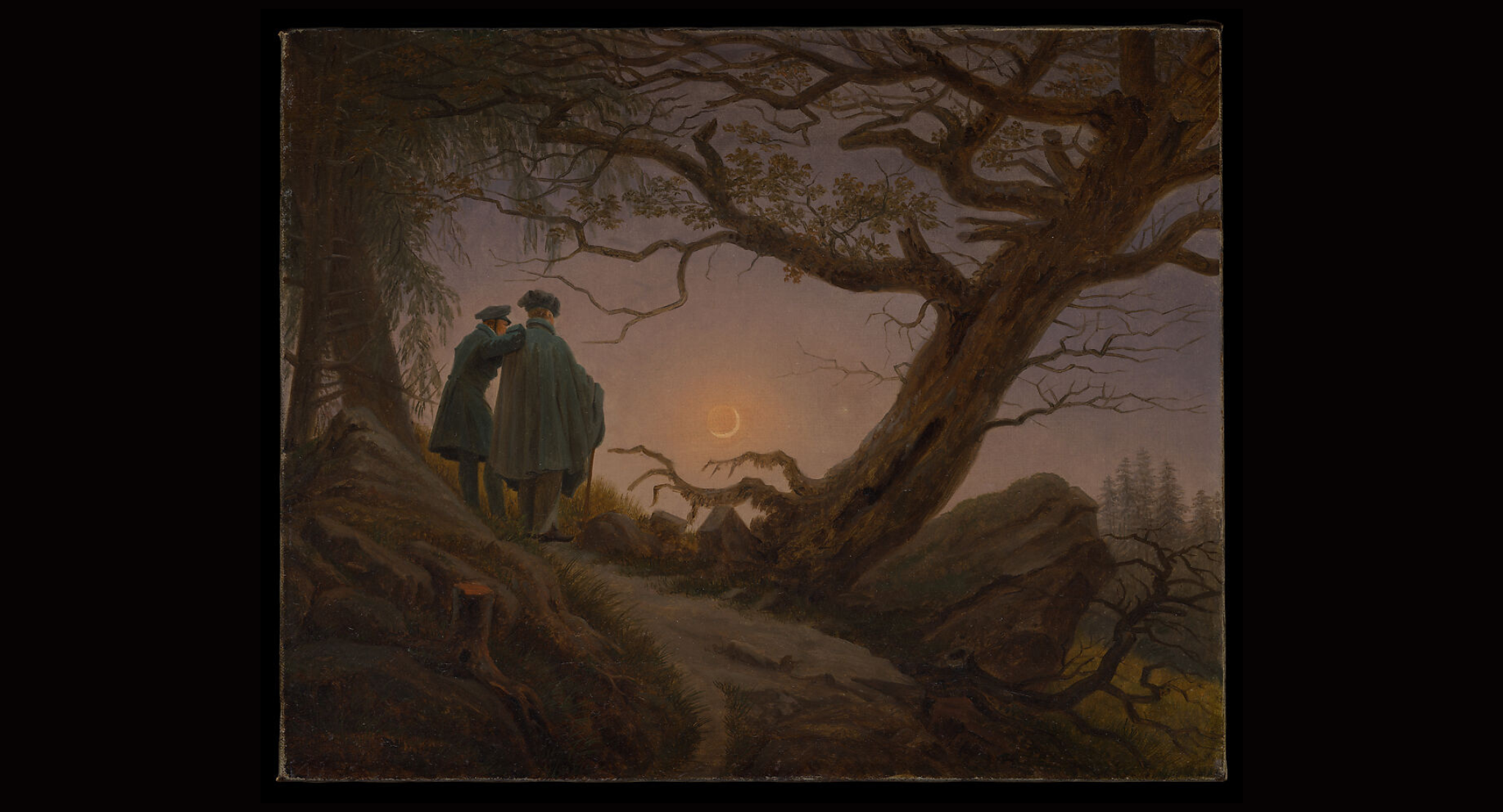
There are few things more romantic than a full moon, shining in the sky and illuminating the darkness of night, turning mundane encounters into scenes from a fairy tale. Humankind’s fascination with the moon goes as far back as the biblical book Song of Songs, whose author described his lover as, “Who is she that shines through like the dawn, beautiful as the moon.” This fascination even made its way into Jewish tradition with the practice of Kiddush Levana, the monthly sanctification of the new moon at the midpoint of the lunar cycle, marked with the recitation of select biblical passages and unique liturgy. Practitioners gather outside, gaze at the moon, recite the prescribed blessings, and often end the service with dancing.
Our Sages have long pondered the significance of the moon we’re expressing joy over with this blessing. Some posit that the goal of Kiddush Levana is to recognize the wonders and greatness of God and appreciate His presence in the world more profoundly (Rabbeinu Yonah, Berachos 4, cited by the Artscroll Siddur). To 19th-century Lithuanian scholar Rabbi Yechiel Michel Epstein, the moon’s reappearance is a source of hope for the Jewish People, suggesting that just as the moon still exists even when we can’t see it, so too does the Jewish People’s light still exist and will reappear. 16th-century Polish scholar, Rabbi Moses Isserles, highlighting the line in Kiddush Levana liturgy “David king of Israel lives and endures,” suggested that the moon symbolizes the waxing and waning of the Davidic dynasty. We dance and sing in anticipation for the day when, like the moon, the Davidic dynasty will return, and the Jewish people will return to God like a wife returning to her husband.
However, what I find striking is the unusual segment of the service when practitioners turn away from the moon and towards one another in the middle of prayer and say Shalom Aleichem—peace be upon you. For 19th-century German scholar Rabbi Samson Raphael Hirsch, this is a fundamental moment of connection as we anticipate our future redemption:
The confidence with which we await the Divinely promised renewal and rebirth of our own prosperity, a trust that is reawakened within our hearts each month as our eyes behold the light of the New Moon, also makes us aware that all of our brethren have the same hopes and aspirations that we ourselves cherish, and impels us to include all of our fellow humans in the future covenant of peace.
—The Hirsch Siddur, pg. 741
After gazing at the moon and praising its significance for ourselves and the Jewish People, we turn to one another to hope for each other’s wellbeing as well as our own in the month ahead. It is a moment of conscious inclusion and connection to the people around us, at a time when we can easily get lost in our own worlds.
Life can be long and challenging, and while we know God is with us and we maintain our faith in the process of redemption, at times we can feel small and alone, like I felt that day in Tennessee in 2017. But sometimes, when we are at our lowest, all we need to do is look at each other, with love, and say “Shalom Aleichem.”
Kiddush Levana is our chance to bask in the light of the moon and see the bigger picture in times of darkness, see God when God is concealed, and see each other when we need it most.