

Approaching America’s 250th birthday, I visited some of the most notable cities in the country’s founding with Yeshiva University’s Straus Center for Torah and Western Thought. I saw firsthand the ways in which Jewish values and texts influenced the Founding Fathers and their vision for America. I felt proud of the influence that Judaism had on the foundations of America and considered how that influence could be maintained. Biblical values may have animated the founding, but in what ways can the current American scene benefit from Jewish influence? What does Jewish wisdom have to share with modern America?
While there are many ways to approach this question I found my answer in the former surgeon general’s 2023 report entitled Our Epidemic of Loneliness and Isolation: The U.S. Surgeon General’s Advisory on the Healing Effects of Social Connection and Community. The surgeon general delves into the issue of modern loneliness, stating that “the number of close friendships has declined over several decades” and claiming that “lacking social connection is as dangerous as smoking up to 15 cigarettes a day.” These results surprised even Surgeon General Murthy himself, who admits in the introduction that it’s far larger of an issue than he previously understood.
The social isolation the surgeon general describes—and the intense independence it engenders—is not unique to the current era, but is woven into the intellectual fabric of American culture.
Leading up to this trip, I had spent a semester studying the thought of Ralph Waldo Emerson, a 19th-century American Unitarian Christian scholar. He is considered to be a formative force of the transcendentalist movement, a cultural, social, and religious school of thought that, among other things, sought to reconceive modern religiosity with a focus on personal discovery, especially through nature (as seen in his 1836 essay, “Nature”), and was largely divorced from traditional texts and rituals.
One of the recurring and central themes in Emerson’s work is self-reliance (as seen in his 1841 essay, “Self-Reliance”). This refers to the intellectual and social isolation necessary for each person to develop their unique greatness. Emerson advocated for less reliance on ancient text due to increasing irrelevance. Wisdom gained from others is important, but not eternally or inherently. Each generation exists with its own needs and whims, and each person all the more so. How tragic would it be for someone to abdicate intellectual responsibility to the old written words of others?
Emerson did not have many close friends, and did not deeply value friendship. Even when like-minded colleagues sought to develop a transcendentalist inspired utopian small town called Brook Farm, Emerson denied the invitation for involvement, lest he lose himself in the sweep of the community. An overflow of external influence, whether from an old text or a living person, stifles one’s personal creative energy and capacity. For Emerson, individuality reigned supreme, and one must stand alone to truly achieve personal greatness.
Emerson’s work is canonical in American literature, and Transcendentalism’s influence, in general, continues to reach areas of American life including (but not limited to) current day counter-cultures as well as political theory on both sides of the aisle. Put simply, his ideas are baked into the development of American society.
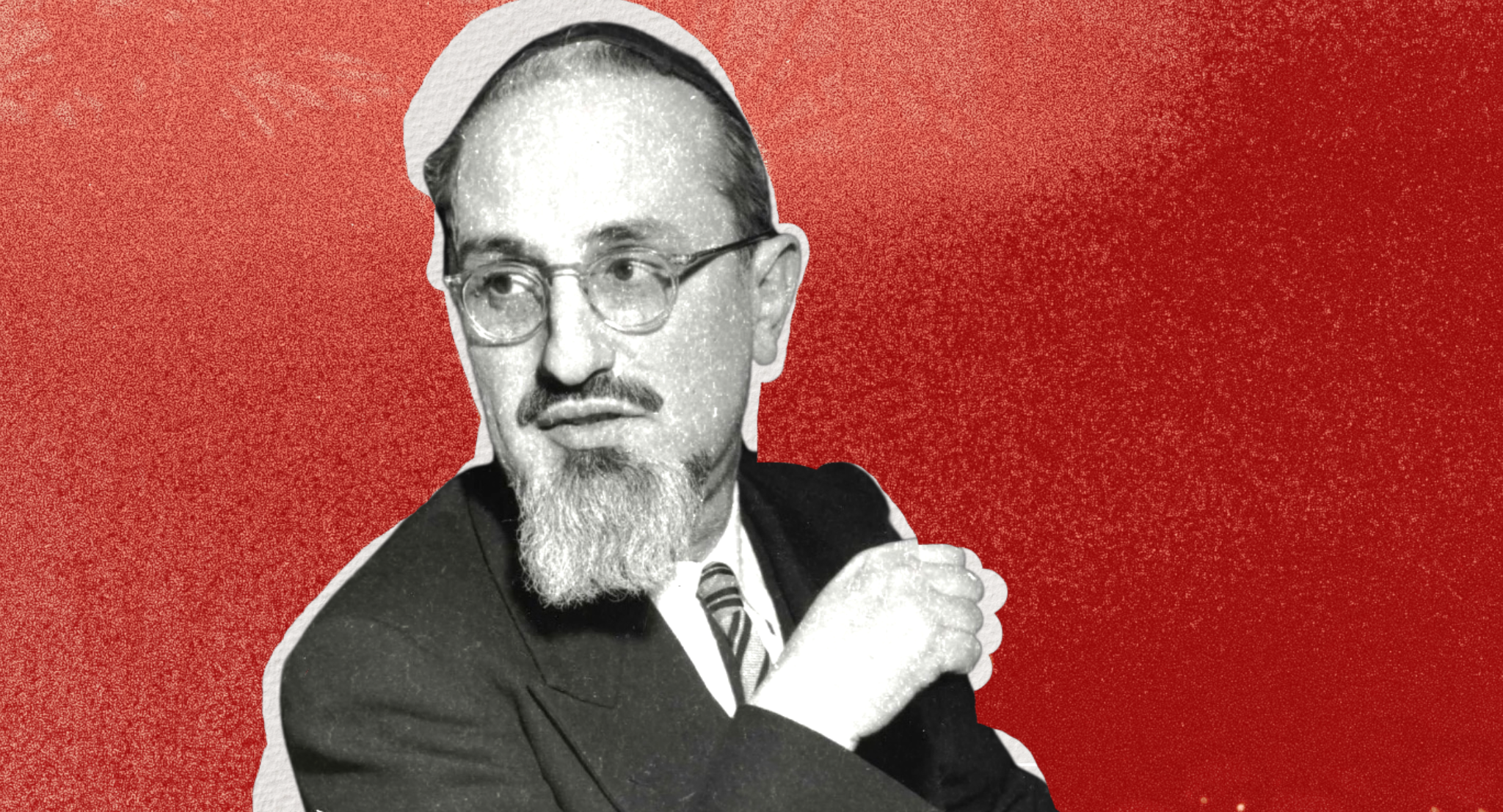
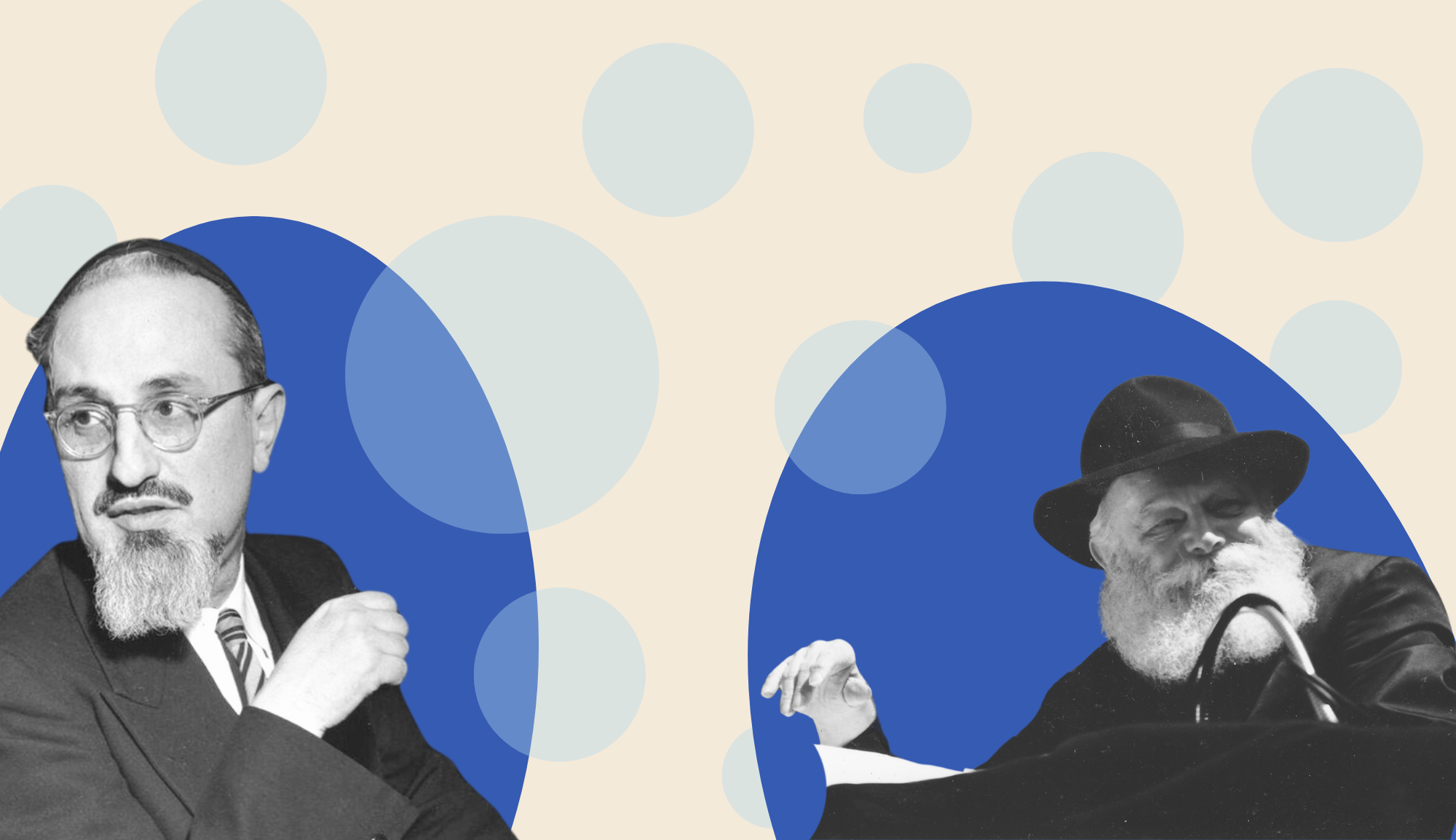
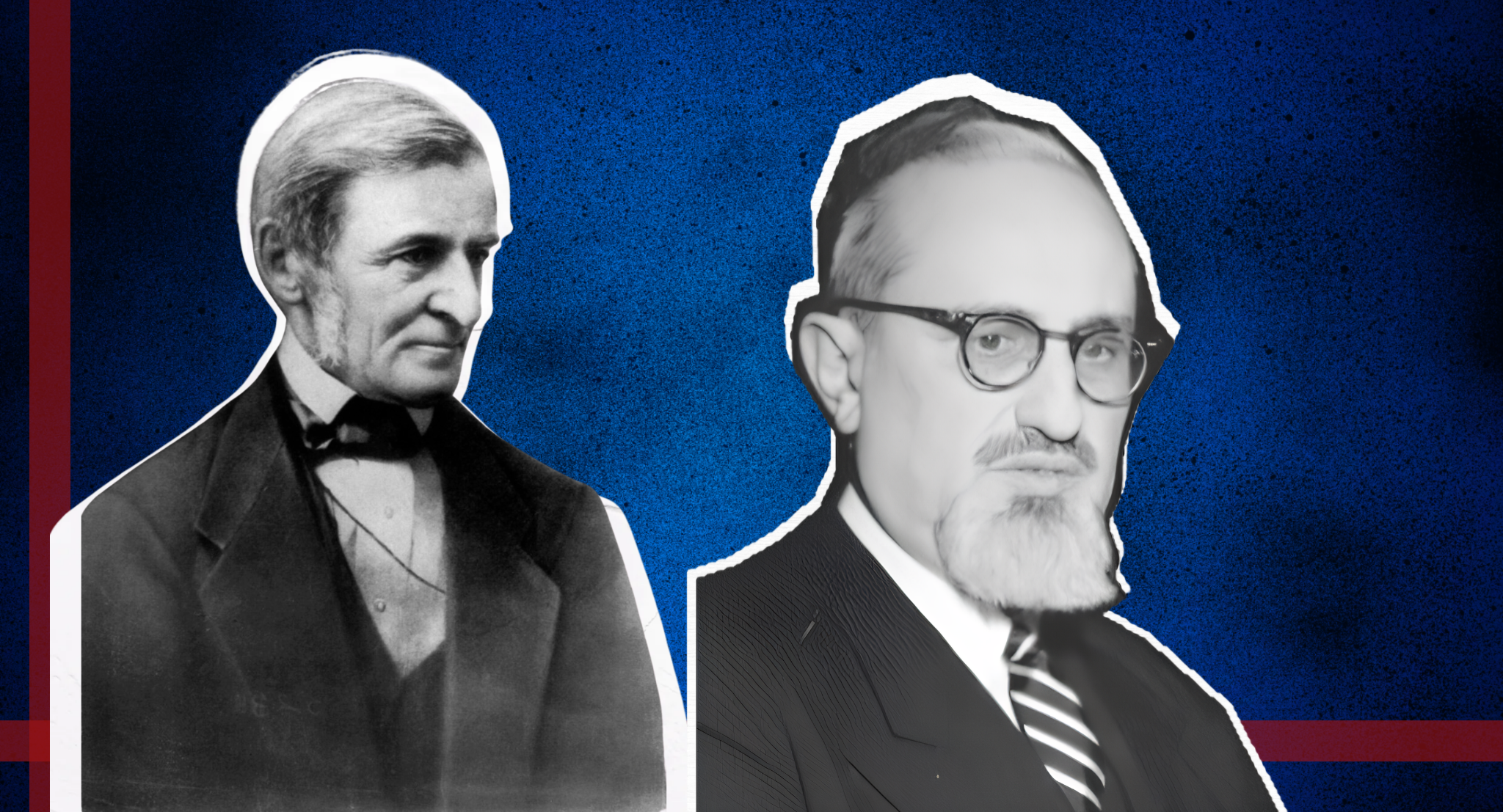
Emerson’s perspective on the nature of the individual deeply contrasts Jewish thought and Jewish life, in a manner well developed by Rabbi Dr. Joseph B. Soloveitchik.
RELATED: Rav Soloveitchik’s Case for Keeping Religious Emotions Private
For Rabbi Soloveitchik, Jews fundamentally live life entrenched in external influence. We are heirs of the original revelation and all of the intellectual development that followed. Further, that intellectual-religious tradition connects us to previous generations of Jews, because Torah belongs to and can be pursued by all Jews—living or dead. Rabbi Soloveitchik famously describes in a passage in And From There You Shall Seek, a work penned in the 1940s, the experience of engaging intensely with scholars of old when entrenched in a Talmudic passage. Time collapses and an intergenerational symposium commences, to rage on for generations to come.
Further, Rabbi Soloveitchik envisioned a religious life filled with communal connection and external influences, though he did not negate the idea of the man’s creative capacity, and even the self-created individual.
In Halakhic Man, his 1944 work, Rabbi Soloveitchik explores the idea of man as a powerful creator, whether through the creation of the ideal halachic structure meant to transcend onto the physical world, expressed in part by a chiddush in Torah study, or the creation of the self through the teshuva process. For Rabbi Soloveitchik, a religious life saturated with ancient texts, years of ideas developed by and with others, and a relationship with God pursued in tandem, is dovetailed with “[t]he most fundamental principle of all-that man must create himself.”
Let us now ask: What do American Jews still have to give to America? Rabbi Soloveitchik’s halachic man, deeply entrenched in ancient texts and communal connection, poses a challenge for Emerson’s self-reliant figure who is wary of externally sourced intellectual or religious sentiments. For Emerson, the greatest version of oneself can only be created and emerge from a state of isolation. Rabbi Soloveitchik, on the other hand, conceives of an individual who leads life fundamentally rooted in both textual fidelity and deep interpersonal connection, and—because of the ideological underpinnings of that worldview, not despite them—is able to engage in powerful creative actions, culminating in the creation of the self. Though Rabbi Soloveitchik’s archetype does rely on specific details unique to Orthodox Judaism, and the question of universal application is a large and pressing one, the halachic man causes readers of both Emerson and Rabbi Soloveitchik in a deeply individualistic modern culture to question if it is really true that one needs to be self-reliant to be great.
American culture is at a point of crisis. Not only does Transcendentalism’s cerebral and social isolation underlie aspects of the intellectual and academic framework of America, but the surgeon general’s statement provides concrete research that the interpersonal connections in American communities are strained. In a word, whether due to ideological and intellectual influence or just the ebb and flow of the modern American communal structure in which people find themselves, Americans are lonely and community is devalued.
While America was originally influenced by the details of Jewish textual tradition, maybe what is specifically missing today is the larger idea of what our tradition embodies: a vision for mankind where individuals don’t simply grow, but grow together. Where community and interpersonal influence and relationships are enriching and not restricting. Where each person can create themselves not in spite of, but because of the people with which they connect.
There is certainly a balance to be struck here, as an extreme approach to either individualism or communal connections has its downsides. An emphasis on individual greatness breeds a sense of responsibility, often leading to accomplishment, while allowing oneself to be entirely defined and dictated by communal norms can prevent depth of personality and unique intellectual development. Further, the values of strong community and individual excellence are not truly dichotomous. A community falls flat and is undynamic without members that have developed their individual abilities, and a commitment to self-actualization outside of the context of collaboration and connection with others is hollow and unrooted. Rabbi Soloveitchik’s formulation of Jewish tradition provides a model to an American culture entrenched in social isolation, as his worldview maintains—and even emphasizes—the potential and value latent in the individual while placing said individual within the context of a deeply enriching community.