

It’s no secret that Americans get unhappier by the generation.
In 2024, for the first time, the U.S. fell out of the top 20 happiest nations, according to the World Happiness Report. The decline was seen starkly among the young; when ranking happiness levels, Americans ages 30 and under placed 52 spots lower than adults over the age of 60, and a Gallup survey found that young adults (18-26) were less likely to “rate their lives positively” than members of earlier generations at the same age.
It is probably not surprising that technology and social media have been credited as primary contributing factors. But while a device no bigger than a hand may help to breed unhappiness, there is another issue perpetuating American sadness: the wrong solution they are seeking—self-help.
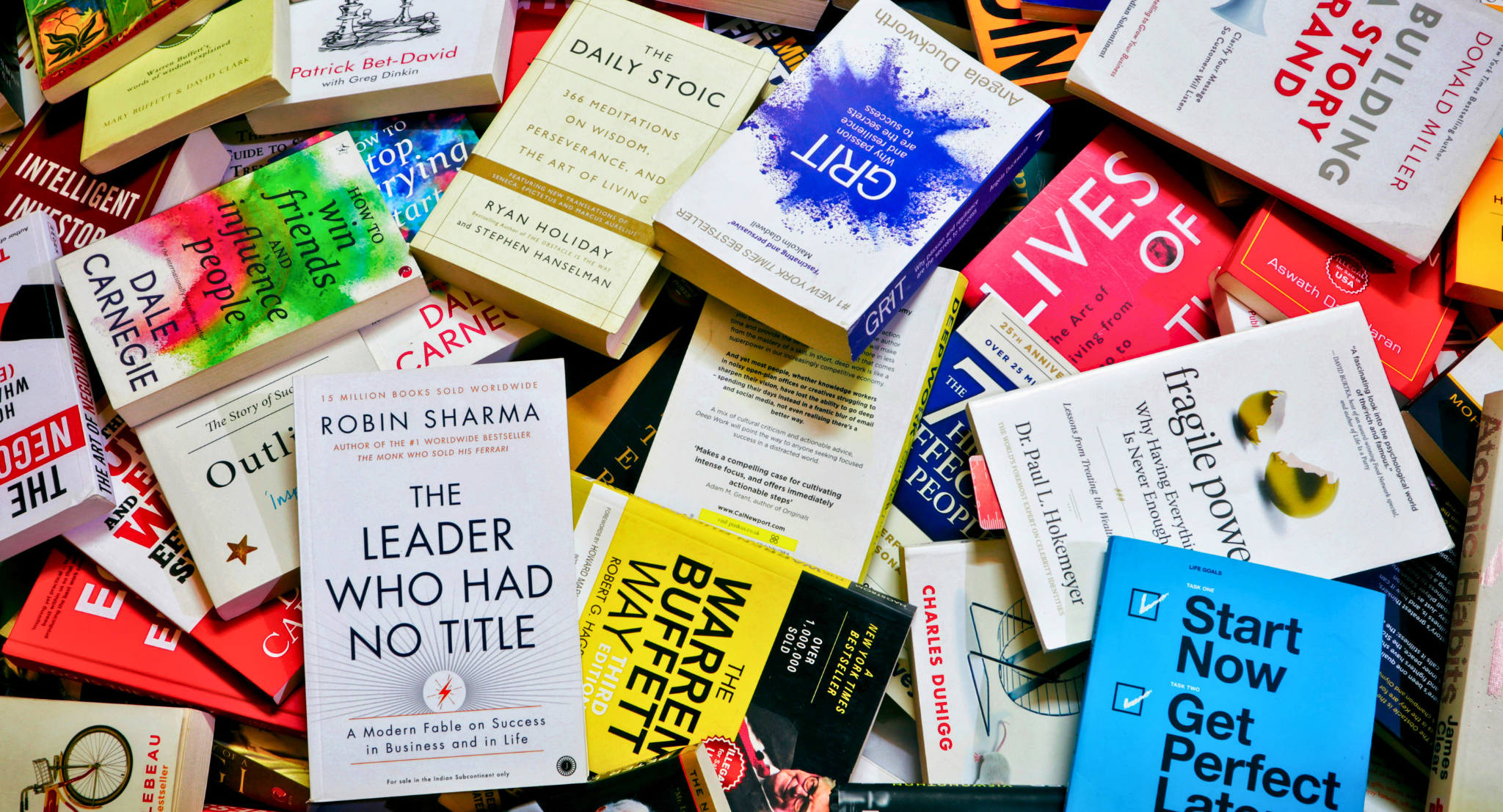
To say that the self-help movement is trendy would be an understatement. The industry is estimated to be worth $81.6 billion by 2032; in the U.S. alone, over two million adults participate in a self-help group, where advice-centered discussions are led among participants going through similar challenges, each year.
The self-help movement stresses controlling one’s mindset for “self-empowerment,” in addition to surrounding oneself with others facing similar hardships, in order to improve emotional stability. But for all its promises to improve people’s lives, self-help can also deliver feelings of brokenness and helplessness among those adopting its ideological practices.
“America’s obsession with incubating positivity and happiness has always amounted to less than meets the eye,” writes Steve Salerno, author of SHAM: How The Self-Help Movement Made America Helpless. “For at least a half-century we’ve been putting the cart before the horse when it comes to aspirational thinking, and evidence suggests that individuals and society are both suffering for it.”
In his essay, “Life, Liberty, and the Pursuit of….What Exactly?” Salerno writes that the self-help movement opened up a world of “personal empowerment” to Americans. However, he emphasizes that the reality self-help gurus preach is flawed, and leads to the opposite of what it promises.
“Long ago, my father spoke of the paradox of happiness: that those most desperate for it run a grave risk of ending up miserable,” Salerno added. “Forever chasing the high of the moment, they live sybaritic, disorderly lives.”
Self-help’s flaws are right in the name; it’s a philosophy so obsessively focused on the self that it leads people to neglect the society surrounding them. Hyper-individualism breeds sadness.
Instead, self-help practitioners might find more success with a popular Jewish movement: the Mussar Movement.
Not Just for Gap Year Students
When I was in seminary, one of my rebbeim “gave mussar” every Thursday: A group of 25 girls would crowd around a beit midrash table at 11 p.m., cholent and potato kugel in hand, pencil and notebook out, ready to record our rabbi’s advice.
He read from Netivot Shalom, the teachings of Rabbi Shalom Noach Berezovsky, rabbi of the Slonim Hasidic dynasty, and always translated what he read into scenarios that related to our own lives: Did it matter if we wore long skirts and stockings if we didn’t treat those around us, even those that dressed differently than us, as fellow Jews? Did learning in the beit midrash all day make a difference if we didn’t practice what we learned in our day-to-day lives? Did davening with kavanah have an impact if we didn’t see every person as created in the image of the God we prayed too?
I always left that beit midrash in deep reflection, eager to improve my conduct in life, albeit the late hour. But mussar is not just productive for a seminary student looking to strengthen her connection to Torah during one of her most formative years. Its impact can and should be felt in the everyday routine of the average individual too.
The word mussar comes from the book of Proverbs and translates to ethics, morals, and principles. The movement developed in Lithuania in the Jewish community in opposition to the Enlightenment, and was popular amongst those seeking an emotional attachment to keeping the Torah’s commandments.
For Rabbi Yisrael Salanter, the leading rabbi of the Mussar Movement, improving one’s ethical and moral conduct was the most important factor to strengthening one’s connection with God. The way to do that? Make yourself more aware of your subconscious thoughts and the actions they lead you to perform.
“Mussar’s teachings and practices help us work a radical inner transformation by showing us how to close the gap between the high ideals we hold in mind and the living truth of how we act in life,” writes Dr. Alan Morinis, founder of The Mussar Institute. According to him, the rabbis of the Mussar Movement “developed a discipline of transformative practices meant to help people like me and you adjust the specific inner traits that are stumbling blocks to living as the beautiful and luminous souls we all have the potential to be.”
My seminary rabbis always emphasized taking on one small deed at a time in order to improve one’s way of life. Make an effort to thank one more teacher after class; take an extra five minutes after davening to reflect on how you treat others; see everyone in the world with the potential that God created them. Making small changes to the way one acts is a big achievement. In the long run, these accomplishments and advancements will have a more lasting impact than trying to turn your life around 180 degrees overnight.
As Rabbi Dina Rosenberg writes: “Mussar masters recognized that simply learning about kindness does not make us more kind.” Rather, practicing what we learn in our daily lives will make the real difference.
Self-Help: The Complete Opposite of Mussar
Want to improve your life the self-help way? Experts suggest reading a book to develop a more positive outlook, building a routine with good exercise and eating habits, and maybe even journaling. Reflect on yourself, your life, and your goals. Change your mindset. Become a better version of yourself.
In complete opposition to the Mussar Movement, the self-help movement developed out of the teachings of the Enlightenment. It emphasizes surrounding oneself with others going through similar hardships in order to improve one’s emotional stability and finding “self-empowerment” by controlling one’s mindset.
The movement developed in the 1930s with Alcoholics Anonymous and was strengthened by the growth of Abolitionism and Suffragism, which both “promoted the freedom of the individual and the realization of one’s own potential.” The first primary text of the movement was Self-Help by Samuel Smiles, which was written as a guide for people to work on individual improvement through “self-reliance, discipline, and integrity.”
There is a reason why Jews turn to mussar rather than self-help. As Rabbi Sacks put it in a TED Talk from 2017, future anthropologists will look at books on self-help, how our generations sees politics through the lens of “individual rights,” and even the practice of taking a selfie, and will conclude that today, we worship “the self, the me, the I.”
“When we have too much of the I and too little of the we, we can find ourselves vulnerable, fearful, and alone,” Rabbi Sacks said. “We need those face to face interactions where we learn the choreography of altruism and where we create those spiritual goods like friendship and trust and loyalty and love that redeem our solitude.”
During Elul, when the time for teshuva is near, improving our lives in an impactful way is on the minds of many. As Yehuda Geberer, a historian and host of the Jewish History Soundbites Podcast, writes: “The mussar movement promoted the centrality of Elul for personal growth and preparation for the Days of Awe and Judgment … As a result, Elul zeman was born at the turn of the 19th and 20th centuries within the yeshivos of the mussar movement.”
For Rabbi Salanter, “adhering to the ritual aspects of Judaism without developing one’s relationships with others and oneself was an unpardonable parody.” This idea, that through helping others we actually improve our own mindset too, has even been backed by science.
Imagine if all you had to do to improve your circumstances when feeling down was give a small amount of charity, hold the door open for a neighbor, or support a friend during a time of need. Well, according to an article in CNBC, after 50 people were given $100 in a Nature Communications study, those who were told to spend the money on others were happier than those who were told to spend the money on themselves. This finding did not just apply to spending money on others; the same results were found when people performed small “acts of kindness” for those around them or supported others emotionally.
While mussar may be the trending practice of Elul, it is not meant to be a custom practiced one month out of the year; it should be implemented into our lives year-round, as we reflect on how we can improve our circumstances each day. Looking at the flaws of the self-help movement in comparison to mussar shows that you shouldn’t make the process of teshuva just about yourself, but rather, the people and the world around you.
While attaining full teshuva and creating a better society may seem daunting on the surface, it is not an unattainable goal. It should not be thought of as making extensive changes overnight or standing before a great but invisible God one day a year. Though the process will undeniably be long, all you have to do is take the first step. Sometimes, that might be as simple as smiling and waving hello to the next person that you meet.