

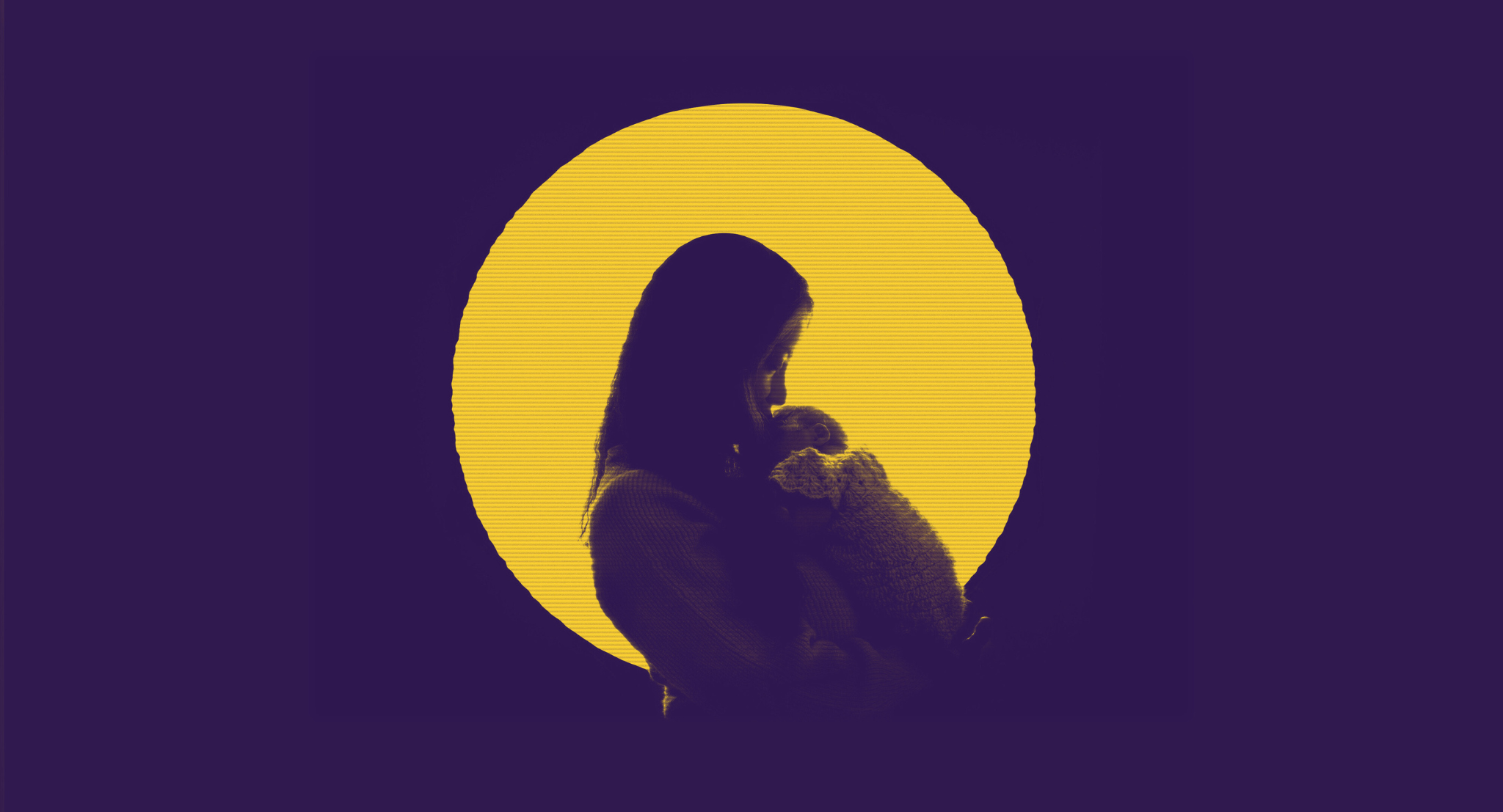
12 years after my last child, I decided to have another baby—always an inherently hopeful act—just in time for the world to implode. My biological clock had interesting timing, to say the least.
I found out I was pregnant a week or two before October 7. I vividly remember two competing and equally intense emotions when news of the attacks broke as Simchat Torah celebrations got underway at shul: joy and fear that I might bring another Jew into this broken world. Suddenly, being pregnant felt more than hopeful. It felt like an almost radical act of defiance.
The festival of Sukkot, with its fragile huts and open skies, became the perfect metaphor for what I was about to undertake: creating life in a world that laid bare the inherent vulnerability of being Jewish.
In the months that followed, I mused about whether it was fortuitous or terrible timing, depending on my mood and the news cycle. Sometimes, I followed the headlines obsessively and immersed myself in the antisemitic cesspools of New York Magazine comments and Reddit threads. Other times, I’d try to step back, disengage, and bury my head in the sand, if the sand was comforting reruns of my favorite 90s television shows—my preferred form of emotional penicillin.
I’d greet each day determined to only google which size fruit my fetus was that week—but I am a Jewish nonprofit professional who writes about Israel and antisemitism regularly for work, so who was I fooling? Disengagement was never a real option.
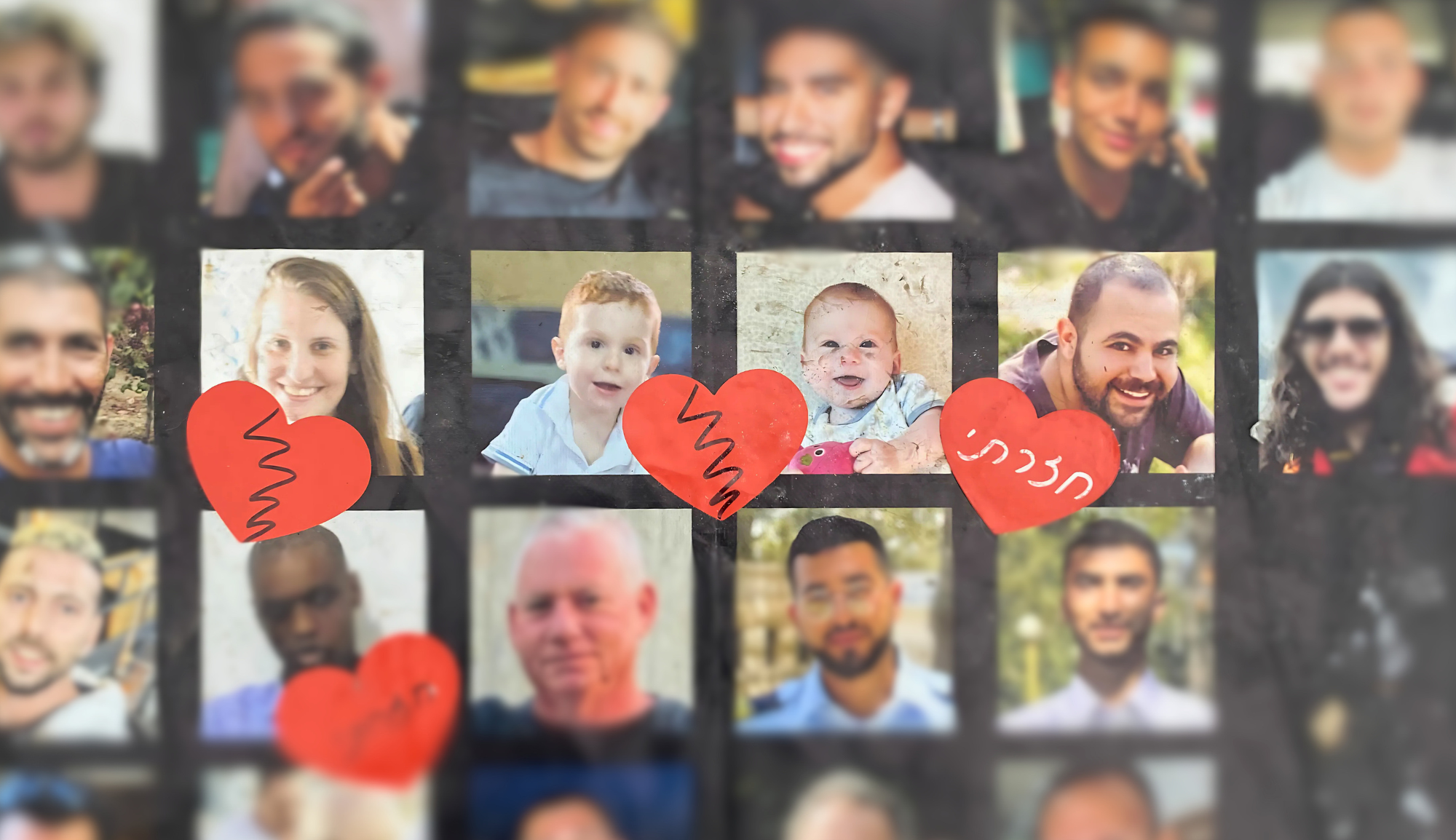
I’d be at my desk, writing about Hersh Goldberg-Polin, or Kfir and Ariel Bibas, and my baby would kick, as if to say: “Yes it’s me! Here to adorably underscore your worst fears about bringing new life into this world where people’s children are murdered because they are Jewish. Or Israeli. Or associated with Israel at all.” (For such an eloquent and perceptive fetus, my baby sure took a long time to crawl when she was out of the womb, perhaps exhausted by her earlier precociousness.)
I pictured that this time around raising a child, fairly older and incrementally wiser, I’d be the embodiment of maternal zen—but the reality is closer to unhinged wreck, prone to hyperventilate about my newest daughter’s excessive dairy intake and whether I am enabling her co-dependency on pacifiers for longer than is healthy.
“I don’t remember you this crazy of a postpartum mom,” my sister said delicately, wide-eyed and slowly backing away, as she watched me unravel over a text message about a hand foot mouth disease case at daycare.
The angst of raising my older kids through my divorce from their dad and a pandemic, wildly disruptive as both those events were on vastly different scales, didn’t come close to testing my existential dread like the current tidal wave of anti-Jewish hate does. There’s something about starting over now that feels entirely rebellious, like planting a seed in a storm and daring it to flourish in a landscape that feels profoundly hostile to the notion of Jewish continuity.
Since my baby’s arrival, war in Israel is still raging and antisemitism has only grown bolder and more normalized. It’s easier to give voice to panic about yogurt and pacifiers, or a contagious virus that isn’t antisemitism. It’s more difficult to verbalize what it means to raise a new Jew in whom you want to instill pride and conviction, while mindful that the world can be unrelentingly cruel—even dangerous—to those who carry their Judaism proudly.
I’m a writer who doesn’t have the words, and a mother who doesn’t have a roadmap.
This year, as we prepare for Sukkot, it’s difficult to believe that it’s been two years since October 7 irrevocably altered the course of Israel and the story of the Jewish People. We are again tasked with building an impermanent hut to protect us from the elements—only it’s not so much the cold and bugs this year as it is raging hatred, which feels thick, ominous, and all around us.
The sukkah, with its thin and porous walls, is a potent reminder: We are vulnerable. And yet we keep building.
It’s what Jewish people have done for centuries, and why we’re still here. More than anything else this year, perhaps this is Sukkot’s lesson: Strength is found in fragility. Holiness is found in a temporary shelter.
And when I show my now-toddler the gaps in the schach in my sukkah this year, through which we can see the sky and any stars bright enough to appear, I will be reminded that raising a child now is a beam of light in a fractured world—if not an act of defiance, then surely one of holiness and hope. That is all I can really articulate right now.