

My name is Michal. I am 49 years old. I am a wife, mother, daughter, sister, friend, teacher, and author. And I am hearing impaired. I live with a severe-to-profound bilateral sensorineural hearing loss.
I was born in 1976 in Toronto, the eldest of four, with normal hearing and an ordinary childhood. In ninth grade, my parents took a sabbatical and we lived in Jerusalem. In January of that year, during the Gulf War, an inner ear virus brought on intense vertigo spells. A local doctor attributed the dizziness to war stress—I was a Canadian kid navigating sealed rooms and incoming Scud missiles—and sent us home.
The virus passed quickly. Its effects did not.
Because balance (the vestibular system) and hearing (the auditory system) both lie in the inner ear, the virus that affected my balance in the short term ultimately affected my hearing in the long term. The hearing loss was mild at first—mild enough that even I didn’t notice. I learned to compensate without realizing there was anything to compensate for. I was still communicating well, succeeding in school, and socially connected.
I do have memories from those years—small moments where something felt off, though I couldn’t name what. When I took a summer job one year in a busy office, and I was tasked with answering the phones, I understood something was wrong. I could not hear the callers properly to direct their calls and I could not take down their phone numbers when they tried to leave messages. It did not go well for me, or for the callers. I also loved going to the movie theater with friends, but leaving the theater, I would reassure myself, saying, “You see, you heard the movie, everything is fine.” During my gap-year in Israel, my roommates would occasionally comment on my inability to hear properly. But these were footnotes to an otherwise typical adolescence.
My hearing loss remained buried within myself. I was not trying to deny my reality, I simply hadn’t recognized it yet.
By the time I started my degree in speech and hearing at Brooklyn College—married, with a son—I could no longer deny my hearing loss. At this point, I had organically learned to use body language and “lip reading” to understand speakers, and college presented a unique challenge. I struggled to hear the teachers’ lectures, while simultaneously taking notes during classes. I couldn’t lip-read and take notes at the same time. I knew that something was wrong.
It was, in retrospect, a blessing that I was studying speech and hearing at Brooklyn College. When our eldest son was three, more than 10 years after that winter in Jerusalem, I finally approached one of my professors and said, “I think something is wrong with my hearing. I need help.”
My professor performed a hearing test, explained to me what my hearing aid options were, and at 24, I had a diagnosis—though in truth, I’d had the condition for a decade. The hearing loss was still relatively mild then, and the hearing aids were small enough that no one noticed them—which, at the time, mattered to me.
For me, confronting my disability wasn’t a sudden reckoning—it had been a slow, largely subconscious process spanning a decade. My family was very supportive, and I was finally relieved to know my new reality, and to be aided in order to help myself.
My education helped me very much in having realistic expectations of what hearing aids can, and cannot, do. It helped me understand the anatomy of my hearing loss, learn how to advocate for myself, and appreciate Hashem’s magnificent creation of the human body.
Over the years, my hearing loss progressed from mild to moderate to severe. For at least a decade now, I live with a severe-to-profound hearing loss. Without my hearing aids, I hear almost nothing—not speech, not my husband’s alarm, not environmental sounds. A few years ago, our house alarm went off by accident in the middle of the night. Everyone in the house woke up, except for me.
My hearing loss did not arrive all at once. Neither did my understanding of it.
Every experience we face in our sojourn through this world teaches us something. Sometimes we learn quickly, sometimes the lessons emerge over time, and sometimes, we are not sure what God is teaching us. But if we open our hearts and minds and humble ourselves before His will—even when that may be supremely difficult—life’s experiences can be enriching, educating, hopeful, inspired, and inspiring.
“Shema Yisrael Hashem Elokeinu Hashem echad”—“Hear O Israel, Hashem is our God, Hashem is One” (Devarim 6:4).
The Torah calls upon us to hear the word of Hashem in our hearts, minds, and lives. This hearing is a spiritual and soulful hearing, through which we come to know God.
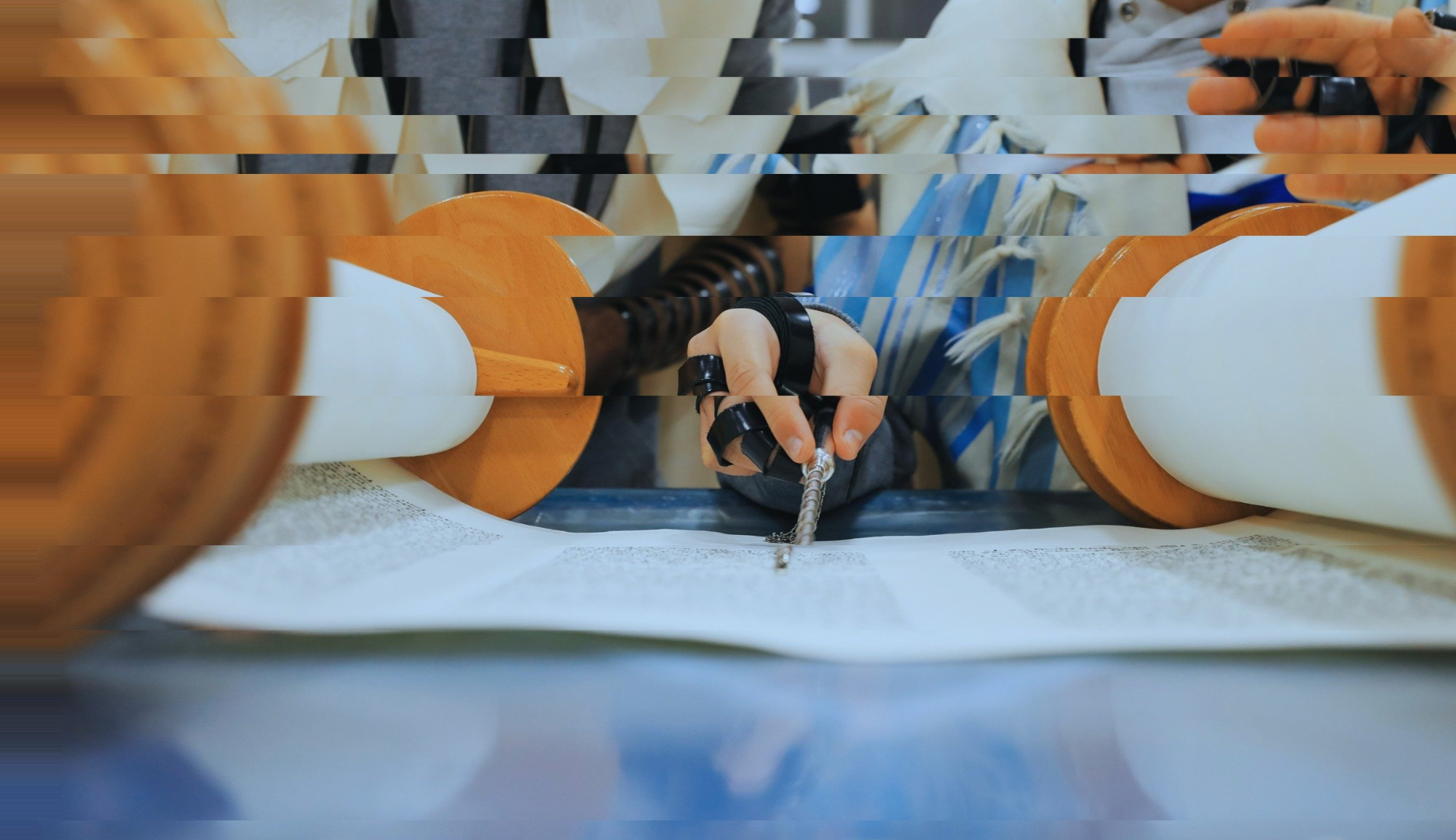
Shema: Hearing is fundamental to our faith and central to our lives as Jews. At the foothills of Sinai, Am Yisrael accepted the Torah and declared: “All that God has spoken, we will do and we will hear” (Shemot 24:7). Since the entire nation said these words, the Sages teach that at Har Sinai there was not a blind, nor deaf, person. Hearing in the spiritual sense—lishmoa—symbolizes a tenet of our faith, and it is something we must hear anew every day, as each day we reaffirm our commitment to Torah and mitzvot (See Rashi to Shemot 19:1 and Devarim 6:6, for example).
While hearing in the spiritual sense affects our neshamot and our avodat Hashem, hearing in the physical sense impacts our daily lives and affects our functioning in this world. It is one of the most important faculties which Hashem has bestowed upon man. As is common, when there is no deficiency, we generally do not stop to marvel at Hashem’s goodness, which manifests through our healthy bodily functions.
Have you considered what it means to follow the conversation at the Shabbat table—to participate because you actually know what’s being said? Have you ever stopped to appreciate hearing a family member call your name from another room—and simply knowing who it is and what they need? Have you ever stopped to appreciate the simple blessing of being able to go to shul on Shabbat? You can follow the davening because you can hear the Chazzan. You can answer “amen” because you know which bracha was just said.
For most with normal hearing, these are gifts taken for granted, just like the breath we inhale with healthy lungs and the beating of a healthy heart.
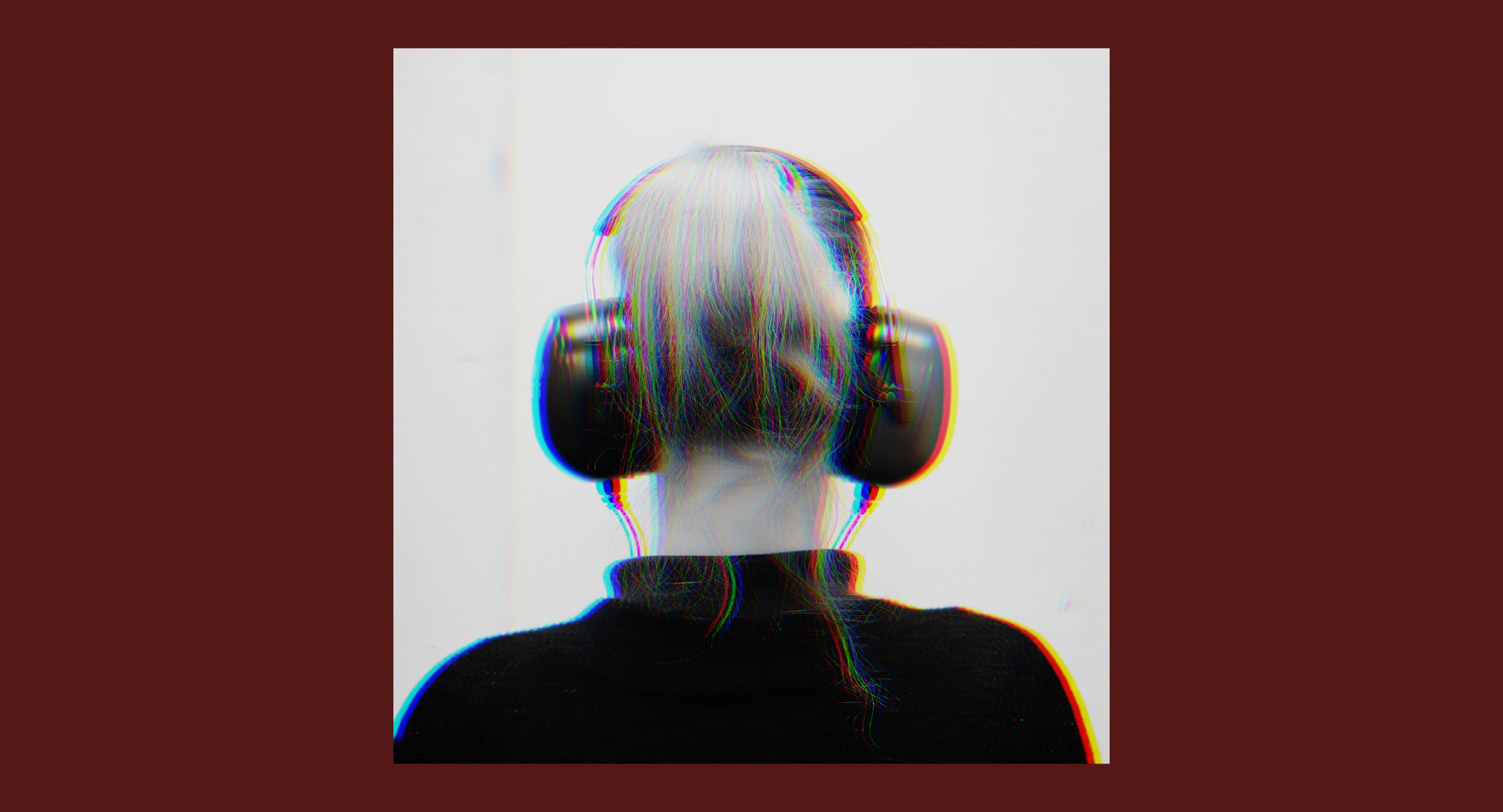
Hearing loss is often referred to as the “hidden disability” because other than hearing aids—which may often be covered by hair or a head covering—no other physical manifestation of the disability is present. However, the more severe the hearing loss, the greater the communicative challenges become. For myself, the degree of hearing loss means that I struggle to hear every single day, in every single conversation I have.
Hearing loss does not just affect one’s communication. It reaches into relationships, confidence, mental health—the accumulation of moments missed, jokes not caught, conversations abandoned. Hearing loss does not define me; it is part of who I am.
I find it helps to be open about my hearing loss. When I meet new people, teach in a new venue, or visit a new community, I always alert others to my hearing loss. When people know what I need, they want to help—and usually do. In my experience, people want to help and feel at ease when I put them at ease.
Our Jewish communities are auditorily challenging. Shuls are not built with architectural acoustics in mind, smachot are loud by design, and busy Shabbat tables are far from optimal listening environments. I am grateful to belong to these communities—even knowing that belonging will always cost me something. The innate busyness of our communities means that I must accept that there are (sadly) many things that I will miss.
If I had a choice, I would want to have normal hearing. But life does not always give us choices. I once read the following line, and it stuck with me: “Life gives us challenges, and along the way we become people who can handle them.”
Over a decade ago, I spent Shabbat with the daughter-in-law of a well-known Hasidic rebbe. We came from very different worlds, but we were both mothers sitting with sick children on Shabbat, and we connected. Something she said has stayed with me ever since.
She relayed to me that everyone carries a “garbage bag” through life. Some carry a clear garbage bag, which allows everyone to see inside. And some of us carry a black garbage bag, into which no one can see inside. But no one goes through life without a package to carry.
In some way or another, we are all “disabled.” But when we appreciate the ways in which we are far more abled, we will become the best version of ourselves that we can be. In this way, we will each strengthen our own avodat Hashem, collectively strengthen our nation, and with our combined efforts, bring nachat and joy to our Father in heaven.