


Fans of Harry Potter (by which I mean all of us), recognize five words well: “I open at the close.” These words, uttered at a very particular juncture of the HP saga, come at a point in which our protagonist accepts his mortality. I’ll leave it there to avoid spoilers (although if you haven’t gotten there by 2022 I really don’t know what you are waiting for), but this line hints to a deep and ancient truth that many religious traditions work through: the opening that can occur at the closing. Life can be deepened and thickened by its encounter and acceptance of the inevitability of death. When we avoid the inevitable, so often we risk forgetting the timeless truths and values that we hold most dear, as we expend all of our efforts escaping death that we forget the life we could be living in the meanwhile.
How then can we go from age-ing to sage-ing, as one creative author and spiritual guide put it? One method, which we find even in the Torah, is the leaving of an ethical will. Leaving last words of instruction, advice, and blessing for one’s family is one way to borrow from the impending ignition of death’s candle to shed light on the living. Yaakov’s deathbed blessings of his sons, Yosef’s dying questions of his people, Moshe’s final address, Dovid’s advice to Shlomo, and so and so forth, can all be thought of as early instances of this impulse.
Ethical wills differ in tone, character, and content, as they can range from a set of blessings, adjunctions, advice, or words of love and affection, or a pithy line or set of words that characterize one’s life or death. Nathan Hale’s famous last words, said upon his hanging as a spy during the American Revolution, ring still: “I only regret that I have but one life to lose for my country.” Early Israeli folk hero Joseph Trumpledore’s last words echo similarly: טוב למוות בעד ארצינו, “It is good to die on behalf of one’s land.”
An ethical will is known as a tzava’ah in the traditional rabbinic Hebrew. When the prophet Yeshayah prophesies the passing of his fellow prophet Chizkiyah, Yeshayah urges צו לביתך, to “set your affairs in order,” which might be an early instance of this term appearing in this context. In the Talmud, such last statements became commonplace, as the sages would visit sages on their deathbed and ask them for words of wisdom. In one notable instance, Akavya ben Mehalalel summoned his own son to his deathbed and tasked him with following the majority, instead of his own views, for Akavya had been censured for refusing to follow the majority opinion in his own life.
What would you tell your descendants, if you had only a few words left?
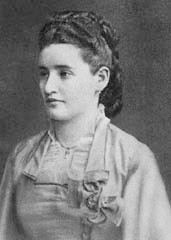
Ethical wills are interesting in their specificity – they are personal, more personal than most of the Jewish rabbinic literature that we have, and they are usually aimed at one’s closest family or students. As often happens, some of these personal documents ended up becoming popular religious tracts, such as the tzava’ah attributed to R. Yehuda HaChassid, R. Yehuda ibn Tibbon, as well as that of the Vilna Gaon. Even outside the closed context of a family, ethical wills are intimate views into what matters most, and they can be windows into the more vulnerable touches of a life. One of the most remarkable instances of ethical wills in Jewish history is the memoir of Glückel of Hameln, the German-Jewish diarist and businesswoman. While she is now famous as a memoirist, her writings were first written as an ethical will, and slowly expanded into one of the most intriguing autobiographies that we have from her time. Glückel’s writings were later published by her relative, Bertha Pappenheim, the German-Jewish pioneering social worker and activist, and ultimately translated into many languages.
Later on, during the Holocaust, last wills took on an added emotional valence, as their writers were often unable to say goodbye any other way. You can read the deeply moving ethical will of Elkhanan Elkes, the chairman of the Kovno ghetto Jewish Council, in which he writes:
“I am writing to you my beloved children…in the Valley of Tears, the Kovno Viljampole Ghetto…I am writing this in an hour when many shattered souls, widows, and orphans, threadbare and hungry, are camping on our doorstep imploring us for help. My strength is ebbing. There is a desert inside me. My soul is scorched. I am naked and empty, and there are no words in my mouth…The Germans killed, slaughtered, and murdered us in complete equanimity. I saw them; I was standing in their presence as they were sending many thousands of men and women and children and infants to be butchered…”
This last month, we explored the stories that bind, in an exploration of intergenerational divergence. As we come to a close of this topic, for now, we are thinking about the stories we leave behind – the lore, legends, and lessons that we impart on our world. In an ethical will, or in the imprint of our goodwill and positive acts, the stories we leave behind bind us to the good we have done, tie us to our highest hopes and truths.
In this reader, we include an introduction to the history of the ethical will from the Jewish Virtual Library, as well as one ethical will sent to us from one member of our listening community. This will, from William (Avigdor) Schulder to his children, is an example of the living legacy of the ethical will in today’s world. We include a typed version, and an original, to give you the full feeling of these words. As we think about the tzava’ah, we are considering the deepest questions of our life. What would you tell your descendants, if you had only a few words left? What words would you wish to remain imprinted on this world? Remember to download the full PDF to read everything.
To read more about ethical wills, check out the Hebrew Ethical Wills: Selected and Edited by Israel Abrahams, or Ethical Wills: A Modern Treasury, both classic compendiums of some of the major and historical ethical wills from Jewish literature. For a somewhat shorter read “Jewish Ethical Wills,” by Israel Abrahams.
–
The Ethical Will of William (Avigdor) Schulder
March 28/1932
With the help of G-d, Monday the week of Parashat Shemini 5692
To my dear children,
You know how hard I worked and tried my utmost to give you the best I could afford in food, shelter, and education, to lead an honest, clean and respectable life.
Therefore, I plead with you to uphold my wishes as follows:
- Be strict Sabbath observers. Your homes to be strictly kosher and otherwise uphold the Jewish religion and traditions.
- Honor, respect and take care of your mother as long as she lives as she is your best friend in the world.
- Be honorable in your dealings, commercially and socially.
- Be respectful to all—never consider yourself greater than the next man.
- Try your best not to insult anyone.
- Talk and treat everyone as kindly as possible.
- Keep together; be friendly with one another.
- Pass all this along to your children and see that they are brought up as orthodox, honorable, and respectable Jews.
This being real fatherly advice, I hope you will follow these rules and G-d will help you.
Your dear father William (Avigdor) Schulder
P.S. I hope you will keep this letter and read it once in a while but at least on the day of my Yahrzeit.
Give a copy to each child.