

ChatGPT forced mankind to look in the mirror and ask itself what makes it unique in a world with AI. However, what I haven’t stopped thinking about since its release hasn’t been my own future, but my daughter’s.
Whenever I look past my screen to my two-year-old playing in the living room and watch her play, run, and laugh, I shudder at the thought of her living in the kind of AI future experts foresee, where human work is replaced by robots and the threat of misalignment looms over humanity.
Unfortunately, few efforts have been made to address these concerns. Instead, industries rushed to integrate AI into their workflows. This technology has been branded as the next phase of human achievement—the future—and its devastating disruption to society as a necessary step towards ultimate human flourishing. But that sentiment feels hollow, almost robotic. Hastily adopting new technology with little consideration for its ramifications feels like a compulsion, not progress.
Something feels wrong with our relationship to technology, but that doesn’t mean new technologies are the problem—only the stories we tell about them.
Writer Paul Kingsnorth is “one of Britain’s top ten troublemakers.” Despite being a leading environmental activist, he retired and moved his family from urban England to the rural Ireland countryside. There he started growing his own food, drawing water from a well, and homeschooling his children, all in an effort to escape the Machine.
The Machine is a term adapted from philosophers like Lewis Mumford’s “megamachine:” a “society, ordered from the top down, justified by a mythos employed by its leaders, and driven by a desire for ‘order, power, predictability and above all, control.’” It is a human tendency to build hierarchical, technocratic systems driven by a desire for power and control, where individuals are pressured to mold their needs and behaviors to whatever serves the system and helps it function. These systems replace human, emotional and sacred ways of being with calculated, rational, and mechanical efficient ways of seeing and living. To experience the Machine is to be “enveloped by something which has been building up, which initially we started creating, which is now controlling us. We feel like … cogs in it …”
They are built on the backs of people who seldom benefit significantly from these systems but are convinced they will, or reluctantly resign themselves to them, all while benefitting a controlling minority. Kingsnorth sees communism and capitalism as manifestations of the Machine—two ideologies that promise liberation, yet in practice concentrates power and reduce human beings to interchangeable units within a vast system, whether through state bureaucracies that manage citizens from above or corporate structures that extract labor, data, and resources from the public for an elite few.
Nonetheless, the Machine maintains power because of the myths surrounding it. “The one lasting contribution of the megamachine,” Mumford wrote, “was the myth of the Machine itself: the notion that this Machine was, by its very nature, absolutely irresistible—and yet, provided one did not oppose it, ultimately beneficent.”
The Machine isn’t new. The first Machine, Mumford claimed, was Ancient Egypt, whose pyramids were built by slaves, “stripped down to their reflexes, in order to ensure a mechanically perfect performance,” conditioned to behave like cogs in what he called a Machine made of human parts.
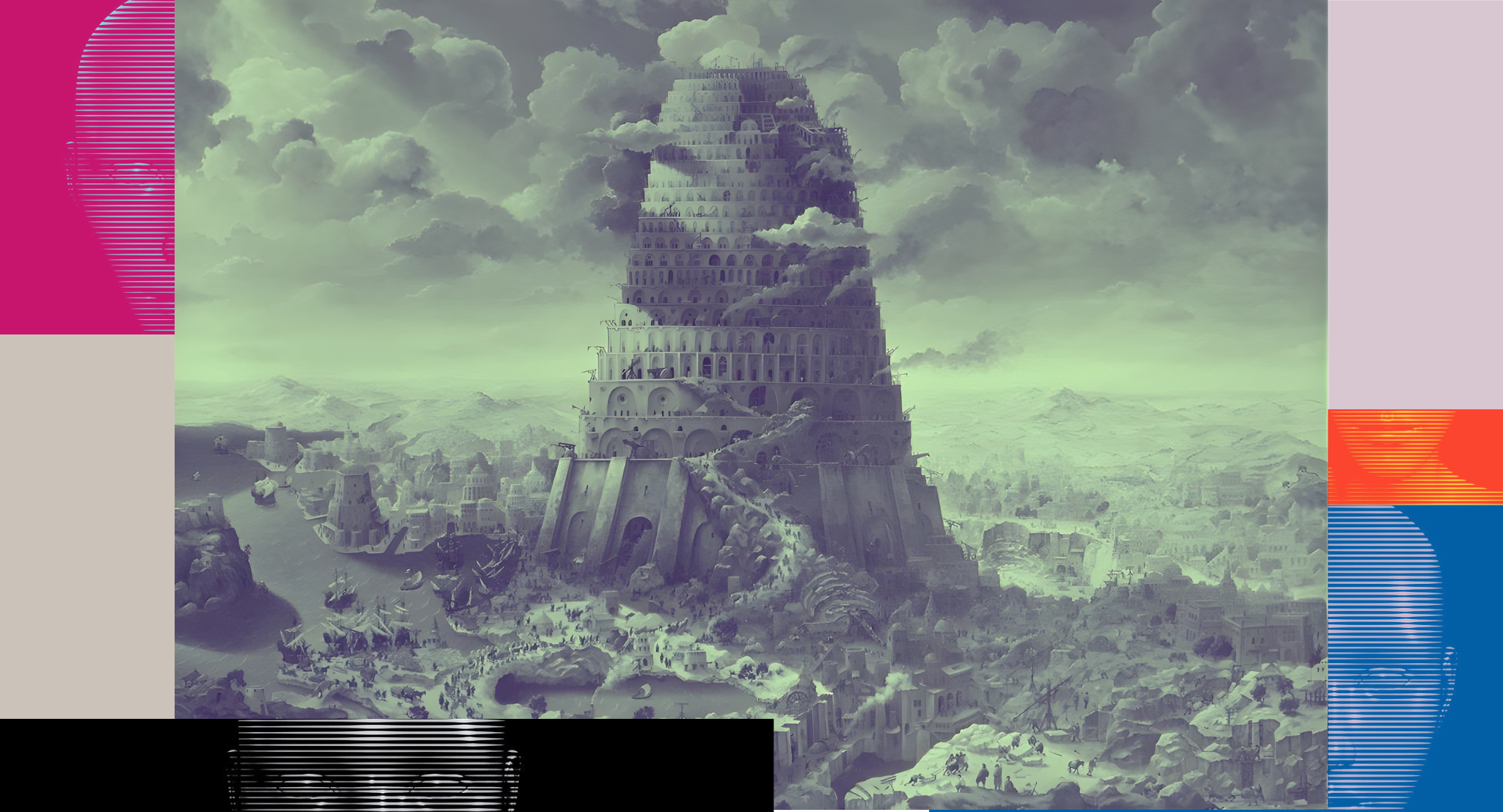
I believe the Torah retains an older story of a Machine in a tale about a monolithic power structure—both physical and social—built by the people in pursuit of false promises of collective flourishing. Long before the Pyramids, there was the Tower of Babel.
The Tower of Babel is the original Machine. In the aftermath of the flood, the burgeoning society sought new territory to support their population, and began building a Tower “with its top in the sky, to make a name for ourselves; else we shall be scattered.” The Netziv read this story as a cautionary tale of totalitarianism. Originally, the Tower was initiated by a people operating with a shared mission of unity in the aftermath of global devastation. However, it quickly morphed from a symbol of safety that would keep them together into a weapon wielded against the people. The Netziv saw the Tower as a tool for control, a watchtower manned by army chiefs to monitor who left and entered the city—both to control the physical population of the city as well as their thoughts—fearful “that people might abandon the philosophy of the city.” They sought to ensure no one would leave, and punish anyone who challenged the status quo.
The Tower was devised by people who sought control of their community—not its safety. Nonetheless, the people weren’t forced to participate in the project; “Everyone had the same language and words.” They were all on board with this plan, but that is precisely why God intervened. God knew what the Tower was really for and that controlling the ways people think inevitably leads to destruction. “It does not help,” wrote the Netziv, “that they share the same perspective now.”
The Tower of Babel was something the people were led to believe they’d benefit from, only for it to control them—this is the essence of Mumford’s megamachine. Like the Machine, the Tower was a tool for order, power, and control. And, like the Machine, its success depended upon Machine-like workers to contribute to its construction and erase their individuality, something that Kingsnorth sees as spiritually and socially destructive. Pirkei D’Rebbe Eliezer describes how the builders’ dedication to the Tower came at the cost of their humanity: “If a man fell and died they paid no heed to him, but if a brick fell they sat down and wept, and said: Woe is us! When will another one come in its stead?”
History is full of powerful people who sway public opinion with promises of prosperity for all, when their motivations are really self-serving. Whenever that happens—whenever we let that happen—a new Tower is built.
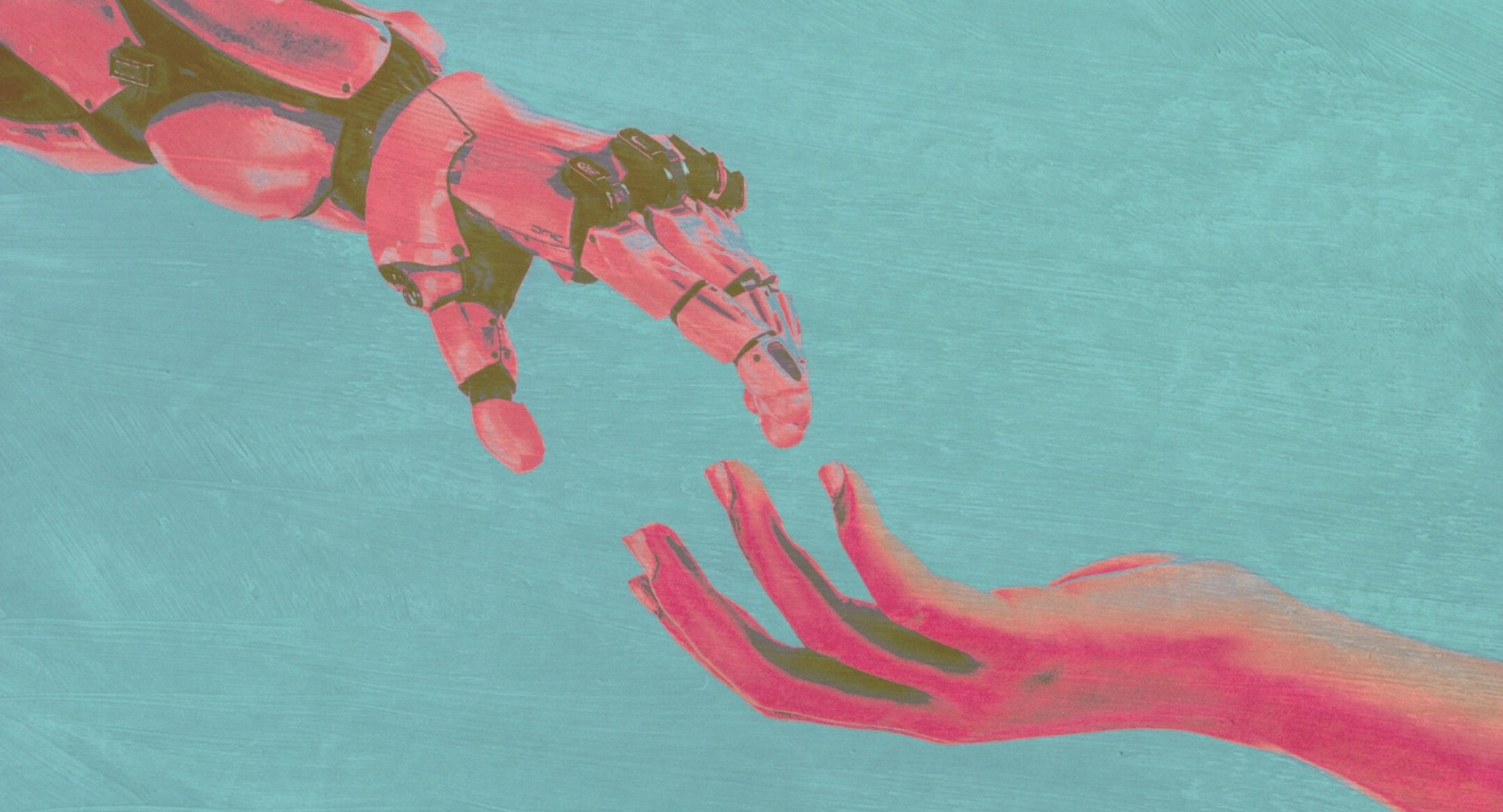
Today, we are witnessing the building of a new Tower and the latest manifestation of the Machine with artificial intelligence. Like the Tower, artificial intelligence is being built by users who are inadvertently training the thing that threatens them. And, like the Tower, artificial intelligence is being sold as necessary, inevitable progress by industry leaders who claim the best of intentions but secretly seek personal wealth and power—to make a name for themselves—and have little concern for the consequences of their inventions.
In 1972, poet R.S Thomas wrote:
The Machine appeared
In the distance, singing to itself
Of money. Its song was the web
They were caught in, men and women
Together. The villages were as flies
To be sucked empty.
God secreted
A tear. Enough, enough,
He commanded, but the Machine
Looked at Him and went on singing.
The nature of the Machine is that it feels unstoppable, and the Tower of Babel leaves the same impression—the only thing that stopped the Tower was divine intervention—but it isn’t unstoppable. When the people were scattered across the globe, Radak claims it wasn’t God who scattered mankind but themselves, compelled to find others they could communicate with and connect to after their languages were confused. Rather than maintain the status quo and persist within a Machine that was destroying it, mankind was given the opportunity to think and speak for itself, disconnecting from the voices asserting a singular narrative for mankind. They were free to seek lives outside of the Machine they were duped into subscribing to.
“Subversion of this authoritarian kingdom,” Mumford wrote, “begins with that area of human contact with the world that cannot be successfully repressed—one’s feelings about one’s self.” Or, as Kingsnorth wrote, “If the Machine is a story, then the first step to its dismantling is neither monkeywrenching nor revolution—it is to stop believing the story. The second step is to stop telling it to others; and the third is to begin the search for a better one.”
The Tower of Babel is a warning: Just because we can build something doesn’t mean we should, and we shouldn’t trust everyone with supposed good intentions. But it’s also a lesson in what needs to be done once we’ve built it, purposefully or accidentally. God didn’t think we were evil for building the Tower—He was disappointed with how we used His gifts. There’s nothing wrong with what we build, but we need to use it wisely. We need to step back from the things that endlessly distract us—the things we’re building—and ask ourselves if we actually want them. If we don’t, we must, like God, do something. The greatest gift mankind was given—what might make us human—is awareness, reflection and choice. “Technology is not neutral,” Kingsnorth writes. “Every device wants something from you. Only you can decide how much to give.”
We need a new story about technology, and to disengage from the ones we’ve suffered from. We need to consider what we do or don’t want to use AI for. Do we want AI in religion, relationships, or childcare? Should we use AI to write wedding speeches? Are we comfortable with AI’s ability to spread false information, act as personal companions, offer mental health counseling, or put people out of work? Are we comfortable with corporations harvesting our data? What does it say about society that we’ve let these problems persist? These are questions we didn’t ask to answer—but we need to.
God created a beautiful world we’re tasked with protecting, and we deserve to live in a world that prioritizes human flourishing, not mechanical efficiency and productivity. That’s the world I want to live in—and the one my daughter deserves.