

Your 18Forty Parsha Guide is a weekly newsletter exploring five major takeaways from the weekly parsha. Receive this newsletter every week in your inbox by subscribing here. Questions or feedback? Email Rivka Bennun Kay at Shabbosreads@18forty.org.
Picture a modern ICU in the spring of 2020. A patient lies surrounded by monitors, separated from family by pandemic protocols. In those isolated final weeks, hospitals across the country began implementing “Legacy Project” interventions based on dignity therapy protocols. Patients who couldn’t hold their children’s hands dictated letters instead. They rushed to articulate who they were and what their love for others meant. The medical system had finally recognized what our tradition understood millennia ago: dying well requires more than comfort care. It requires transmission.
Parashat Vayechi presents a paradox embedded in its very name. “Vayechi” means “and he lived,” yet the parsha details Yaakov’s death. It contains the Torah’s first extended deathbed scene, establishing the template for what Jewish tradition would eventually call the tzava’ah, the ethical will.
For a modern reader, Yaakov’s final moments can feel jarring. He appears to play favorites, elevating Yosef’s sons above his own. He offers “blessings” to Reuven, Shimon, and Levi that sound more like indictments than gifts. He burdens his children with elaborate burial instructions and cryptic prophecies. To many readers, it reads like one last family crisis.
When we examine these scenes through the lens of family systems theory and contemporary research on grief, such as the landmark Continuing Bonds studies, a different picture emerges. Yaakov was constructing something. His final words represent a deliberate transition from parenting to blessing. Parenting means guiding and controlling children. Blessing means empowering adults to carry the mission forward without him. The following five strategies from Yaakov’s final moments offer a framework for anyone seeking to leave a legacy that outlasts them.
1. Clear Instructions as Continuing Connection
Genesis 47:29-31 records Yaakov’s first request as death approaches. He summons Yosef and extracts a solemn oath: “Do not bury me in Egypt.” He wants his body physically carried back to the land of Canaan, to the cave where Avraham and Yitzchak rest. The request seems straightforward, even logistical. But the classical commentators detected something deeper.
Rashi on Genesis 47:29 identifies this as chesed shel emet, “true kindness.” The term requires explanation. All kindness is true, isn’t it? Rashi clarifies: kindness performed for the dead is the truest form because the giver cannot expect repayment. The deceased will never reciprocate. This seems to focus on what Yosef gives to Yaakov. But consider the inverse. Yaakov’s clear instructions function as a gift to Yosef.
For most of the 20th century, grief psychology followed Freud’s model: healthy mourning meant “decathecting” (withdrawing emotional investment) from the deceased, moving on. Then researchers began noticing that bereaved people who maintained active connections to the dead through rituals, conversations, and kept objects often fared better than those who attempted clean breaks. The landmark study Continuing Bonds: New Understandings of Grief by Klass, Silverman, and Nickman documented this phenomenon across cultures. Healthy mourning involves maintaining a bond, not severing one.
Jewish tradition intuited this centuries ago. The shiva process—seven days of visitors, shared meals, and storytelling—embodies exactly what contemporary grief research now validates. The process then extends through shloshim and, for those who lose a parent, eleven months of kaddish. This graduated structure allows grief to be processed in stages while maintaining connection rather than severing it.
Yaakov’s burial request creates exactly this kind of continuing bond. By mandating the elaborate journey from Egypt to Canaan, he gives his descendants a physical ritual to perform. They will carry his body, walk the routes he walked, stand in the cave where their ancestors rest. The instruction anchors their identity in geography and lineage.
Elissa Felder and Sonia Hoffman, who spoke on 18Forty about the chevra kadisha, noted that dealing with the physical reality of the body—the washing, the shrouding, the actual earth on the coffin—creates an intimacy that abstract memory cannot achieve. The ritual serves the living as much as it honors the dead.
We often hesitate to burden our children with our death arrangements. We tell ourselves we’re being considerate by leaving things open. Yaakov models the opposite approach. Clear instructions provide a concrete roadmap for expressing love when the person is gone. The gift isn’t just about where Yaakov’s body rests. The gift is giving his children something meaningful to do with their grief.
2. The Psychological Power of Voiced Belief
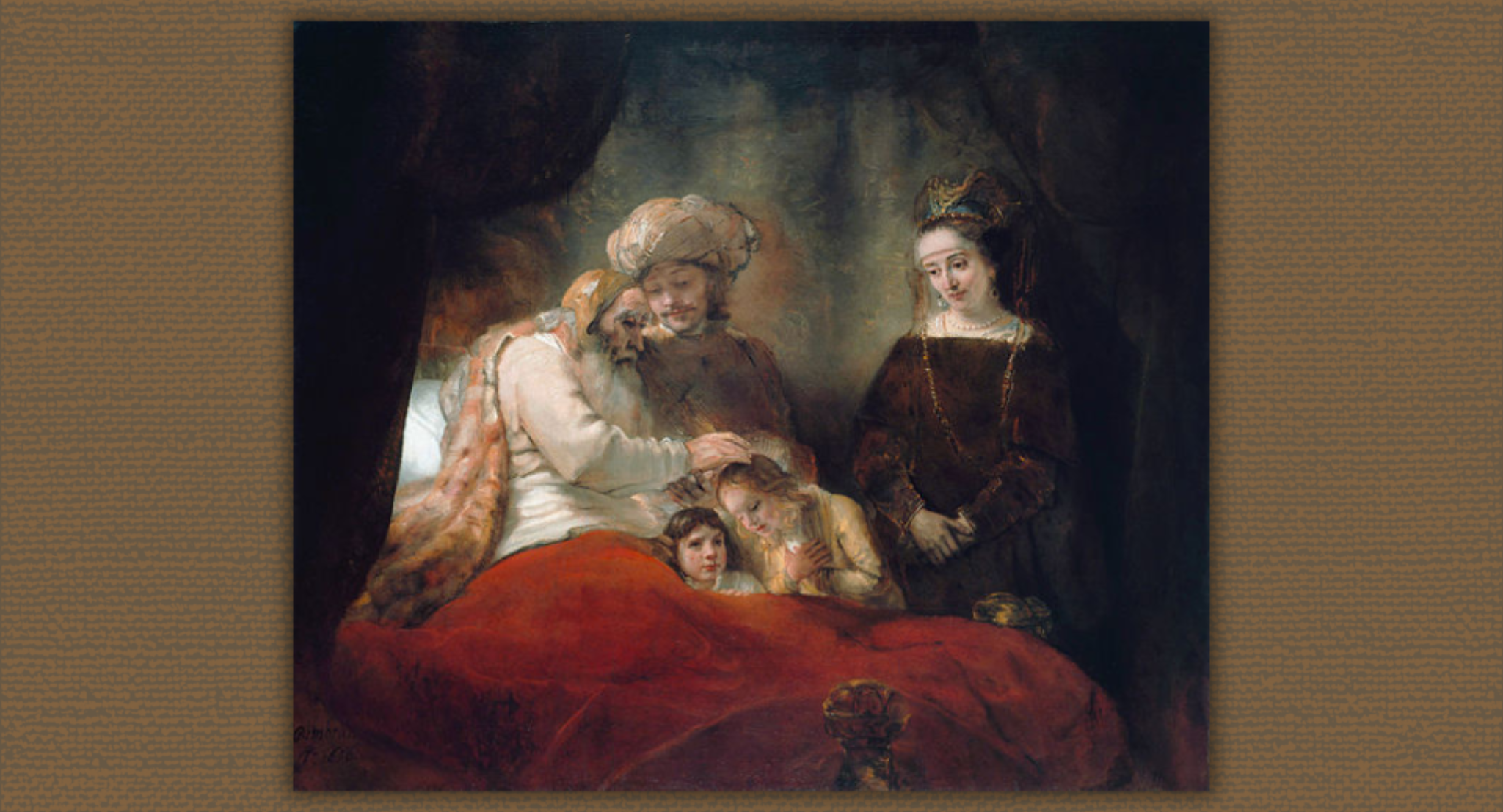
When Yaakov blesses Yosef’s sons Ephraim and Menashe in Genesis 48:15-16, his language carries unusual weight. He invokes “the angel who has redeemed me from all harm” and asks that his name and the names of Avraham and Yitzchak “be called upon them.” The blessing links these Egyptian-born grandchildren to the patriarchal line.
Sforno on Genesis 48:16 reads this as more than a wish. Yaakov prays that Ephraim and Menashe should be fit for the blessing—that they should become worthy of bearing Israel’s name. The blessing sets a standard they must grow into.
Modern psychology offers a mechanism for understanding how this works. In 1968, researchers Robert Rosenthal and Lenore Jacobson published Pygmalion in the Classroom, documenting what became known as the Pygmalion Effect. Teachers were told that certain students had been identified as “academic spurters” poised for intellectual growth. In reality, these students were randomly selected. Yet by year’s end, the “spurters” showed significantly greater gains than their peers. The teachers’ expectations had subtly shaped their interactions. They offered more patience and challenged those students with harder material. The students rose to meet them.
Children retain agency, of course. But the research illuminates something important: voiced belief influences how people see themselves. When a figure of authority expresses genuine confidence in someone’s potential, that confidence becomes part of the person’s internal narrative.
In 18Forty’s tribute episode for Rabbi Lord Jonathan Sacks, archival audio captures his characteristic teaching: “Judaism is God’s faith in us.” Yaakov’s blessing to his grandchildren communicates something similar. You carry the spiritual DNA of Avraham. I believe you can bear this weight.
RELATED: Five Years Since Passing, Rabbi Sacks Still Speaks to Our Fractured World
This ancient practice persists. Every Friday night, Jewish parents place their hands on their children’s heads and invoke Yaakov’s blessing: “May God make you like Ephraim and Menashe” for sons, “like Sarah, Rivka, Rachel, and Leah” for daughters. The ritual of Birkat Banim (blessing the children) keeps Yaakov’s model alive in contemporary homes. Parents who might struggle to articulate their hopes directly find in this blessing a framework for expressing confidence in their children’s futures.
Skeptics ask whether blessings “do” anything. They do something profoundly practical. They change how the recipient understands themselves. Leaving a legacy requires articulating—out loud, to the person’s face—our deep confidence in their capacity to carry forward what matters.
3. The Courage to See Each Child Distinctly
Genesis 49:28 summarizes Yaakov’s deathbed addresses to his 12 sons: “And he blessed them; every one according to his blessing he blessed them.” The phrase sounds redundant until you recognize its emphasis. Each son received his own blessing. Yaakov refused to treat them as interchangeable.
This creates an obvious problem. Some of those “blessings” hardly sound like blessings at all. Reuven is told he is “unstable as water” and will not excel. Shimon and Levi are condemned for their violence. How is this blessing?
Rashi on Genesis 49:28 addresses the question directly. Were there not sons whom Yaakov did not bless? Rashi responds: he blessed them all. The harsh words were part of the blessing, tailored to what each son needed to hear.
Family systems theorist Murray Bowen developed the concept of “differentiation of self” in his foundational work Family Therapy in Clinical Practice. Differentiation describes the ability to maintain one’s individuality while remaining emotionally connected to the family system. Families that suppress individual differences in favor of unity often produce members who struggle to function as adults. Families that acknowledge and validate each member’s distinct nature foster healthier development.
Yaakov’s individualized addresses—some praising, some warning, all specific—model differentiation. He sees Yehuda’s leadership capacity. He sees Dan’s potential for judgment. He sees Reuven’s instability. By naming what he sees, he validates their separate identities.
Previous 18Forty Podcast guest Gedalia Miller articulated this need in stark terms, quoting Rabbi Shimon Russell: children need to be “defined” by their parents. The child’s hunger to be seen for who they actually are runs deep. Generic praise—”you’re all wonderful”—often feels hollow precisely because it fails to see the individual.
A meaningful ethical will requires this courage. It validates the child’s unique strengths and offers guidance calibrated to their specific struggles. Yaakov didn’t give 12 copies of the same blessing. He gave 12 different ones.
4. Transmitting Values Over Valuables
Genesis 49:1-2 opens Yaakov’s final address with a call to assemble: “Gather yourselves together, and I will tell you what will befall you in the end of days.” The focus is striking. Yaakov controls significant wealth after decades in Pharaoh’s favor. He could have devoted his final breath to dividing estates, assigning property, ensuring fair distribution of material goods. Instead, he gathers his sons to deliver words.
Kli Yakar on Genesis 49:1 notes that Yaakov, unable to reveal the messianic end, pivoted. He told his sons to become “one bundle” (agudah achat). When we cannot determine the future, we can still shape the present through values and unity.
Contemporary medicine has rediscovered this ancient insight. Dr. Harvey Max Chochinov developed dignity therapy, a structured intervention for patients near the end of life. The protocol involves guided conversations about values, life lessons, hopes for loved ones, and messages the patient wants to preserve. These “Legacy Documents” are transcribed, edited, and given to family members. The research published in the Journal of Clinical Oncology found that the intervention significantly reduces existential distress in palliative care settings.
Rabbi Shlomo Brody and Dr. Beth Popp, speaking on the 18Forty Podcast about dying well, noted our cultural failure to prepare for death. We invest enormous energy planning for birth, education, marriage, career. We take courses, consult experts, create detailed preparations. Then we leave the end to chance. The ethical will—a document transmitting values, stories, hopes, and wisdom—offers a corrective.
Yehuda Fogel’s article on 18Forty explores this tradition in depth. The practice dates back to the medieval period, with famous examples including the tzava’ah of Rabbi Yehuda HaChasid. These documents focus entirely on spiritual guidance. They assume the material inheritance will sort itself out. The scarce resource requiring careful transmission is meaning.
Yaakov could have focused on Goshen real estate. He chose to distribute spiritual expectations instead. Legacy endures through values, not valuables.
5. Reframing Trauma as Purposeful History
The book of Genesis ends with a striking scene in Genesis 50:19-21. Yaakov has died. The brothers, terrified that Yosef will finally take revenge for being sold into slavery decades earlier, throw themselves at his feet. Yosef’s response has echoed through Jewish thought ever since: “You intended it for evil, but God intended it for good, to bring about the present result—the survival of many people.”
Notice what Yosef does and does not say. He does not deny the evil. “You intended it for evil” remains true. His brothers’ actions were wrong. Yosef refuses to sanitize the history or pretend the trauma didn’t occur. At the same time, he refuses to let that trauma define the story’s meaning. He contextualizes the suffering within a larger narrative of survival and providence.
Sforno on Genesis 50:19 sharpens the point. “Am I in God’s place?” Yosef asks. Sforno reads this as Yosef declining to judge based on human intention alone. He looks at the outcome, at what God accomplished through the suffering. Yosef chooses active reinterpretation.
Narrative therapy, developed by Michael White and David Epston in Narrative Means to Therapeutic Ends, operates on similar principles. People often arrive at therapy with a “dominant narrative” in which they are victims of circumstance. The therapeutic work involves “re-authoring”—not changing the facts, but changing the story those facts tell. The same events can be organized into a narrative of defeat or a narrative of resilience. The choice of narrative shapes future possibilities.
Dr. Rachel Yehuda has researched intergenerational trauma extensively. Her work demonstrates that trauma transmits across generations through biological and psychological mechanisms. The critical variable is whether the trauma gets integrated into a coherent narrative. Unprocessed trauma passes on as damage. Integrated trauma can become a source of meaning and even strength.
RELATED: A Letter to Children Estranged From Their Parents
Yosef’s statement functions as his own ethical will to the family. He is releasing the next generation from the cycle of vengeance by reframing the family’s worst moment. The final act of legacy may be forgiveness—achieved through narrative reframing rather than through forgetting.
Questions for Reflection:
- Is the idea of a “parental blessing” just wishful thinking? Does it actually change anything?
- Why does the Torah care so much about burial in Israel? Isn’t the soul what matters?
- Is Yosef’s reframing of his brothers’ betrayal—“you intended it for evil, but God intended it for good”—a model for healing family wounds, or does it risk minimizing genuine harm?
This project is made possible with support from the Simchat Torah Challenge and UJA-Federation of New York. Learn more about the Simchat Torah Challenge and get involved at their website.