

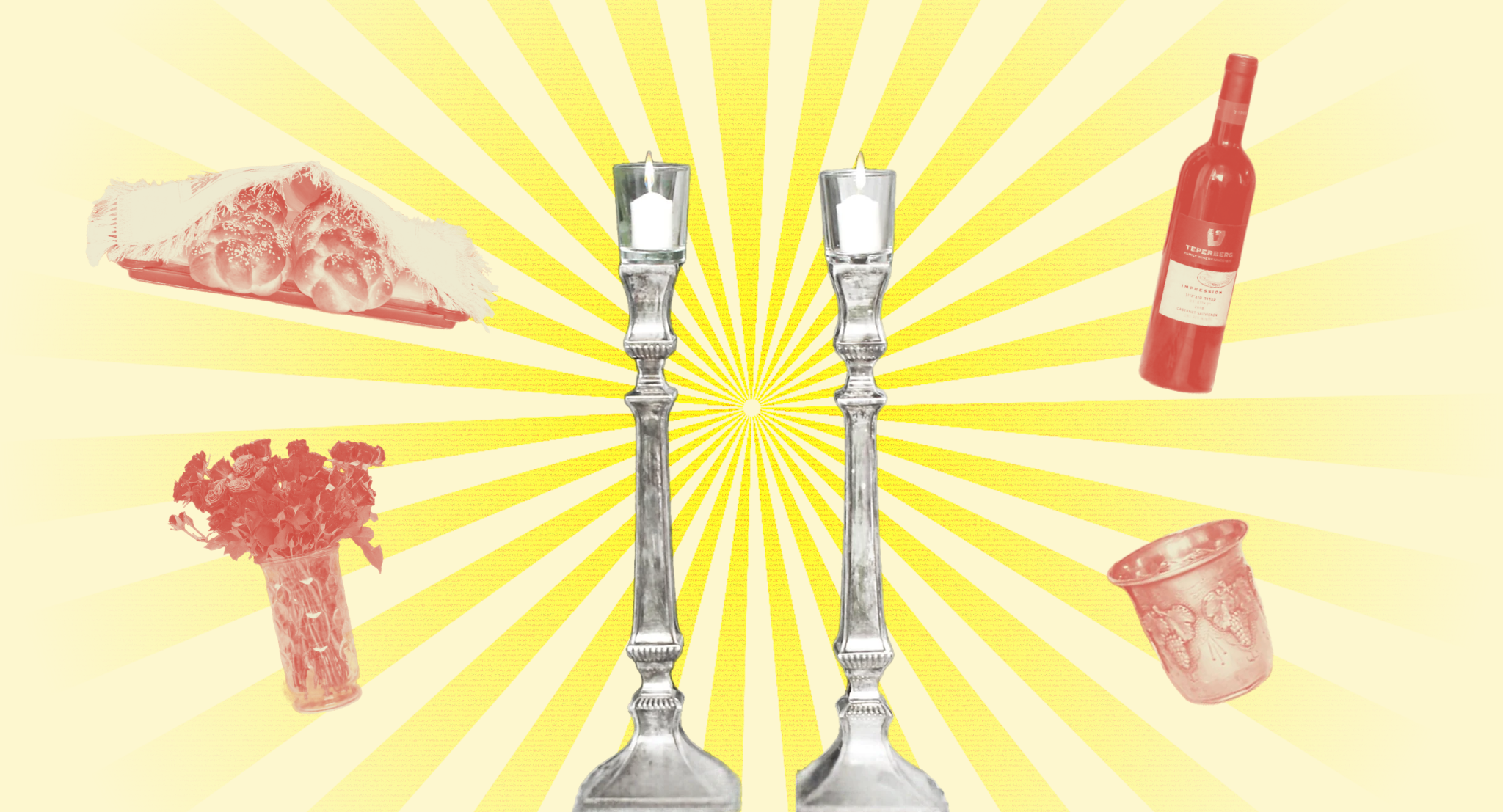
In “What Does Shabbos Even Mean to Me?” the argument is made that the meaning of Shabbos comes from its externally imposed break from productivity and the space that break creates for relationships. Drawing on the Torah’s link between Shabbos and the Jewish People’s redemption from slavery in Egypt, Shabbos declares that a person is intrinsically valuable; one’s worth is not based on what they accomplish through their work. By creating space for natural relationships around a Shabbos table or at a post-services synagogue Kiddush, Shabbos promotes the development of a community based on one’s identity rather than one’s interests; whereas the running club might take a break during the worst weeks of winter, Shabbos stops for nothing.
It is certainly important to highlight the significant benefits of religious practice, especially one as foundational as Shabbos observance. The significance of developing strong relationships and a sense of communal belonging are crucial benefits of Shabbos observance and deserve to be brought to the fore; hopefully Dana, the protagonist in the article, will appreciate their value and accept her colleague’s invitation. I’ve heard similar arguments being made extolling Shabbos as an opportunity to disconnect from technology and social media, a brief respite to clear one’s mind of the often-toxic fumes of the 21st century’s public square. However, this is not the whole story.
Benefit and Meaning
It is important to maintain a distinction between meaning and benefit. A benefit is personal and subjective; it highlights what I enjoyed or gained from an experience. Meaning, in this context, is the objective message an experience has the potential to convey, whether I’m interested in it or not.
For a fairly shallow example, imagine bumping into a friend the day after Yom Kippur and asking how their fast was. You’re expecting a response about the meaning of the day—was it cleansing, challenging, inspiring? But instead, the friend grins and pokes his stomach, saying, “It was a great cleanse, just what I needed; I think I lost a few pounds, too!” While a benefit of Yom Kippur may be the impact of taking a break from food for twenty-five hours, that is certainly not the same as the intended meaning of Yom Kippur, when we empty our pockets of sin and receive a fresh start for the new year.
More meaningfully, consider a family that utilizes the Pesach seder as an opportunity to review the family story. It’s a perfect time for it: The whole extended family comes together, Grandma and Grandpa/Bubby and Zeide looking at three, even four generations with pride. What could be more important than connecting every member of the family to their forebears? To remind everyone of the ancestor who was the gabbai of the shul in the old country and the siblings who perished in Europe?
But again, while reviewing the family story is certainly important and beneficial, it is not the objective meaning assigned to the Seder night, which is meant to be focused on retelling, even reexperiencing, the Jewish People’s miraculous deliverance from Egyptian slavery, culminating in our expression of praise and gratitude to Hashem for His continued protection since that moment. If the family story overshadows the national story, rather than being incorporated into it, one would seem to be replacing objective meaning with benefit.
Centering Meaning
Like I said above, there is certainly value in highlighting the benefits of religious practice. In many places, the Torah spotlights the practical benefits of religious life. David Hamelech exclaimed, “Taamu u’reu ki tov Hashem — Taste and see that God is good!” portraying our experience of the Divine like that of enjoying a competition-winning cholent.
Still, though, meaning should be kept separate, as the meaning carries the intended goal of the commandment. Certain thinkers, like the Rambam and the Ramban among the Rishonim and Rabbi SR Hirsch and Rabbi YD Soloveitchik among the Acharonim, understand the mitzvos as educational tools that convey ideals and values or regulate communal behavior. According to them, the ideal of every mitzvah entails reflecting on its unique message and internalizing it through practicing and learning about it. The meaning of the mitzvah lies not in what I get from it but in what the mitzvah is meant to teach me. In the last part of Halakhic Mind, Rabbi Soloveitchik especially highlights the difference between assigning significance to mitzvos based on subjective experience versus the objective experience defined by the halachic system. Rabbi Hirsch argues that the details of that same halachic system coalesce to reveal the intended meaning of each mitzvah.
The Meaning of Shabbos: Junior Partners
When it comes to Shabbos, Rav SR Hirsch offers a compelling explanation in Horeb. He writes that as the sun set on the very first Friday, God completed His creation of the world and appointed humanity to continue the project in His place. We were given access to the world’s raw materials to use them as we saw fit, as long as we worked to further the ultimate goal of fashioning a world that reflected Divine values—a place that could “host the Shechinah.”
That appointment to the highest position possible—what 18Forty guest Rabbi Michael Rosensweig calls the “Junior Partners” of the Creator—carries a risk, though: What if humans turn their creative powers to furthering their own plans, rather than the Creator’s? That is where Shabbos steps in. Every Shabbos—the anniversary of humanity’s first day on the job—God “closes the office” and mandates a day off from creative work, what is known as melachah. Even if a person wants to continue building and developing, he may not — because the Senior Partner said so. This serves as a weekly reminder of why we were granted our mandate in the first place; we create for Him, not for ourselves.
The benefit (ironically) of centering objective meaning is that it accepts that for some people, Shabbos can be an objectively challenging—even negative—experience. One can scarcely imagine the experience of American Jews in the early 19th century struggling to put food on the table but unable to open their stores or come in to work on Saturday. Trying to convince them of the benefits of Shabbos will most likely fall flat; there’s a reason they adopted the phrase “S’iz shver tzu zayn a Yid—It’s hard to be a Jew.” However, the meaning of Shabbos is accessible even in such challenging circumstances—it may not sweeten the experience, but it will give it significance.
The Cold Kugel
To give an insignificant example, we once forgot to set our hotplate to go on for Shabbos lunch. We only realized, though, a few minutes before we were going to begin the meal, leaving no time to find another way to heat up the food. Lunch that Shabbos was going to be cold potato kugel and schnitzel, no way around it—and the kids were certainly not going to be happy.
Here’s what we did. We called in the kids and pointed out our mistake: The hotplate was off, and the food was cold. We validated their frustration: Cold food isn’t good. But then we explained: Here’s why we can’t just flick the switch on. Making any form of a fire is included in the melachah of mav’ir, making a fire. This is because firemaking was one of the 39 types of work needed to build the Mishkan, God’s mobile home in the desert. While those activities are positive during the week, as they contribute to making a place for Hashem to live with us, on Shabbos, Hashem told us He wants us to stop building; the office is closed. So our cold kugel, in truth, is really our declaration that we work for Hashem, not for ourselves, and that the things we do during the week have meaning when done with that in mind.
Did this little speech make the kugel taste better? Nope. But it did center the meaning of the experience, making us feel that the low-quality meal was actually significant in some sense. (And if you were nervous, the extra dessert we gave out salvaged the meal.)
Dana’s Meal
Practically, here’s what I would add to the article. I hope Dana accepts the invitation to the Shabbos dinner so she can experience the benefits of a Shabbos kept with friends. And at the meal, I hope someone explains how the Shabbos-imposed break from all forms of creativity, challenging as that can be, actually affirms the value of the work she does during the week, assuming it’s oriented towards extending Divine values. Both benefits and meaning have a place—but they should be kept distinct.
Thank you to Rivka Bennun Kay for her helpful edits and suggestions, which strengthened and improved this essay.