

Your 18Forty Holiday Guide explores the meaning and relevance behind each of the holidays in the Jewish calendar. Receive this newsletter in your inbox by subscribing here. Questions or feedback? Email Rivka Bennun Kay at Shabbosreads@18forty.org.
Cheshvan is the only month on the Jewish calendar with no holiday in it. That is why this two-part guide takes up Shabbos, the one holy day that comes every week. Last week’s part I argued that Shabbos is a stretch of the week in which nobody is supposed to be getting ahead, and that for most people who keep it, it becomes meaningful because it is kept with other people. This week asks what happens when the community that keeps Shabbos is the very thing you left, and then the hardest question, in the words of the person asking it: “For me, Saturday is just another day, so what does Shabbos even mean to me?”
It is the following Friday. Dana, the graduate student, has been invited to one Shabbos dinner at her colleague’s home.
If judgments by my community or family are a problem, then how do I accept Shabbos?
What if the community is the problem?
For many people, the difficulty with Shabbos is that the community that would keep it with them is the one they left. In The Sabbath World, Judith Shulevitz describes a day that “has built communities, sustained cultures, and connected us to the memory of our ancestors and to our better selves, but it has also aroused as much resentment as love.” She discussed the book on the 18Forty Podcast.
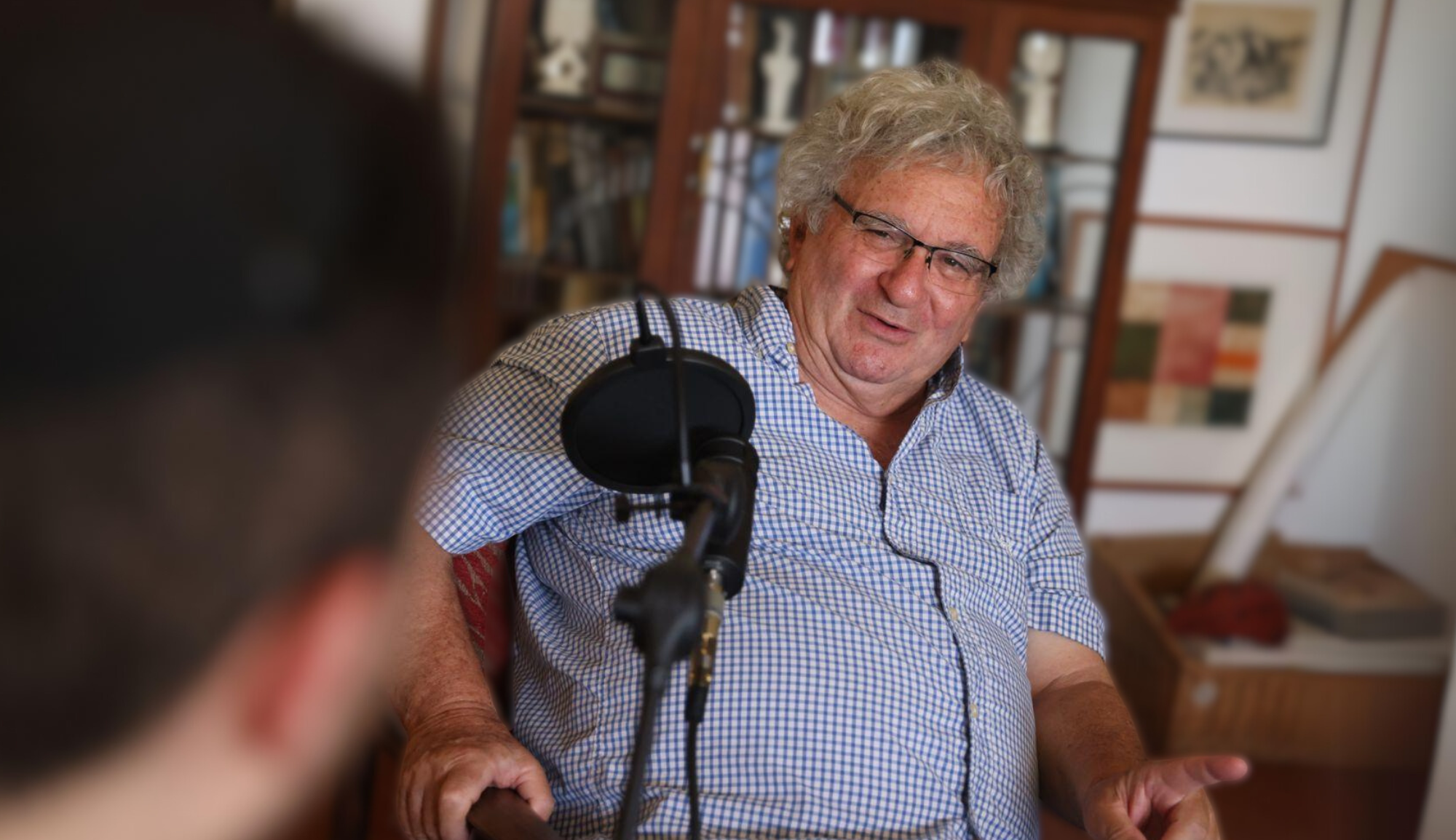
If that is why you left, nobody should tell you that you imagined it. Rabbi David Bashevkin said on 18Forty that many people who love the spirit of Shabbos “struggle with the sense of constriction that following the rules of Shabbos may give.” He continued that “there’s no teenager who doesn’t struggle with this,” and that “it follows us into adulthood.” But you do not need a whole community to keep Shabbos. You need a few people who keep it with you.
How do I start?
The simplest way to step back into Shabbos is a Shabbos dinner at somebody else’s table. The Talmud records Rav’s teaching that hospitality toward guests “is greater than receiving the Divine Presence.” Many families who keep Shabbos take that seriously enough to look for a guest who has nowhere else to be on Friday night. Dana’s colleague from the lab is one of them.
What you do after that first dinner is up to you. There will be no magical revelation from your first Shabbos dinner, and you may feel a bit like a fish out of water. It is the repetition that builds a sense of belonging.
For me, Saturday is just another day, so what does Shabbos even mean to me?
Is my life full, or just busy?
Ask Dana to describe her life and she will tell you it is full. The lab runs six days a week and often seven, and the doctorate is on schedule. She generally runs with a group on Sunday mornings, she gives time to the political causes she cares about, and her phone is never quiet. Her few Jewish friends are secular, with little or no Jewish education. Apart from her colleague’s rare invitation, nobody invites her to a Shabbos dinner, and there is nobody she can think of to invite to her non-kosher home.
Her family mostly keeps Shabbos, and she is close to them, but they live a plane ride away and their life looks nothing like hers. When she visits, she feels like a guest in her childhood home. A life like hers is very busy, but is it really full and satisfying?
Sebastian Junger, a war reporter writing in Tribe with no religious purpose at all, put the same point plainly: “A person living in a modern city or a suburb can be surrounded by others and yet feel deeply, dangerously alone. The evidence that this is hard on us is overwhelming.” Robert Putnam found this across a whole country in Bowling Alone. The book traced how Americans had become “increasingly disconnected from family, friends, neighbors, and social structures,” and found that “social bonds are the most powerful predictor of life satisfaction.”
Why Shabbos, and not another club?
If the gap in Dana’s life is companionship, she thinks the obvious answer is more of what she already has, another club, another political cause, more people who share an interest. A running club meets to run, and when a member stops running, the club often stops seeing her.
People at a Shabbos table join together for no purpose beyond spending an evening together, with no agenda and no phones. Different members of the community come every week, whether or not anyone is in the mood or has the energy for it that week. As Rabbi Bashevkin says on Talmud Daily, “Shabbos deliberately comes as a rhythm and it’s never convenient.” That is a different kind of regularity from a club, and for those who join together on Shabbos it makes a different kind of friend, even without a shared profession or cause.
Dana would say she cannot keep Shabbos because she has no community that would keep it with her. But the community does not have to come first.
It often starts with showing up in shul the next week, and the week after, even if the first time is lonely and nobody speaks to you. Soon you are recognized as a regular and gradually accepted.
Community can also start at home. Bethany Mandel, a writer and editor, described on the 18Forty podcast raising her children with no Jewish community around them at all. She said that for them Judaism “will never be a rabbi, it will never be a synagogue, because Judaism is the thing that they grew up with in their homes.”
Why would it mean anything to me, when it never has?
If companionship is the gap and the Shabbos table is the way to it, Dana’s question is whether any of it would come to mean anything to her. Rabbi Bashevkin, who openly discusses his lonely twenties, did not find his way back to a Shabbos that felt like home by being persuaded of its meaning. His wife’s answer, when he complained one Friday about a Shabbos that was not the one he wanted, was, “Stop blaming everyone else for what Shabbos feels like,” and then, “Shabbos is what you make of it.”
A second story points the same way. Senator Joe Lieberman, who kept Shabbos through his years in the Senate, had let it go at Yale. He called that in hindsight “a kind of conformity” and “a sort of liberation from home.” In his 18Forty conversation he said that “eventually I found out that it wasn’t worth it.” He realized something fundamental was missing in his life, and he came back the first Shabbos after his grandmother died, to a shul that had been across the street from his apartment the whole year he lived there. In these stories, as with many others, the “keeping” came before the “meaning.”
For Dana, the question is what her work has done to her sense of what she is worth. Most of the people she answers to during the week measure her by what she produced, the thesis chapter, the data, the next paper. She has learned to measure herself the same way. Robert Waldinger and Marc Schulz direct the Harvard Study of Adult Development, which has followed its participants for their entire adult lives. In The Good Life they wrote that the answer to what makes a life fulfilling “is: relationships.” They added that “the stronger our relationships, the more likely we are to live happy, satisfying, and healthier lives.”
Shabbos gives those relationships a weekly place to grow. If Dana keeps coming, she sits at the same table with the same people every week, for hours, with nothing to accomplish. The shift from what you cannot do to what you do not have to do reaches further than errands and email, to what a person is worth.
Rabbi Bashevkin says something similar from inside the tradition: Shabbos teaches that “nothing that we do is how we earn our value but we have inherent value in life itself and Shabbos is returning to that most essential value.” Rabbi Abraham Joshua Heschel wrote in The Sabbath that “six days a week we seek to dominate the world, on the seventh day we try to dominate the self.” For 25 hours a week, Dana would not have to produce anything to be worth something. Neither would anyone at the Shabbos table with her. Whether being valued apart from your work or your outside interests reaches you as meaning is not something anyone can promise. Little else in Dana’s week even attempts to make that claim.
So why bother?
Whatever she says by day, the things missing from Dana’s life, on a bad or lonely night, are the things a Shabbos table was built to supply. But the meaning and richness of Shabbos cannot be known without trying it.
The cost of finding out is Friday night dinner or Kiddush after services in shul on most Saturdays. What is being tested is whether Dana’s life will become richer and more meaningful with companionship that does not depend on a shared project or interest.
Dana will accept the invitation to Shabbos dinner tonight, or she will not. Either way, what has kept her from Shabbos has one answer: a community that shares it together.
Shabbos will arrive next Friday at sundown, and the Friday after that, whether or not Dana is ready for it. Accepting it is the only part that is up to her. Her seat at her colleague’s Shabbos table is hers whether or not she keeps any of Shabbos’s rules. And it belongs to her as fully as it belongs to the most learned person in the room, because Klal Yisrael, the whole Jewish People, is not complete without her. All she has to do is show up.