

I Read This Over Shabbos is a weekly newsletter from Rivka Bennun Kay about Jewish book culture, book recommendations, and modern ideas. Receive this free newsletter every week in your inbox by subscribing here. Questions, comments, or feedback? Email Rivka at Shabbosreads@18forty.org.
I’ve said it before, and I’ll say it again: Shavuot is the best holiday. It’s always been one of my favorites—I love to stay up all night, even though the older I get, the more I struggle to actually stay awake.
But there’s something ethereal about that three a.m. window, when your head is buried deep in your learning as you fight to stay awake. Rabbinic literature long ago explored the significance of nighttime—the kind of faith that emerges in the darkness of night, the depth of prayer one can reach in the hours when most are asleep.
On Shavuot, we learn at night to reach something deeper. We express our love for God, and our gratitude for receiving the Torah, by studying it. I love You, therefore I will learn more about who You are.
I asked our 18Forty team what they’re reading on Shavuot, and what they like to return to each year. These are the books they’re bringing to the table.
David Bashevkin — Founder
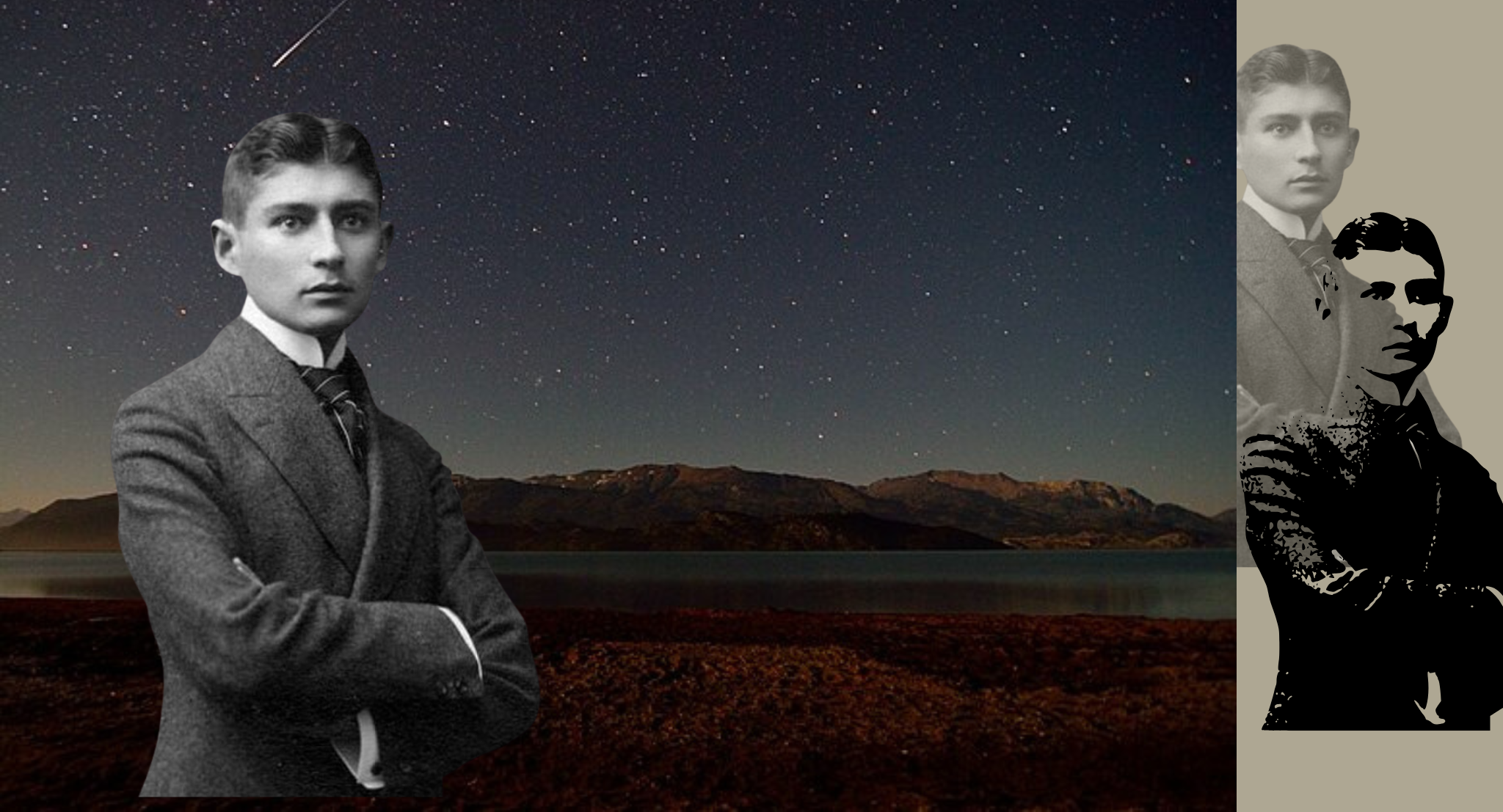
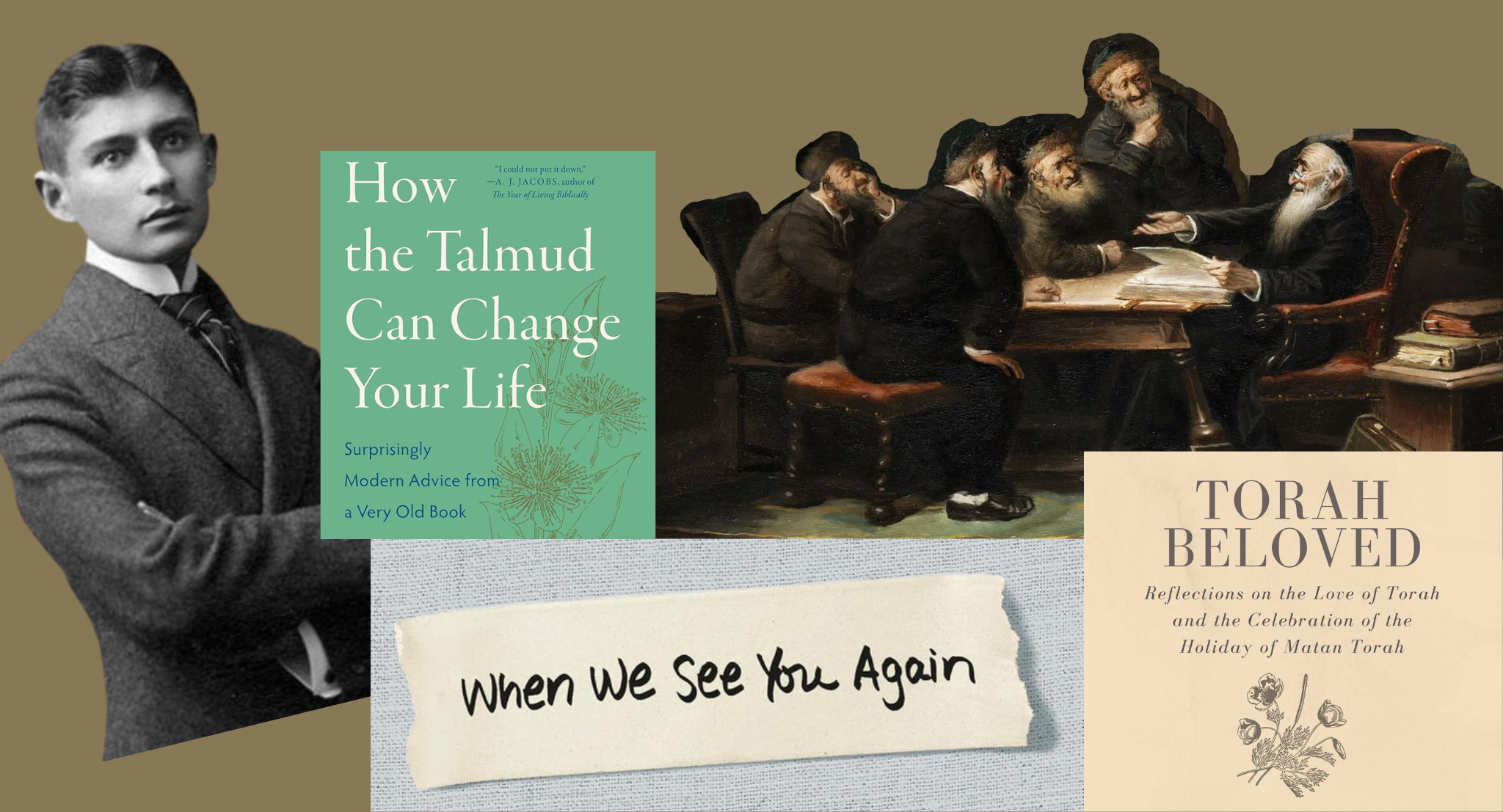
The Writings of Franz Kafka
Franz Kafka died on June 3, 1924—Rosh Chodesh Sivan. Though Kafka was deeply drawn to Judaism, even studying Hebrew near the end of his life, he remained far from traditional observance. Still, there is something quietly poetic in the fact that his yahrtzeit leads into Shavuot. Gershom Scholem once described Kafka’s writing as expressing a “Kabbalistic world-feeling” that walks the “fine line between religion and nihilism.”
Anytime I sit in conversation with my dear friend Shais Taub, Kafka’s name invariably comes up, and that is why I try to return to his writings each year before Shavuot. A good place to begin is Franz Kafka’s The Trial, that haunting meditation on judgment, expectation, and the terrifying possibility that we are accountable long before we understand to whom.
For a deeper exploration of Kafka’s religious imagination, I would recommend Robert Alter’s Necessary Angels, along with Susan Handelman’s The Slayers of Moses: The Emergence of Rabbinic Interpretation in Modern Literary Theory. And I’ll leave you with Kafka’s unforgettable reflection on Moses: “He has scented Canaan all his life; that he should see the land only before his death is unbelievable … It is not because his life was too short that Moses does not reach Canaan, but because it was a human life.”
Denah Emerson — Podcast Editor
When We See You Again by Rachel Goldberg-Polin
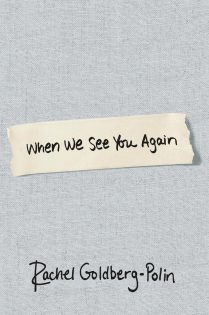
Over Shavuot this year, I’ll be reading When We See You Again by Rachel Goldberg-Polin. In a time when so much pain has felt overwhelming and abstract, Rachel’s voice has become a reminder of what it means to remain deeply human—grounded in faith, dignity, and love even in the face of unbearable uncertainty.
Shavuot feels like an especially meaningful time to sit with questions of faith, resilience, responsibility, and Jewish peoplehood. That makes this a fitting book for the holiday. Rachel has spoken with extraordinary moral clarity and emotional honesty over the past year, and I want to spend Yom Tov sitting with those ideas more carefully and intentionally. Reading her words over Shavuot feels like a way of honoring both grief and hope without turning away from either. It also feels fitting to pair the holiday of revelation with a voice that has challenged so many of us to see each other more fully and compassionately.
I suspect this won’t be an “easy” read, but that’s part of why I’m choosing it. Some books entertain us; others ask something of us—and this feels like one of those books.
Cody Fitzpatrick — Associate Editor
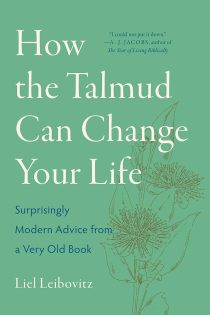
How the Talmud Can Change Your Life: Surprisingly Modern Advice from a Very Old Book by Liel Leibovitz
There’s an anecdote my grandfather loves to tell me: Your uncle, when he was in law school, was in a program where he helped rabbis “break down the Torah.” And when we’d go to visit 770, the Lubavitcher Rebbe would recognize your uncle personally.
Surely, I’d think, they weren’t dealing with simply “the Torah.” I learned from this uncle specifically what he did, but it’s not even something I remember.
What I do remember is, to my grandfather, a simple Jew in the best sense of the term, studying “the Torah” is the most quintessentially Jewish thing one can do.
When he noticed that I, as a kid coming from an interfaith family, was developing a deeply unhealthy relationship with Catholicism, he told my grandmother, “Get Cody the Torah to read.”
How “the Torah” expanded for me into the Talmud, the Tanya, and countless other works is a story for another time. But what’s important to me is they all flow from the same origin.
“The story begins, if it begins anywhere, at the foothills of Mount Sinai,” Liel Leibovitz writes in the introduction to How the Talmud Can Change Your Life: Surprisingly Modern Advice from a Very Old Book. “There, circa 1313 BCE, Moses … receives from the Almighty not one gift but two. The first is the Torah … But, alongside the Torah, God also bequeathed unto his servant another gift: Torah Shebaal Peh, or the Oral Torah.”
Today, the Talmud garners attention from antisemitic conspiracy theorists, folks who want to discredit the rabbinic tradition, and philosemites who think it will sharpen their mental acuity, but what matters to me is that it’s our collective inheritance as a people.
“Long before the philosopher Ludwig Wittgenstein, the rabbis decreed that none of us were at liberty to obey a rule privately,” Leibovitz writes. “The rules are the rules because they were designed to amplify what we cherish, to help us forge a shared vision, and to bring us together.”
On Shavuos, I like to remember that the Torah is what connects me to our past, to God, and to the entire Jewish People.
Rivka Bennun Kay — Shabbos Reads Editor
Torah Beloved: Reflections on the Love of Torah and the Celebration of the Holiday of Matan Torah by Norman Lamm
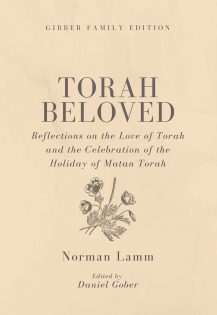
When I want to make sense of the world, I like to turn to my spiritual teachers—people whom I may not have met before, but whose Torah and worldview have shaped my own. On Shavuot, when I try to make sense of what it means to receive the Torah, I turn to Rabbi Lamm.
Torah Beloved is a collection of sermons and essays by Rabbi Norman Lamm, whose writing is marked by eloquence, warmth, and honesty. The sermons span decades, but the questions Rabbi Lamm wrestled with—what faith might look like today, what it means to have a relationship with Torah—are as alive as they ever were.
Rabbi Lamm returns to a question that is at the heart of Shavuot: Why is it called zman matan Torateinu, the time of the giving of the Torah, instead of zman kabbalat Torateinu, the time of the receiving of our Torah? He explains that the Torah was given equally to each Jew on this day. What differs among us is how we choose to receive it. On Shavuot, with this book by my side, I strive to receive the Torah with an open heart.
Tzila Hadad — Social Media Manager
Pirkei Avot
I remember as a child finishing Pirkei Avot one Shavuot night, and from then on it became a tradition for me to revisit it every Shavuot. What amazes me is that each time I return to the same words, I notice something completely different. Maybe that itself is one of the deepest messages of Shavuot.
One teaching that always stands out to me is Ben Bag Bag’s famous line:
Turn it and turn it, for everything is in it.
הֲפוֹךְ בָּהּ וַהֲפוֹךְ בָּהּ דְּכֹלָּא בָהּ
On Shavuot we celebrate not only that the Torah was given once at Sinai, but that it can be received again and again throughout our lives. Ben Bag Bag teaches that Torah is never exhausted. Every time we return to it, we uncover something new — not because the Torah has changed, but because we have.
That is what makes the custom of staying up learning on Shavuot night so powerful. We are not simply reviewing ancient words; we are opening ourselves to hear them differently. The Torah remains eternal, but we continue to grow. And each year, when we “turn it and turn it” once more, we discover a new piece of ourselves reflected within it.