


Your 18Forty Parsha Guide is a weekly newsletter exploring five major takeaways from the weekly parsha. Receive this newsletter every week in your inbox by subscribing here. Questions or feedback? Email Rivka Bennun Kay at Shabbosreads@18forty.org.
A documentary filmmaker in her late 40s has just finished a two-year project on American homelessness and is sitting in the editing room with 500 hours of footage. She grew up in a Reform household, learned to read Hebrew for her bat mitzvah, and has not been inside a synagogue on a regular Shabbat since college. Her Jewish life now runs to High Holidays, the kids’ bnei mitzvah, and the Pesach seder she hosts when her mother visits. She is trimming a scene with a man who has been on the corner outside her studio for the whole two years of shooting, and two verses from her own bat mitzvah portion keep coming back to her while she works. One verse says there shall be no poor among you. The other verse, three sentences later, says the poor will never cease.
Both verses sit inside Parshat Re’eh. In Devarim 15:4, Moshe tells the assembly that there shall be no poor among you, in the land the Lord your God gives you, if Israel keeps the laws of the chapter. Seven verses later in Devarim 15:11, Moshe tells the assembly the poor will never cease from the land. Earlier in the same chapter in Devarim 15:1-3, Moshe commands the seven-year debt forgiveness, which he pairs with the personal command at Devarim 15:7-8 to open your hand to your poor brother.
Moshe tells every Jew with the means to lend to open his hand, and his warning at 15:11 falls hardest on the comfortable person who could give and chooses not to. Two modern readers each seize on half of what Moshe says—the activist takes verse 4, the libertarian takes the personal command—and Rashi reads both verses together in one comment to explain why Moshe places them three sentences apart.
1. The Verse and the Contradiction
Rashi reads verses 4 and 11 together in one comment. He quotes verse 11 and asks how Moshe can promise no poor in one verse and warn of permanent poverty seven verses later. Citing the Sifrei, Rashi answers that verse 4 describes what would happen if Israel kept the laws of the chapter, and verse 11 describes what actually happens when Israel falls short. Moshe describes two different worlds. Moshe commands the open hand in verses 7-8 on every Jew who meets a person asking, regardless of which world Israel currently faces.
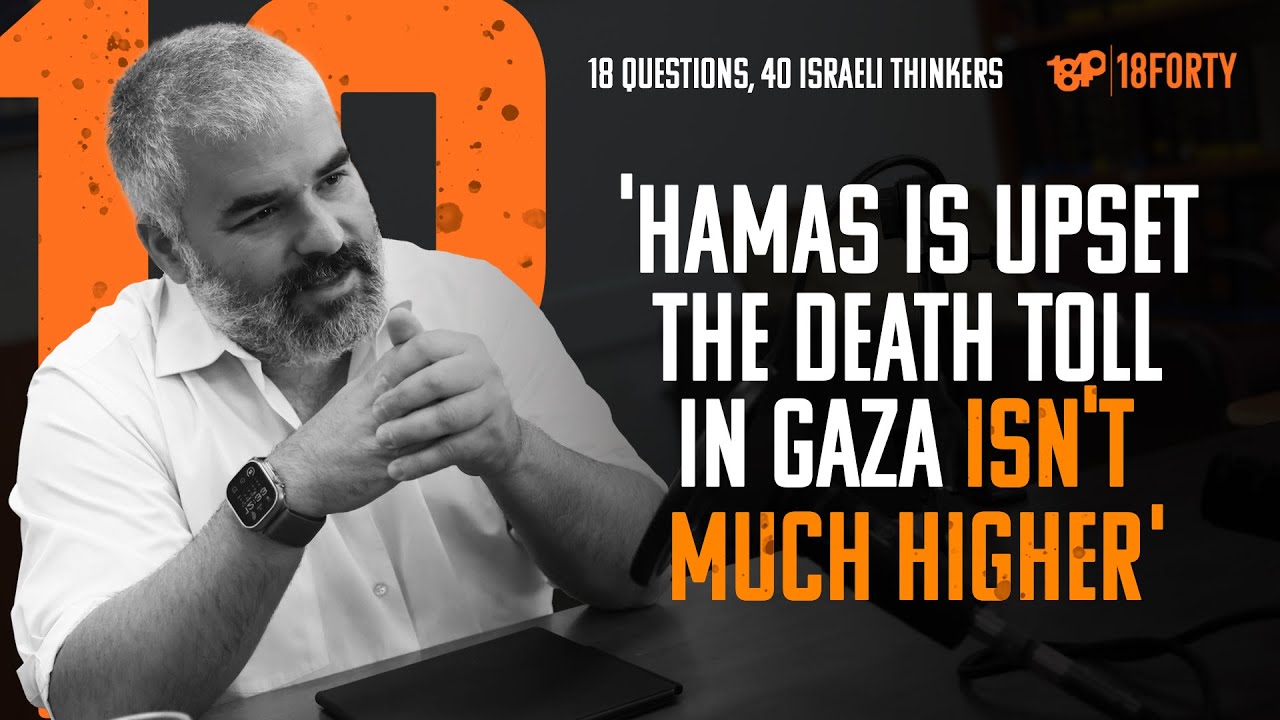
Mark Trencher, founder of Nishma Research, spoke on 18Forty about the cost of frum life in Modern Orthodox households. Trencher has spent years measuring how Modern Orthodox families carry that cost, including the tzedaka they give. He reports that Modern Orthodox households give at rates well above the American average, while also paying tuition, mortgages, and the other costs of frum life. The question Trencher raises is whether all that giving actually does what Rashi describes the chapter commanding, or whether the community gives generously without ever reducing the poverty Moshe describes in verse 11. Esther Duflo and Abhijit Banerjee, two Nobel Prize-winning economists, report in Poor Economics that specific interventions like deworming, mosquito nets, and conditional cash transfers measurably reduce specific kinds of poverty, while broader structural poverty resists comprehensive solutions across every country they studied.
A reader can object that the chapter contradicts itself three sentences apart, and that Moshe must be asking her to ignore whichever verse she finds inconvenient. Rashi answers that Moshe placed the two verses three sentences apart on purpose. Moshe commands the open hand in both worlds, with no promise that the giving will close the gap his second verse describes. The gap stays open without anyone’s help, and academic studies explaining why have been running at Harvard and Princeton for the last 20 years.
2. Why Poverty Self-Perpetuates and the Activist’s Argument
Harvard’s Sendhil Mullainathan and Princeton’s Eldar Shafir ran a decade of academic studies on the psychology of scarcity and reported the findings in Scarcity. They measured that being short of money puts the poor under so much stress that their working memory and decision-making suffer, with effects roughly the size of a full night of lost sleep or a 10-point IQ drop. The stress makes the poor person make worse decisions about money, those worse decisions produce more scarcity, the new scarcity produces more stress, and the cycle keeps itself going once it starts. Their academic studies confirm what Moshe warns about in verse 11 3,000 years before they published the first one. The cycle Mullainathan and Shafir document also explains why Duflo and Banerjee’s interventions reduce specific kinds of poverty without ending it. Relieving one scarcity restores some bandwidth, but new scarcities arise and the cycle restarts.
RELATED: 5 Ways the Torah Challenges Our Idea of Enough
The activist looks at the data and concludes that the comfortable Jewish reader has a special obligation to fight that cycle at the policy level, treating private giving as a moral cop-out that leaves the system in place. The activist reads verse 4 as a promise the comfortable can keep, and the activist is right about three things. First, the obligation is real. Second, the indifference of the comfortable is itself a moral failure. Third, the chapter asks the comfortable to give. Dr. Rivka Press Schwartz argues that Modern Orthodox educators should teach tzedaka as halacha, not as left-coded politics or as private discretion. The obligation is the obligation, whether or not the donor’s political party agrees with what the donor is doing.
RELATED: How Should We Educate About Social Justice?
The activist ignores Moshe’s second verse, the one that says the poor will never cease. Moshe warns in verse 11 that the cycle does not close, and he commands the open hand in verses 7-8 inside that world. Moshe commands the person-to-person obligation Press Schwartz teaches her students, and Moshe pairs that obligation with the seven-year debt forgiveness cited in verses 1-3, which he commands the entire community to keep. The activist reads the conditional promise of verse 4 as a project the wealthy can complete. Moshe reads it as one of two worlds the giver might face, and tells the giver to give in either world.
3. The Effective Altruism Argument and What the Torah Refuses
Utilitarian philosopher Peter Singer argues in The Life You Can Save that a comfortable person who buys a luxury item while a child in another country dies of a preventable disease is in the same moral position as a person who watches a child drown in a pond and does nothing to save her. Singer says the obligation scales with what the donor can afford. The wealthier the donor, the more the donor owes, up to the point where giving more would hurt the donor more than it would help the recipient. The donor should give wherever the dollar does the most measurable good. The effective altruism movement runs on Singer’s argument, with donors picking causes through evaluators like GiveWell. The filmmaker hears Singer’s argument at every talk she gives, because most of the people in her audience are comfortable Americans whose giving Singer hopes to redirect.
Rabbi Jeremy Wieder, rosh yeshiva and Bible professor at Yeshiva University, reads the chapter’s obligation as built around the person asking, not around the donor’s wealth. Moshe commands in verses 7-8 that the giver shall open his hand and lend the asker dei machsoro (sufficient for his need). The phrase measures the obligation by what the asker is missing, not by what the donor has. Rambam rules that the giver must restore the asker to what the asker had before he fell into poverty. He writes that if the asker used to ride a horse with a servant running ahead, the giver buys the horse and provides the servant. For an asker who has always been poor, the same recipient-specific rule still applies, with the standard being the basic necessities the asker actually lacks. Rambam ties “sufficient for his need” to the asker’s specific situation, not to the donor’s discretion, and the local community and its rabbinic authorities historically determined the specific quantum in disputed cases. Rambam also caps the obligation at a fifth of the giver’s wealth in normal circumstances, so the recipient-specific rule does not require the giver to impoverish himself. Singer measures giving by the donor’s wealth. The Torah measures it by the asker’s specific lack and caps the giver at a fifth.
RELATED: Suffering, Social Justice, and the Jewish Response
Both Singer and Moshe give the filmmaker different answers when she walks down her street the next morning past the man on her corner. A donor who runs on Singer’s argument decides the bill in her wallet is better routed through GiveWell to fund a high-impact intervention thousands of miles away. A giver who reads Moshe’s chapter decides the bill in her wallet belongs to the man standing in front of her. Singer is not wrong that there are real lives at the other end of the global ledger. Wieder is not wrong that the man on the corner is the person Moshe points to in verses 7-8.
4. The Limits of Philanthropy and the Libertarian’s Argument
Anand Giridharadas, a journalist who reported on the global elite for years and wrote Winners Take All, documents that billionaire philanthropy often defends the system that produced the billionaires. He reports that the giving class tends to support what he calls win-win-win charity, the kind that improves outcomes without asking the giving class to give up the advantages that produced the wealth. The libertarian who reads Giridharadas and stays a libertarian argues that voluntary private charity is enough, and that government redistribution is the problem, not the answer. The libertarian is right about three things. First, the chapter commands the individual giver, not the state. Second, the wealthy giver has standing to decide where her own giving goes. Third, the giver answers to God, not to the policy-maker. The libertarian misses the seven-year debt forgiveness in verses 1-3, where Moshe commands the entire community to forgive outstanding debts every seventh year. The debt forgiveness is not optional, and no giver gets to opt out.
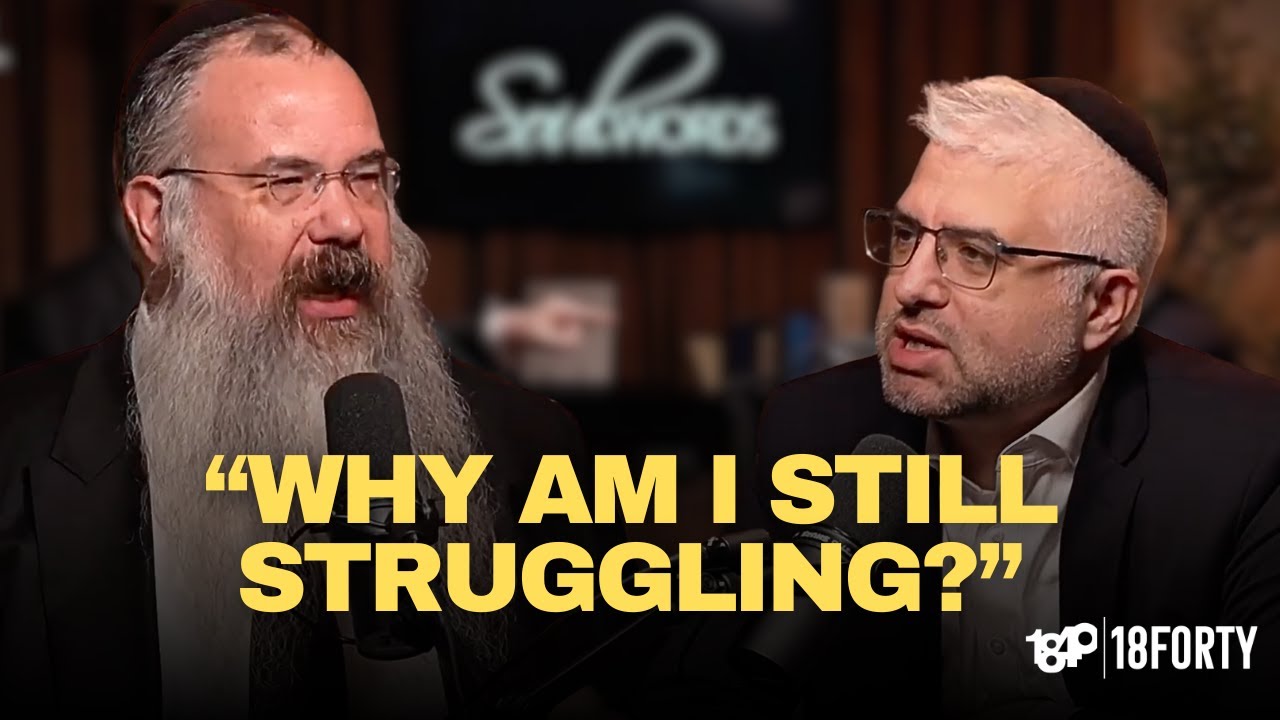
Dr. Eli Rubin describes the Hasidic warning that a person can do interior spiritual work and use that work as an excuse to skip outward action. The libertarian giver runs a similar risk through her donor-advised fund. Contributing to the DAF does not satisfy the tzedaka commandment. The commandment is satisfied only when the money leaves the DAF and reaches a person or organization in actual need. A donor who lets the DAF balance sit has moved the money out of her own reach without putting it in the hands of any asker, and she has earned a tax deduction without yet fulfilling the obligation. Rambam ranks anonymous giving high on the ladder when the money still reaches the asker. The failure here is not anonymity but the DAF balance standing in for the face-to-face response Moshe commands in verses 7-8. In verses 9-10, Moshe warns against the calculation a lender runs when the seventh year is coming and the loan looks like a loss. Moshe commands the loan anyway, and he calls the calculation that withholds the loan a sin.
The activist takes Moshe’s first verse and ignores the second. The libertarian takes Moshe’s personal command and ignores the communal command. Moshe pairs the two halves of the chapter together, and neither contrast position carries both halves. Through verses 7-8, Moshe tells the filmmaker to open her hand and to climb Rambam’s eight-level ladder of giving over the course of her lifetime.
5. The Practical Posture
Rambam ranks the highest level of tzedaka as the kind that keeps a person out of poverty in the first place. The giver employs the person, partners with the person, or lends or gives enough that the person never has to ask. Rambam then ranks the next six levels in descending order, from anonymous giving where neither party knows the other down through cheerful giving in person before being asked. He ranks the lowest level as giving the giver does sadly when the asker is at the door. Rambam gives every Jew eight rungs to climb across a lifetime. A giver who reaches the highest rung produces exactly the world Moshe promises in verse 4.
RELATED: How Generosity Built the Synagogue
In honor of Rabbi Lord Jonathan Sacks’s yahrzeit, Jonathan Haidt spoke about what Rabbi Sacks had taught him about Jewish economic ethics. Rabbi Sacks argued for years that tzedaka is generosity inside a community that takes responsibility for its own members. Haidt’s own field has measured the conditions under which human communities thrive, and what social science measures matches what Rabbi Sacks described and what Rambam’s ladder organizes. Person-to-person mutual obligation holds a community together. Social science has measured the halacha Rambam ranks.
Tomorrow morning the filmmaker walks from the editing room to the subway and passes the man on her corner. Moshe’s command from verses 7-8 falls on her now—lend the man enough for what he needs. Moshe warns in verses 9-10 against the calculation she is about to run, that the bill in her wallet will fund whatever the man buys next, which after two years of filming she suspects she knows. The bill will not solve the homelessness her film documents. Moshe describes the world the bill cannot solve in verse 11. Moshe commands the open hand anyway, because the obligation is not about whether the giver can solve the problem.
Moshe asks the filmmaker to open her hand to the man in front of her once, when he asks, and to take the next rung of Rambam’s ladder seriously the next time she has a choice about how she gives. Tomorrow the filmmaker either reaches into her wallet at the corner or she does not. Moshe wrote the chapter for that moment.
Questions for Reflection
- Do you focus more on “there shall be no poor” (15:4) or “the poor will never cease” (15:11)? What does the one you skip let you avoid?
- Have you ever given through a fund instead of directly to someone in need? What did that avoid?
- Looking at Rambam’s ladder of giving, which rung matches most of your giving this year, and what would the next rung actually ask of you?
This project is made possible with support from the Simchat Torah Challenge and UJA-Federation of New York. Learn more about the Simchat Torah Challenge and get involved at their website.